

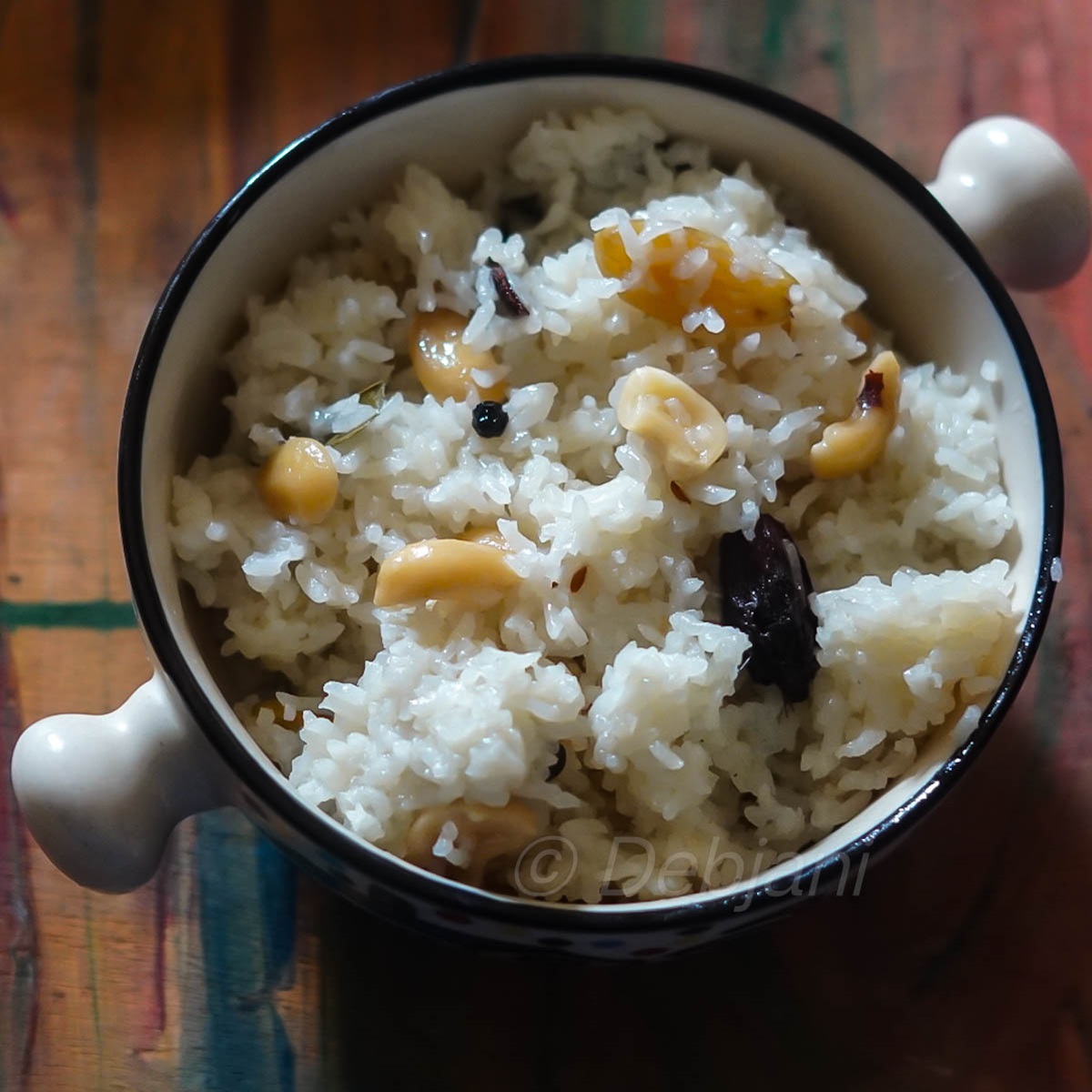
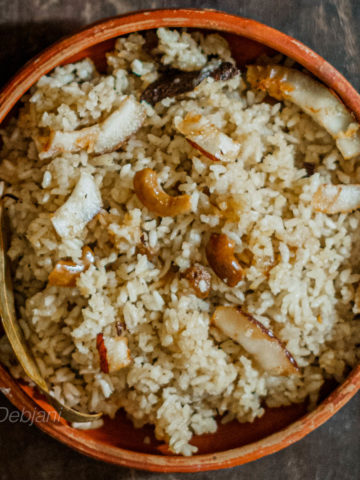
Kaju Kishmish Pulao, or Bengali Sada Polao, is a classic Bengali rice dish. This white pulao cooked with fragrant Gobindobhog rice, cashew nuts, and raisins is much more than just these ingredients; read on to discover its full charm.
Jump to:
- Debjani's Note
- About the Recipe
- Ingredients
- Step-by-step Instructions
- Substitutions and Variations
- Top Tips!
- Frequently Asked Questions
- Related
- Pairing Kaju Kishmish Pulao
- Recipe Card
- Have you tried the Bengali Kaju Kishmish Pulao Recipe from Debjanir Rannaghar!
- Here's the Bengali Sada Pulao Kaju Kishmish diye Recipe Pin for your Pinterest Board
Debjani's Note
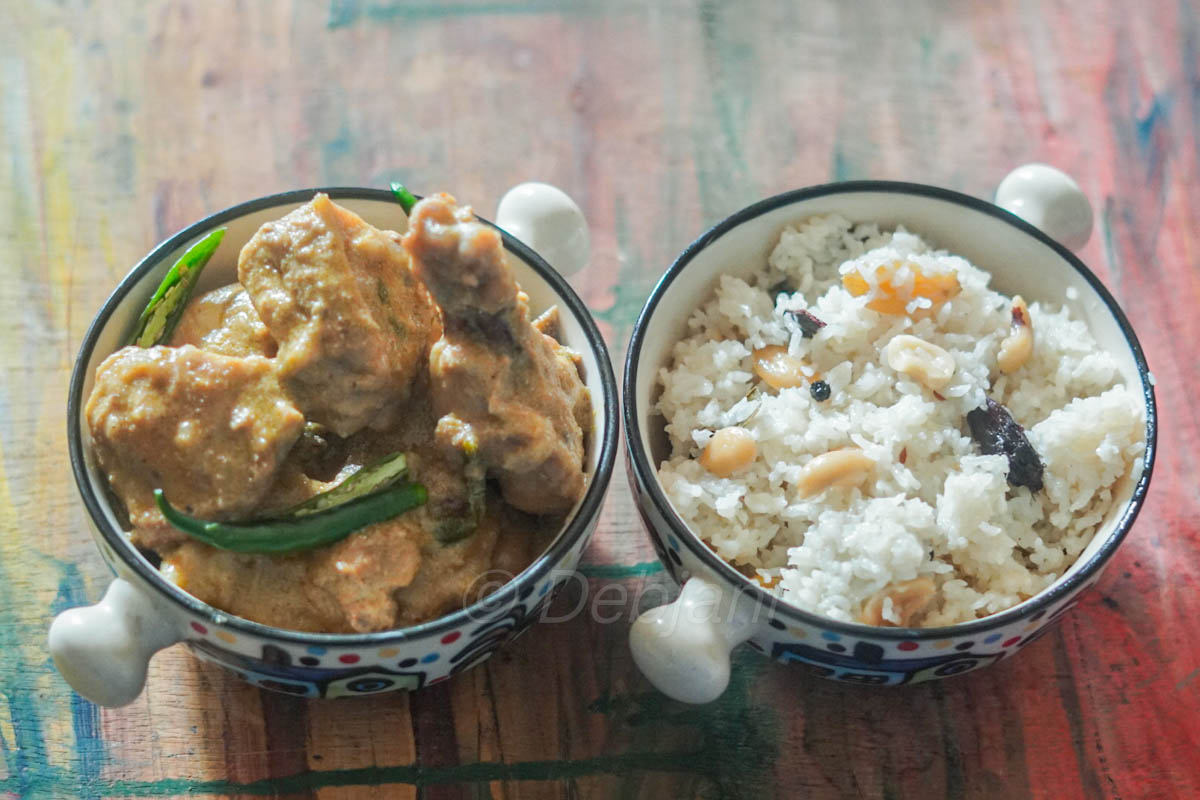
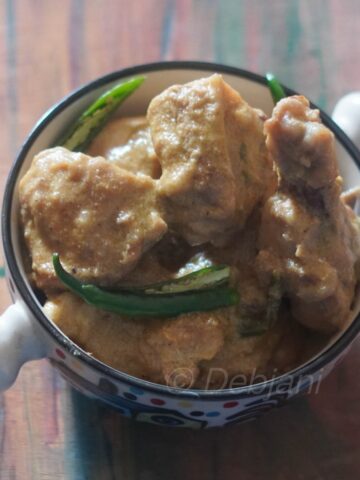
This Kaju Kishmish Pulao is a family-favorite almost as much as Basanti Pulao. The fragrance of gobindobhog rice as well as ghee, plenty of fried cashews and raisins, and a hint of sweetness and balanced spices - that says it all. This white pulao is a perfect side for classic non-vegetarian dishes like kosha mangsho, dimer dalna, or a mild Posto Murgi. You can also easily pair it with vegetarian dishes such as chanar dalna or sada aloor dum. The choice is yours.
The best part is that Kaju Kishmish Pulao is - it is easy to cook, though there are a few tricks, especially when it comes to handling the rice. Cooking with Gobindobhog Rice is not difficult, but you need to know how. At home, I've only ever seen Gobindobhog rice used to make this fragrant pulao. These days, I do use korpurkanti or tulaipanji at times, but never basmati rice at our place.
Though I have seen people making Bengali pulao with Basmati rice. However, in our place, Bengali Pulao has always been cooked with fragrant short-grain rice. Gobindobhog rice is typically the go-to for this type of dish, similar to how it's used for basanti pulao. However, Basmati was always a favorite for ghee bhat or bhat bhaja, both Bengali versions of fried rice, making it a bit on the sweeter side. Dehradun Chal er bhat bhaja; this was what Dida used to call the basmati rice- "Dehradun rice."
About the Recipe
Now, there's an interesting difference when it comes to Kaju Kishmish Pulao. There are two versions at home: one from my family and my Dida's (my mother's mother), and another from my in-laws, at Mehebub's home. Let me tell you, both recipes are good! I love both versions of Sada Pulao. In our family, it's a slightly sweet pulao made with Gobindobhog rice. Yet, at my in-laws', while it's still a cashew nut and raisin pulao, it's savory, not sweet and savory, and cooked with a similar rice - Badshabhog.
This highlights the wonderful diversity of Bengali cuisine. You'll often find the same dish prepared differently in Bengali Hindu and Bengali Muslim homes throughout West Bengal. Even when preparing the same dish, you'll find differences between Ghoti and Bangal households. In fact, recipes can even change from one district to another for the very same dish. This truly showcases the rich culture and diverse nature of Bengali cuisine. Which version am I sharing in this sada pulao recipe? The first one-the sweet Sada Kaju Kishmish Pulao. I'll share the other recipe another time.
Ingredients
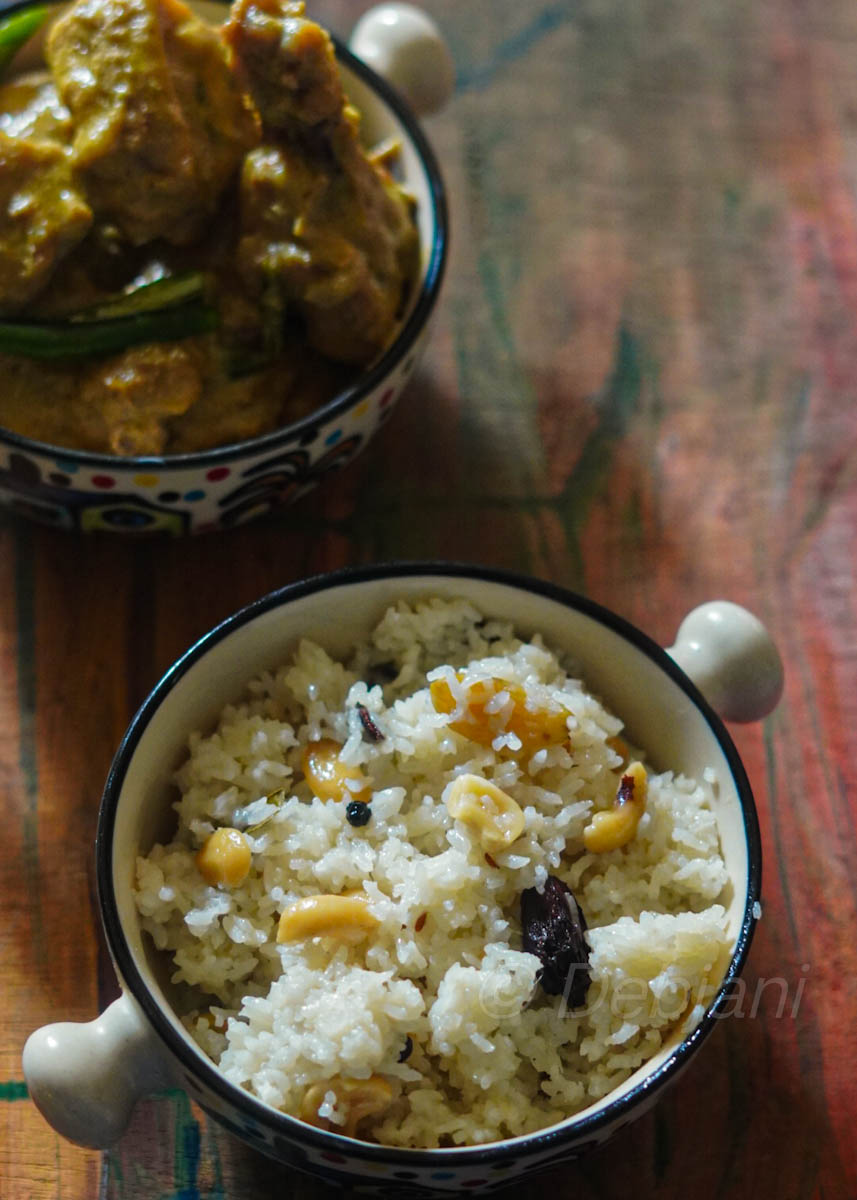
The ingredients for a basic Mishti Sada Pulao with cashew and raisins are quite simple. This ensures no single flavor overpowers the dish, allowing the subtle taste of Bengali Pulao to shine through.
- Gobindobhog Rice
- Cashew nuts / Kaju
- Raisins / Kishmish
- Green Chili
- Ginger paste
- Ghee
- Sugar
- Salt
- Cinnamon Stick
- Clove
- Green Cardamom
- Black Cardamom
- Bay Leaf
See recipe card for quantities.
Step-by-step Instructions
-
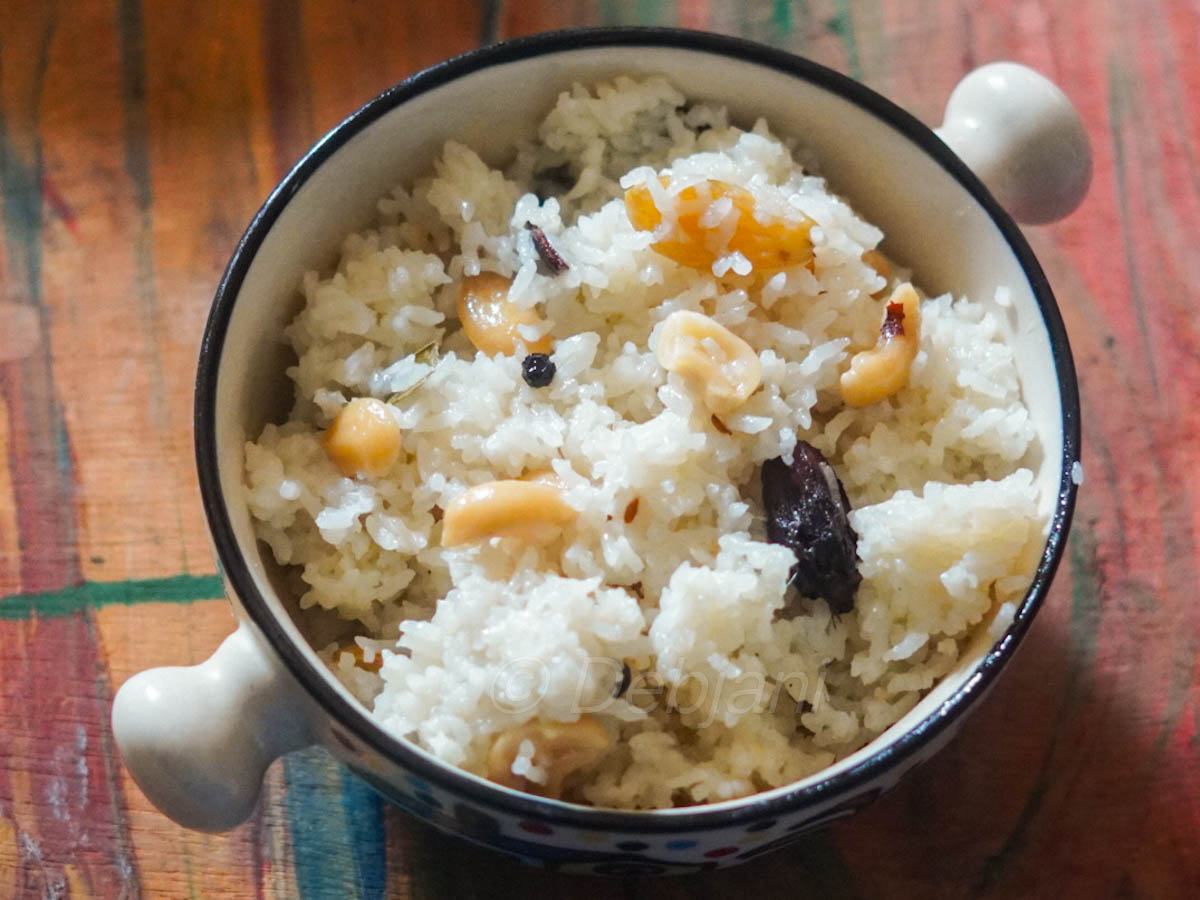
Let's learn how to make Bengali sada kaju kishmish pulao at home.
-
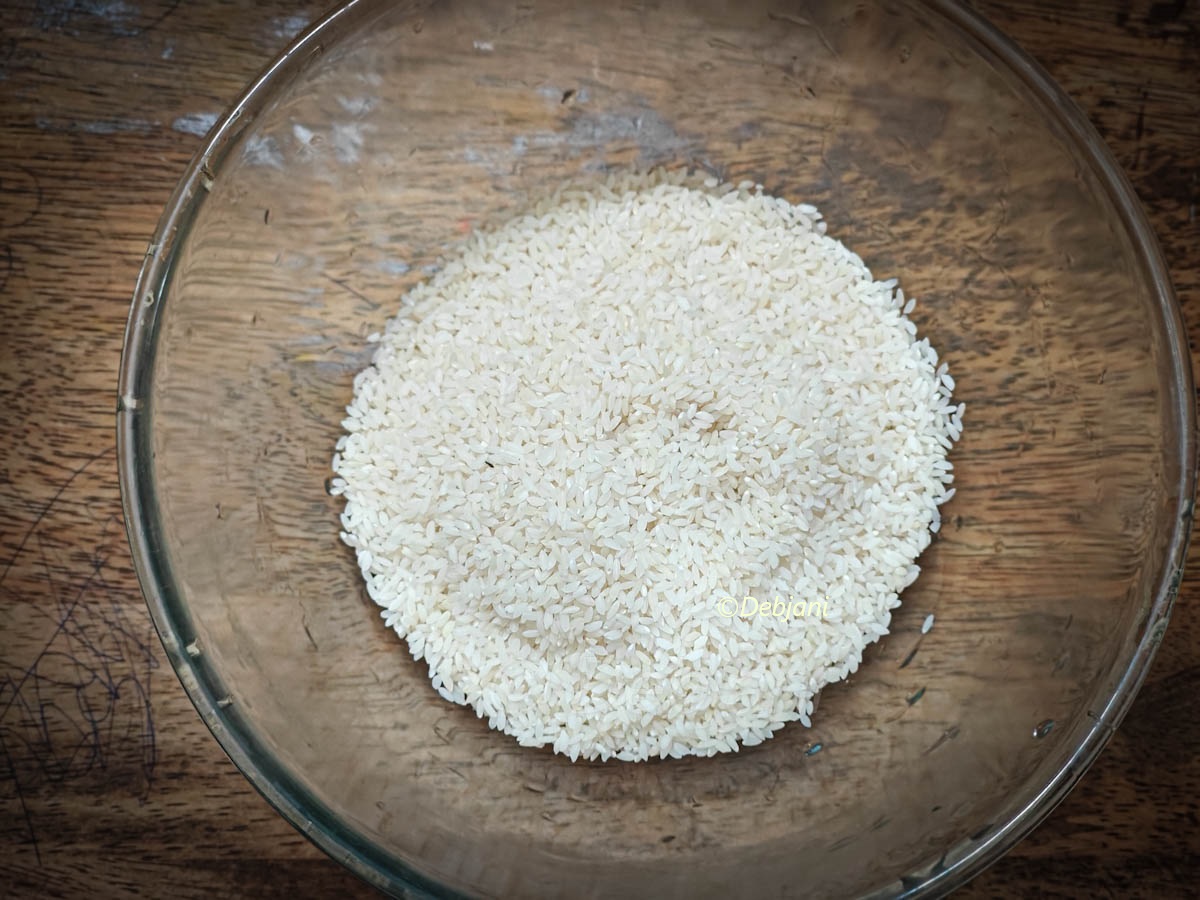
Start with 200g of Gobindobhog rice.
-
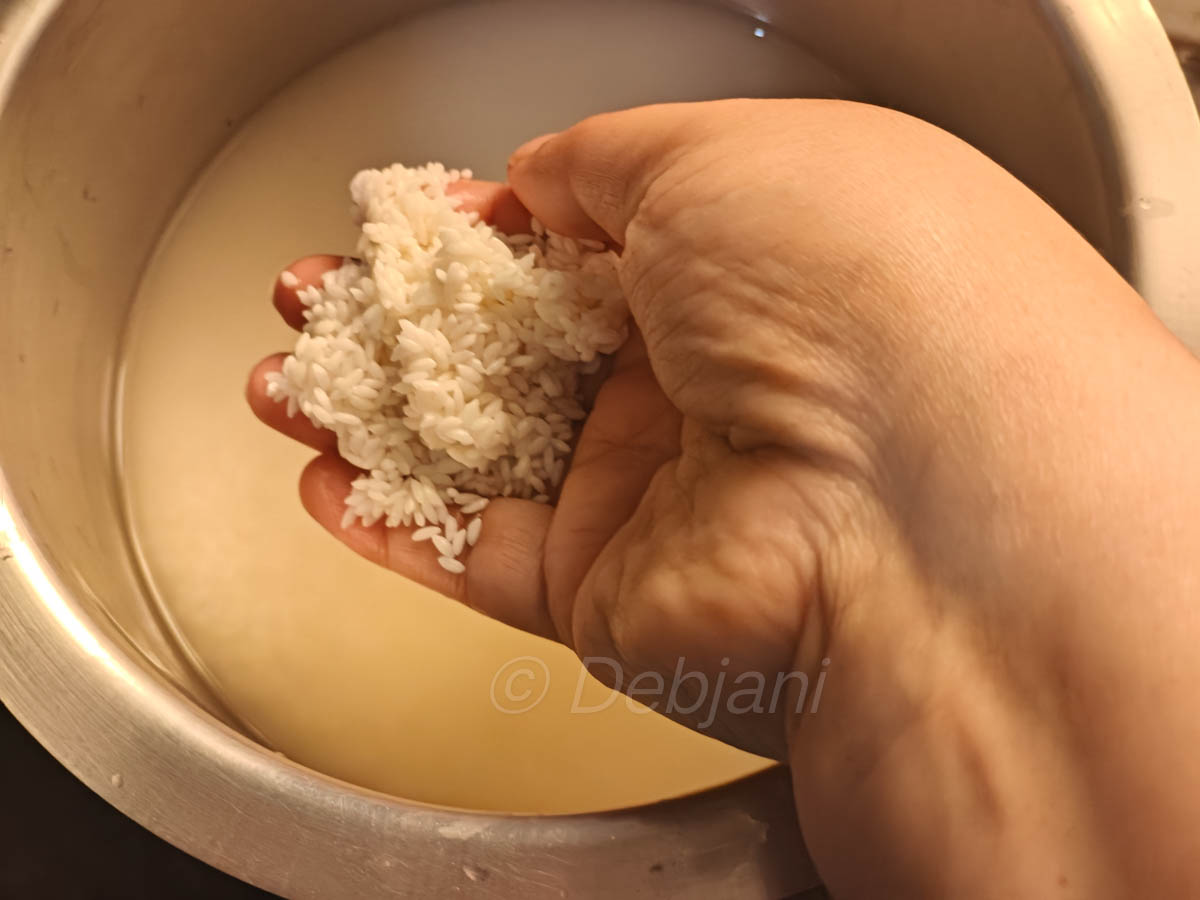
Wash the rice several times under running water until the water runs clear, being careful not to break the grains. Then, soak the rice in water for exactly 15 minutes. This step is crucial; soaking for too long will make the rice too soft, while soaking for too short a time won't be enough.
-
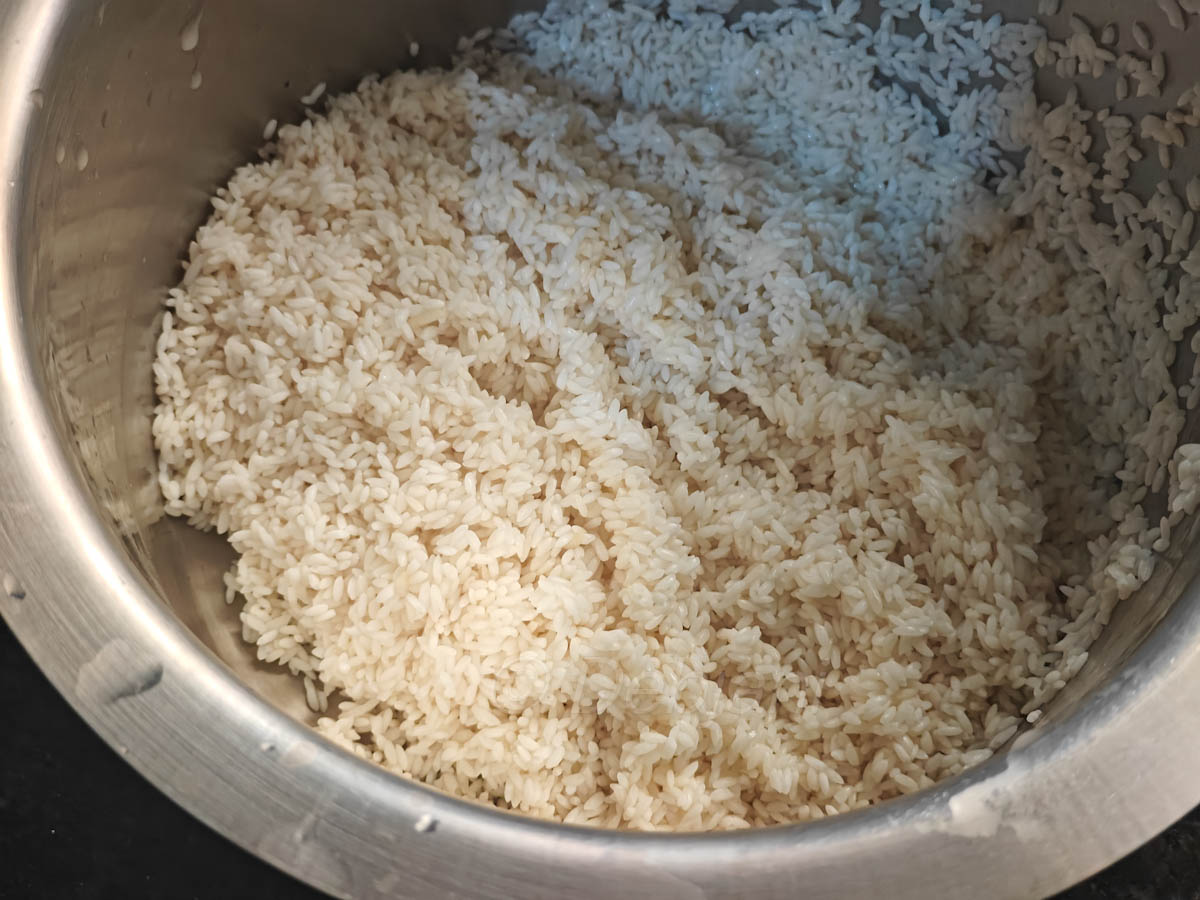
After 15 minutes, drain the water from the rice.
-
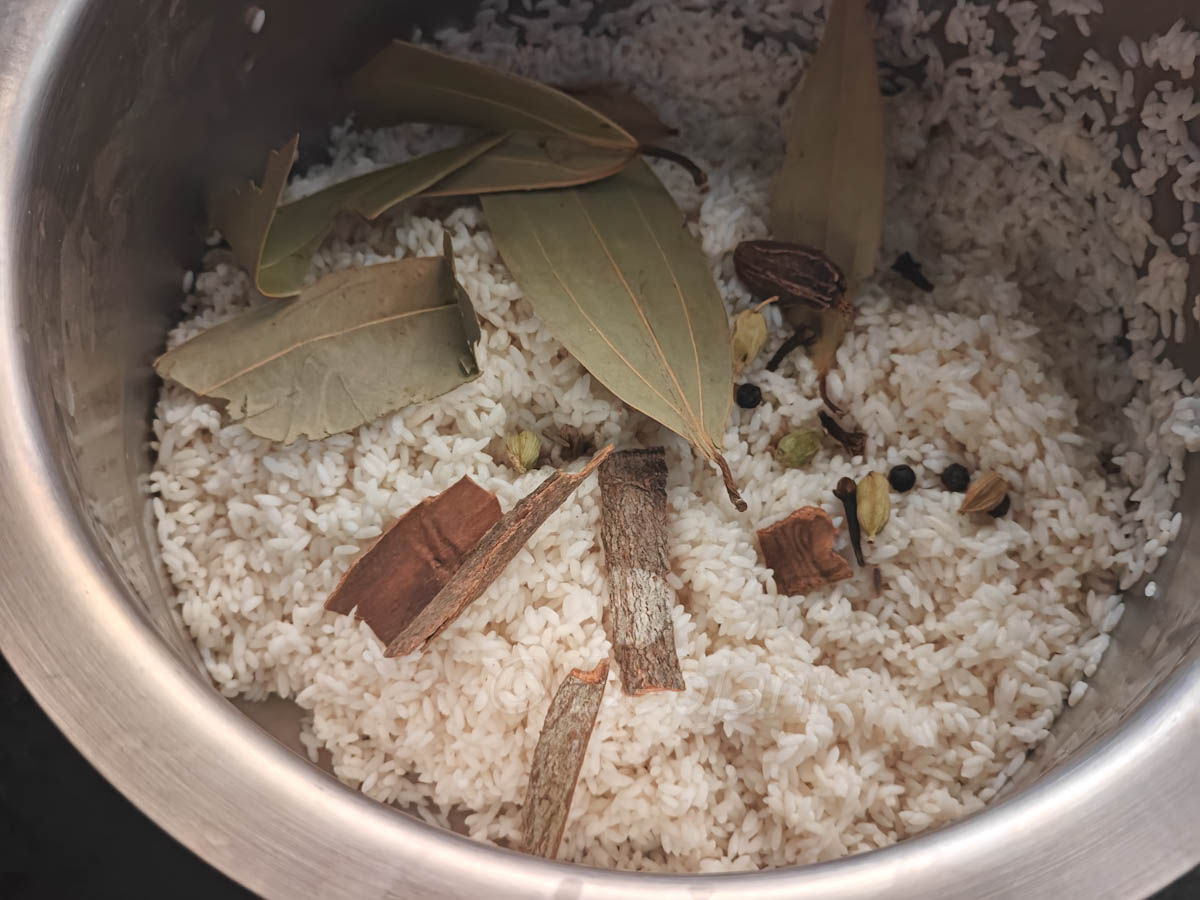
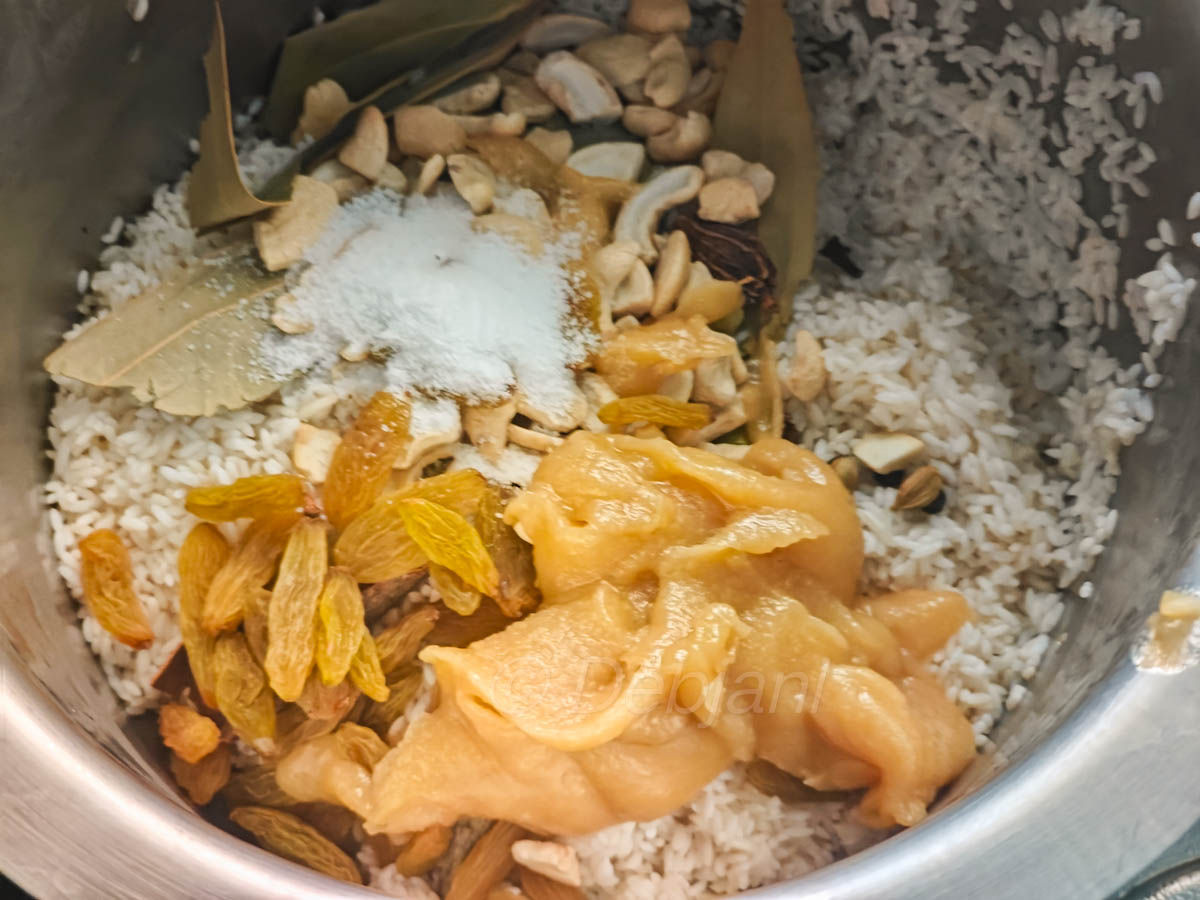
Now, add all the whole spices: cinnamon stick, black cardamom, green cardamom, cloves, and bay leaves (broken into pieces).
-
Mix in two-thirds of the total ghee and 1 teaspoon of salt. Also, add the broken cashew nuts and raisins.
-
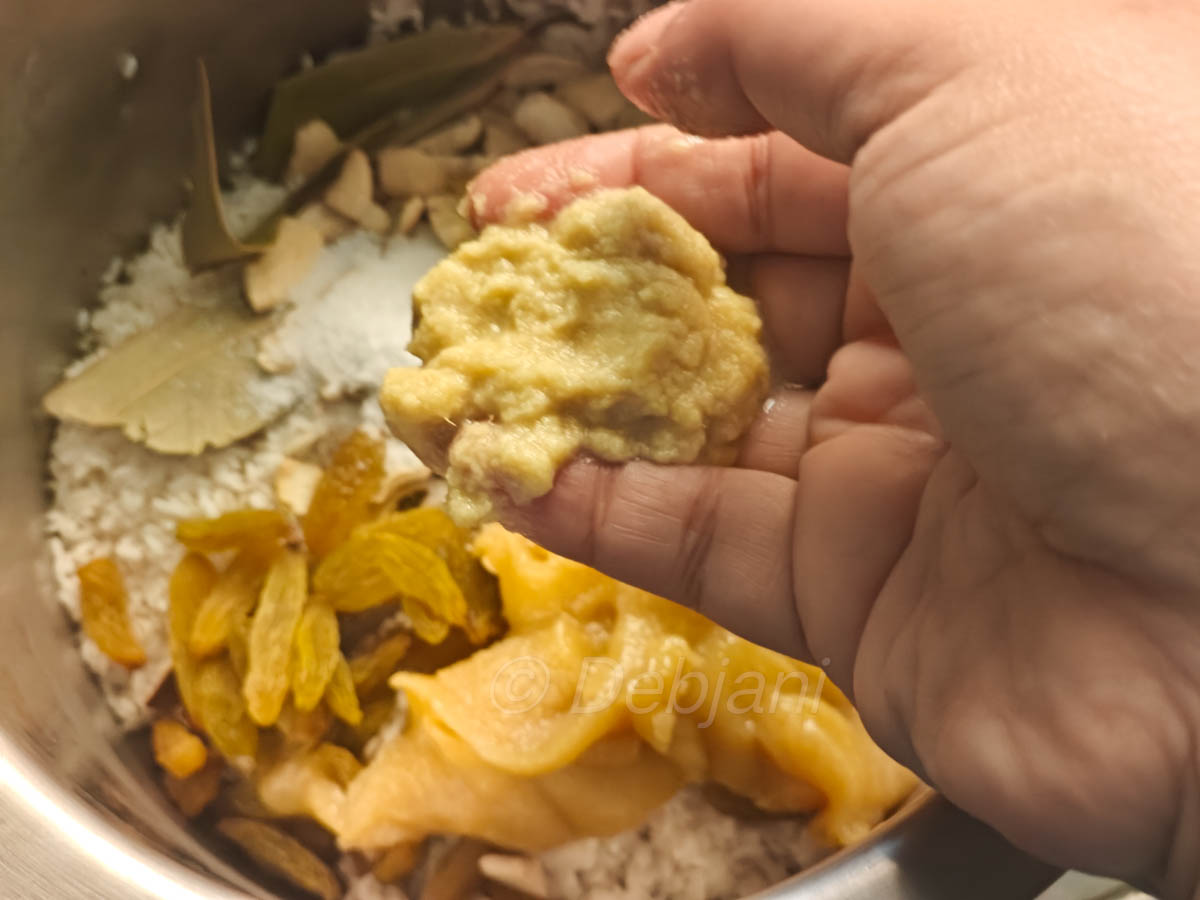
Don't forget to include 1 tablespoon of ginger paste.
-
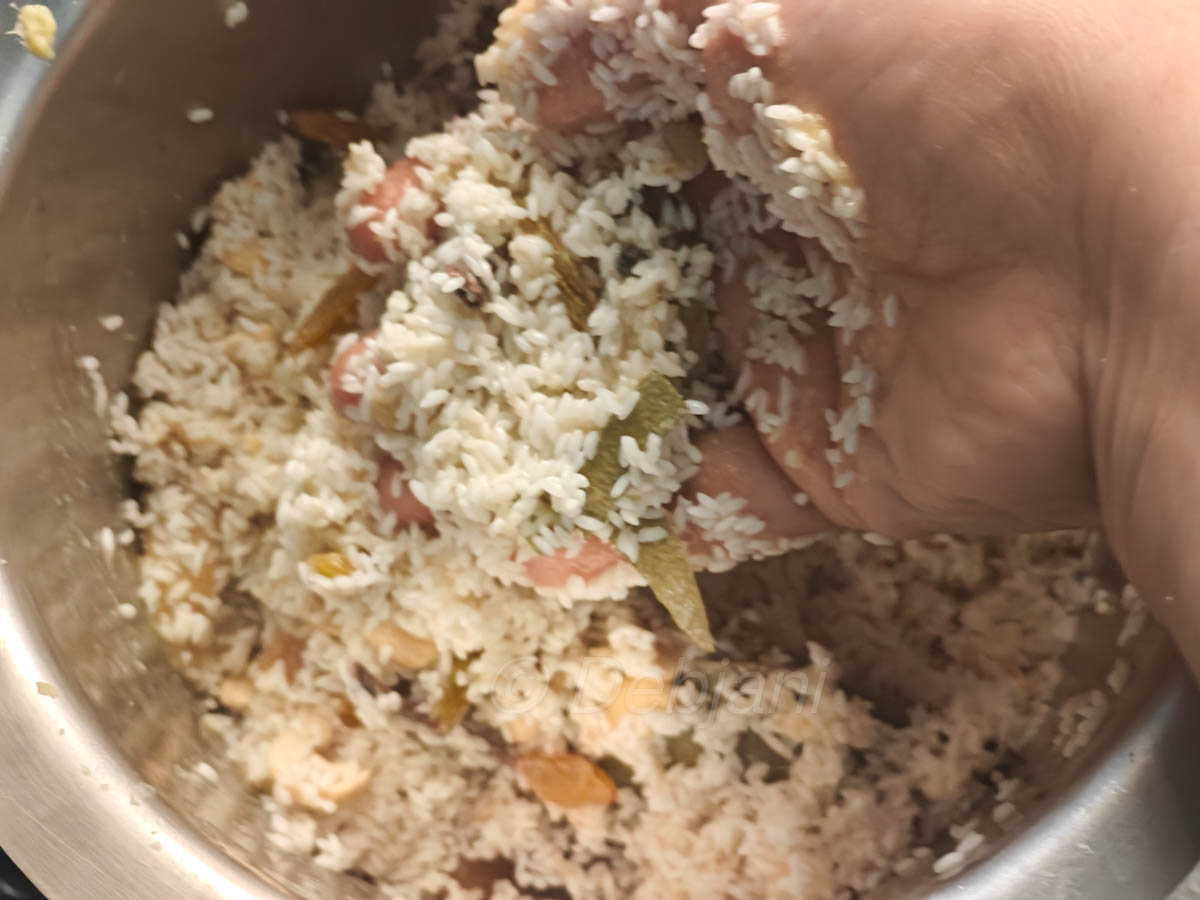
Gently mix everything together and let the rice sit for 15 minutes.
-
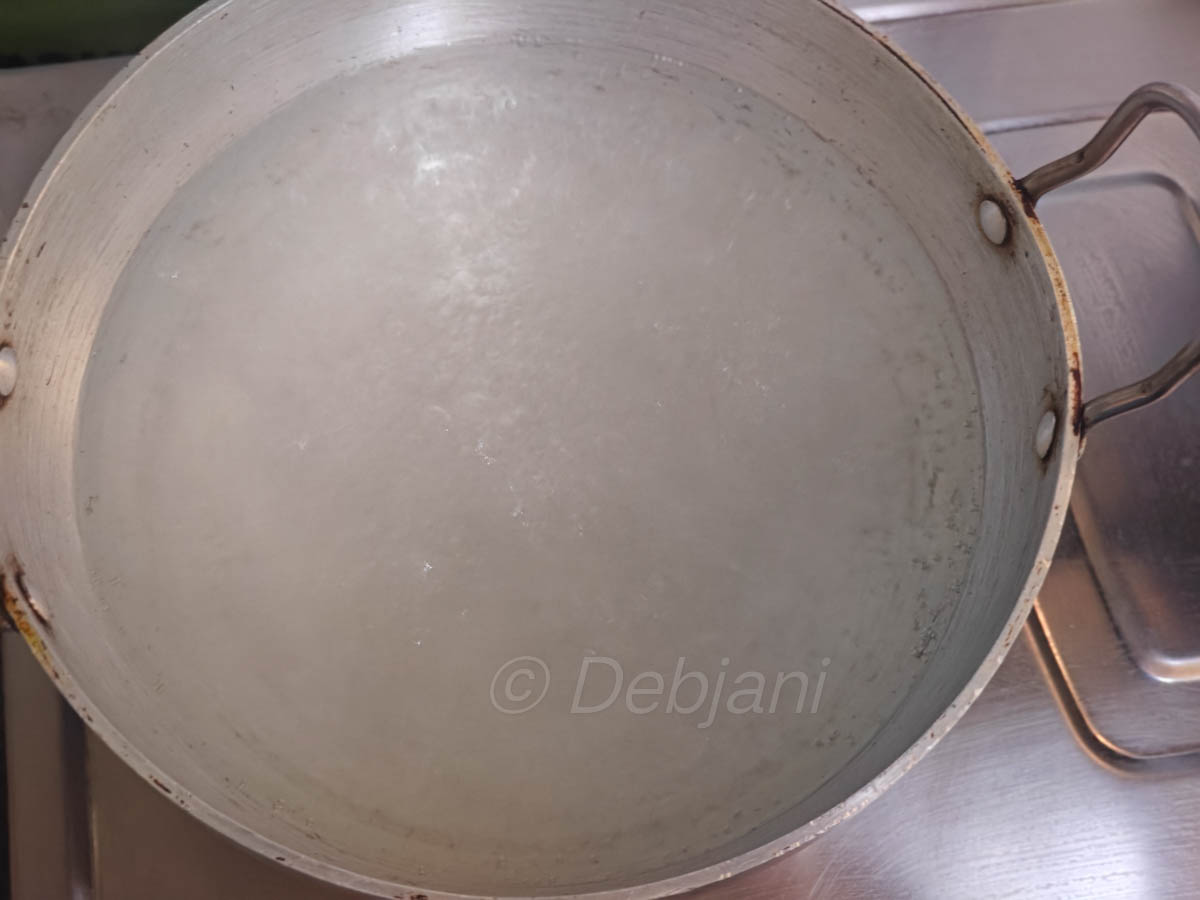
Meanwhile, boil about 3 cups of water.
-
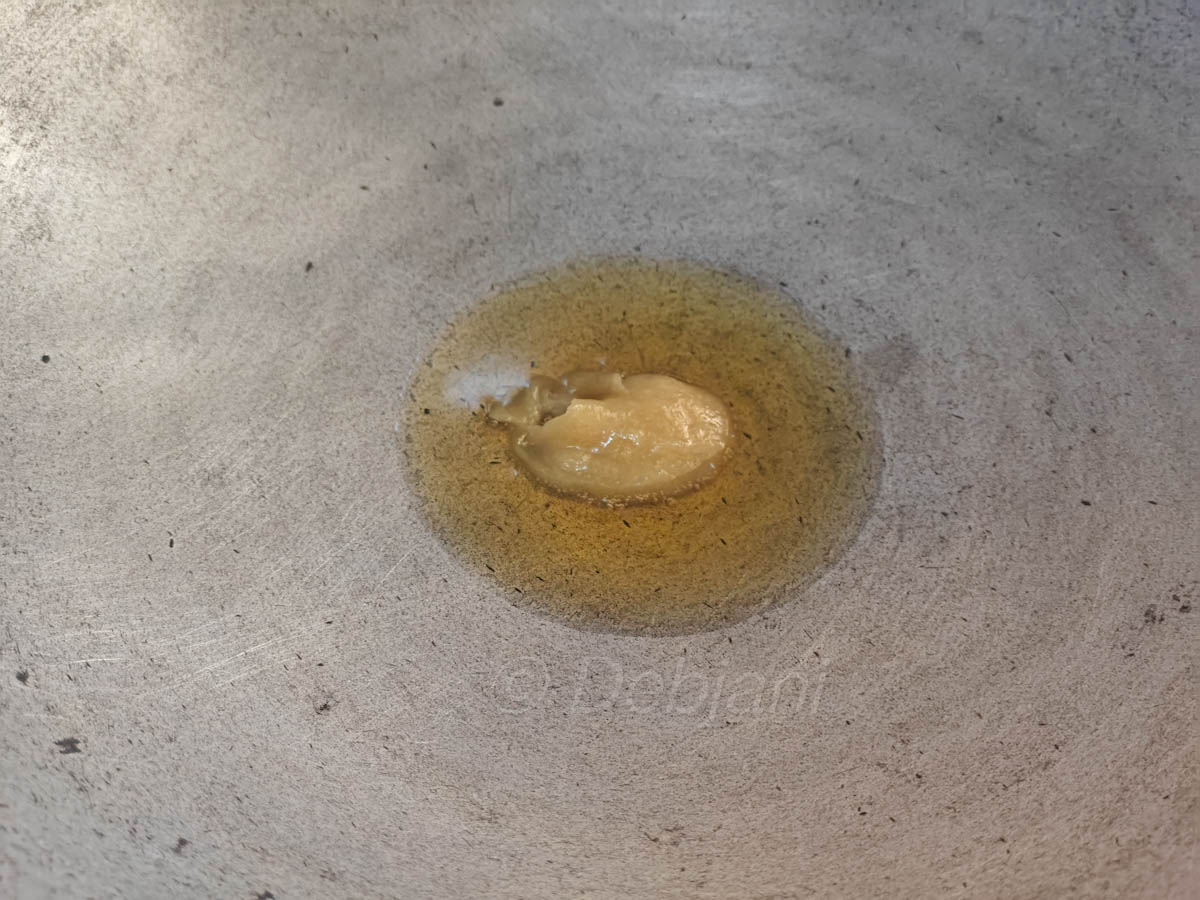
Next, heat a heavy, deep pan (kadhai) and add the remaining one-third of the ghee.
-
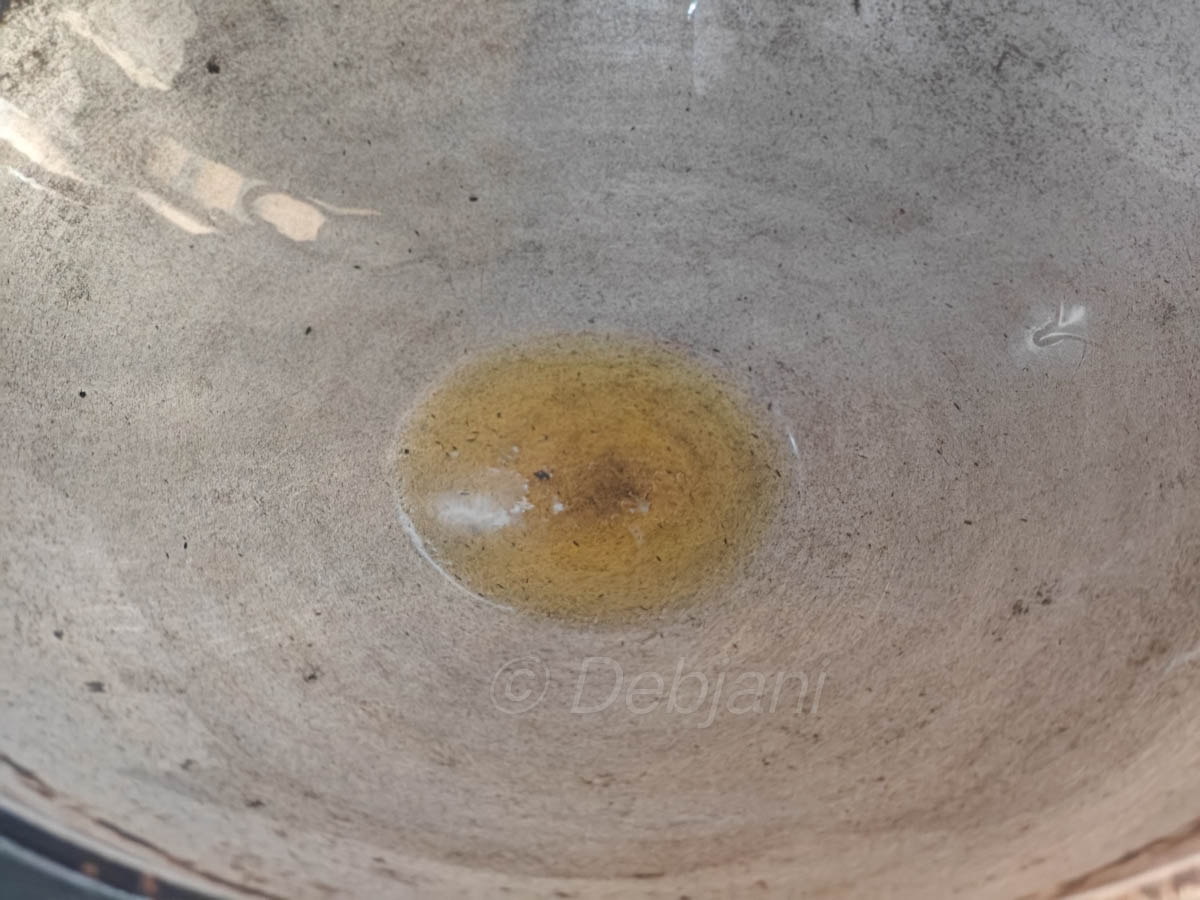
Once the ghee melts, use a spoon or spatula to spread it around the inside of the pan. Keep the flame at a medium setting.
-
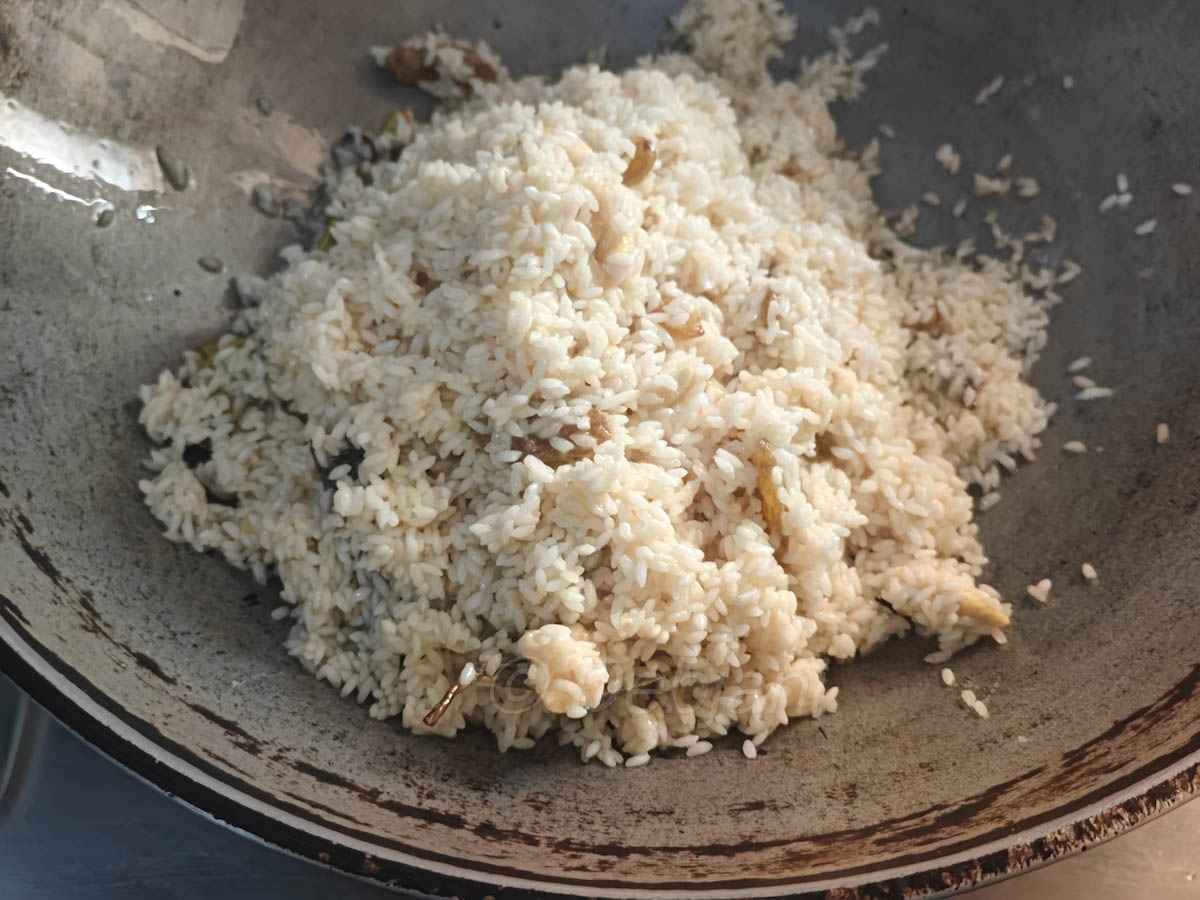
Next, add the marinated gobindobhog rice to the pan.
-
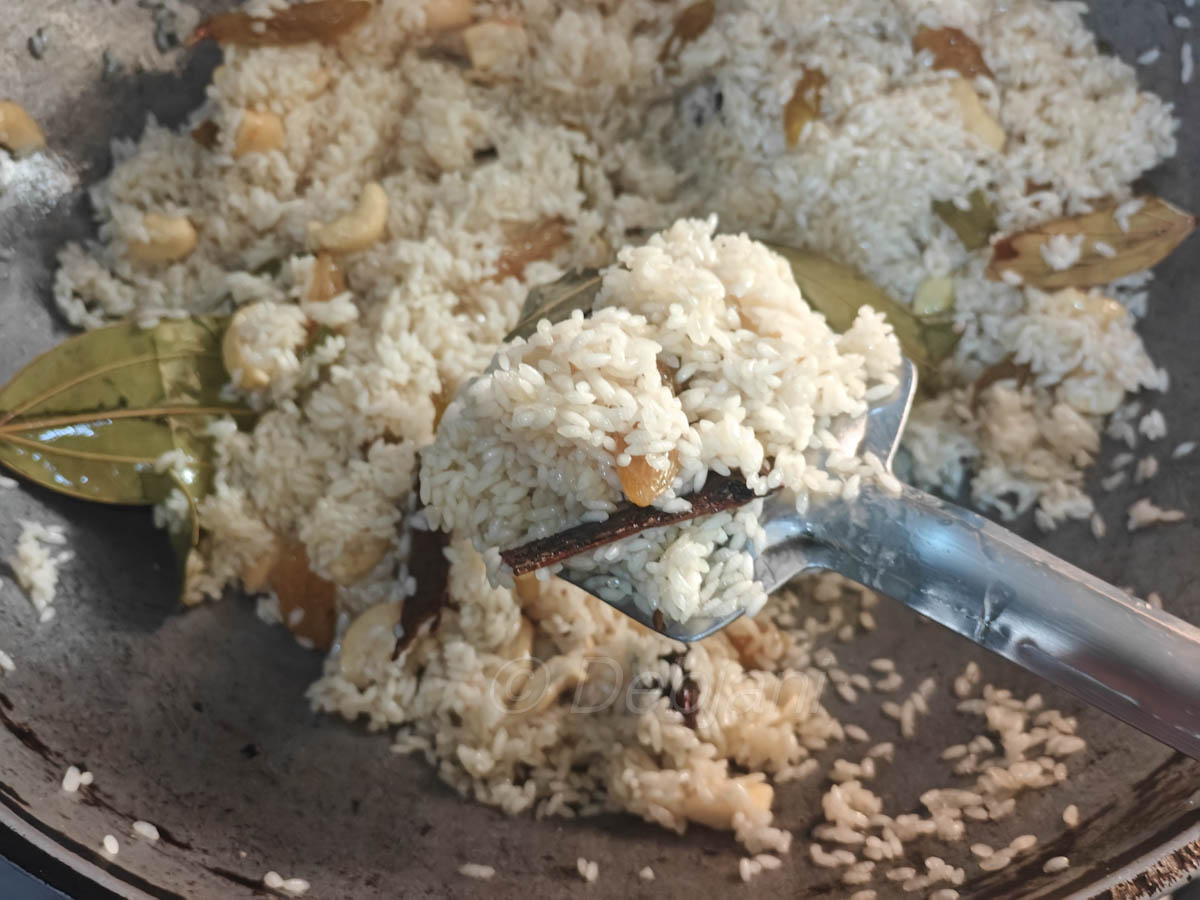
With a spatula, stir-fry the rice for about 5 minutes until it looks shiny and the nuts and raisins are golden.
-
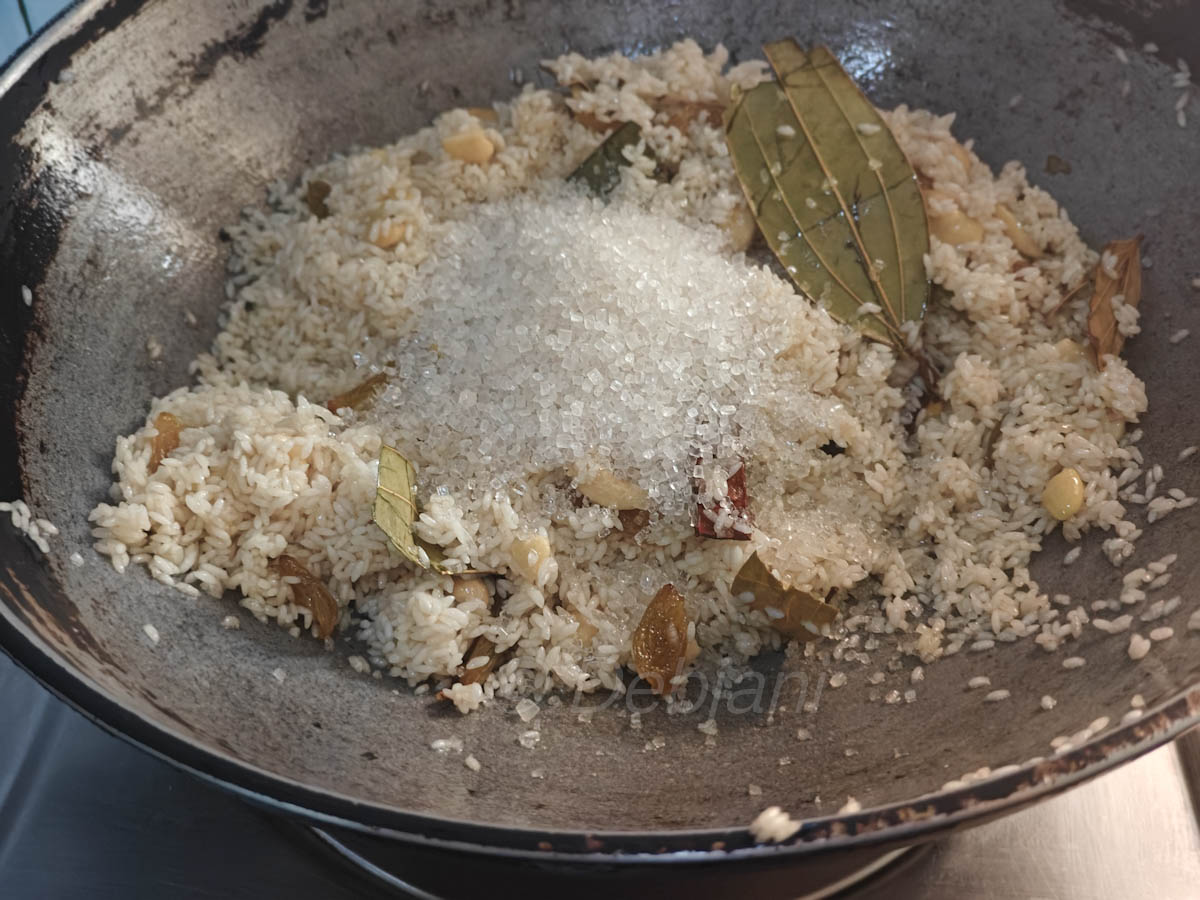
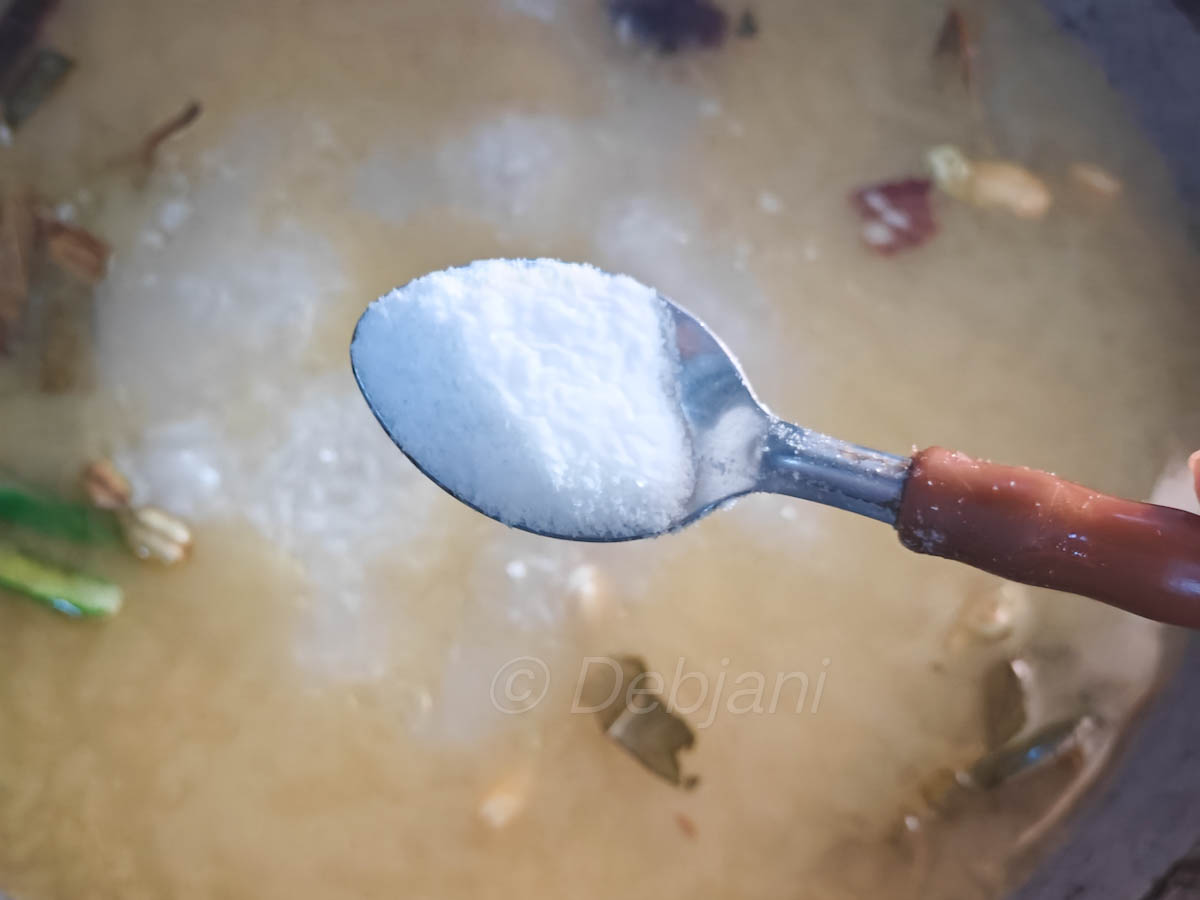
Now, add the sugar. I use 50 grams of sugar for 200 grams of rice, but you can adjust this amount to your taste, using less if preferred.
-
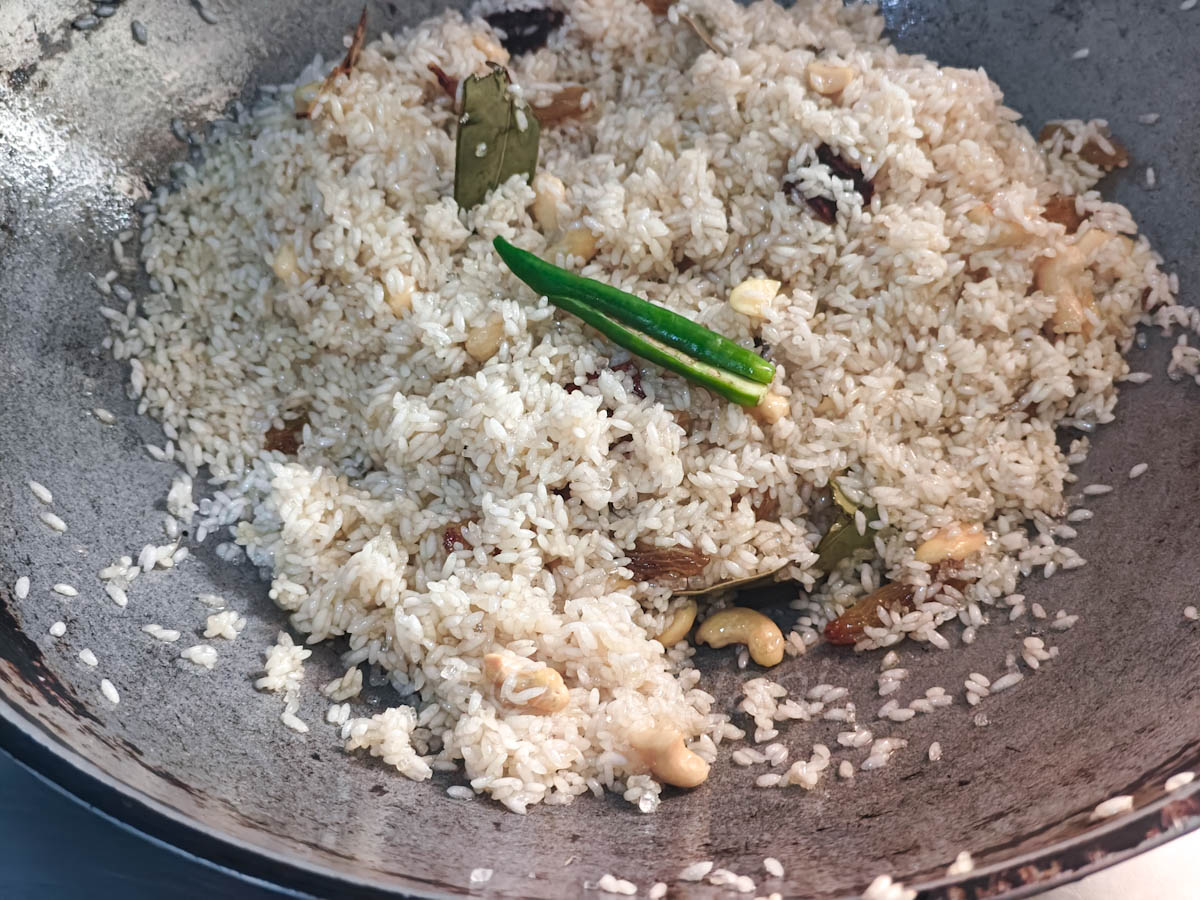
After adding the sugar, mix it in and then add the sliced green chilies.
-
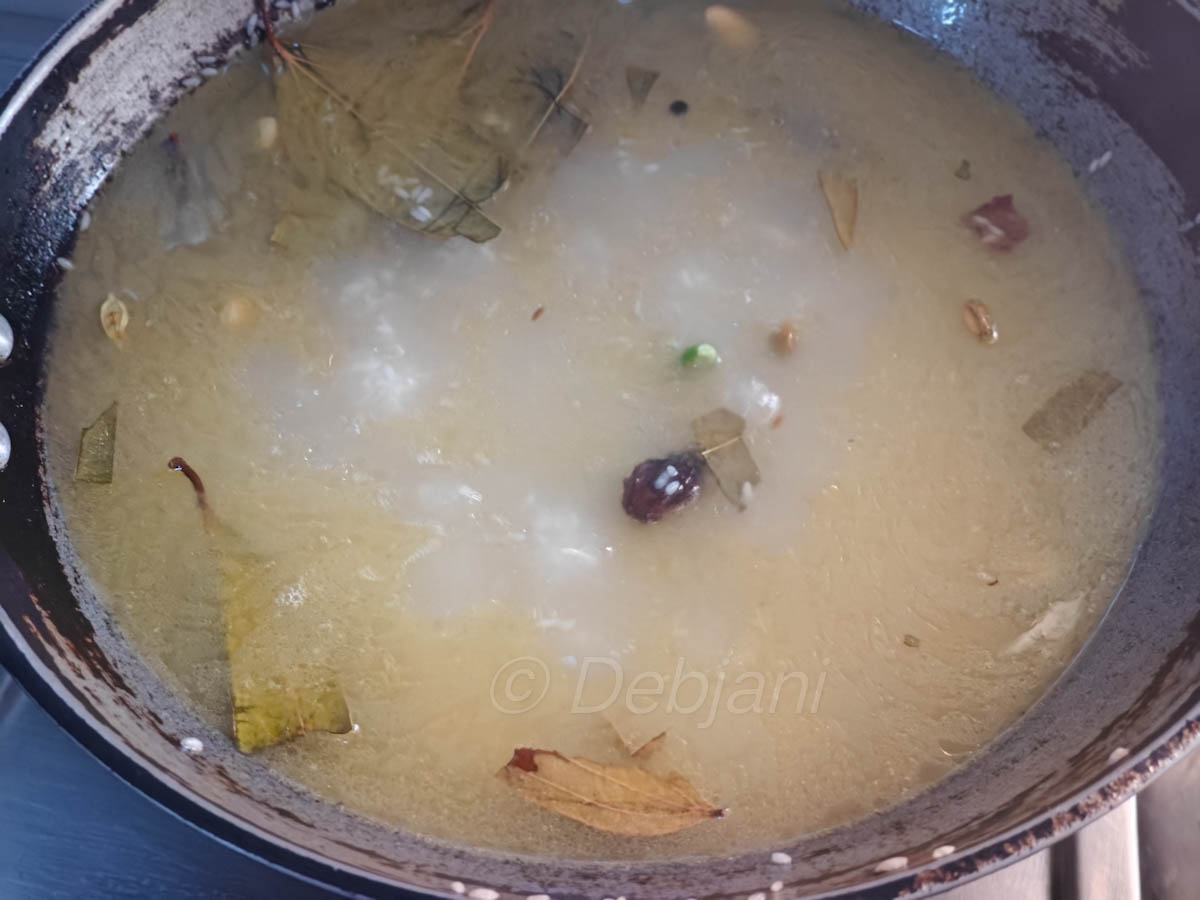
Now, pour in 2 cups of hot, boiling water, using the same cup you used to measure the rice.
-
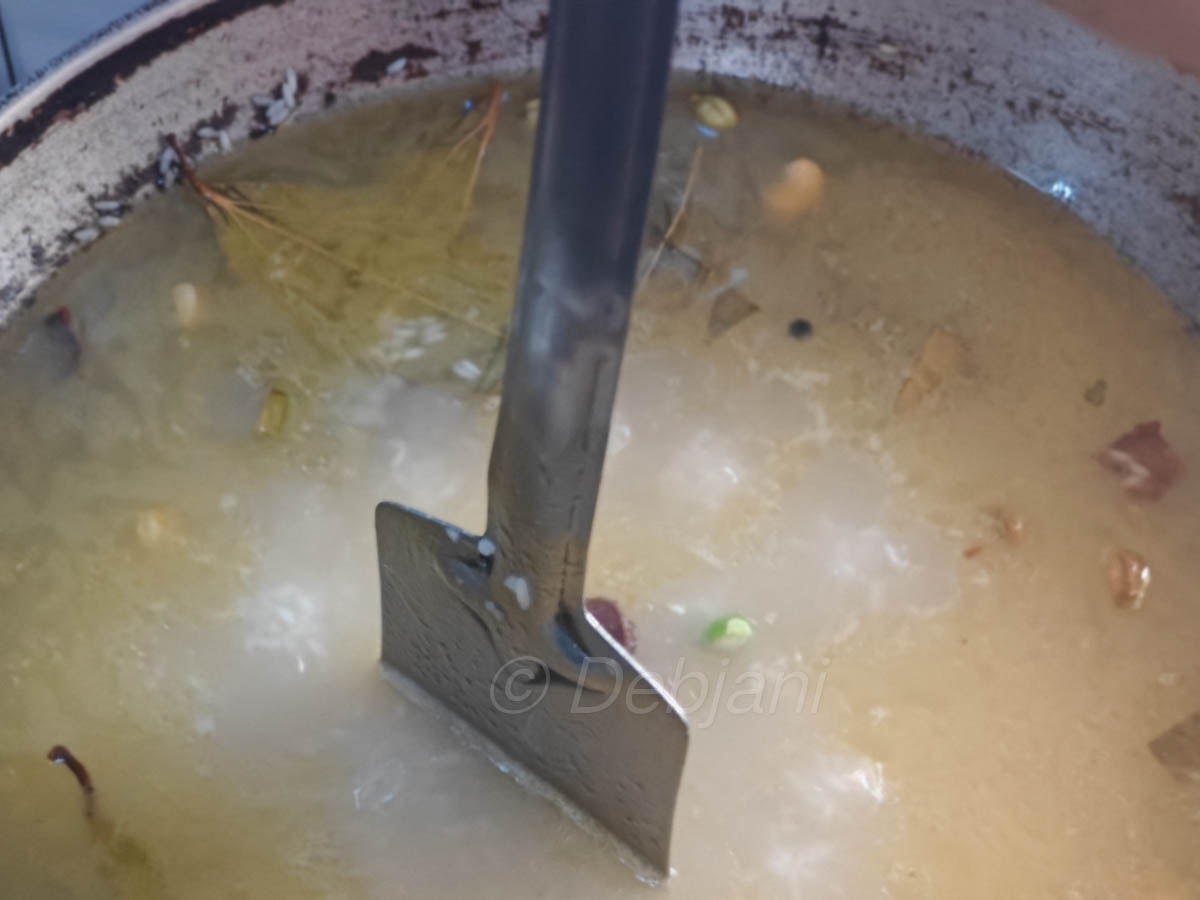
Stir gently.
-
This is also a good time to adjust the salt; I added another teaspoon.
-
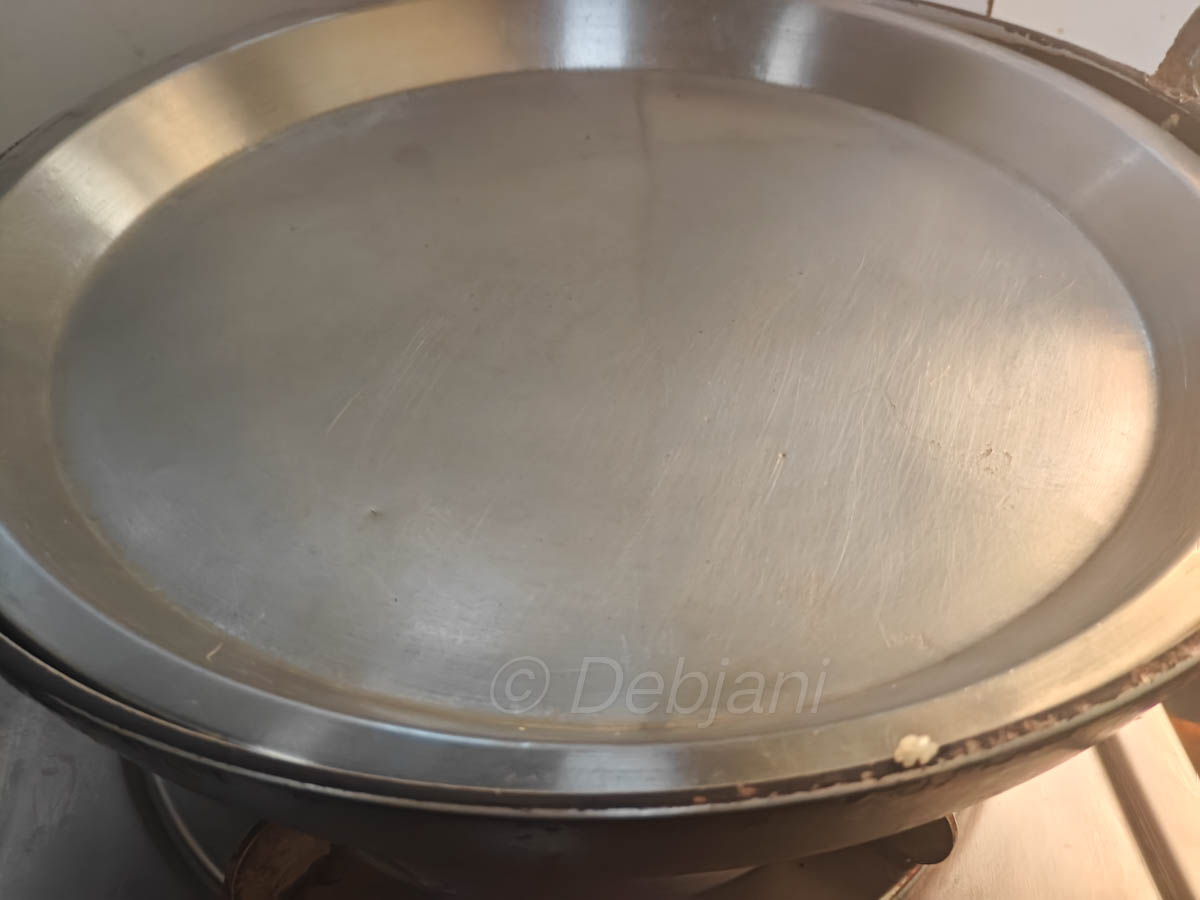
Turn the heat to high and wait for the water to boil. Once it boils, reduce the heat to medium and cover the pan with a lid.
-
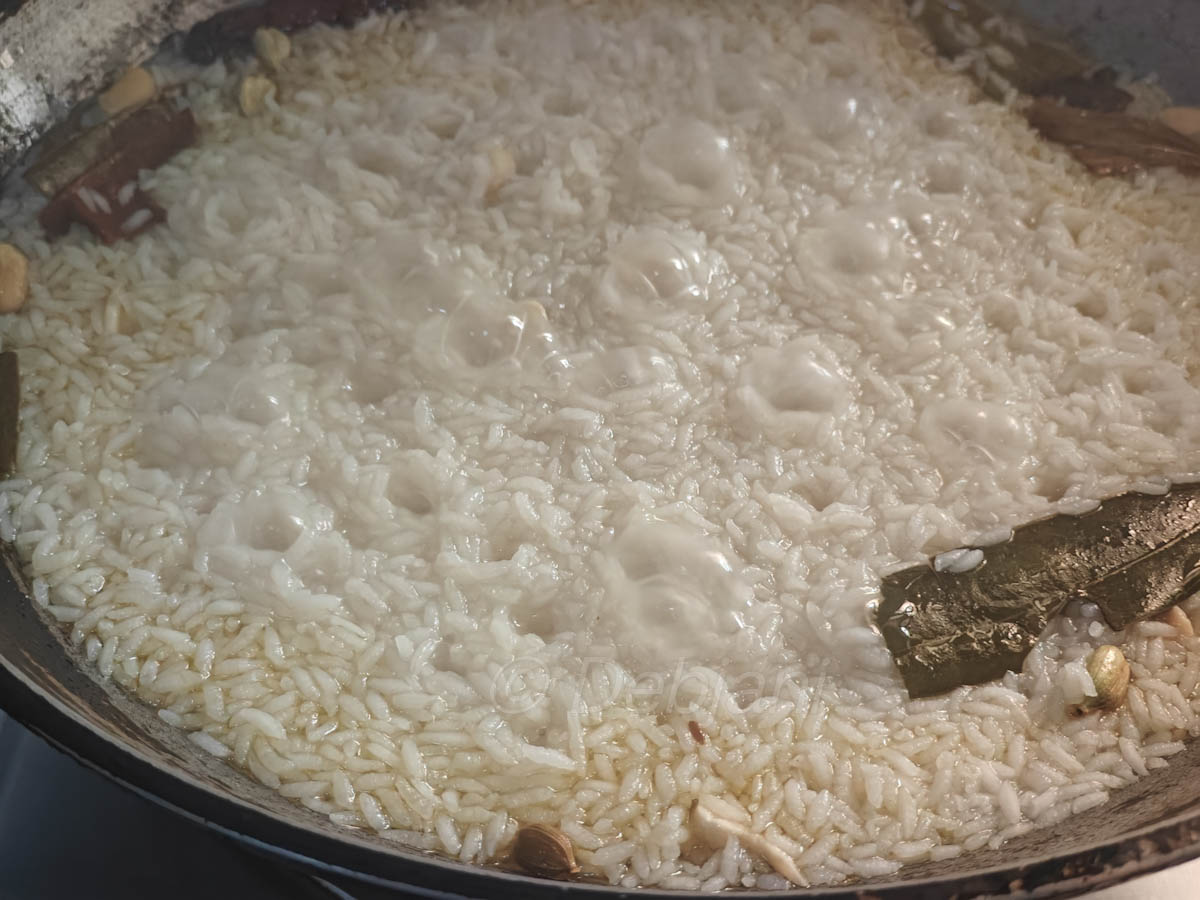
After 5 minutes, uncover the pan and stir lightly.
-
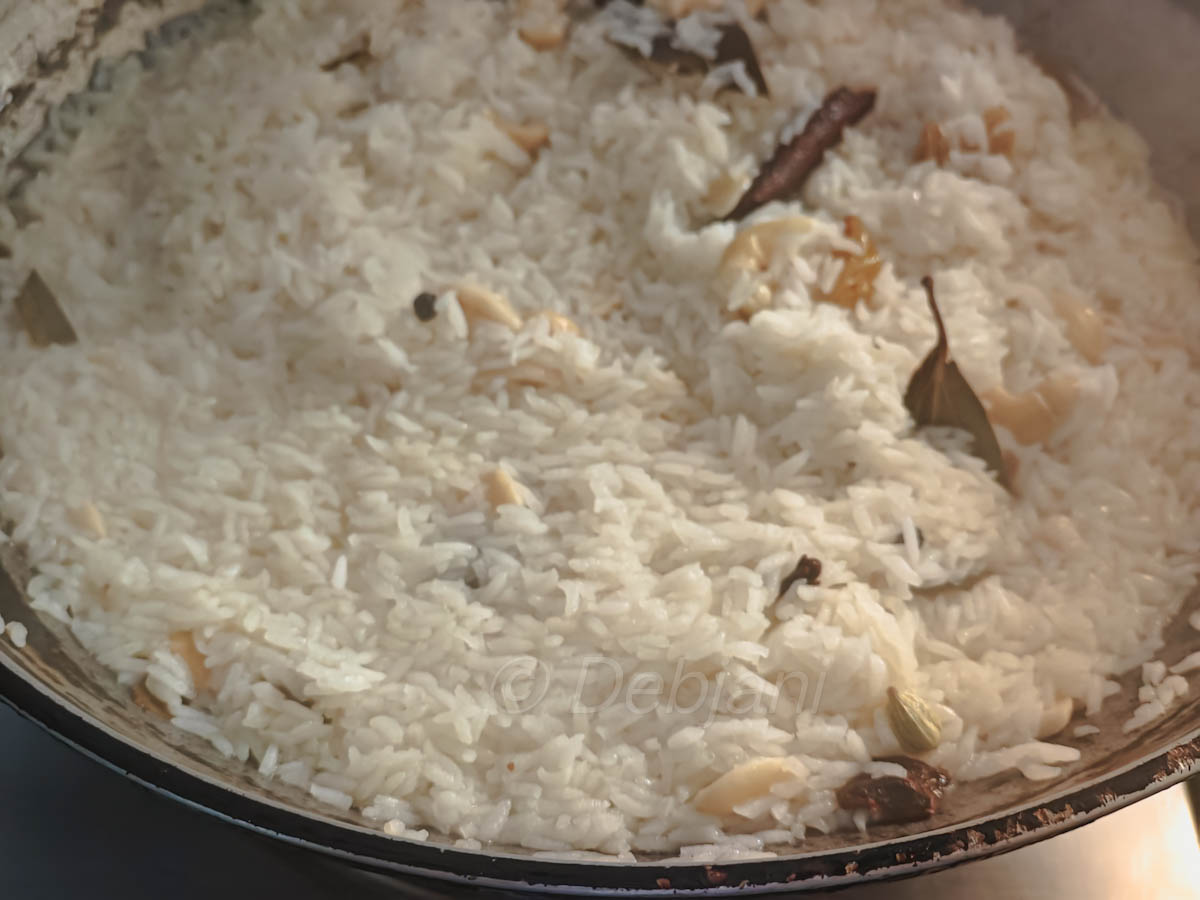
Keep the heat on medium, cover again, and cook for another 2 minutes.
-
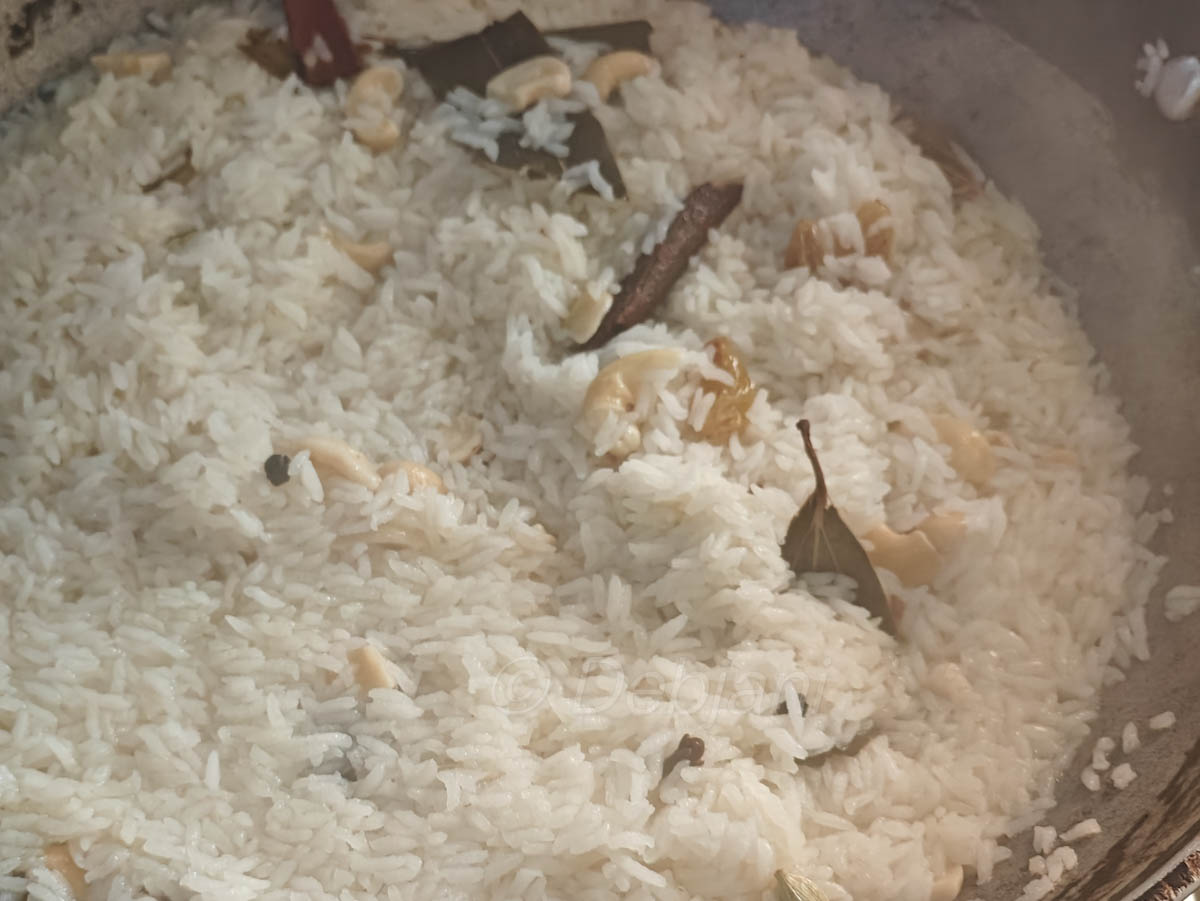
By now, the rice should have absorbed most of the water. Remove the lid and cook for one more minute without it.
-
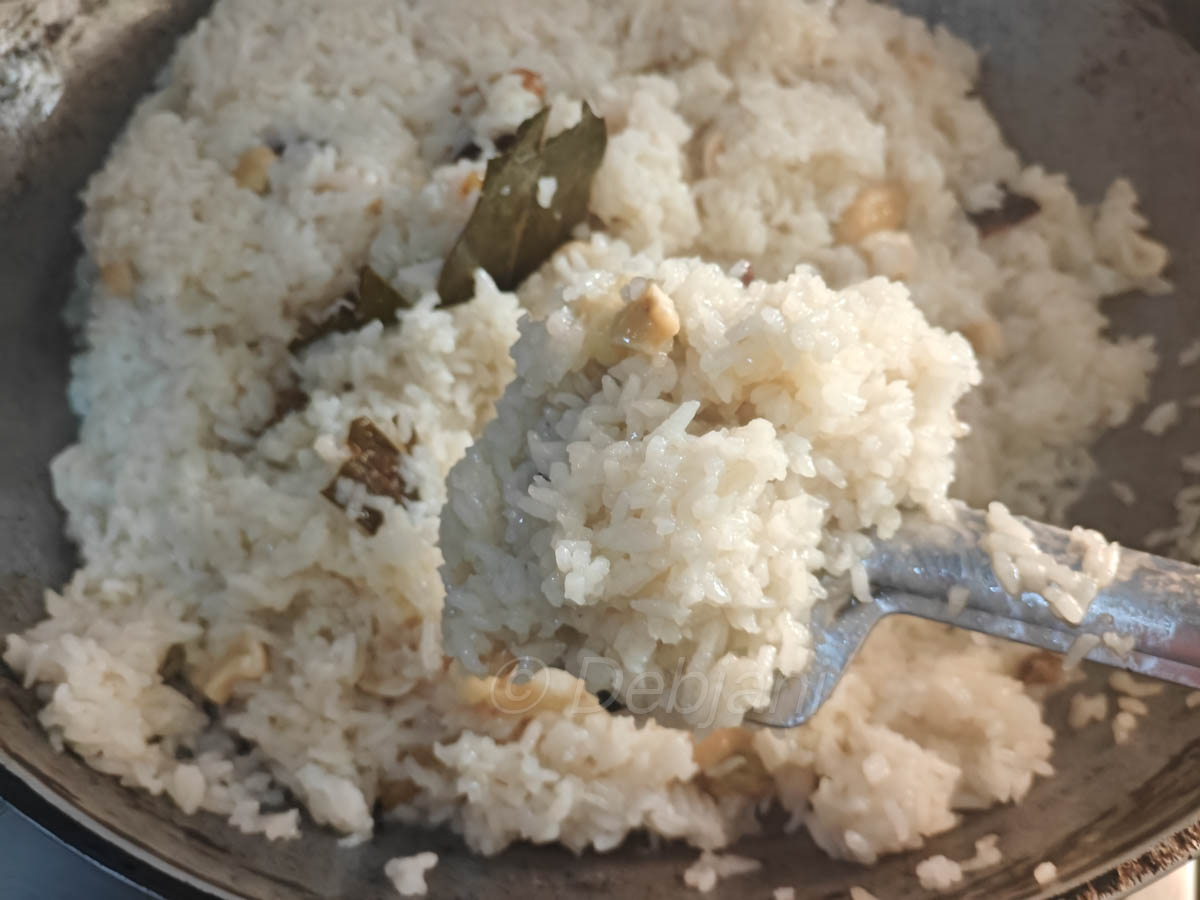
Finally, turn off the heat. Gently mix the cashew and raisin pulao with a spatula, cover the pan, and let it sit for at least 5 minutes before serving.
-
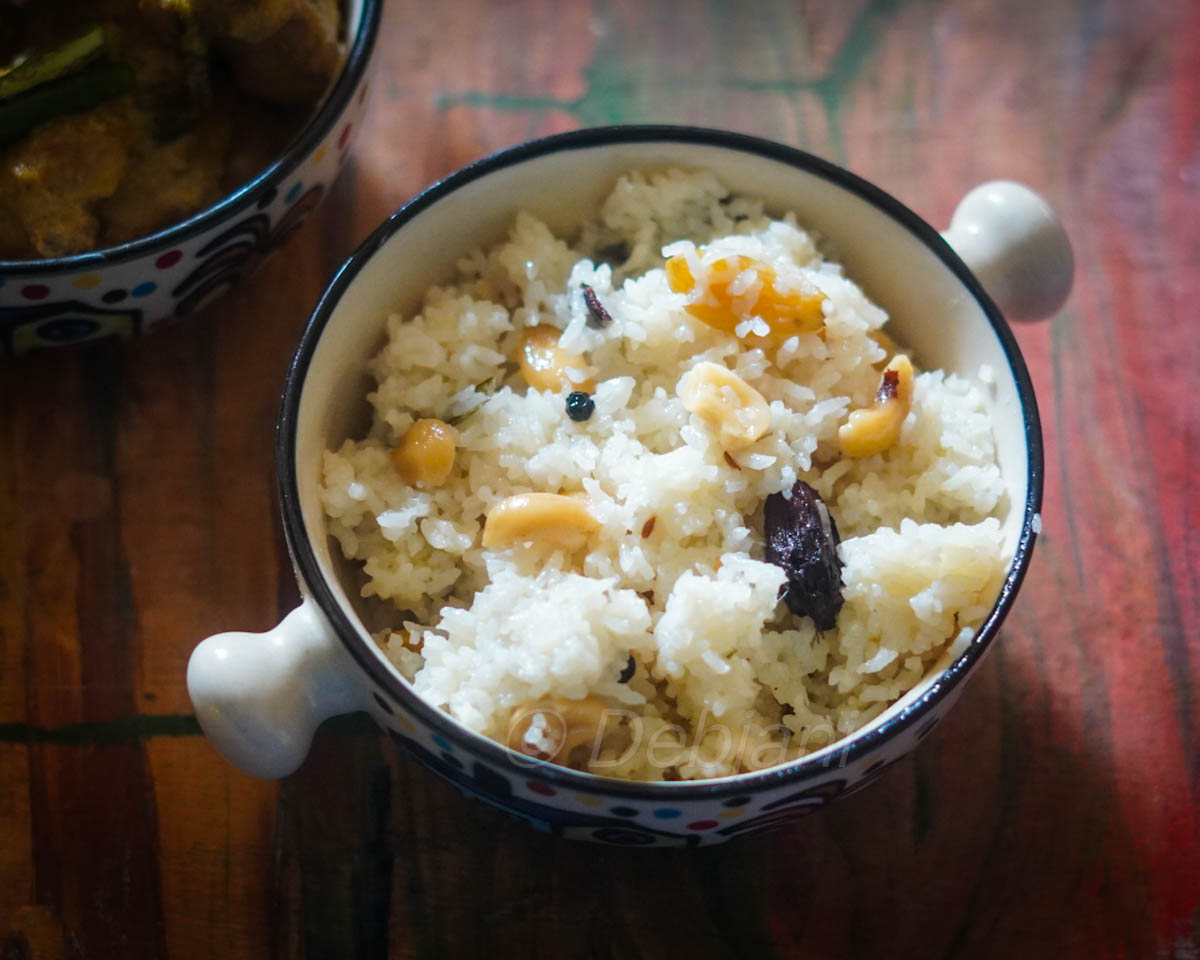
Your cashew and raisin pulao is now ready to enjoy!
Substitutions and Variations
- Rice - While any short-grain fragrant rice works well, I prefer using Gobindobhog rice for this cashew and raisin pulao. For a slight variation, you can also use Badshabhog, Korpurkanti, or Tulaipanji rice. If none of these are available, Basmati rice is a good substitute.
- Dry Fruits - Cashews and raisins are essential for this recipe. The recipe specifically calls for broken cashews, so either buy them broken or simply break whole cashews yourself. If you have a cashew allergy or dislike them, you can use almonds instead or omit them entirely. However, without cashews, it won't truly be a Kaju Kishmish Pulao. Golden raisins are best, but sultanas can also be used.
- Ghee - Ghee is essential for giving Bengali pulao its perfect flavor. If you want to reduce calories, you can use any unflavored oil for cooking the pulao and then add a spoonful of ghee at the very end, or simply leave it out entirely.
- Spices - I've listed the whole spices, which are the basic whole garam masala. You can easily find ready-made packages of mixed whole garam masala to use.
- Chili - The green chili is included to balance the flavors and truly boosts the overall taste of the pulao.
Top Tips!
To measure the water, use the same bowl or cup that you used for the rice. You'll need double the amount of boiled water to cook the pulao. For example, if you use 1 cup of rice, you'll need 2 cups of hot, boiling water. Do not boil exactly 2 cups of water and then add it, as the amount will be less. Instead, heat a bit more water and then measure out 2 cups from that.
Frequently Asked Questions
It's the specific type of rice used. Bengali pulao stands out from other variations because it's made with short-grain "atop chal" varieties like gobindobhog, kalijeera, or badshabhog.
I always prefer gobindobhog rice. Other excellent choices include kalijira, badshabhog, karpurkanti, or tulaipanji. Just remember that the cooking time might change if you use a different type of rice.
Broken cashews blend better throughout the dish. A large, whole cashew can disrupt the balance of flavors and textures of the kaju kishmish pulao.
I personally don't, but you can certainly add a small amount of milk in place of some of the water.
Related
Looking for other recipes like this? Try these:
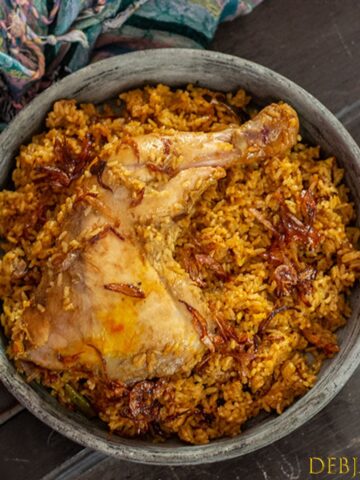
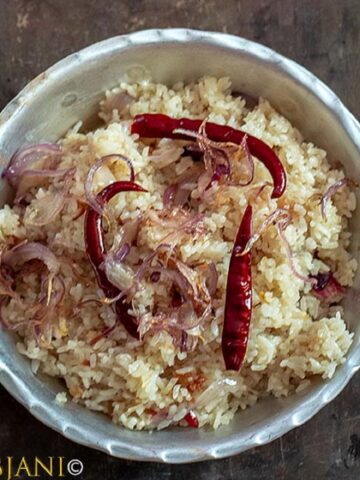
Pairing Kaju Kishmish Pulao
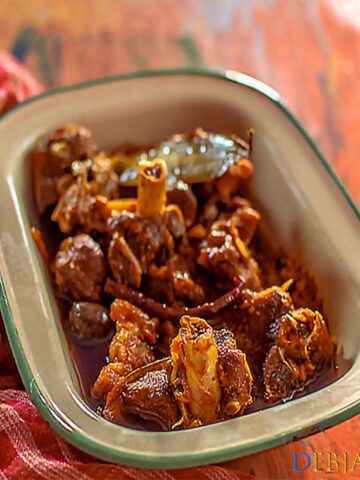
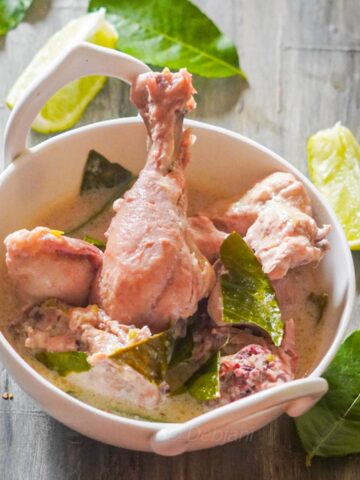
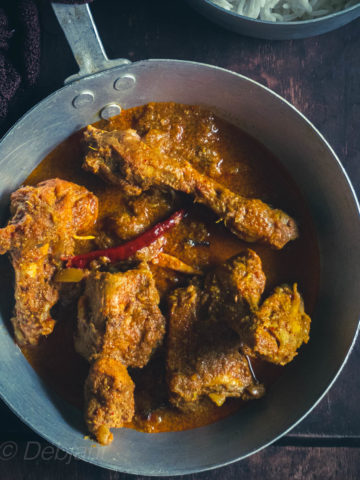
These are my favorite dishes to serve with Bengali sada Pulao. Also, check above where I have suggested a few more dishes.
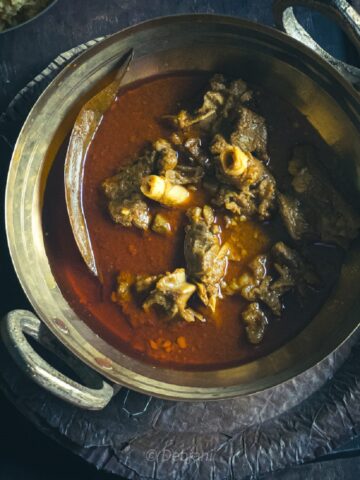
Recipe Card
Kaju Kishmish Pulao Recipe | Bengali White Pilaf with Cashew nuts and Raisin
Ingredients
- 200 g Gobindobhog Rice
- 50 g Cashew nuts / Kaju
- 50 g Raisins / Kishmish
- 2 Green Chili
- 1 tablespoon Ginger paste
- 50 g Ghee
- 50 g Sugar
- 2 teaspoon Salt
Whole Spices for flavoring
- 2 pieces Cinnamon Stick
- 5 pieces Clove
- 5 pieces Green Cardamom
- 2 pieces Black Cardamom
- 3 pieces Bay Leaf

Instructions
- Let's learn how to make Bengali sada kaju kishmish pulao at home.
- First, measure out 200g of Gobindobhog rice.
- Wash the rice several times under running water until the water runs clear, being careful not to break the grains.
- Next, soak the rice in water for exactly 15 minutes.
- After 15 minutes, drain the water from the rice.
- Now, add all the whole spices: cinnamon stick, black cardamom, green cardamom, cloves, and torn bay leaves.
- Also, mix in two-thirds of the total ghee and one teaspoon of salt.
- Add both broken cashew nuts and raisins.
- Don't forget one tablespoon of ginger paste.
- Gently mix everything together and let the rice sit for 15 minutes.
- In a separate step, boil about three cups of water.
- Heat a heavy, deep pan (kadhai) and add the remaining one-third of the ghee.
- Once the ghee melts, use a spoon or spatula to spread it around the inside of the pan. Keep the flame at a medium setting.
- Next, add the rice to the pan. With a spatula, stir the rice for about 5 minutes until it looks shiny and the nuts and raisins are fried.
- Now, add the sugar.
- After adding the sugar, mix it in, then add the sliced green chilies.
- Now, pour in 2 cups of hot, boiling water,.
- Stir it gently.
- This is a good time to adjust the salt; I added another teaspoon.
- Turn the heat to high and wait for it to boil.
- Once it's boiling, lower the heat to medium, and cover the pan with a lid.
- After 5 minutes, uncover and stir lightly. Keep the heat on medium, cover again, and cook for 2 more minutes.
- By now, the rice will have absorbed most of the water.
- Remove the lid and cook for another minute without the lid.
- Finally, turn off the heat.
- Gently mix the kaju kishmish pulao with a spatula, cover it, and let it sit for at least 5 minutes before serving.
- Your kaju kishmish pulao is now ready!
Notes
- Any fragrant, short-grain rice works well for this dish, but I personally prefer Gobindobhog rice for my Kaju Kishmish Pulao. If you'd like a different option, Badshabhog, Korpurkanti, or Tulaipanji are also good choices. If none of these are available, Basmati rice can be used.
- Since this is a Kaju Kishmish Pulao recipe, cashew nuts and raisins are essential. The recipe specifically calls for broken cashew nuts, so you can either buy them pre-broken or simply break whole cashews yourself. If you have a cashew allergy or simply don't like them, almonds can be used as a substitute, or you can omit them entirely. However, without cashews, it wouldn't truly be a Kaju Kishmish Pulao. For the raisins, golden ones work best, but sultanas are also a good option.
- I've listed the basic whole spices, which are simply garam masala. You can often find pre-packaged mixes of whole garam masala to make this easier.
- Green chilies are included to balance the flavors and improve the overall taste of the pulao.
- Ghee is essential for the authentic flavor of Bengali pulao. If you want to reduce calories, you can use any flavorless oil for cooking and then stir in a spoonful of ghee at the end, or simply omit it entirely.
- Always use the same bowl or cup to measure both the rice and the water. You will need double the amount of boiling water compared to the rice. For example, if you use 1 cup of rice, you'll need 2 cups of hot, boiling water. Do not boil exactly 2 cups of water and then add it, as some will evaporate. Instead, boil a bit more water and then measure out 2 cups from that.
Nutrition
Have you tried the Bengali Kaju Kishmish Pulao Recipe from Debjanir Rannaghar!
Please inform me of your experience, and feel free to send a photo to dolonchttrj@gmail.com. Additionally, you can find me on various social media platforms such as Instagram, YouTube, Facebook, Pinterest, Google News, X, and Thread. Don't forget to use the hashtag #debjanirrannaghar when sharing your attempts at my recipes or if you have any questions or recipe requests.
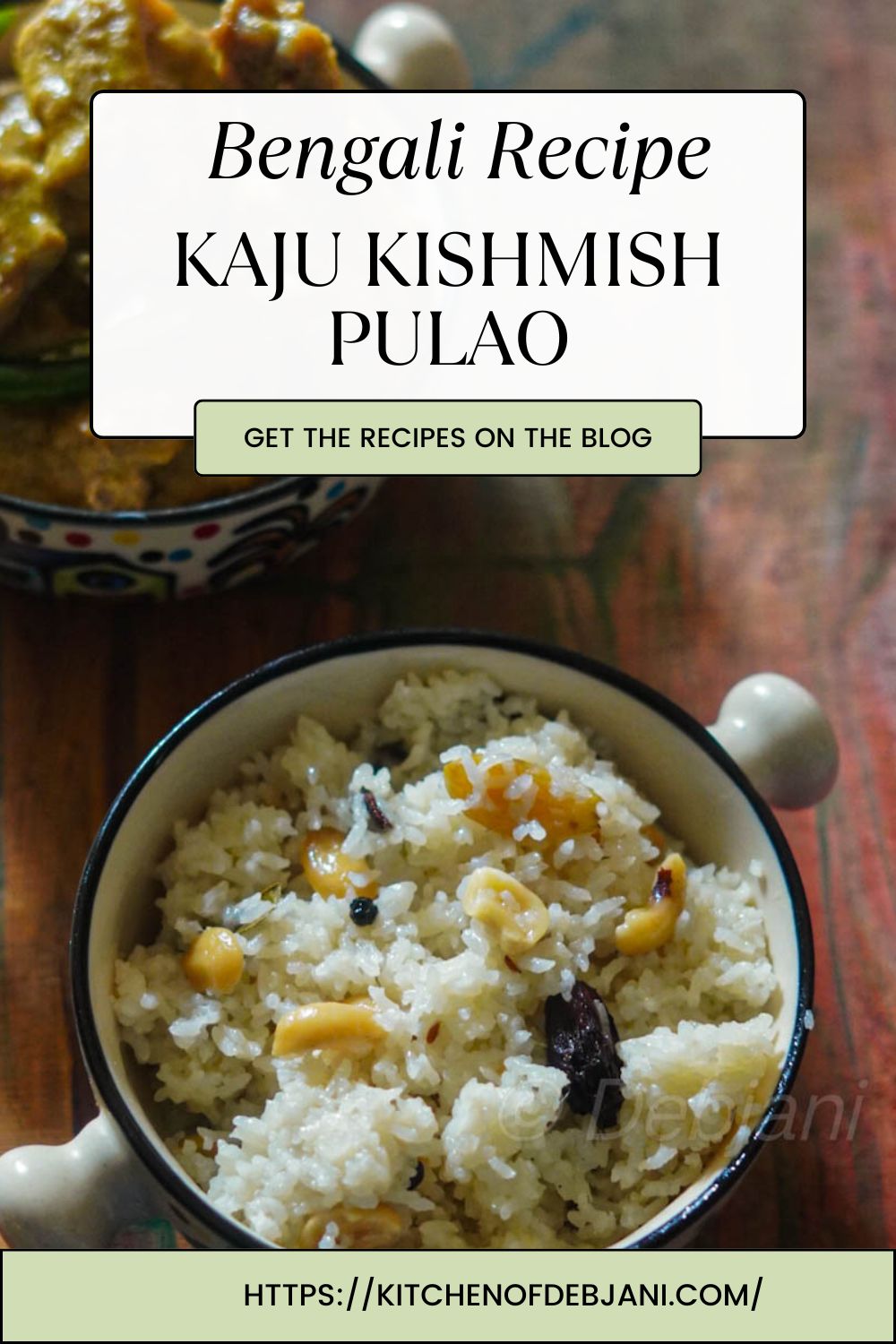
Here's the Bengali Sada Pulao Kaju Kishmish diye Recipe Pin for your Pinterest Board

About Debjani Chatterjee Alam
I am Debjani Chatterjee Alam. A CSR specialist by profession and a food writer, food blogger, and food photographer as well. I live in Kolkata along with my Husband Mehebub who is an architect by profession, my daughter Pasta, and also my dog daughters Coffee and Luchi.




Leave a Reply