

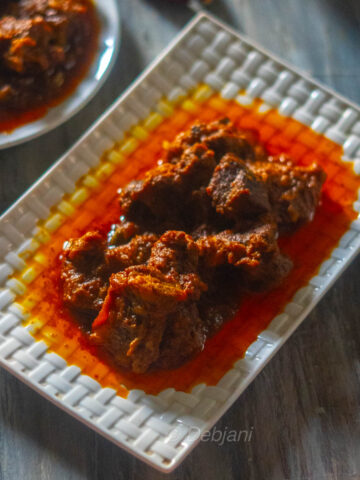
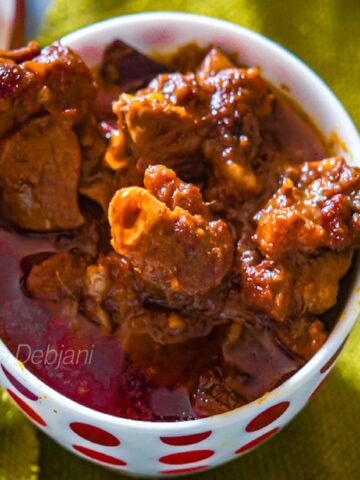
Some recipes enter our kitchens through cookbooks, some through family traditions, and some through the kindness of a person we meet along the way. My Mezbani Gosht (Mejbani Mangsho) recipe belongs to the last category.
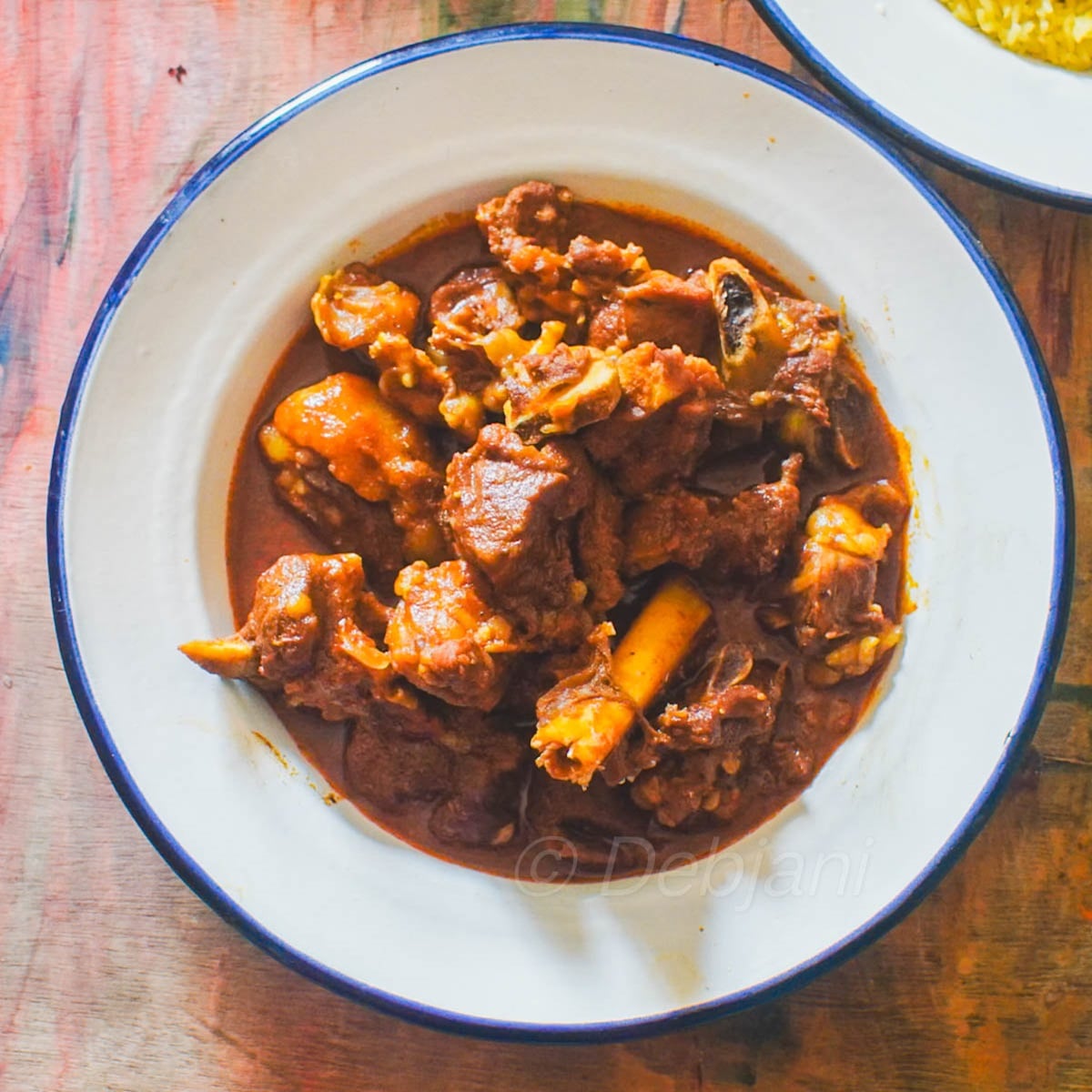
I first tasted this rich, aromatic meat curry during a work visit to Bangladesh in 2019. What began as a memorable meal at a colleague's home soon turned into a recipe I wanted to learn, recreate, and cook repeatedly for my family and friends. Traditionally, Mezbani Gosht features beef at the famous Mezbani feasts of Chattogram. However, my home-style version uses mutton and a homemade Mezbani spice blend that I prepare from scratch.
I slow-cook the mutton with mustard oil, onion, ginger, garlic, and a generous assortment of spices. As the curry simmers, the flavours deepen, creating a warmth that builds gradually rather than relying solely on chilli heat. Although I cannot claim that my mutton version is the only way to make Mezbani Gosht, it has certainly earned a permanent place in my kitchen.
Mezbani Gosht is traditionally associated with communal feasts and special gatherings in Chattogram. Nevertheless, I love making this flavourful curry at home whenever I crave a hearty, spice-rich meat dish.
Jump to:
- My First Taste of Mezbani Gosht in Bangladesh
- What Is Mezbani Gosht or Mejbani Mangsho?
- The Mezbani Spice Blend: The Heart of the Curry
- Ingredients for Mezbani Mutton Curry
- How to Make Mezbani Gosht with Mutton - Instructions
- Substitutions and Variations
- A Few Tips for Making Mezbani Gosht
- Frequently Asked Questions
- Related Recipes
- Pairing
- Recipe Card
- More Mutton Recipes from Debjanir Rannaghar
- Have you tried the Mezbani Gosht Recipe from Debjanir Rannaghar?
- Here's the Mezbani Mutton Recipe Pin for your Pinterest Board
My First Taste of Mezbani Gosht in Bangladesh
My first encounter with Mezbani Gosht was in 2019, during a work visit to Bangladesh. A colleague invited me to their home, where I was served this wonderful curry. I remember being completely taken by its flavour. It was different from the mutton curries I was familiar with, and I naturally wanted to know how it was made.
My colleague's mother very generously shared her recipe with me. She was a lovely lady, and the way she explained the preparation was just as memorable as the curry itself. There was, however, a small hurdle. I knew the spices from my Bengali kitchen in India, but some of the names she used were unfamiliar to me.
Take mouri, for instance. In my kitchen, mouri is mouri. In Bangladesh, it is commonly referred to as mishti jira. I remember asking questions about the spices, trying to make sure I understood exactly what she meant. Eventually, she showed me the ingredients, and the confusion disappeared. Sometimes a recipe lesson needs a little demonstration from the spice box!
I came back with more than just a recipe. I came back with a dish I wanted to understand better. Over the years, I researched Mezbani Gosht, worked on the spice blend, and began preparing my own Mezbani masala at home. I have cooked this mutton version for my family and friends, and it has also made its way into my food pop-ups.
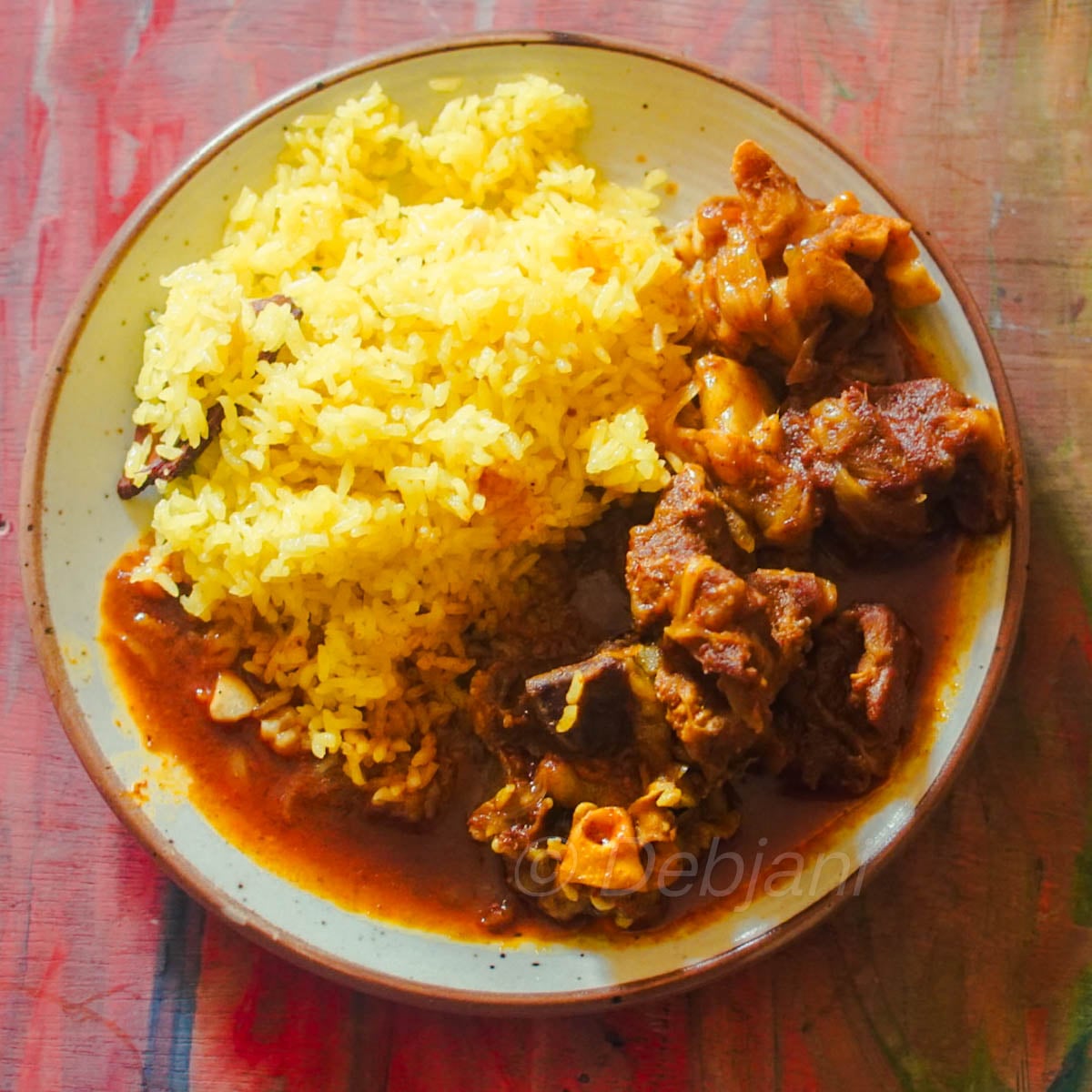
Whenever I make it, I remember that lovely lady and the warmth with which she shared her recipe. Food has a wonderful way of carrying such memories from one kitchen to another.
What Is Mezbani Gosht or Mejbani Mangsho?
Mezbani Gosht is a traditional meat curry associated with the Mezbani feasts of Chattogram, Bangladesh. Chattogram, formerly known as Chittagong, has a distinct food culture. Among its many culinary traditions, Mezbani holds a special place.
The word Mezban has Persian origins and means a host. Similarly, Mezbani refers to hosting and entertaining guests. However, in Chattogram, the term also describes a large communal feast where people come together to share a meal.
A Mezbani is much more than a meat curry served at a gathering. It reflects the region's tradition of hospitality and community. People organise these feasts for various occasions, including weddings, family gatherings, religious events, remembrance ceremonies, and other important social occasions. Moreover, experienced cooks prepare the meal in large quantities, often using enormous pots of meat to serve guests.
Traditionally, Mezbani Gosht features beef cooked with mustard oil and a distinctive combination of spices. Cooks often use a large handi or deg to prepare the curry. Meanwhile, plain white rice remains an important accompaniment, and the feast may also include dal and bone broth.
Although the traditional recipe uses beef, the exact preparation varies from one cook or household to another. Some cooks use a generous mix of whole spices, while others add ingredients to develop the flavour and texture. Therefore, these variations form an important part of the culinary tradition.
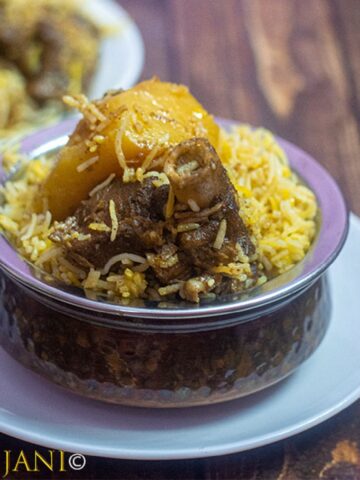
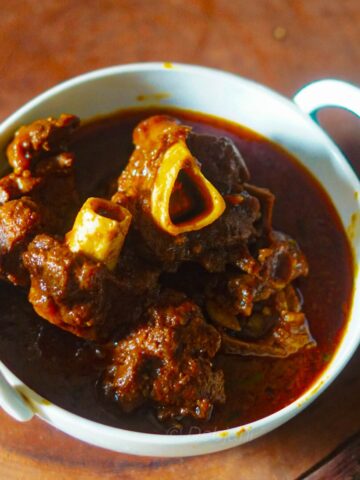
My recipe, however, is a home-style mutton adaptation inspired by the version shared with me in Bangladesh. I use goat mutton with bones and fat. As the meat slowly cooks, it releases its juices and gives the curry a rich, flavourful gravy.
The Mezbani Spice Blend: The Heart of the Curry
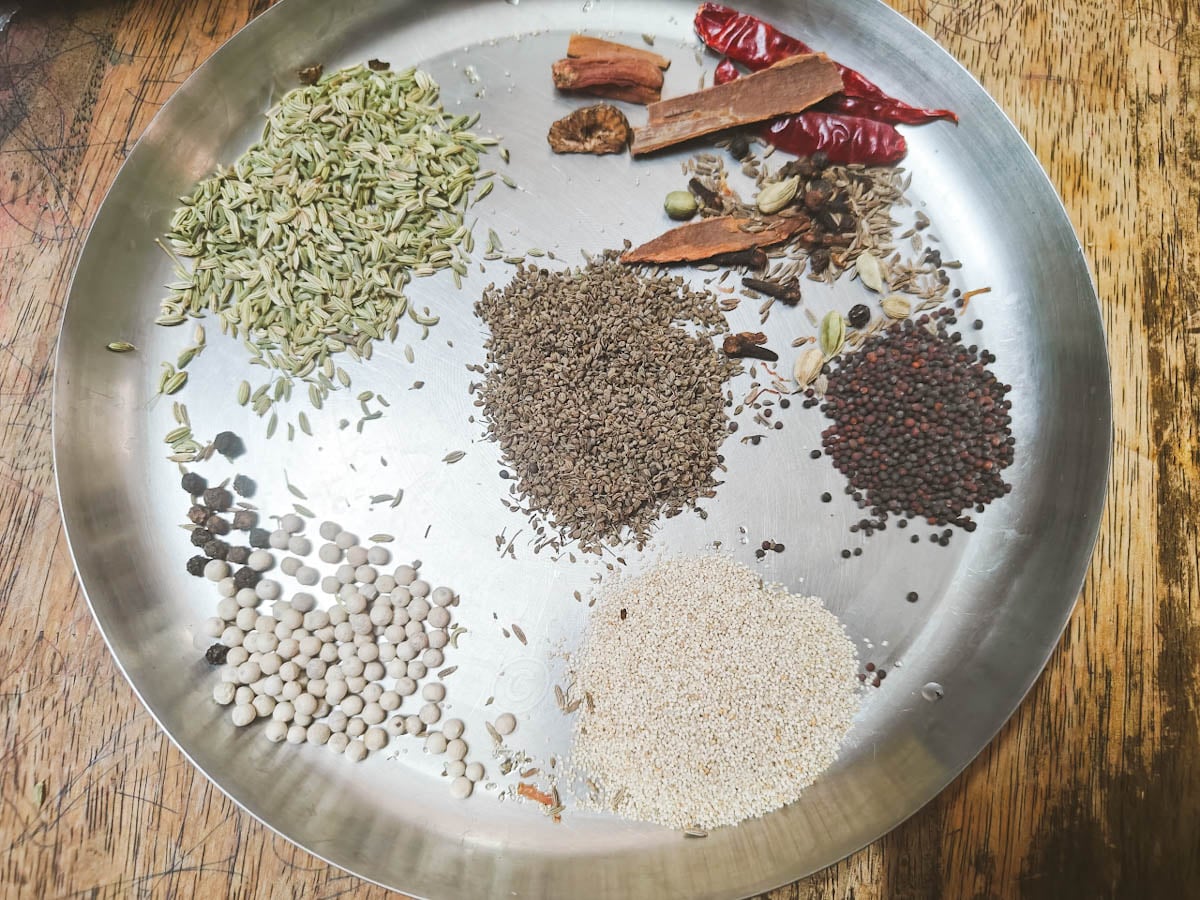
The homemade Mezbani masala is one of the most important parts of this recipe. It is a fragrant blend of dry red chillies, mouri, radhuni, black pepper, cloves, cardamom, cinnamon, mace, nutmeg, poppy seeds, white pepper, and mustard seeds.
I roast the spices gently before grinding them into a paste. This releases their aroma and allows the flavours to come together during the slow cooking process.
Mouri, or fennel seeds, brings a gentle sweetness and fragrance to the blend. In Bangladesh, fennel is commonly called mishti jira. Radhuni contributes its own distinct aroma, while black pepper and dry red chillies add warmth. Cardamom, cinnamon, mace, and nutmeg bring depth. Poppy seeds contribute to the rounded flavour, and mustard seeds complement the mustard oil used in the curry.
The blend is not simply a standard garam masala. It is the combination of these ingredients, prepared fresh, that gives this curry its particular character.
I recommend making the spice paste at home rather than using a ready-made generic meat masala. It takes only a few minutes to roast and grind the spices, and the fragrance is well worth the effort.
Ingredients for Mezbani Mutton Curry
For this recipe, I use mutton cut into medium-sized pieces, preferably with bones and some fat. The bones add flavour, while the fat helps create a rich curry.
Mustard oil is important for the flavour. Onion, ginger, and garlic form the base of the marinade, while turmeric, Kashmiri red chilli powder, cumin powder, and coriander powder provide the familiar foundation of a Bengali-style meat curry.
The freshly prepared Mezbani spice paste is added along with whole spices. I also use ghee towards the end of cooking. Slit green chillies give the curry an additional layer of heat.
The optional beresta, or fried onion, is a finishing addition. I do not consider it essential to the recipe.
For the mutton curry
- Mutton, medium-sized pieces with bones and fat
- Finely sliced onions
- Onion paste
- Ginger paste
- Garlic paste
- Mustard oil
- Ghee
- Green chillies
- Salt
- Warm water
For the homemade Mezbani spice blend
- Dry red chillies
- Mouri (fennel seeds)
- Radhuni seeds
- Black peppercorns
- Cloves
- Green cardamom
- Black cardamom
- Cinnamon
- Mace (javitri)
- Nutmeg (jaiphal)
- Poppy seeds (posto)
- Whole white pepper
- Black mustard seeds
Powdered spices
- Turmeric powder
- Kashmiri red chilli powder
- Cumin powder
- Coriander powder
Whole spices for marination
- Black peppercorns
- Cloves
- Green cardamom
- Black cardamom
- Cinnamon
Optional finishing
- Additional sliced onions for beresta
The exact quantities are provided in the recipe card below.
How to Make Mezbani Gosht with Mutton - Instructions
- Step 1: Prepare the Homemade Mezbani Masala
Start by preparing the spice blend. Heat a dry pan over a low flame and add Heat a dry pan over low heat. Add all the ingredients for the Mezbani masala and roast for 2 to 3 minutes, stirring frequently until fragrant. However, take care not to burn the spices, as this can make the curry bitter.
- Step 2: The Mejbani Spice Paste
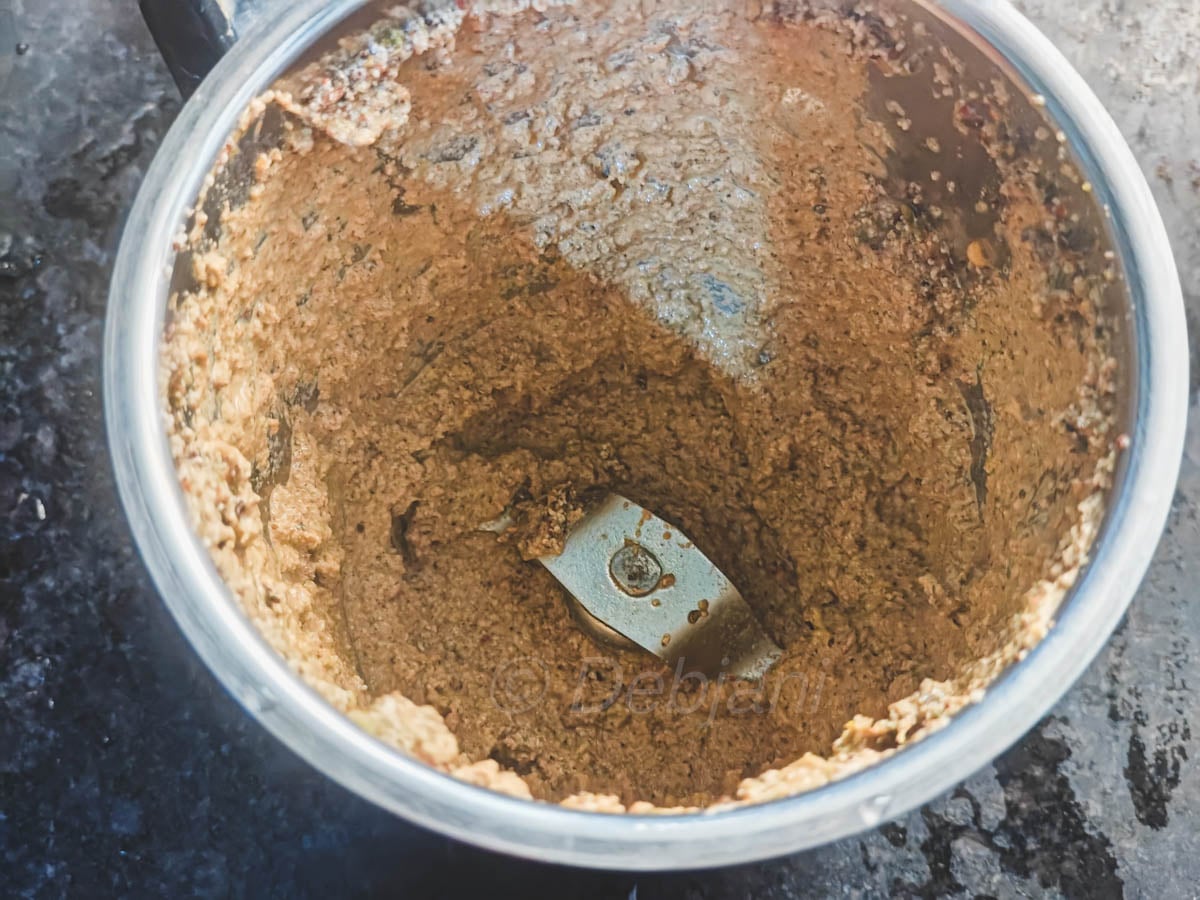
Next, allow the spices to cool completely. Grind them with a little water to form a smooth paste, then set aside.
- Step 3: Prepare the Mutton
Wash the mutton and drain thoroughly. I prefer medium-sized bone-in pieces with some fat, as they add flavour to the curry.
Meanwhile, keep a heavy-bottomed handi or deep kadhai ready for slow cooking.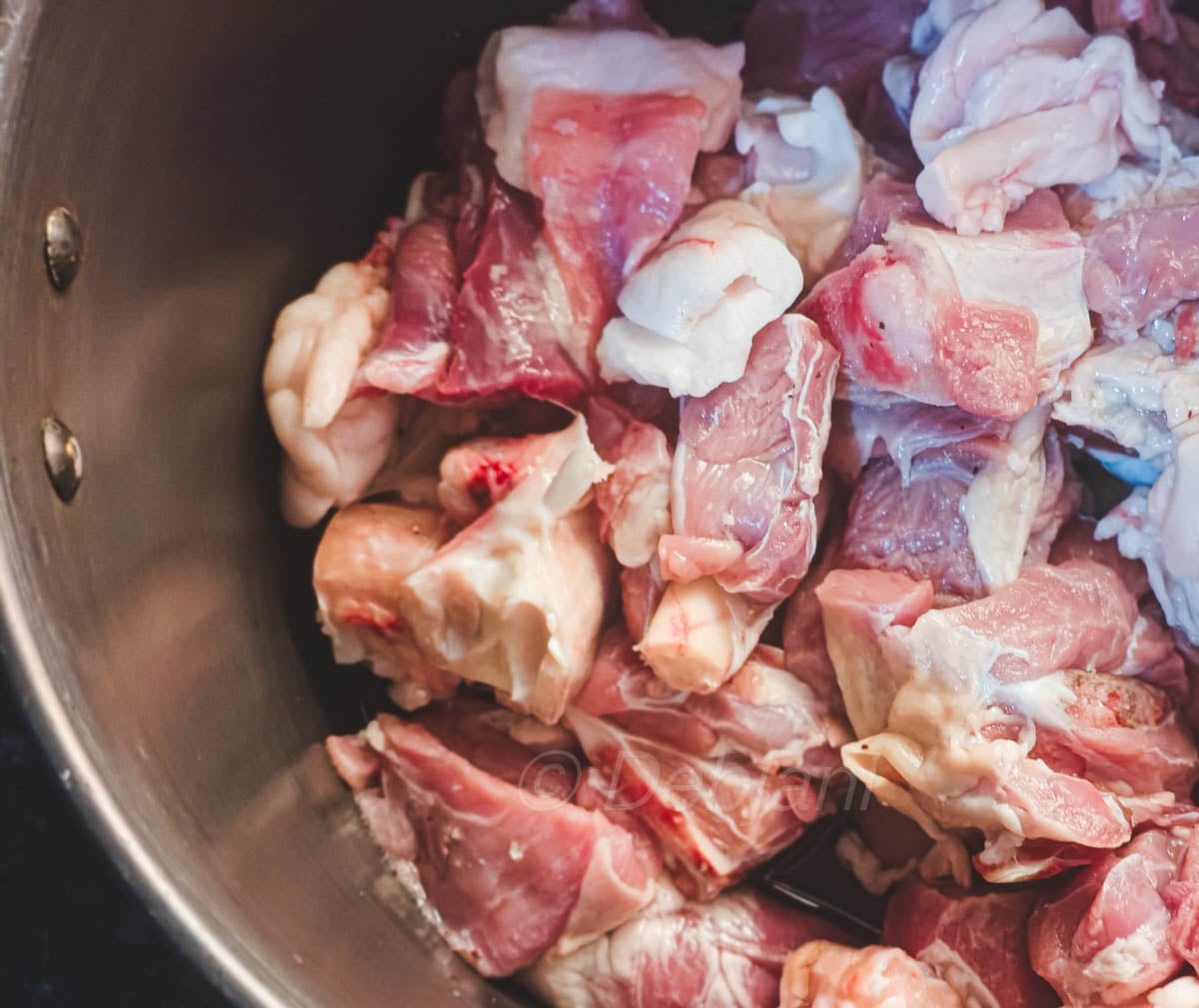
- Step 4: Add the Marinade
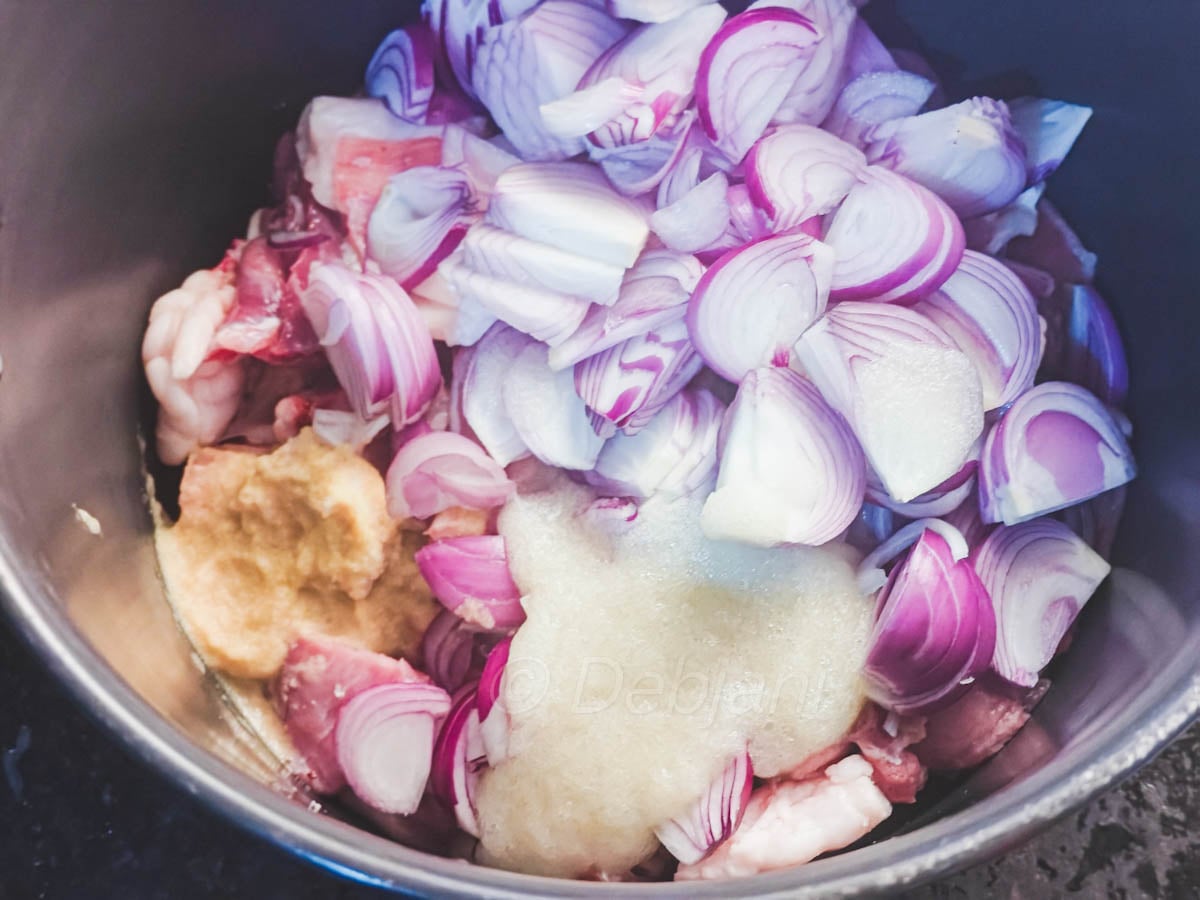
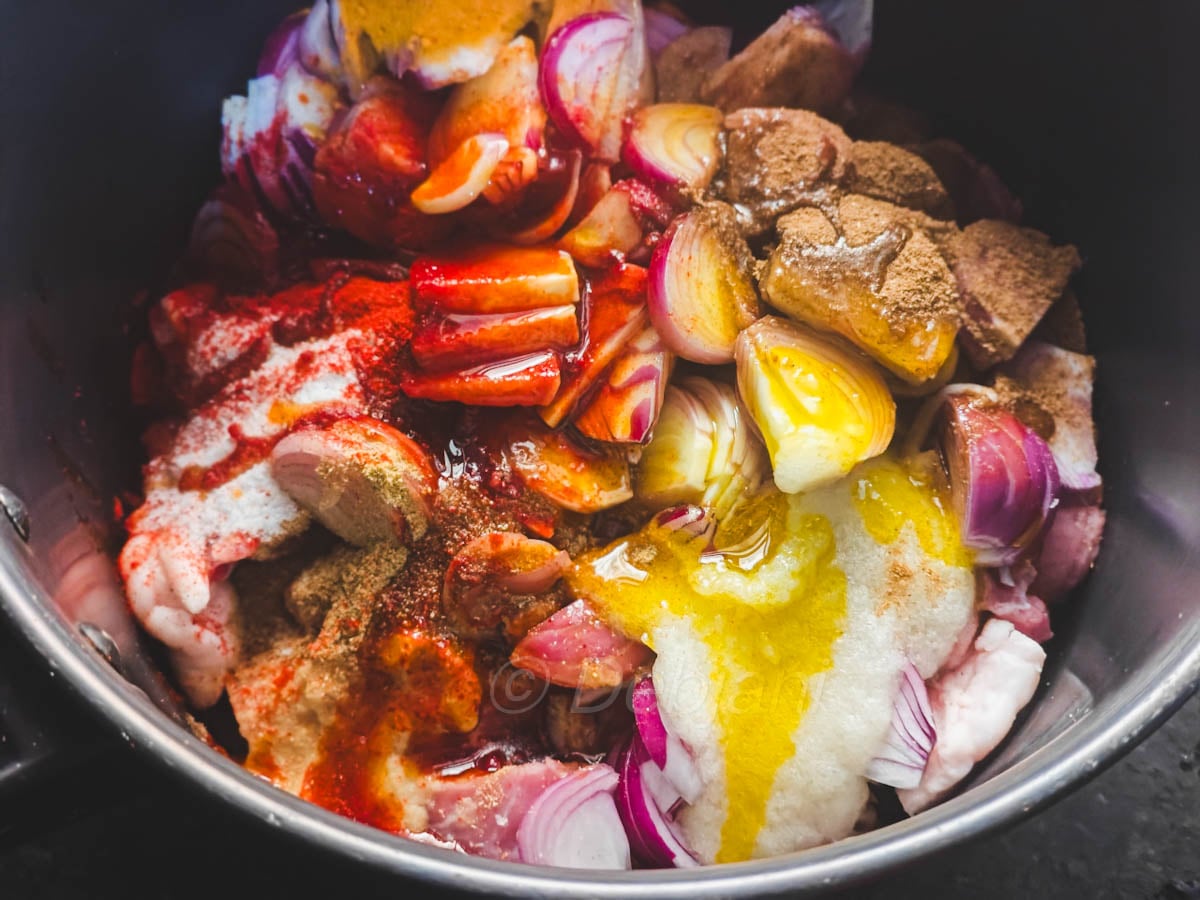
Add the finely sliced onions, onion paste, ginger paste, and garlic paste to the mutton.
-
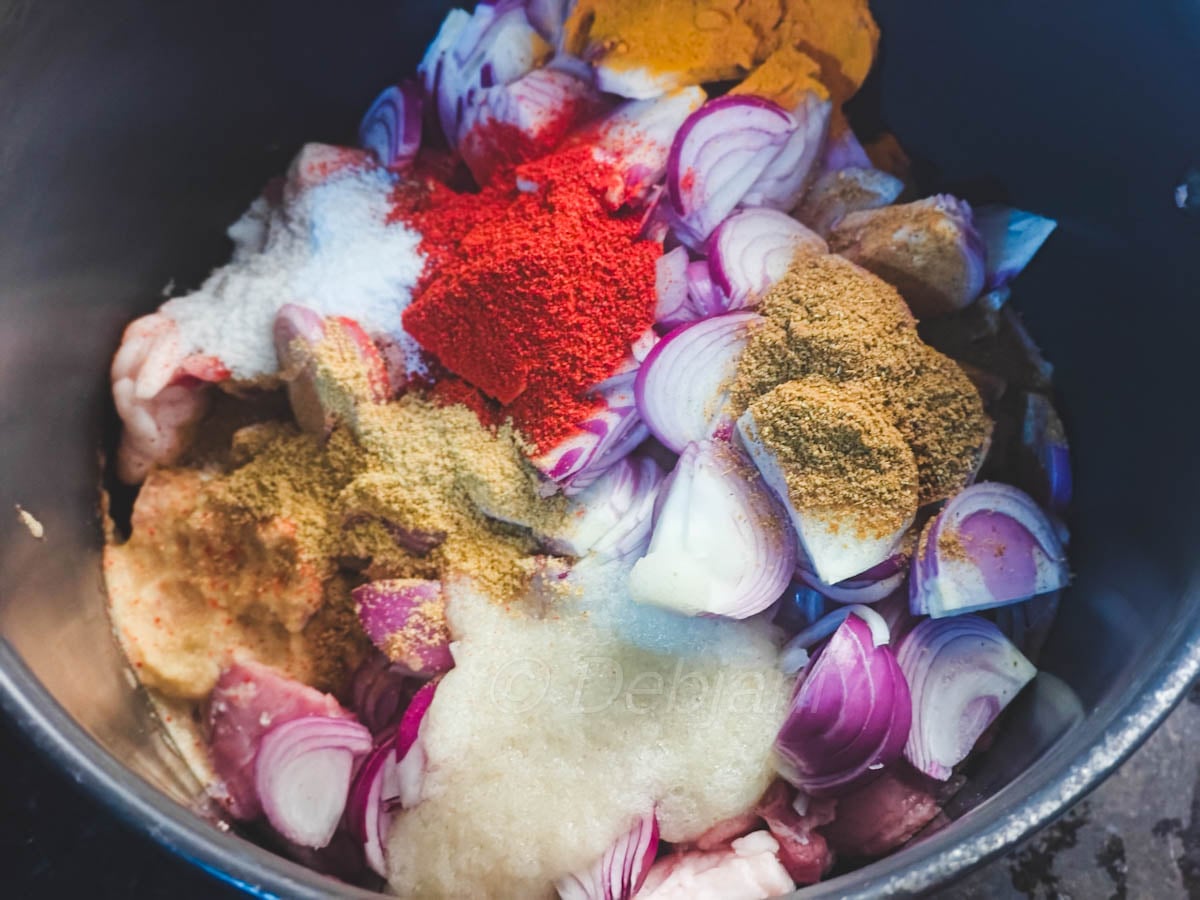
Next, add turmeric powder, Kashmiri red chilli powder, cumin powder, coriander powder, and salt.
-
Next, pour in the mustard oil and add the freshly prepared Mezbani masala along with the whole spices. Mix thoroughly so that every piece is coated with the marinade.
-
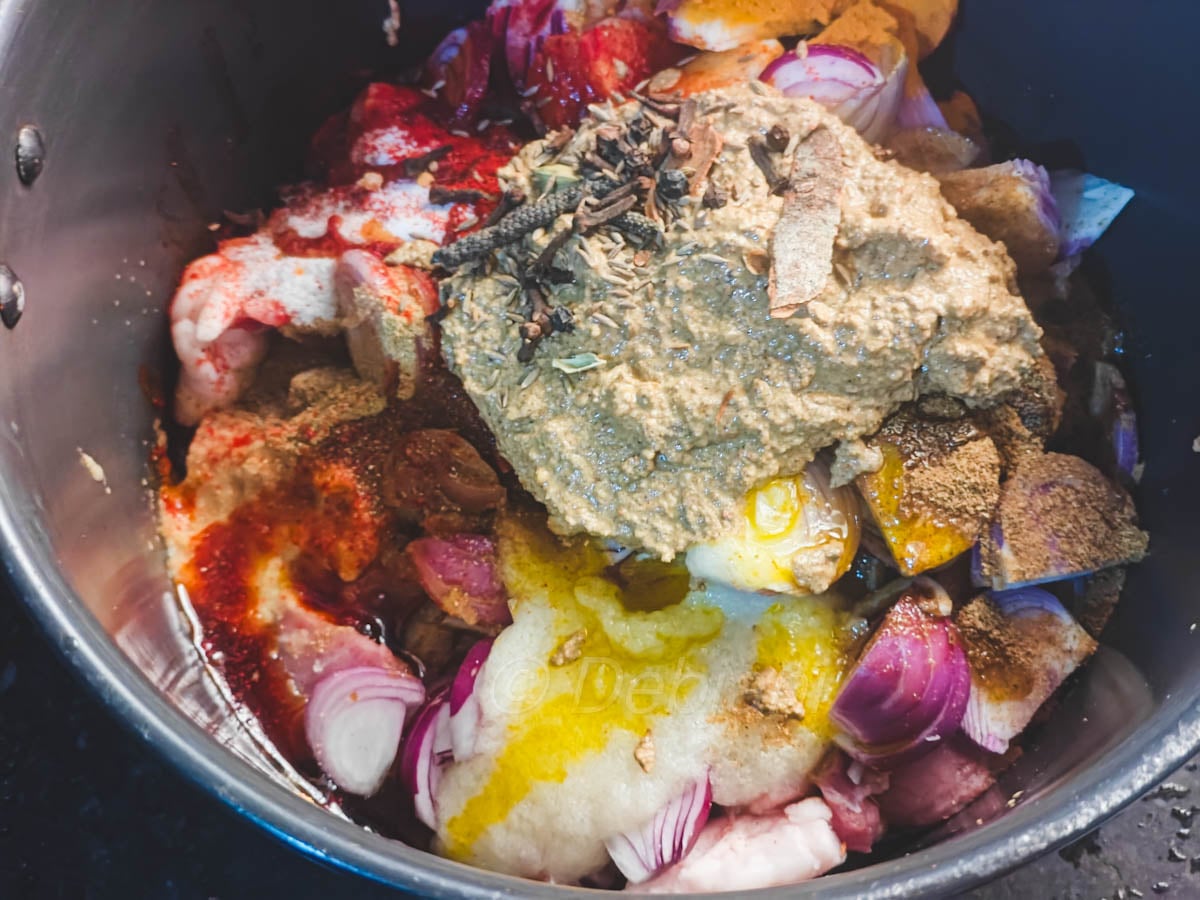
Add the homemade Mezbani masala paste along with the whole spices listed for marination.
-
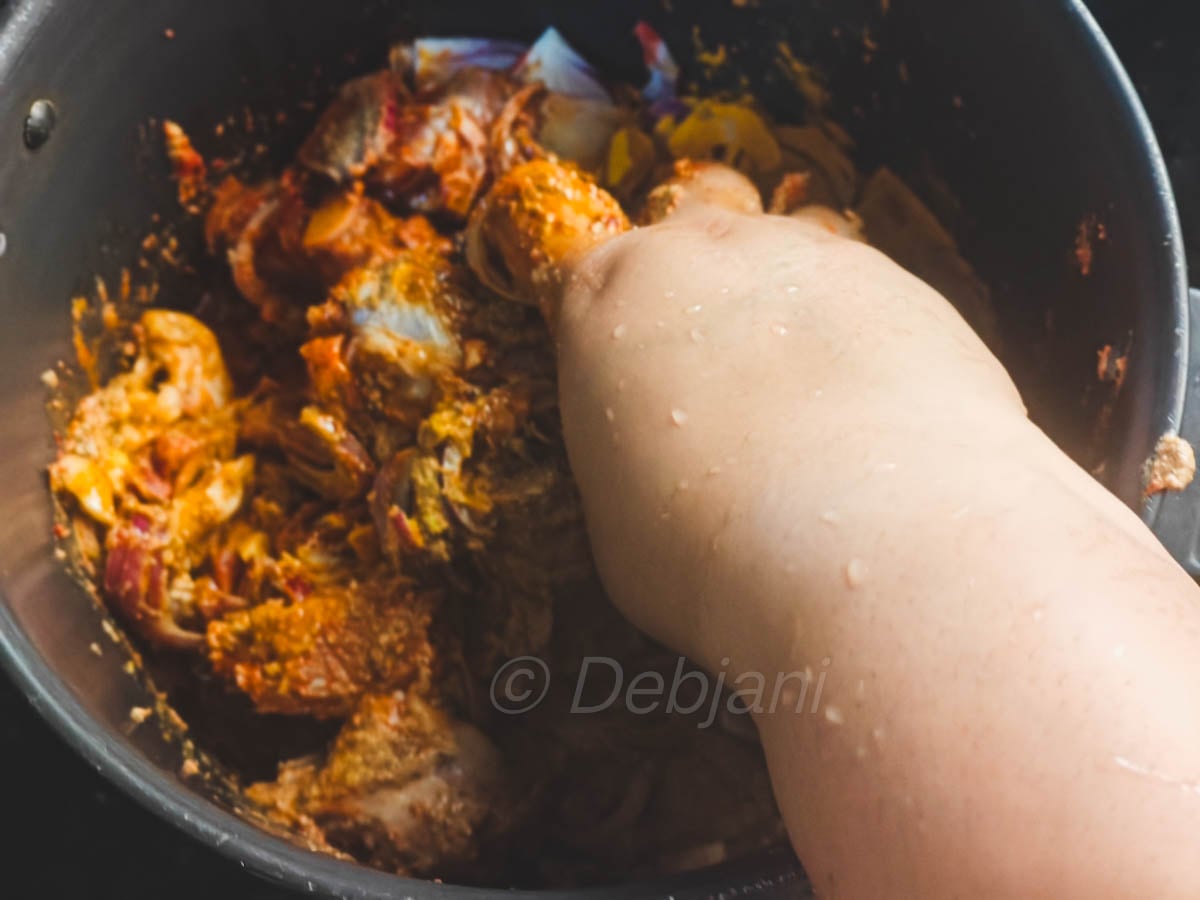
Mix everything thoroughly. I prefer using my hands to ensure that the marinade coats every piece of mutton properly.
-
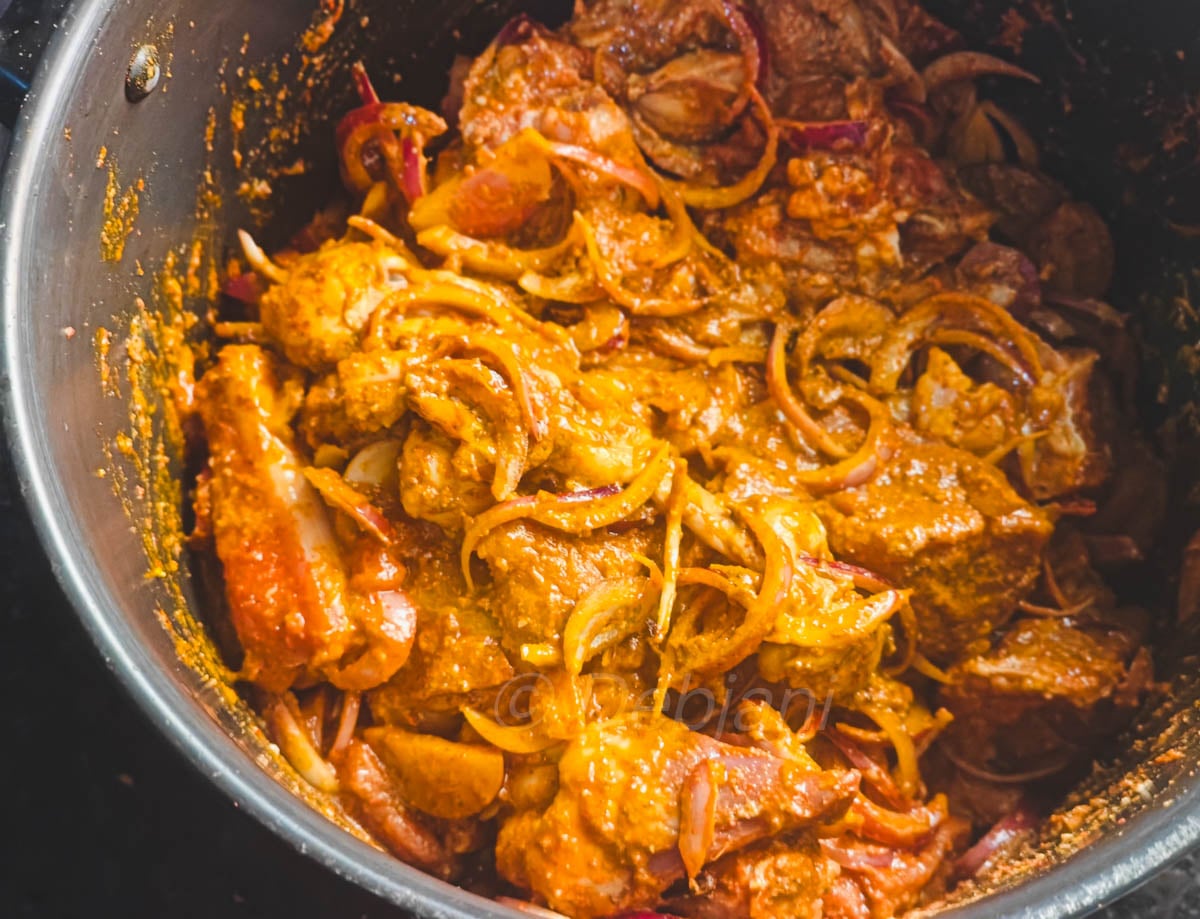
Allow the mutton to marinate for 30 to 45 minutes. If you plan to marinate it longer, keep it covered in the refrigerator.
- Step 5: Bhuno the Mutton
Place the handi over medium-high heat and cook the marinated mutton uncovered for 10 to 12 minutes, stirring frequently.
As the meat changes colour, the onions and spices will release their moisture. Continue cooking until the marinade coats the mutton well. This initial bhuno helps develop the curry's flavour.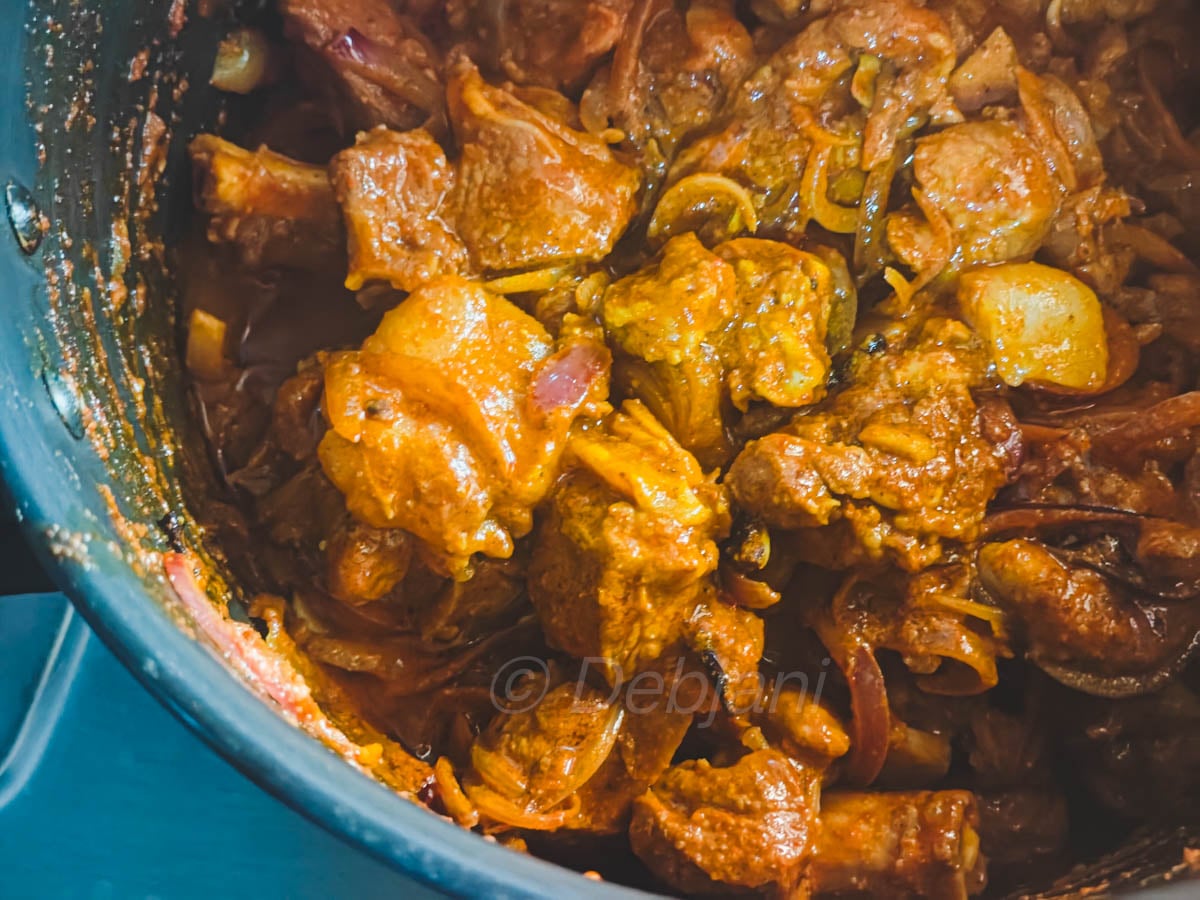
- Step 6: Cook the Mutton in Its Own Juices
Now, cover the handi and reduce the heat to low. Cook for 25 to 30 minutes.
During this stage, the mutton releases its natural juices. Stir every 5 to 7 minutes, scraping the bottom gently to prevent the spices from sticking or burning. Gradually, the curry will become darker and more aromatic.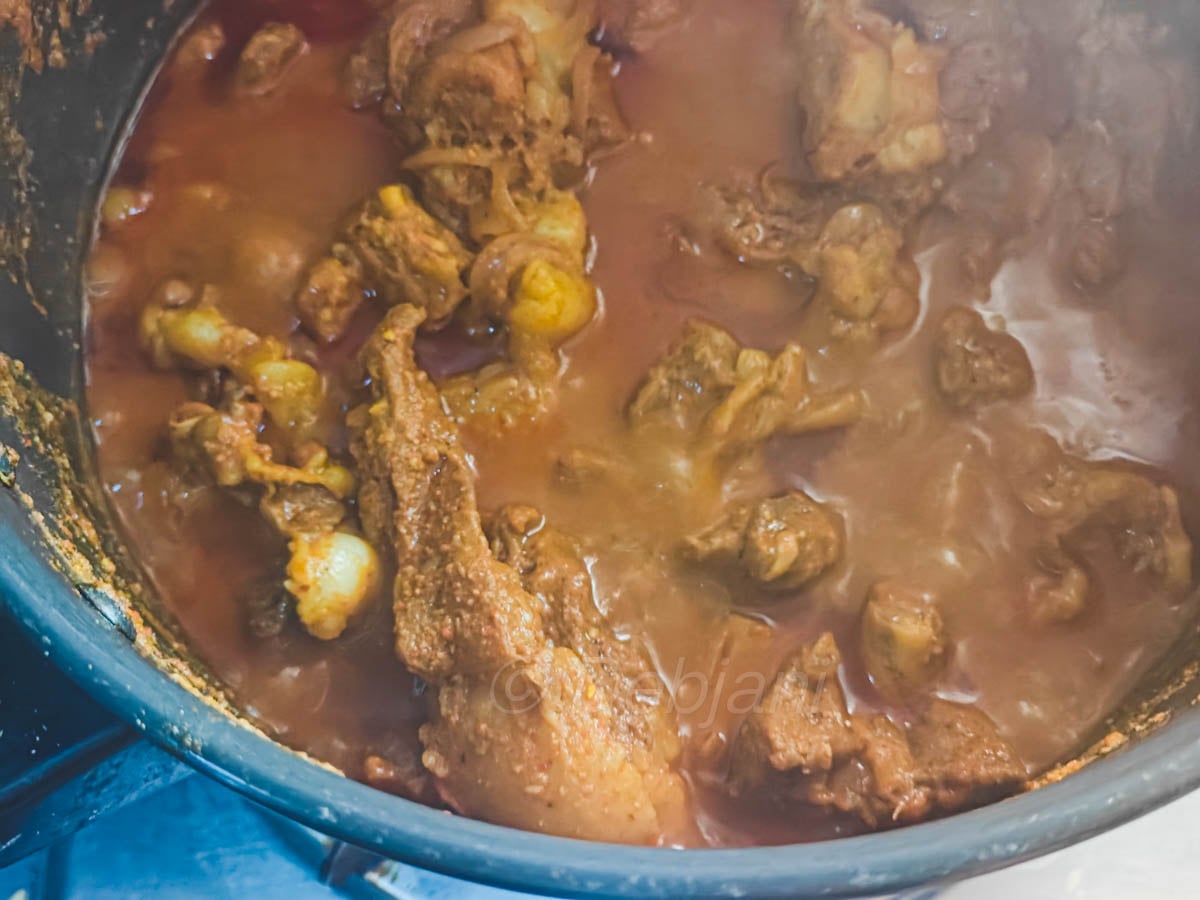
- Step 7: Add Warm Water and Slow Cook
Once most of the moisture has dried up and the oil begins to separate, add 2 to 3 cups of warm water.
-
Bring the curry to a boil. Then, cover the handi and simmer over low heat for 45 to 60 minutes, or until the mutton becomes tender.
Check occasionally and add more warm water if needed. The gravy should remain rich rather than watery.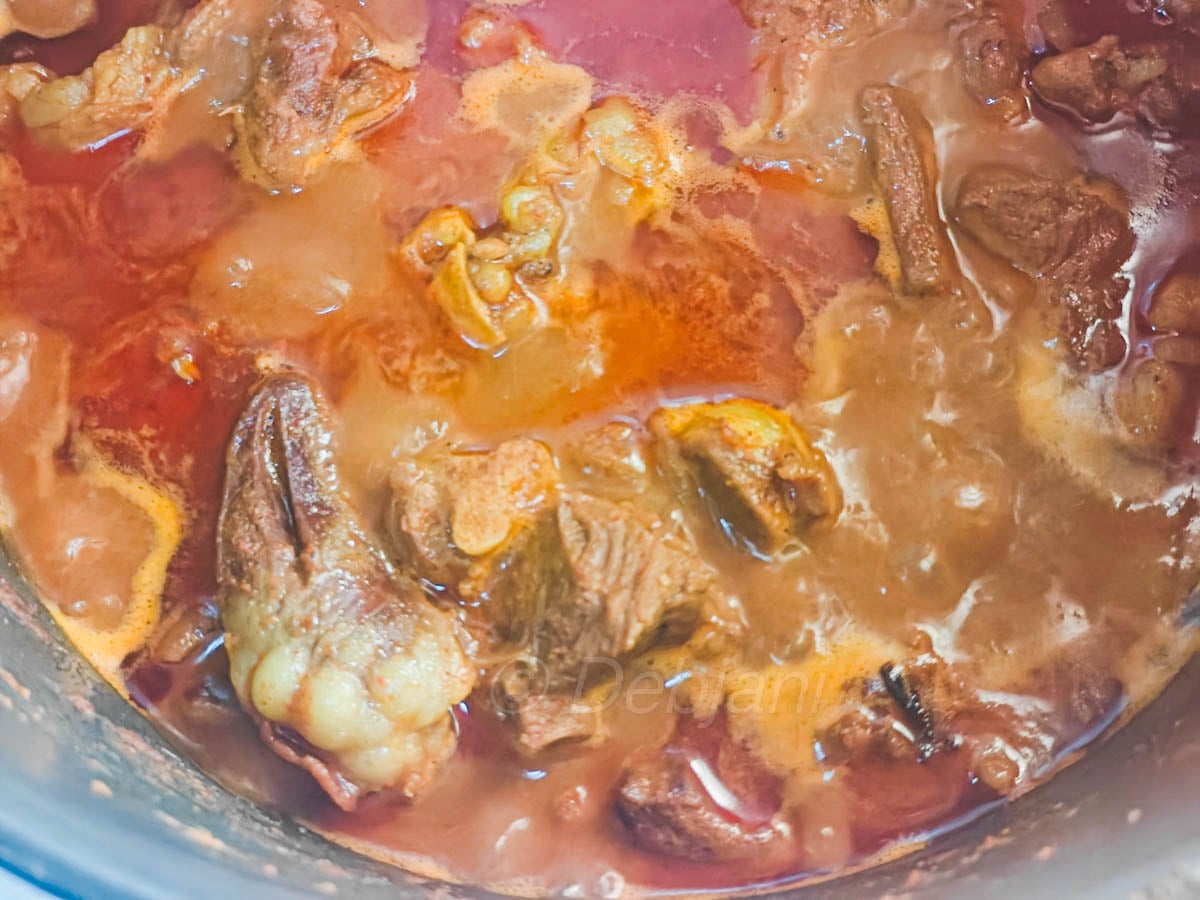
- Step 7: Finish the Mezbani Mangsho
Once the mutton is tender, check the seasoning and gravy consistency.
Finally, add the ghee and slit green chillies. Simmer for a few more minutes so the flavours blend well.
For an optional finishing touch, fry sliced onions until deep golden brown and add the beresta to the curry.
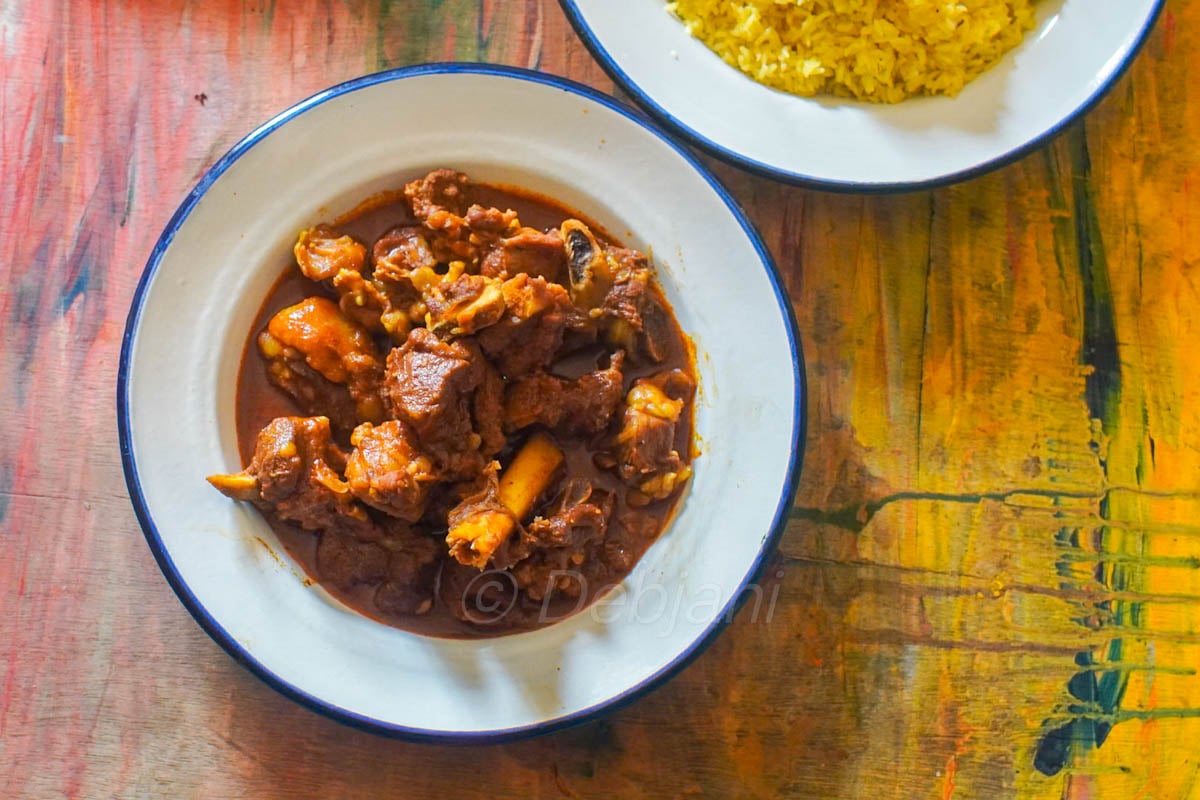
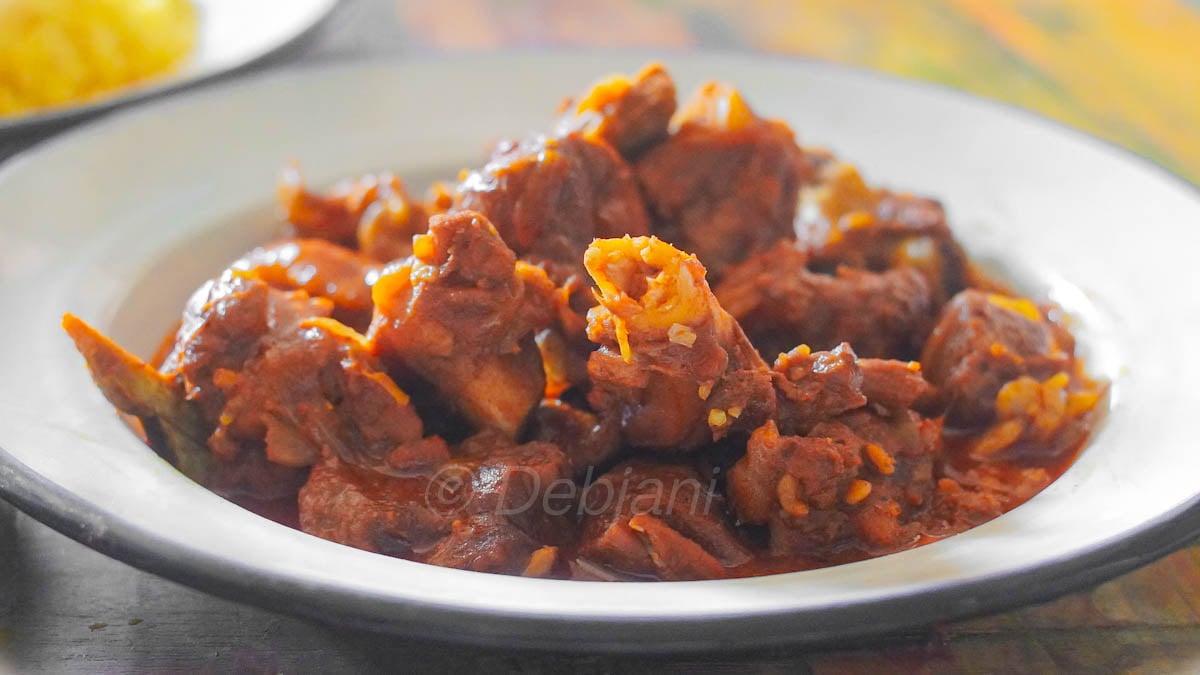
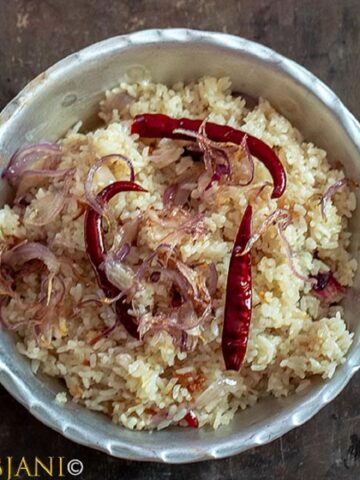
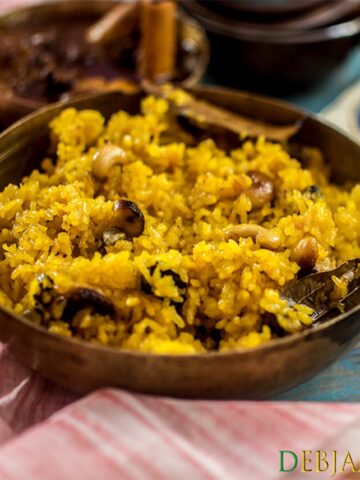
Your homemade Mezbani Gosht is ready. Serve it hot with plain white rice or Basanti Pulao.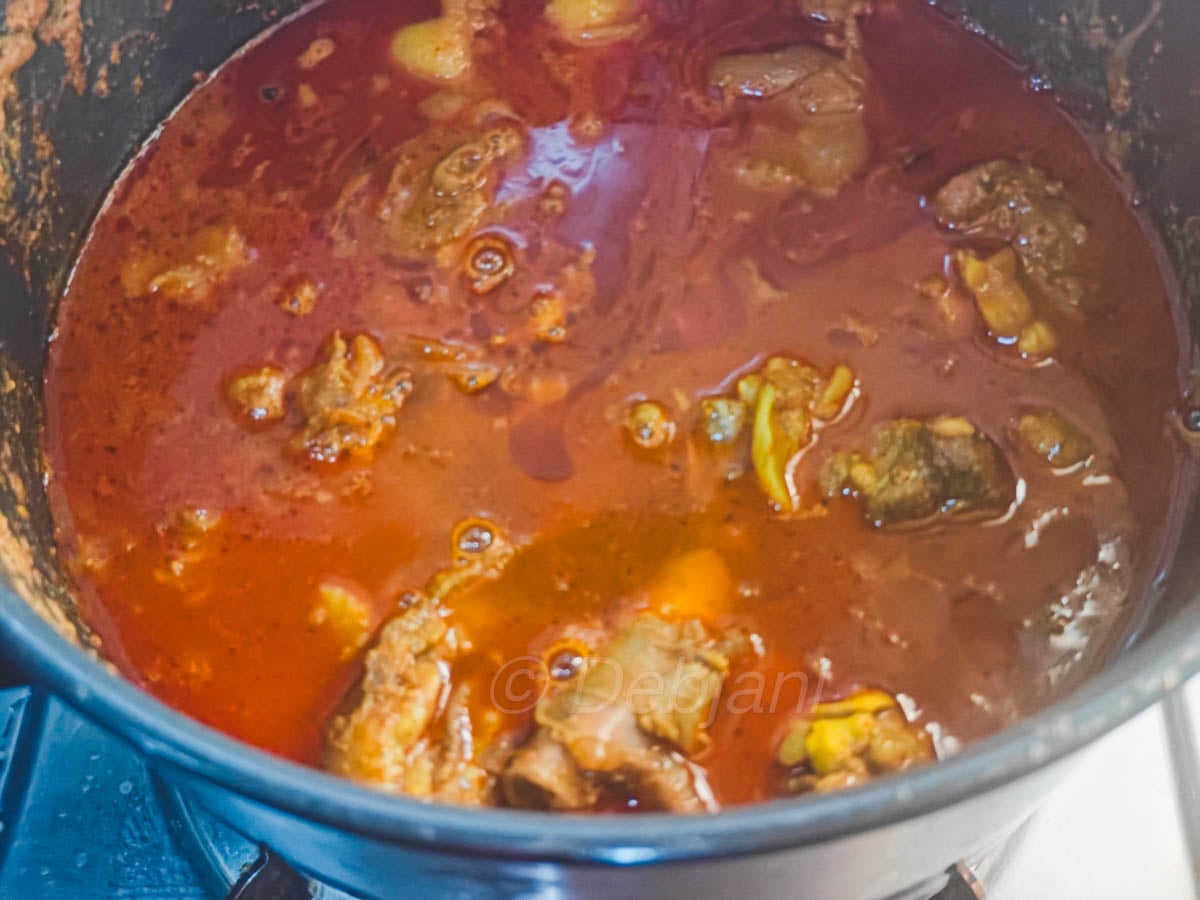
Substitutions and Variations
Traditional Mezbani Gosht is prepared with beef, while this recipe uses mutton. Lamb can also be used, although the cooking time may differ.
The cooking method remains broadly similar: marinate the meat, bhuno it with the spices, allow it to cook in its own juices, and then slow simmer until tender.
Beef and goat mutton can require more time than tender lamb, depending on the cut. Rather than relying entirely on the clock, check the meat for tenderness.
A Few Tips for Making Mezbani Gosht
Share something here that you think is key to making this recipe well, such as: Don't overcook the burgers! Sear the outside and cook to a minimum internal temperature, but they should still be juicy for best results.
- Use mutton with bones and fat: This helps create a richer gravy.
- Roast the spices gently: The spice blend should be aromatic, not burnt.
- Prepare the masala fresh: Freshly roasted spices give the curry a more pronounced aroma.
- Marinate the mutton properly: Allow at least 30 to 45 minutes for the spices to coat the meat.
- Do not rush the bhuno: This initial cooking stage helps develop the flavour.
- Stir during slow cooking: The thick spice mixture can stick to the bottom of the pot.
- Use warm water: Adding warm water helps maintain the cooking temperature.
- Adjust the chillies: The heat can be modified according to your preference.
- Beresta is optional: The curry is flavourful without the additional fried onions.
Frequently Asked Questions
Mezbani Gosht is a traditional Chittagong-style spicy meat curry, commonly served at communal feasts in Bangladesh.
Traditionally, it is often made with beef. This recipe uses goat mutton.
It features spices such as fennel, radhuni, dried red chillies, black pepper, cardamom, cinnamon, mace, nutmeg, poppy seeds and mustard.
You can prepare the spice blend in advance and store it in an airtight container in a cool, dry place. However, I prefer roasting and grinding the spices fresh for this recipe.
You can use a pressure cooker to shorten the cooking time. I would still recommend completing the marination and initial bhuno stages before adding warm water and pressure cooking.
For mutton, approximately 20 to 30 minutes under pressure can be a useful starting estimate. The exact time will depend on the cooker and the meat.
Once the pressure has released safely, check the tenderness. If the meat is cooked but the gravy is thin, simmer the curry uncovered until it reaches the desired consistency.
Related Recipes
Looking for other recipes like this? Try these:



Pairing
These are my favorite dishes to serve with Mezbani Mangsho:

Recipe Card
Mezbani Gosht Recipe | Mejbani Mangsho | Chittagong-Style Mejbani Mutton Curry
Ingredients
For the mutton curry
- 1 kg mutton medium pieces with bones and fat
- 4 onions finely sliced
- 2 cups onion paste
- 2 tablespoons ginger paste
- 2 tablespoons garlic paste
- 75 ml mustard oil
- 2 tablespoons ghee
- 6 green chillies slit
- 1 tablespoon salt with additional salt to taste if required
- 3 cups warm water
For the Mezbani spice blend
- 4 dry red chillies
- 1 teaspoon mouri fennel seeds
- 2 teaspoons radhuni seeds
- 1 teaspoon black peppercorns
- 6 cloves
- 5 green cardamom
- 1 black cardamom
- 2 cinnamon stick
- 1 small blade mace
- ¼ whole nutmeg
- 1 tablespoon poppy seeds
- ½ teaspoon whole white pepper
- 1 teaspoon black mustard seeds
Powdered spices
- 1 teaspoon turmeric powder
- 1 tablespoon Kashmiri red chilli powder
- 1 tablespoon cumin powder
- 1 tablespoon coriander powder
- Whole spices for marination
- 1 teaspoon black peppercorns
- 6 cloves
- 5 green cardamom
- 1 black cardamom
- 2 cinnamon stick
Optional finishing
- 2 cups additional sliced onions for beresta

Instructions
Prepare the Homemade Mezbani Masala
- Dry roast all the ingredients listed for the Mezbani spice blend in a dry pan over low heat for 2 to 3 minutes, stirring frequently.
- Allow the spices to cool completely, then grind them with a little water to make a smooth paste.
Prepare the Mutton
- Wash the mutton and drain the excess water thoroughly. Place the medium-sized mutton pieces, preferably with bones and some fat, in a heavy-bottomed handi or deep kadhai.
Add the Marinade
- Add the finely sliced onions, onion paste, ginger paste, and garlic paste to the mutton. Add turmeric powder, Kashmiri red chilli powder, cumin powder, coriander powder, and salt.
- Pour in the mustard oil. Add the homemade Mezbani masala paste and the whole spices listed for marination.
- Mix everything thoroughly until the marinade coats all the mutton pieces evenly. Allow the mutton to marinate for 30 to 45 minutes.
Bhuno the Mutton
- Place the handi over medium-high heat and cook the marinated mutton uncovered for 10 to 12 minutes, stirring frequently. The meat will begin to change colour, and the onions and spices will release their moisture.
Cook the Mutton in Its Own Juices
- Cover the handi with a tight-fitting lid and reduce the heat to low. Cook for 25 to 30 minutes, allowing the mutton to release its natural juices and cook in them.
- Stir every 5 to 7 minutes, scraping the bottom gently.
Slow-cooking the mutton
- Once most of the released moisture has evaporated and the oil begins to separate from the spices, add 2 to 3 cups of warm water. Bring the curry to a boil.
- Cover the handi again and simmer over low heat for approximately 45 to 60 minutes, or until the mutton becomes tender.
- Check occasionally and add a little more warm water if required.
Finish the Mezbani Mangsho
- Once the mutton is tender, check the seasoning and gravy consistency. Add the ghee and slit green chillies towards the end of cooking. Simmer for a few more minutes.
- For optional beresta, fry the additional sliced onions separately until deep golden brown and add them to the curry.
Serve
- Serve the Mezbani Gosht hot with plain white rice or Chaler Ruti.
Notes
- Meat choice: Traditional Mezbani Gosht is prepared with beef. This recipe is my home-style goat mutton adaptation. Mutton with bones and some fat is preferred for a richer gravy.
- Mustard oil: Mustard oil is an important flavour component. It is best not to replace it with a neutral oil if you want to retain the characteristic flavour.
- Mezbani masala: Freshly roasting and grinding the spices gives the curry its distinctive aroma. The spice paste can be prepared ahead and stored in an airtight container in the refrigerator for a short period.
- Salt: I generally use 1 tablespoon of salt or adjust it to taste. Check the seasoning again towards the end of cooking.
- Water: Start with 2 to 3 cups of warm water. Add more only if needed during slow cooking.
- Beresta: The additional 2 cups of sliced onions are for optional finishing and are separate from the 4 onions used in the marinade.
- Pressure cooker option: Complete the marination and initial bhuno stages first. Add warm water and pressure cook the mutton for approximately 20 to 30 minutes as a starting estimate, depending on the cooker and meat. Release pressure safely and check tenderness. If the gravy is thin, simmer uncovered until it thickens.
- Serving suggestion: Plain white rice is the classic accompaniment. Chaler Ruti is another lovely option.
Nutrition
More Mutton Recipes from Debjanir Rannaghar
Have you tried the Mezbani Gosht Recipe from Debjanir Rannaghar?
Please share your experience with me, and feel free to send a photo to dolonchttrj@gmail.com. Additionally, you can find me on various social media platforms, including Instagram, YouTube, Facebook, Pinterest, Google News, X, and Thread. Don't forget to use the hashtag #debjanirrannaghar when sharing your attempts at my recipes or if you have any questions or recipe requests.
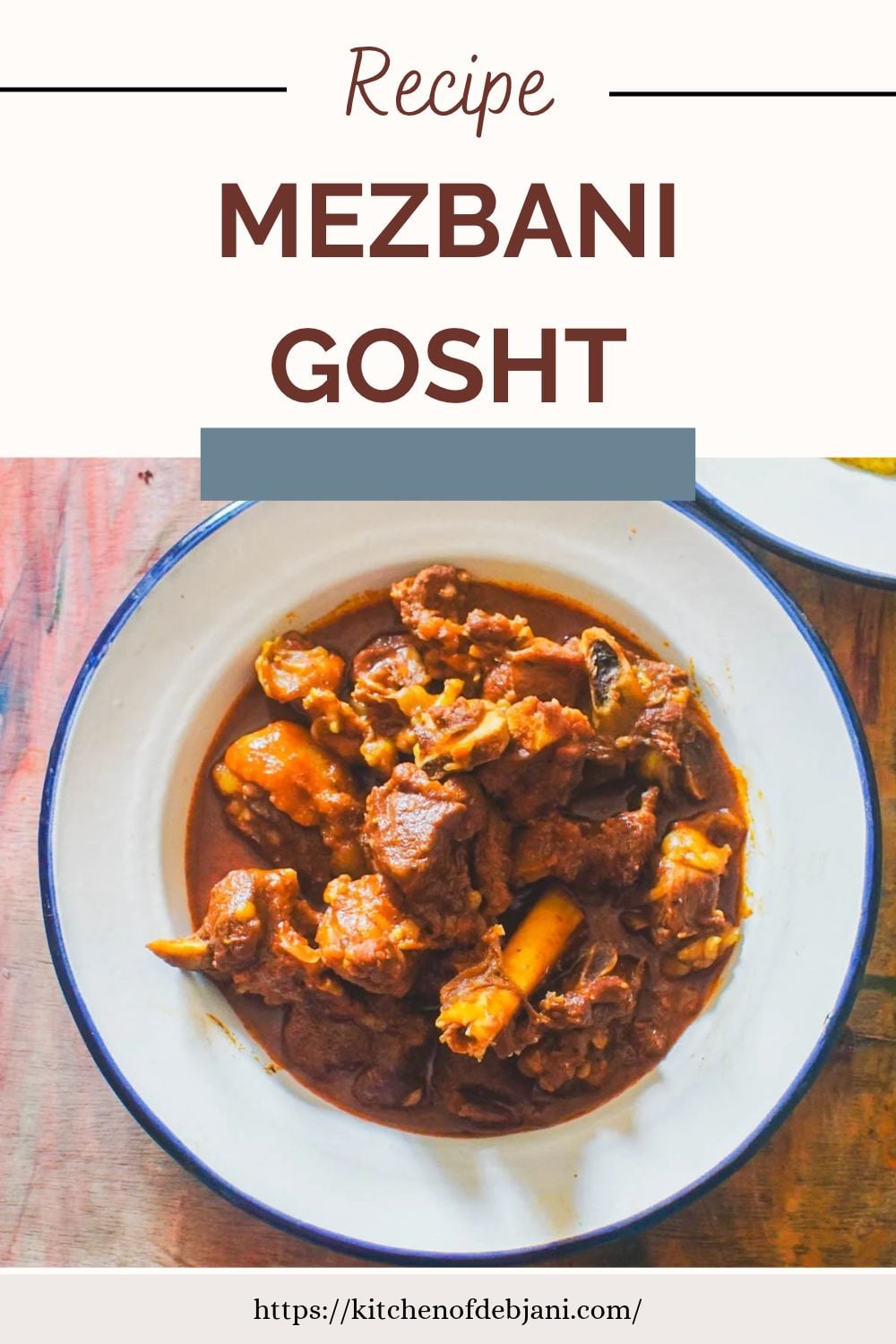
Here's the Mezbani Mutton Recipe Pin for your Pinterest Board

About Debjani Chatterjee Alam
I am Debjani Chatterjee Alam. A CSR specialist by profession and a food writer, food blogger, and food photographer as well. I live in Kolkata along with my Husband Mehebub who is an architect by profession, my daughter Pasta, and also my dog daughters Coffee and Luchi.



Leave a Reply