

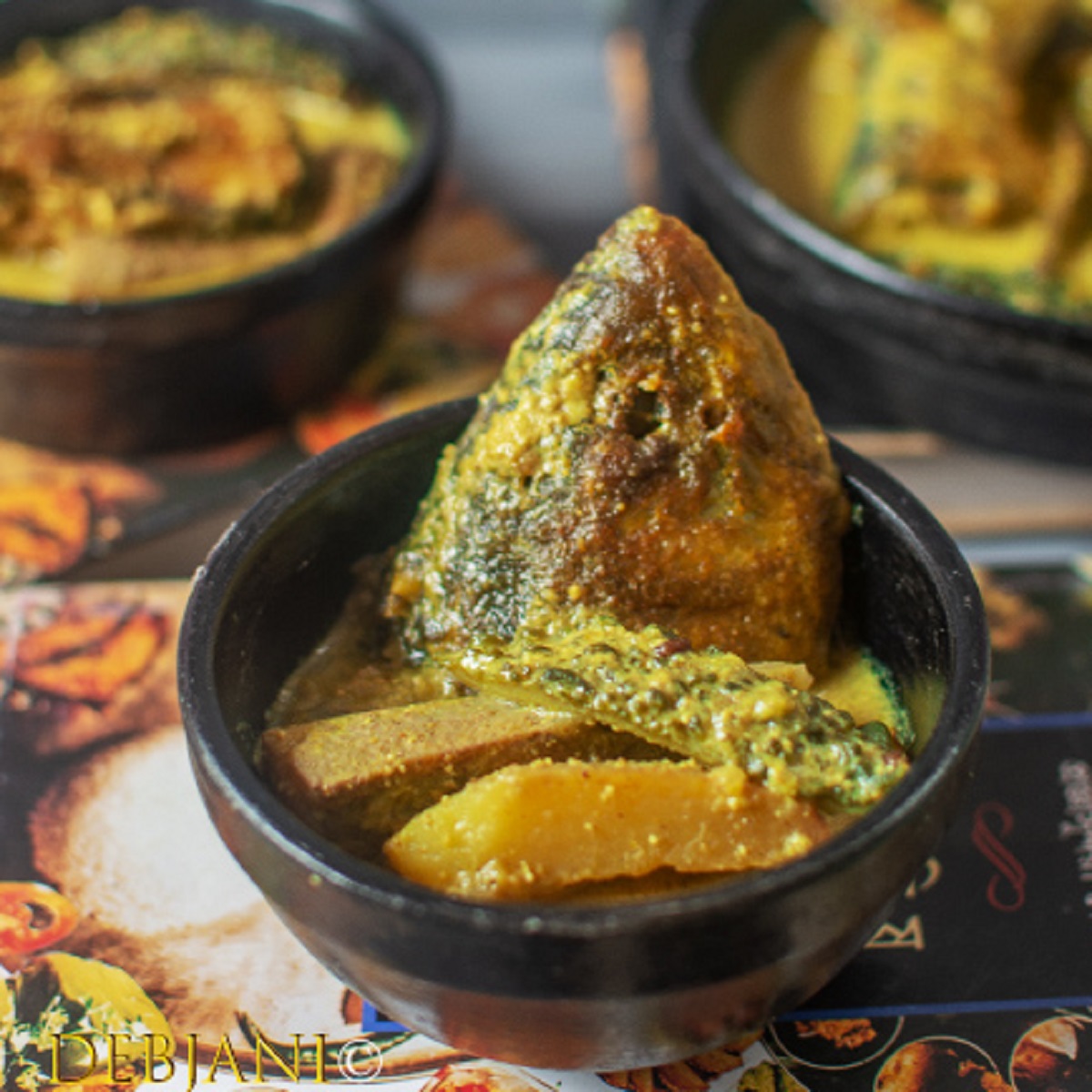
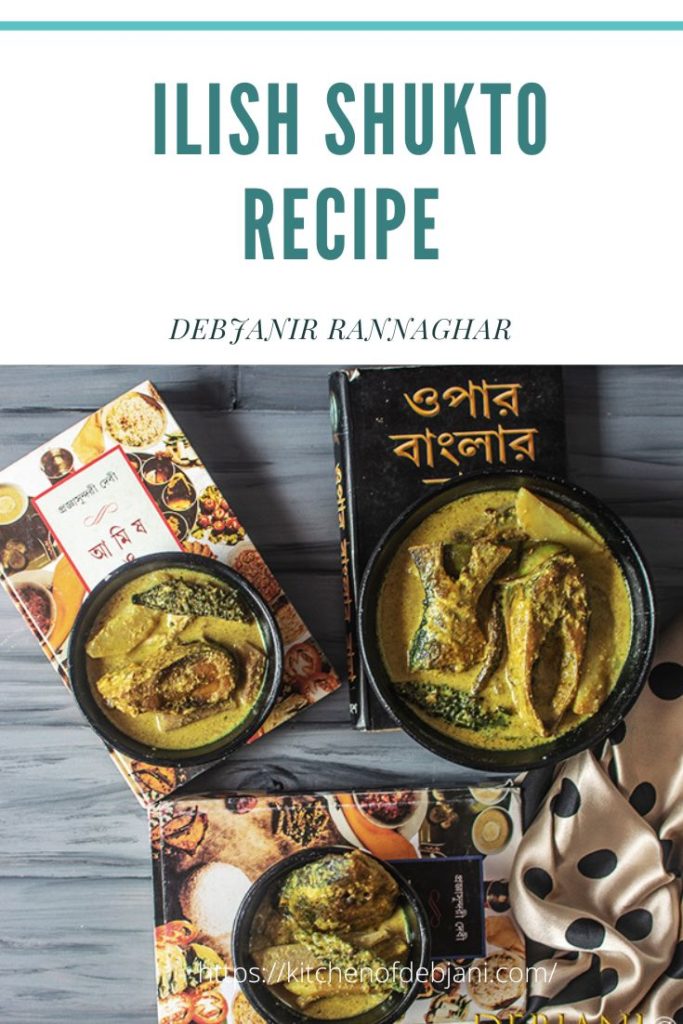
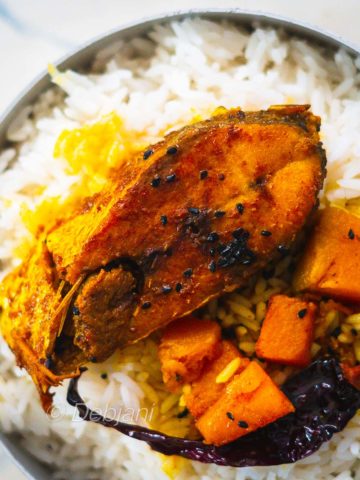
Hilsa fish and vegetable curry with a Bengali twist, Ilish Shukto, is seasoned with five spices and Randhuni. It's a popular delicacy among the Bangal community and is enjoyed in many Ghoti households.
Jump to:
Debjani's note
"Debjani, will you be able to cook for Taj Bengal's Hilsa festival, and if we find the item worth enough, we can have that as part of our menu for the said Festival!" This is how the Ilish Shukto happened and traveled from Debjanir Rannaghar to Taj Bengal's kitchen!

Jump to:
Ilish Shukto: The journey from Debjanir Rannaghar to Taj Bengal's Kitchen!
The thought of working in a professional kitchen terrified me. I have no prior experience in that field. Cooking, to me, is a form of therapy. My blog, Debjanir Rannaghar, shares simple recipes, mostly Bengali, with no complex techniques or fancy descriptions. I do not hold a degree in food, nor do I claim to be an expert in authentic cuisine. My approach to cooking is straightforward, and I describe food in a simplistic manner. My knowledge of Bengali cooking is limited to the works of Prajnasundari Devi, Lila Mazumdar, Sulekha Sarkar, Purnima Thakur, and the lessons I have learned from my family and other people.
Our Experience at Taj!
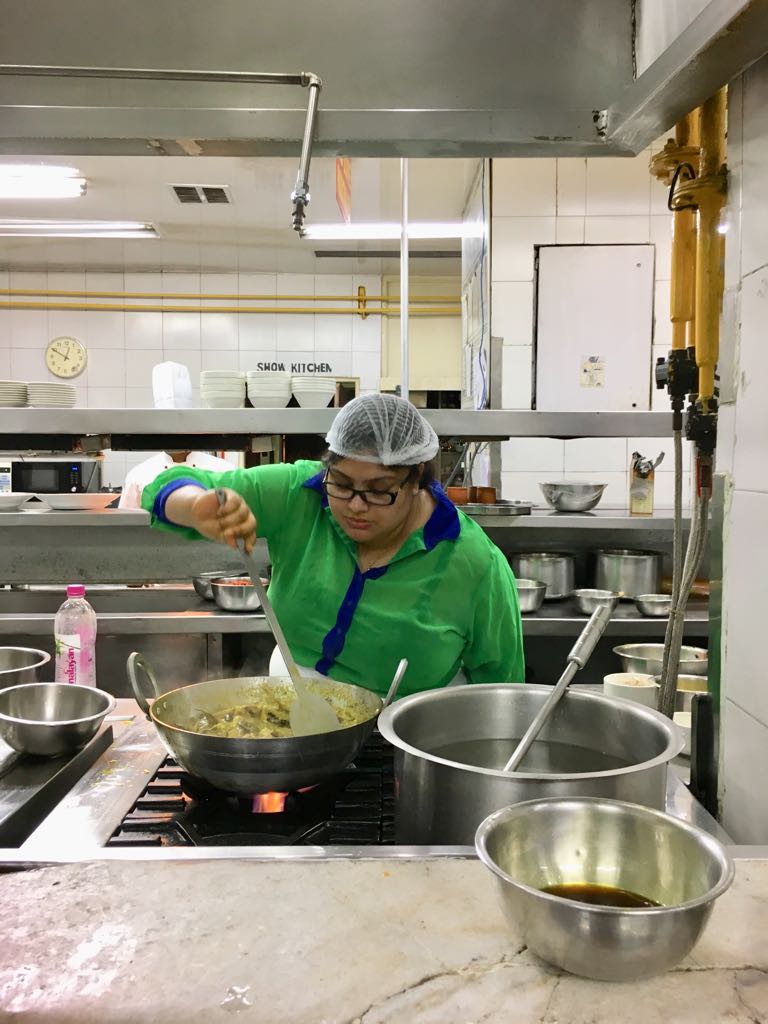
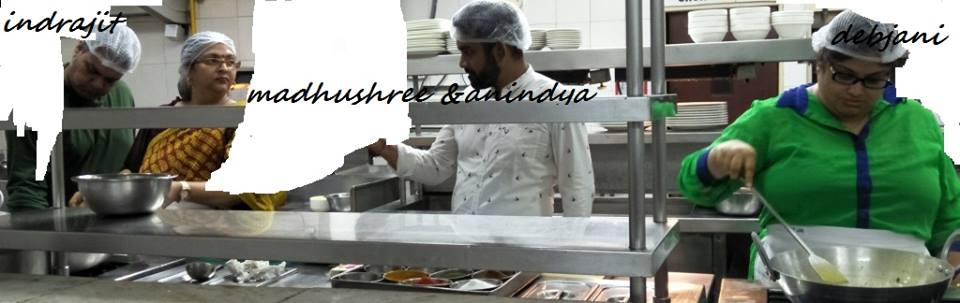
Together with three blogger friends, I prepared food in the kitchen. Anindya and Madhushree cooked Doi Ilish while Indrajit Lahiri made Ilish Bhorta. We were all excited and nervous, but it turned out to be an incredible experience. The cooking process was simpler than the tasting session, which was a bit overwhelming. Thankfully, everyone who tasted our food survived without any issues. 😉 .
Ilish Shukto!
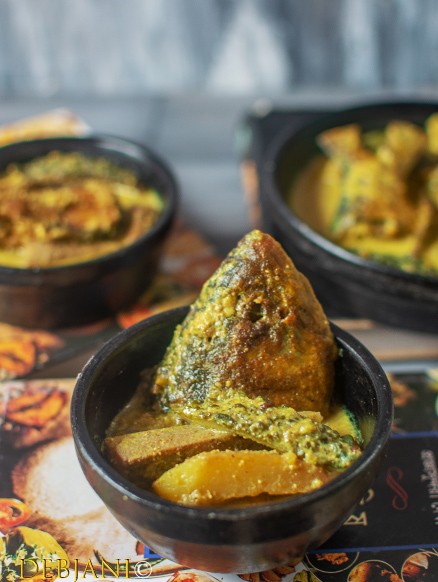
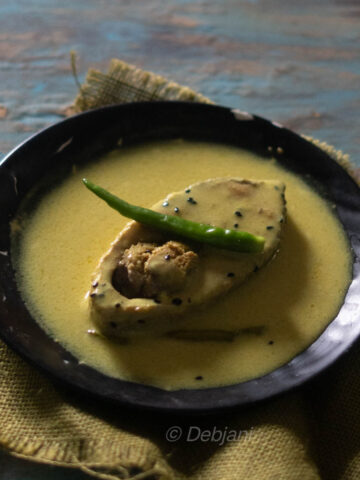
Ilish Shukto is a curry that combines Hilsa Fish and vegetables, seasoned with Randhuni and a blend of five spices. This dish is a well-known delicacy among the Bangal community and is also enjoyed in many Ghoti households.
I went to Taj Bengal and decided on a simple bowl of Ilish Shukto. I chose it for two reasons. Firstly, my father believes that a Bengali cook's journey is incomplete without Shukto, no matter how humble their background is. Secondly, I wanted to write this recipe, which is a regular dish at home, and I was waiting for a special occasion to do so.
I was hesitant about choosing Ilish Shukto, as I had been trolled before for using Turmeric Powder in it. I thought of cooking something less controversial to avoid the negativity of society. However, after reconsidering, I decided to stick with my decision and cook Ilish Shukto anyway.
The Ilish Shukto Recipe
Prajnasundari Devi and her Amish o Niramish Ranna
This book talks about "Shuktani" in detail, where she did mention that Turmeric Powder is a must! In her book, she mentioned Shuktoni is incomplete without Bitter. However, the book does not have the recipe for Ilish Shukto!
Sulekha Sarkar and her Rannar Boi
This book contains the Ilish Shukto recipe, prepared without the use of bitter ingredients and with a pointed gourd, also known as Potol. I gave this dish a couple of tries, but I was surprisingly dissatisfied with how flat it was.
Ghoti Barir lish Shukto
Turmeric powder is used in the preparation of the Shukto that I grew up eating. Turmeric is claimed to help avoid allergies, and since I'm sensitive to eggplant, it's better to prevent than to treat! Luckily or unfortunately, my home in North Calcutta is almost 175 years old, and it goes without saying that the dishes that originated there are the product of evolution.
An authentic blue "ghoti" I am, but the family has accepted a number of "Bangal" as sons-in-law or daughters. It goes without saying that their culinary greatly inspired my family's cooking, which is most likely how I learned about Ilish Shukto.
Bangal Bari-r Ilish Shukto
Didimoni- my private tutor during my elementary classes was from Sylhet, Bengal, but they moved to Kolkata in the north of India during the split. Their food merits respect even though it is not connected to any notable culinary ancestry. I enjoyed their Ilish Shukto, which combined the bitter flavour of fish tail and head. They were used to using every edible portion of a fish because they came from a lower-middle-class background, and I have also grown accustomed to doing the same. Thus, Macher Matha and Lyaja are also part of my Ilish Shukto.
Finally, my Ilish Shukto went into the kitchen of Taj Bengal and is now part of their Menu
My Ilish Shukto Checklist - Tips!
- Shukto prepared with Hilsa Fish: Yes!
- Fish Head and Tail: I used both to stick to the middle-class mentality of not ignoring the humble parts.
- Bitter as part of the Shukto: Yes! To balance the flavors and to make the dish rich. (In fact, this was discussed during the tasting session at Taj, specifically, where people opined how the bitter gourd flavored the dish in a good way.
- Turmeric Powder in my Shukto: Yes. While shallow frying (Read "Santlano") the fish and eggplant.
- The authenticity of the Recipe! I am not claiming to be coming up with an authentic recipe. I believe in evolution, and food is no exception. In addition, cooking at home and cooking in a professional kitchen are two different things.
Here is my recipe for Ilish Shukto!
Recipe Card
Ilish Shukto Recipe
Ingredients
- 4 pieces Hilsa Fish/ Ilish Mach including of the fish head and Tail
Vegetables:
- 2 Bitter gourd
- 3 Potato
- 1 Plantain
- 1 Sweet potato
- 1 Drumstick
- 1 Eggplant
Spices:
- 1 teaspoon Panch phoron whole
- 1 teaspoon Panch phoron powder
- 1 teaspoon Randhuni/ Celery Seed
- 2 Bay leaf
- 1 teaspoon Turmeric Powder
- 1 tablespoon Mustard paste
- 1 tablespoon Ginger paste
- 1 tablespoon Poppyseed paste
- 1 tablespoon Sugar
- 1 teaspoon Salt or to taste
Other:
- 3 tablespoon Mustard oil
- 150 ml Milk
- 1 tablespoon Ghee

Instructions
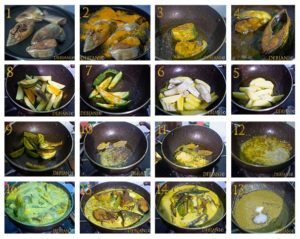
- Marinate Hilsa chunks (head, tail, and pieces) with salt and half of the turmeric powder, and then leave for 10 minutes.
- Cut the veggies into long strips after peeling the skin (potato, plantain, sweet potato, drumstick).
- Cut the bitter gourd and eggplant with the skin on. These two need to be marinated with salt and turmeric powder.
- Heat mustard oil in a deep-bottom pan.
- Shallow fry fish chunks on both sides. 30 seconds from both sides is enough.
- Fry the head and tail for extra time till they are properly fried.
- Now shallow fry the veggies one by one. Potato, sweet potato, and Plantain require extra frying time.
- Temper remaining oil with 2 bay leaves, whole 5 spices aka Panch Foron, and Radhuni.
- Now add ginger paste, followed by mustard paste and poppy seed paste.
- Cook for a minute or two by adding 1 Tbsp. of water.
- Add Salt and Sugar, and give a thorough mix.
- Now add 1 teaspoon of powdered 5 spices, and cook for a minute or two.
- Add milk and 3 cups of water, and bring it to a boil after adding salt and sugar.
- Finally, add fried Potato, Sweet Potato, and Plantain and cook until those soften.
- Add Drumstick, Fried Eggplant, and Fried Bitter gourd, followed by the fried fish chunks.
- Cook on low flame for 5-7 minutes by covering the pan with a lid.
- If required, add some more water.
- Once done, add Ghee and switch the flame off after mixing it.
Notes
- You may cook Ilish Shukto without using the Head and tail; however, these two enhance the flavor.
Bitter Gourd balances the flavor; obviously is optional. - Turmeric powder, needless to say, is optional.
- Ghee and milk are optional as well if you are planning to cook a low-calorie and flat version of the dish.
Nutrition
Taj Bengal Hilsa Feast!
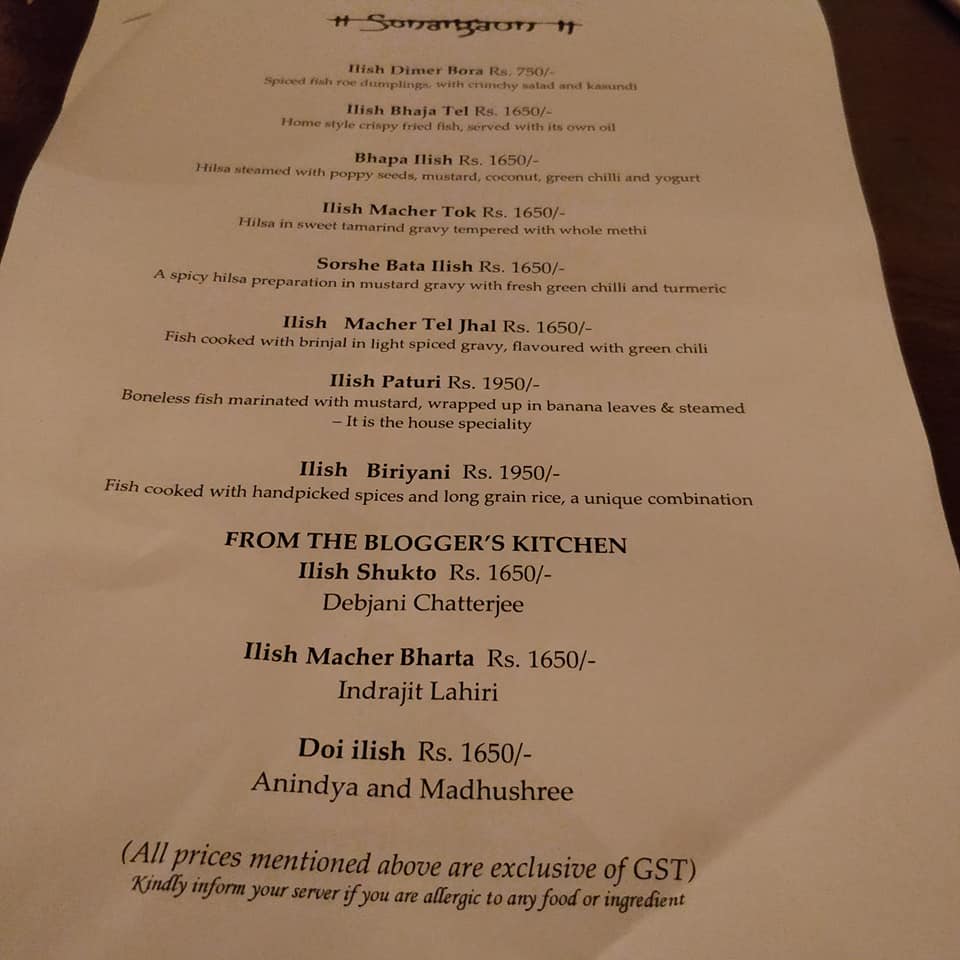
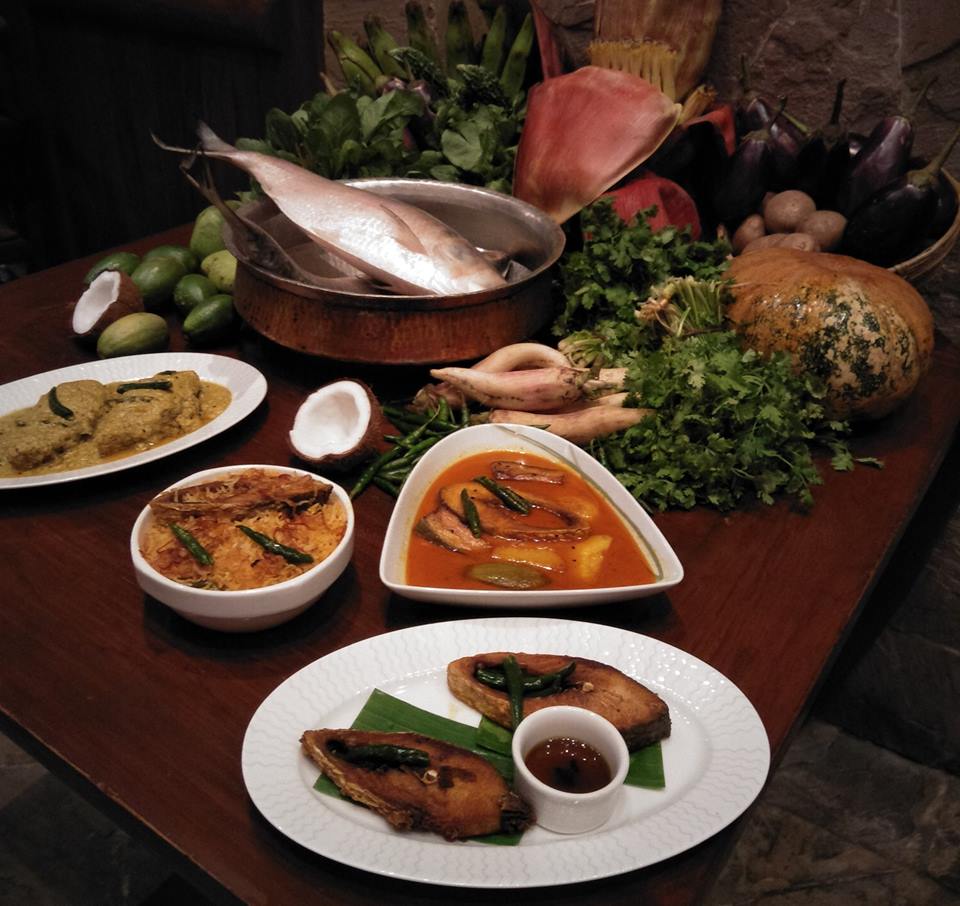
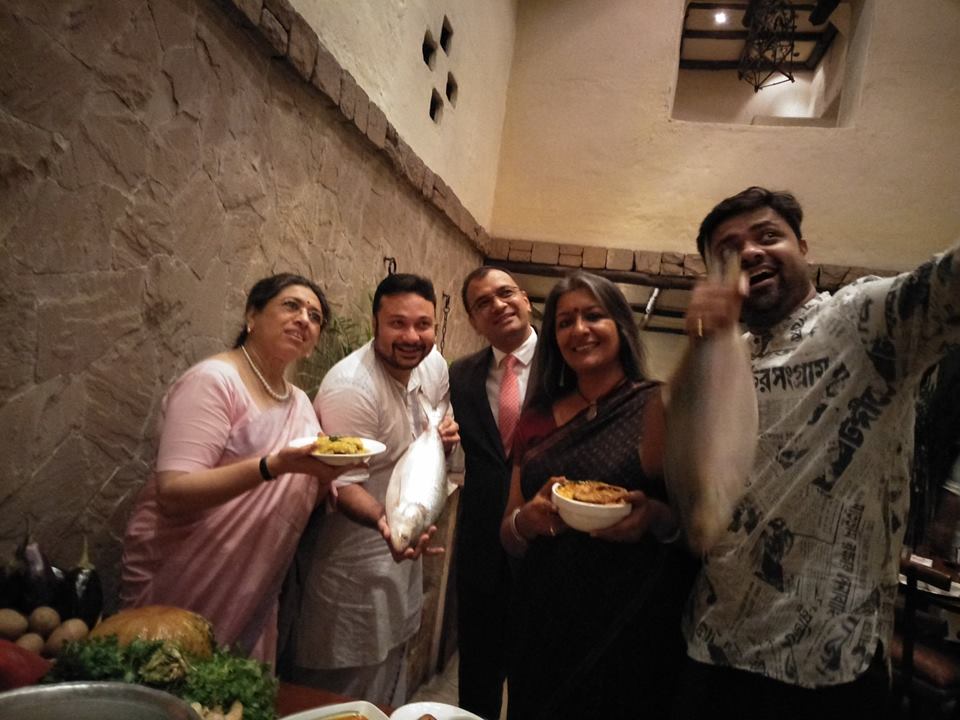
By the way, like every year, we have some brilliantly cooked Hilsa dishes from the Kitchen of Chef Giri. Their specially curated dishes, as well as the dishes we cooked, will be available there at Sonargaon from July to September 2018. Visit as a foodie if you want to savor some "quality Ilish." Visit as a friend if you want to taste the Ilish Shukto, now they are serving following my recipe and visit as a foe to criticize me 😉 .
To book!

Disclaimer: This post is written based on my recipe of Ilish Shukto and also the cooking of the same in the kitchen of Taj Bengal as part of their Hilsa Festival.

About Debjani Chatterjee Alam
I am Debjani Chatterjee Alam. A CSR specialist by profession and a food writer, food blogger, and food photographer as well. I live in Kolkata along with my Husband Mehebub who is an architect by profession, my daughter Pasta, and also my dog daughters Coffee and Luchi.


Leave a Reply