

Bengali Simui Payesh Recipe takes me back to the Bhai Phota celebrations at home. Simui, milk, a little ghee, kaju, kishmish and cardamom. Nothing complicated, yet the bowl of payesh always felt special. I still associate it with hot luchi, family get-togethers and the kind of festive meals where nobody really counts how many times they have gone back for a second helping.
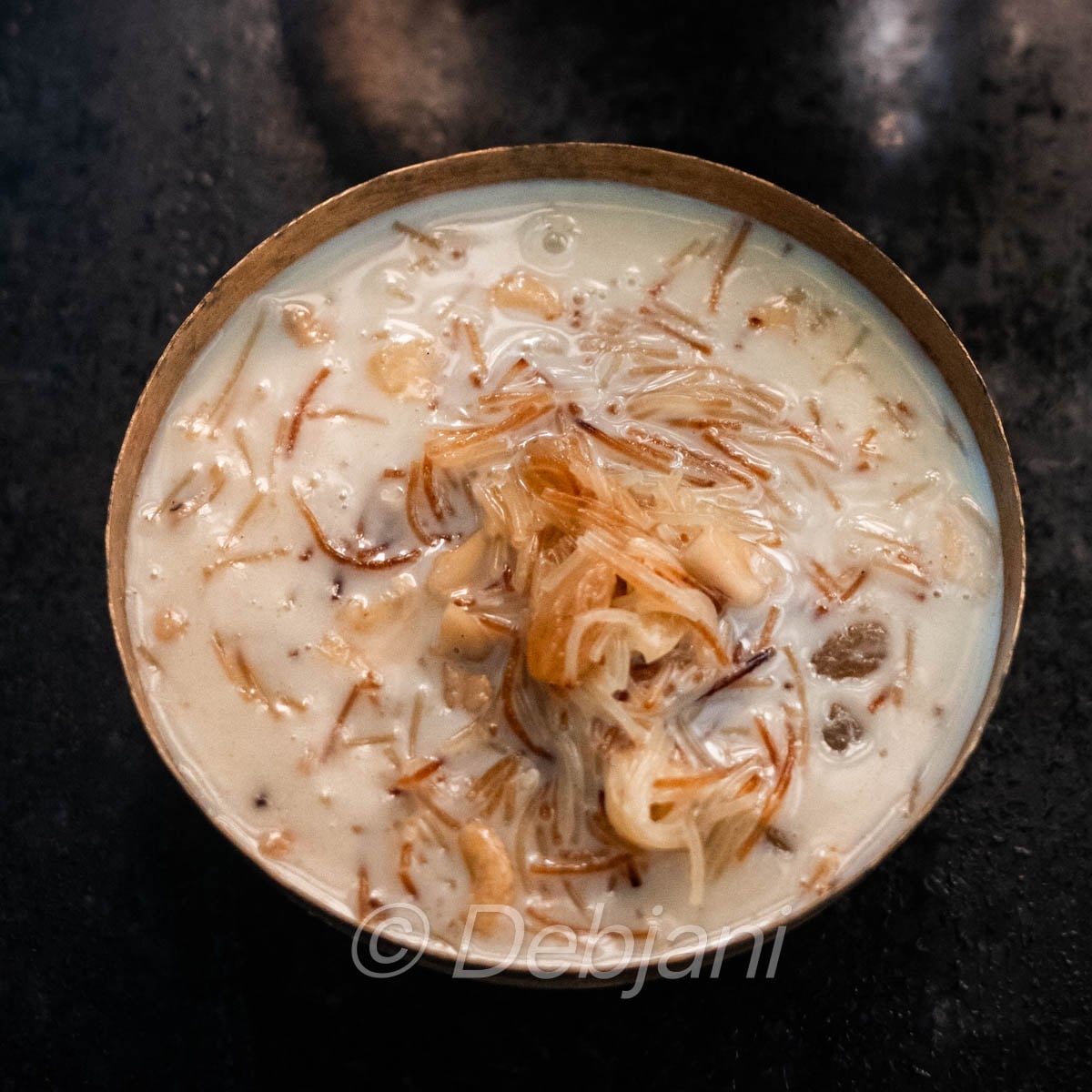
As a child, Bhai Phota meant finishing the phota ceremony at home and then heading to my Mama Bari (Mama's house). There would be a whole bunch of cousins, gifts, the ceremony itself, and, of course, food. Because, let's be honest, food is a little more important than everything else at a Bengali celebration. We negotiate the rest of our emotions around the dining table.
Whenever I visited my mamabari as a child, Dida would hand me a small tiffin box while I was leaving. And inside it would be Simui Payesh. Back then, I did not quite understand that the box contained more than just payesh. A little extra affection was packed in there too.
When I started cooking, I learnt several dishes by watching Dida. On Bhai Phota night, dinner at my mamabari invariably meant luchi and Simui Payesh. Eating with my cousins remains a special memory even today.
So, this Bhai Phota, I am opening that little box of memories and sharing Dida's style of Bengali Simui Payesh with you. It is a simple vermicelli payesh recipe, but sometimes the simplest recipes are the ones that stay with us the longest.
Jump to:
- What is Bengali Simui Payesh?
- Debjani's Note
- Ingredients for Bengali Simui Payesh
- A note on the ingredients
- How to Make Bengali Simui Payesh
- Watch How to Make Simui-er Payesh
- Tips for Making the Best Simui Payesh
- Substitutions and Variations for Simui-er Payesh
- Frequently Asked Questions
- Recipe Card
- Related Recipes
- My Favourite Bhai Phota Recipes from Debjanir Rannaghar
- Have you tried the Bengali Simui Payesh Recipe from Debjanir Rannaghar?
- Here's the Simui Payesh Recipe Pin for your Pinterest Board
What is Bengali Simui Payesh?
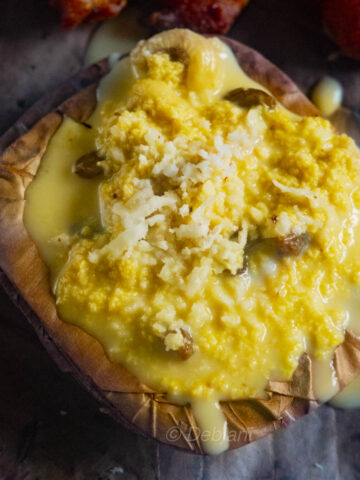
Simui Payesh is a traditional Bengali dessert made with vermicelli, milk, ghee, sugar, and a few fragrant ingredients. The vermicelli is first roasted in ghee and then cooked slowly in milk until it softens and the milk develops a lovely, creamy texture. Cashew nuts, raisins, bay leaves, and cardamom add flavour to this homemade Bengali dessert.
Unlike some rice-based Bengali payesh recipes, Simui Payesh takes relatively little time to prepare. Moreover, it does not require an elaborate cooking process. The trick, however, is to roast the vermicelli properly and cook it without allowing it to turn mushy.
In our home, this vermicelli payesh is particularly associated with Bhai Phota. A bowl of chilled Simui Payesh alongside hot luchi makes for a rather memorable festive dinner.
Debjani's Note
I have used medium-thick vermicelli for this Bengali Simui Payesh recipe. The thicker variety holds its shape better while cooking, which is something I personally prefer. You can adjust the quantity of cashew nuts and raisins according to your taste. However, I would suggest keeping the milk-to-vermicelli ratio close to the one mentioned in the recipe if you want a creamy yet not overly thick payesh.
I also prefer cardamom powder over whole cardamom. The aroma feels a little more pronounced, and it blends beautifully with the milk. Of course, whole cardamom works perfectly well too.
One important thing: do not cook the payesh until it becomes very thick in the pan. Simui Payesh thickens naturally as it cools. So, switch off the flame while it still has a slightly flowing consistency.
And yes, if you are serving it for Bhai Phota dinner, try it with hot luchi. That combination has a rather strong case for being non-negotiable.
Ingredients for Bengali Simui Payesh
The ingredients for Bengali Simui Payesh Recipe are fairly simple, and you may already have most of them in your kitchen.
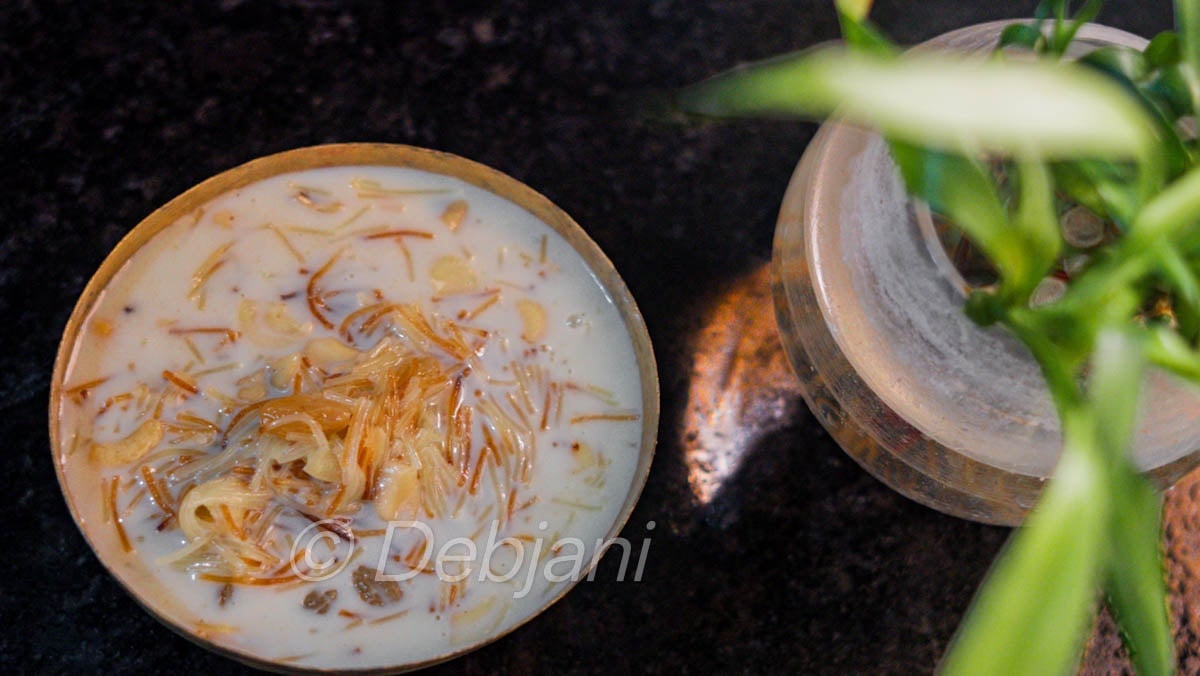
- Thick vermicelli (Simui)
- Ghee
- Broken cashew nuts
- Raisins
- Full-cream milk
- Bay leaves
- Sugar
- Cardamom powder
See recipe card for quantities.
A note on the ingredients
- Vermicelli: Use medium-thick or thick vermicelli rather than the very thin variety used for some other desserts. It helps the payesh retain its texture.
- Milk: I have used 500 ml of full-cream milk for 150 g of vermicelli. You can add a little more milk if you prefer a thinner consistency.
- Sugar: The recipe uses 150 g of sugar. You can reduce or increase it according to your preference.
- Cashew nuts and raisins: I like adding both in generous quantities. However, feel free to adjust them. The raisins puff up as they cook, while the cashew nuts add a lovely roasted flavour.
How to Make Bengali Simui Payesh
- Step 1: Roast the vermicelli in ghee
Heat 3 tablespoons of ghee in a kadai over medium heat. Once the ghee melts and becomes hot, add 150 g of thick vermicelli.
Roast the vermicelli over medium heat until it turns light golden brown. Stir continuously so that it roasts evenly. Keep an eye on it, though, because vermicelli can burn rather quickly.
Proper roasting is important here. It gives the Simui Payesh a lovely flavour and helps the vermicelli retain its texture.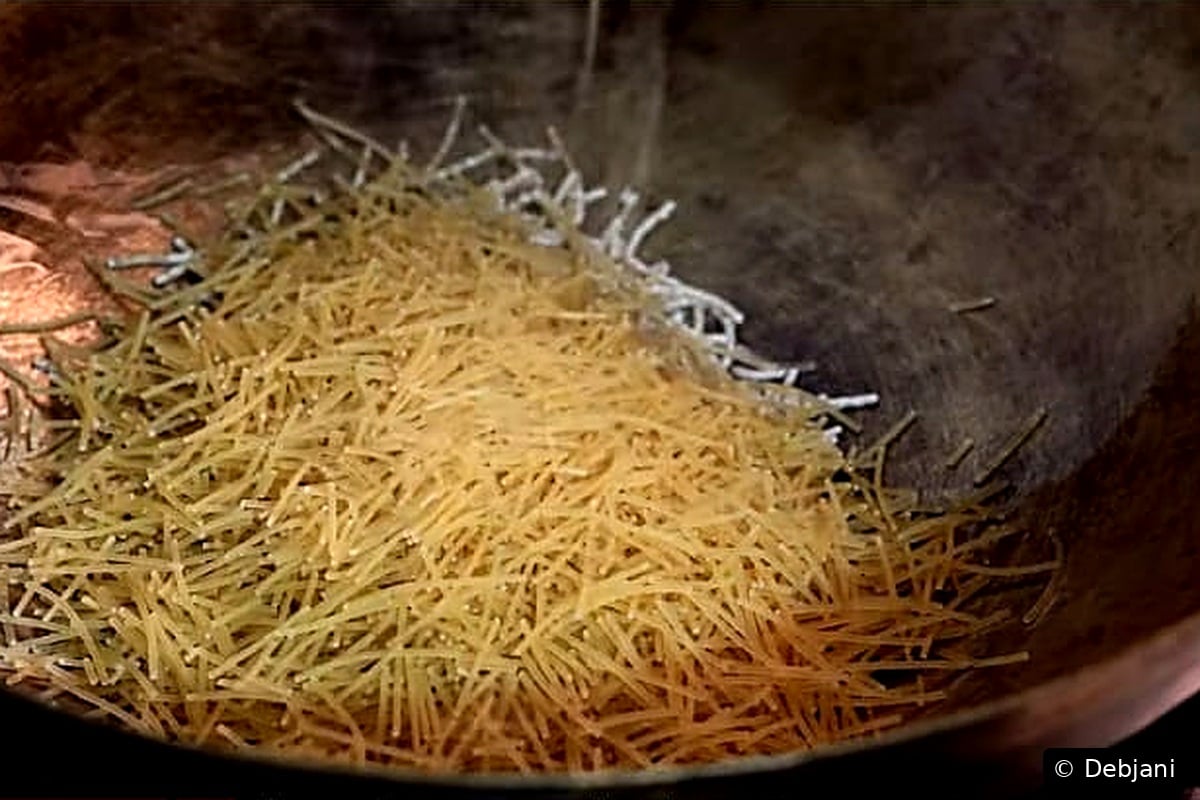
- Step 2: Add cashew nuts and raisins
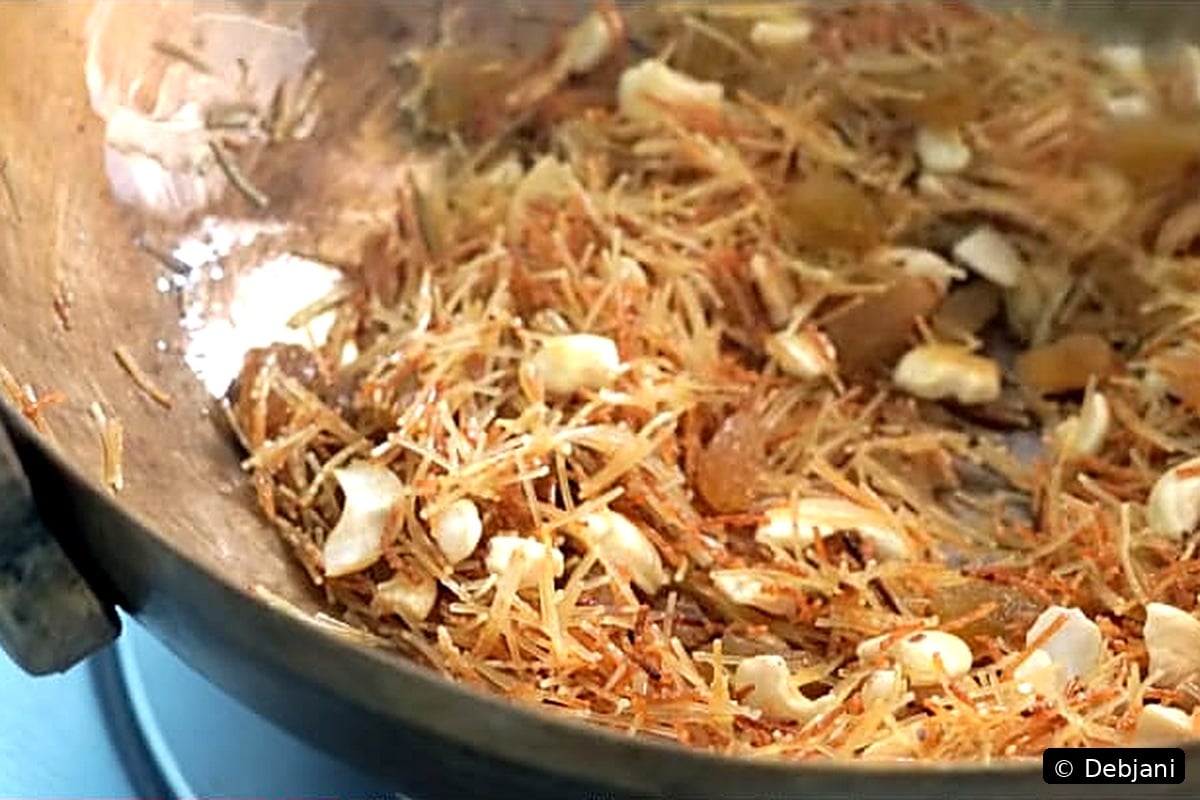
- Step 3: Add milk gradually
Now add 500 ml of full-cream milk to the kadai. Instead of pouring all the milk in at once, add it in small batches and mix well after each addition.
This simple step helps prevent the vermicelli from clumping together. Keep the flame low while adding the milk.
You can adjust the quantity of milk slightly if you prefer a thinner payesh. However, the measurements mentioned here give the Simui Payesh a creamy consistency without making it excessively thick.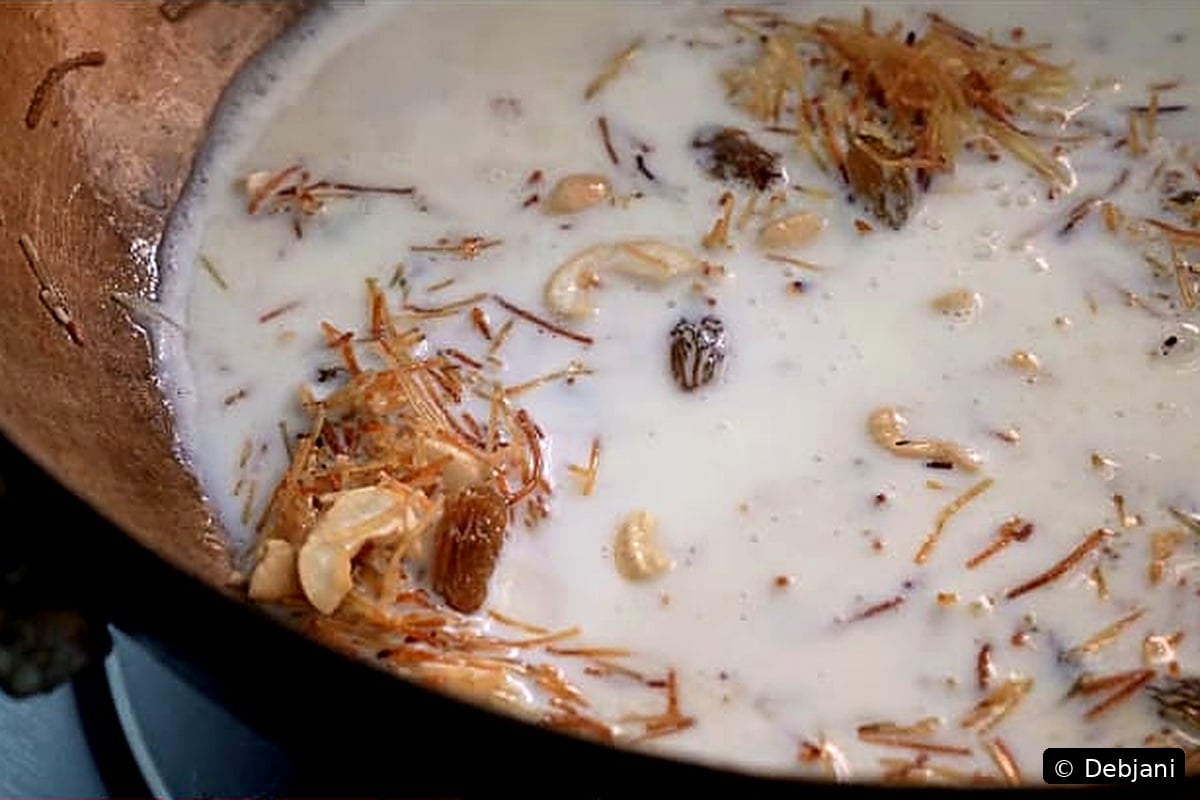
- Step 4: Cook the vermicelli with milk
Once you have added all the milk, stir continuously with a ladle. This prevents the vermicelli from sticking to the bottom of the kadai.
Add 2 bay leaves and continue cooking over low heat. Allow the milk to simmer gently while the vermicelli cooks.
It takes approximately 7 minutes for the vermicelli to become half-cooked, although the exact time may vary depending on the variety you use. Meanwhile, the milk will begin to simmer and gradually thicken as the vermicelli releases its starch.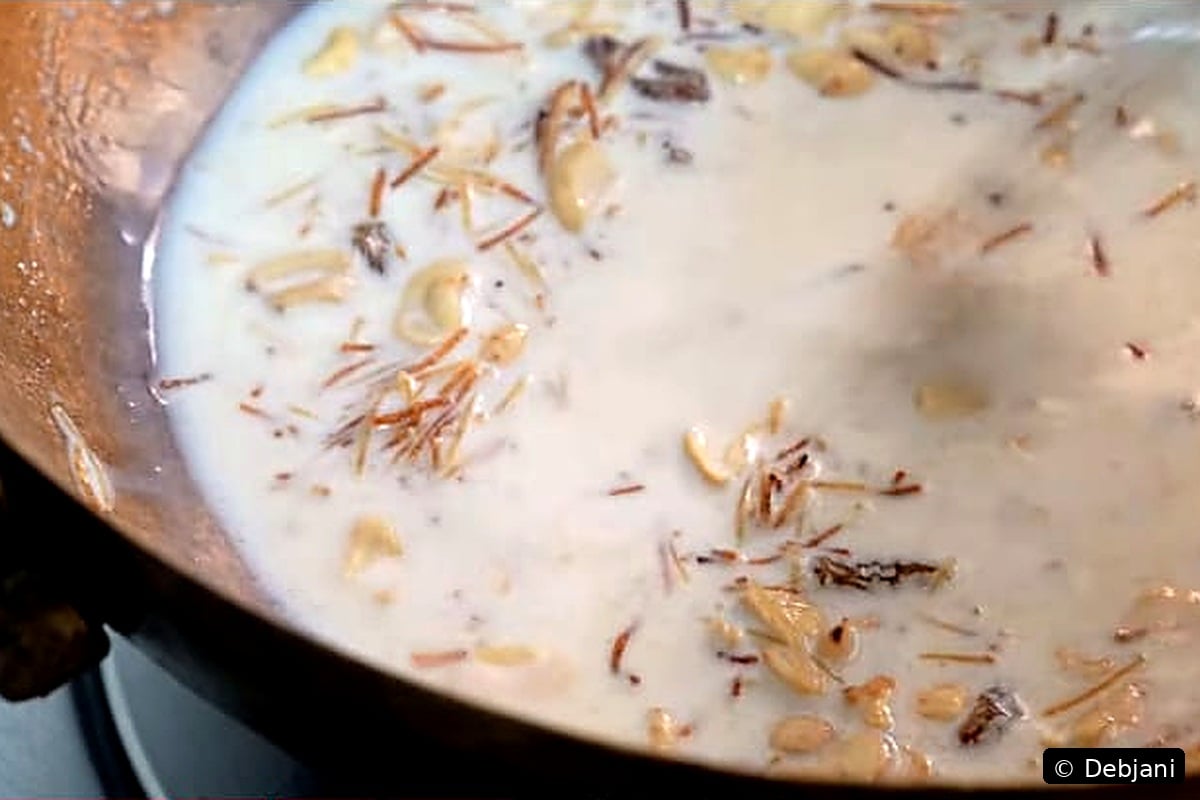
- Step 5: Add sugar
Once the vermicelli is half-cooked, add 150 g of sugar. Mix well until the sugar dissolves.
Continue cooking over low heat, stirring frequently. The vermicelli should become completely cooked, but it must not turn mushy. Ideally, each strand should retain its shape.
This is the stage where you need to keep an eye on the consistency. The payesh will continue to thicken after you switch off the flame.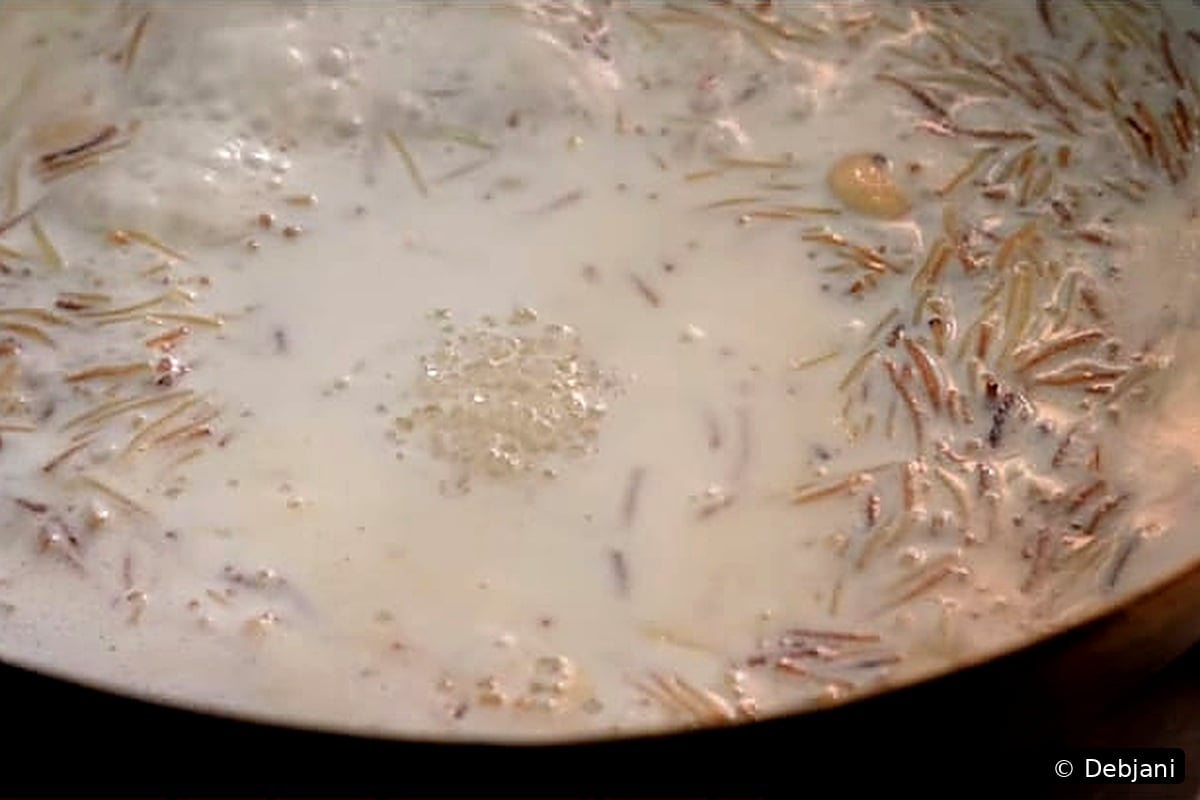
- Step 6: Add cardamom powder and finish cooking
Once the vermicelli is cooked, add 1 teaspoon of cardamom powder. Mix well so that the aroma blends into the payesh.
I personally prefer cardamom powder because I find its fragrance more pronounced. You can use whole cardamom instead if that is what you prefer.
Switch off the flame and transfer the Simui Payesh to a serving bowl. Do not wait for the payesh to become very thick in the kadai. It will thicken naturally as it cools.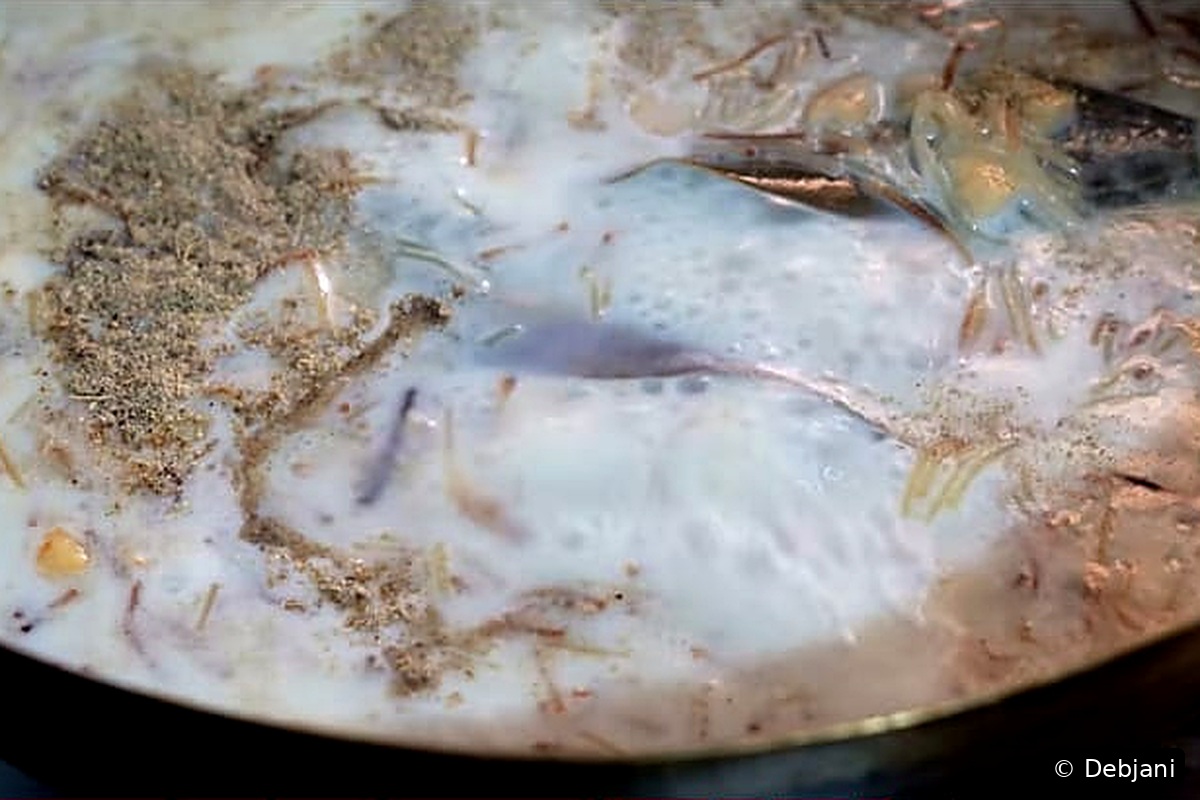
- Step 7: Serve Bengali Simui Payesh
You can serve Simui Payesh at room temperature or chill it in the refrigerator before serving.
For a traditional Bhai Phota dinner, I love serving it with hot luchi. The combination of warm, freshly made luchi and chilled or room-temperature vermicelli payesh is particularly comforting.
And that is it. A simple Bengali Simui Payesh recipe, made with a handful of ingredients and a whole lot of memories.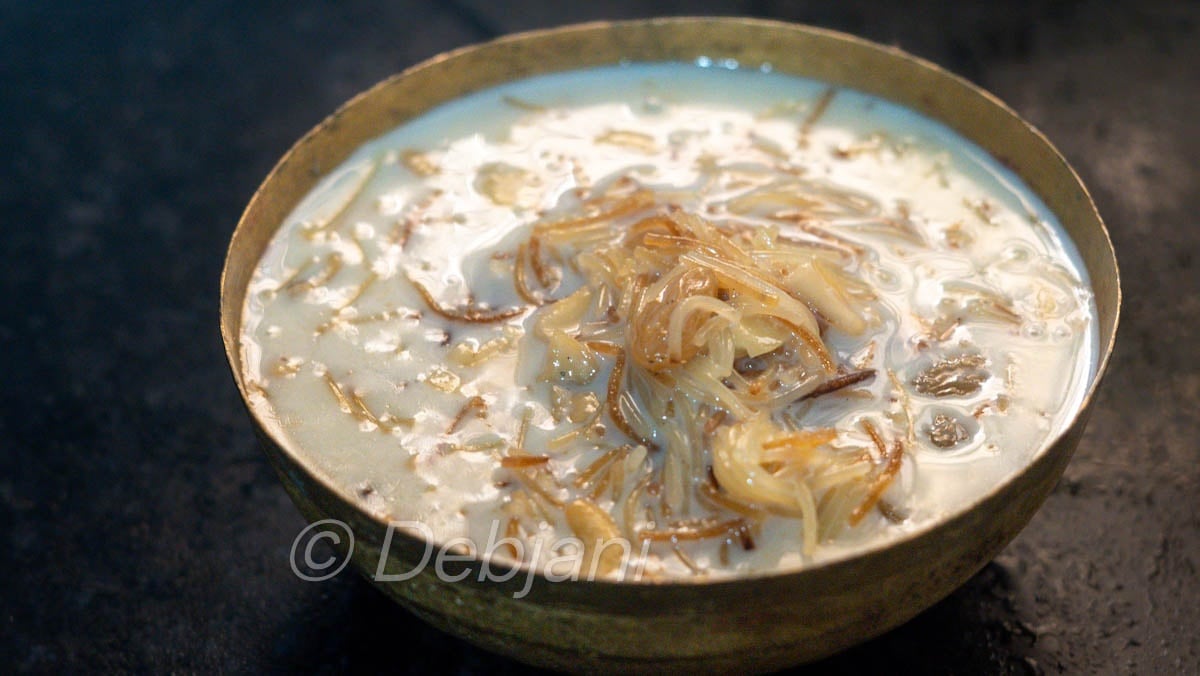
Watch How to Make Simui-er Payesh
Tips for Making the Best Simui Payesh
- Use thick vermicelli: Medium-thick vermicelli works best for this recipe because it retains its shape while cooking.
- Roast the vermicelli properly: Roast it until it turns golden brown, but do not allow it to burn.
- Add milk gradually: This reduces the chances of the vermicelli clumping together.
- Keep stirring: Stir frequently while cooking the vermicelli in milk to prevent it from sticking to the bottom of the kadai.
- Cook over low heat: A gentle simmer allows the vermicelli to cook evenly and gives the milk time to develop a creamy texture.
- Do not overcook: The vermicelli should be soft but should still retain its shape.
- Do not make it too thick: Simui Payesh thickens as it cools, so switch off the flame while it still has a slightly flowing consistency.
- Adjust the sweetness: You can reduce or increase the sugar depending on your preference.
- Serve with luchi: For a Bengali Bhai Phota dinner, Simui Payesh and hot luchi make a lovely combination.
Substitutions and Variations for Simui-er Payesh
Simui-er Payesh, or Bengali Simui Payesh, is one of those recipes where a little tweaking is quite easy. I would still say the traditional version has its own charm, but if you have dietary restrictions or simply want to make a lighter bowl of payesh, here are a few things you can try.
- For lactose intolerance: Replace regular milk with lactose-free milk. You can still get that familiar creamy payesh without the lactose trouble.
- For a vegan version: Swap the milk with oat milk or coconut milk and use coconut oil instead of ghee. Coconut milk will, of course, bring its own flavour to the payesh. Almond milk is another option, but not if nuts are a problem.
- For a nut-free version: Skip the cashew nuts altogether. The payesh will still be delicious with raisins. If seeds are safe for you, a few toasted pumpkin seeds can add a little crunch.
- For a lighter, lower-calorie version: Use low-fat milk, cut down on the ghee, and reduce the sugar. You can also go easy on the cashew nuts and raisins. The payesh may not be as rich as Dida's version, but it will still do the job.
- If you prefer less sweetness: The 150 g sugar mentioned in the recipe can be reduced. Start with 100 g and adjust according to your taste. Raisins add a little sweetness too, so there is no need to make the payesh excessively sweet.
- One small thing to remember: if you are cooking for someone with a severe nut allergy, do check the ingredients and avoid cross-contamination. A recipe substitution is only useful when the bowl is safe to eat.
Frequently Asked Questions
Medium-thick or thick vermicelli works best for Bengali Simui Payesh. It retains its shape during cooking and gives the dessert a pleasant texture. Avoid using very thin vermicelli if you prefer the strands to remain distinct.
Roasting vermicelli in ghee gives it a lovely nutty aroma and improves the flavour of the payesh. It also helps the vermicelli retain its texture while cooking in milk.
Yes. You can prepare Simui Payesh a few hours before serving and refrigerate it.
Absolutely. The recipe uses 150 g of sugar, but you can adjust the quantity according to your taste. Add a little less if you prefer a mildly sweet dessert.
You can serve it at room temperature or chilled. I personally enjoy it either way. For Bhai Phota dinner, it is especially lovely when served alongside hot luchi.
Recipe Card
Bengali Simui Payesh Recipe | Vermicelli Kheer
Equipment
- 1 Heavy-bottomed pan or kadai For roasting the vermicelli and cooking the payesh
- 1 Spatula For stirring
Ingredients
- 150 g Thick vermicelli Simui
- 3 tablespoon Ghee
- 50 g Cashew nuts Broken
- 50 g Raisins
- 500 ml Full cream milk
- 2 Bay leaves
- 150 g Sugar Adjust to taste
- 1 teaspoon Cardamom powder

Instructions
- Heat ghee in a heavy-bottomed pan. Add the thick vermicelli and roast over low to medium heat until it turns lightly golden and aromatic.
- Add the broken cashew nuts and raisins to the roasted vermicelli. Continue roasting for a minute or two until the cashews turn lightly golden and the raisins begin to plump up.
- Pour the milk into the pan gradually, stirring gently. Add the bay leaves and bring the mixture to a gentle simmer.
- Simmer for around 7 minutes, stirring occasionally, until the vermicelli is partially cooked and begins to soften.
- Add the sugar and stir until it dissolves. Continue cooking until the vermicelli is completely soft and the payesh reaches the consistency you prefer.
- Add the cardamom powder and stir gently. Switch off the heat.
Rest and serve
- Allow the Simui Payesh to rest for a few minutes before serving. Serve warm or chilled, as preferred.
Video
Notes
- I use thick vermicelli for this recipe, as it holds its shape better while cooking in milk.
- Roast the vermicelli in ghee before adding milk. This gives the payesh its characteristic aroma and flavour.
- Keep stirring occasionally while the payesh simmers, especially after adding sugar, to prevent the milk from sticking to the bottom.
- The payesh will thicken further as it cools. So, switch off the heat while it is still slightly thinner than your desired final consistency.
- You can adjust the sugar according to your preference. The raisins also add a little natural sweetness.
- Bengali Simui Payesh can be served warm or chilled. I particularly enjoy serving it with hot luchi for a festive Bhai Phota meal.
Nutrition
Related Recipes
Looking for other recipes like this? Try these:


My Favourite Bhai Phota Recipes from Debjanir Rannaghar
Planning your Bhai Phota menu? Simui Payesh is only one part of the feast. Here are a few of my favourite recipes from Debjanir Rannaghar to make your Bhai Phota meal even more special.
- Bengali Shukto
- Bhaja Moong-er Daal
- Bengali Luchi Recipe
- Bengali Basanti Pulao
- Gota Moshlar Mangsho
- Bengali Plastic Chutney
- Chanar Jilapi
- Bhai Phota Special Recipes: 150+ Recipe Ideas
Have you tried the Bengali Simui Payesh Recipe from Debjanir Rannaghar?
Please share your experience with me, and feel free to send a photo to dolonchttrj@gmail.com. Additionally, you can find me on various social media platforms, including Instagram, YouTube, Facebook, Pinterest, Google News, X, and Thread. Don't forget to use the hashtag #debjanirrannaghar when sharing your attempts at my recipes or if you have any questions or recipe requests.
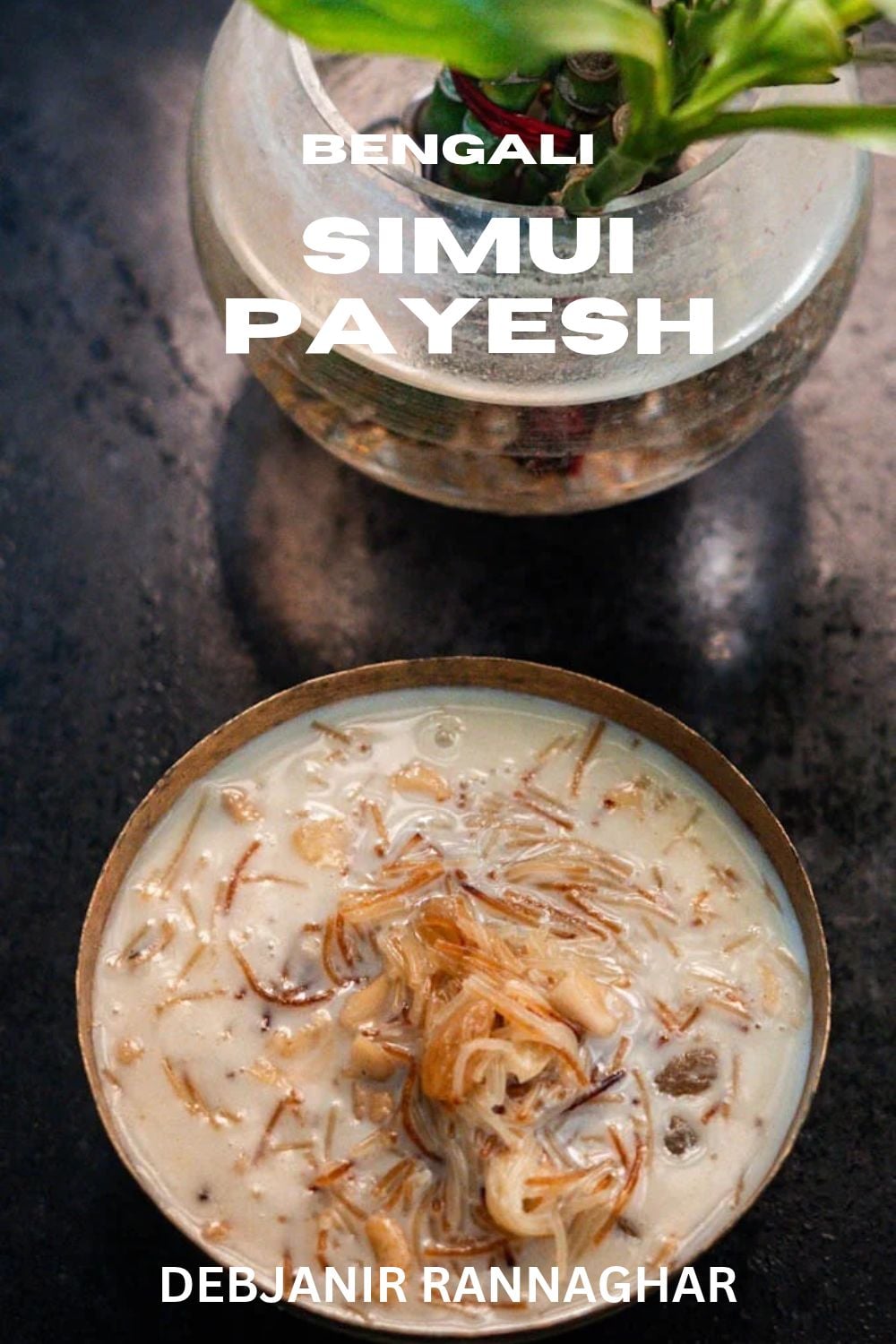
Here's the Simui Payesh Recipe Pin for your Pinterest Board

About Debjani Chatterjee Alam
I am Debjani Chatterjee Alam, an ESG and Corporate Social Responsibility (CSR) professional by vocation, and a food writer, blogger, and photographer by passion. I live in Kolkata with my husband, Mehebub, an architect by profession, our daughter Pasta, and our two furry daughters: Coffee, our Golden Retriever, and Luchi, our pug. Between my work in sustainability and social impact, my love for food, storytelling, and photography, and the delightful chaos of family life, I find inspiration in the everyday moments that make life meaningful.





Leave a Reply