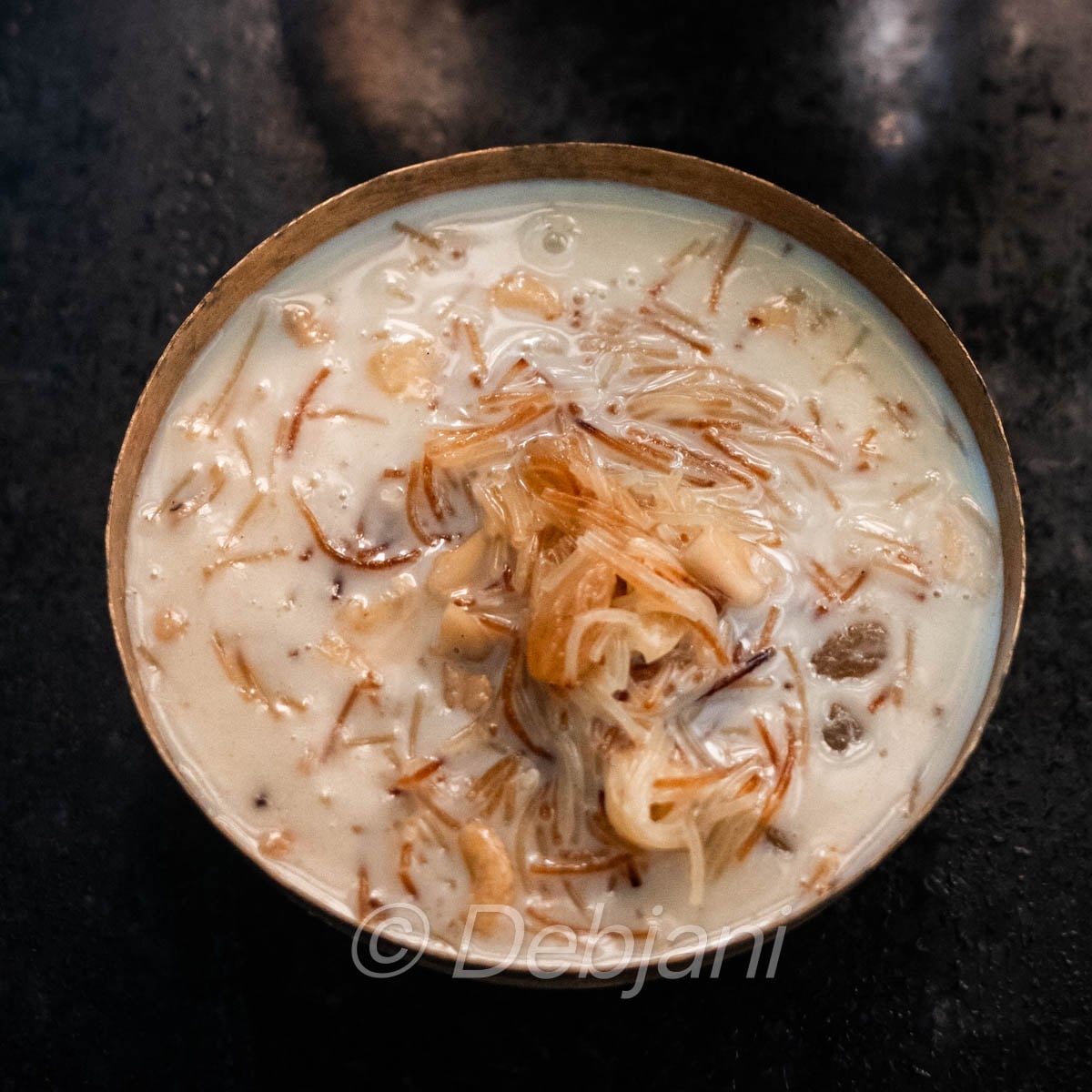
Bengali Simui Payesh Recipe | Vermicelli Kheer
Bengali Simui Payesh is a traditional vermicelli dessert made with milk, ghee, cashews, raisins and cardamom. This simple, comforting payesh is often prepared for Bhai Phota and other Bengali celebrations.
Print
Pin
Servings: 4 people
Calories: 600kcal
Equipment
- 1 Heavy-bottomed pan or kadai For roasting the vermicelli and cooking the payesh
- 1 Spatula For stirring
Ingredients
- 150 g Thick vermicelli Simui
- 3 tablespoon Ghee
- 50 g Cashew nuts Broken
- 50 g Raisins
- 500 ml Full cream milk
- 2 Bay leaves
- 150 g Sugar Adjust to taste
- 1 teaspoon Cardamom powder

Instructions
- Heat ghee in a heavy-bottomed pan. Add the thick vermicelli and roast over low to medium heat until it turns lightly golden and aromatic.
- Add the broken cashew nuts and raisins to the roasted vermicelli. Continue roasting for a minute or two until the cashews turn lightly golden and the raisins begin to plump up.
- Pour the milk into the pan gradually, stirring gently. Add the bay leaves and bring the mixture to a gentle simmer.
- Simmer for around 7 minutes, stirring occasionally, until the vermicelli is partially cooked and begins to soften.
- Add the sugar and stir until it dissolves. Continue cooking until the vermicelli is completely soft and the payesh reaches the consistency you prefer.
- Add the cardamom powder and stir gently. Switch off the heat.
Keep stirring so the vermicelli roasts evenly without burning.
Keep the heat low to medium. Milk can easily catch at the bottom of the pan.
Rest and serve
- Allow the Simui Payesh to rest for a few minutes before serving. Serve warm or chilled, as preferred.
Video
Notes
- I use thick vermicelli for this recipe, as it holds its shape better while cooking in milk.
- Roast the vermicelli in ghee before adding milk. This gives the payesh its characteristic aroma and flavour.
- Keep stirring occasionally while the payesh simmers, especially after adding sugar, to prevent the milk from sticking to the bottom.
- The payesh will thicken further as it cools. So, switch off the heat while it is still slightly thinner than your desired final consistency.
- You can adjust the sugar according to your preference. The raisins also add a little natural sweetness.
- Bengali Simui Payesh can be served warm or chilled. I particularly enjoy serving it with hot luchi for a festive Bhai Phota meal.
Nutrition
Serving: 220g | Calories: 600kcal | Carbohydrates: 85g | Protein: 11g | Fat: 24g | Saturated Fat: 12g | Polyunsaturated Fat: 1g | Monounsaturated Fat: 7g | Trans Fat: 0g | Cholesterol: 28mg | Sodium: 75mg | Potassium: 400mg | Fiber: 2g | Sugar: 43g | Vitamin A: 400IU | Vitamin C: 1mg | Calcium: 160mg | Iron: 2mg
