

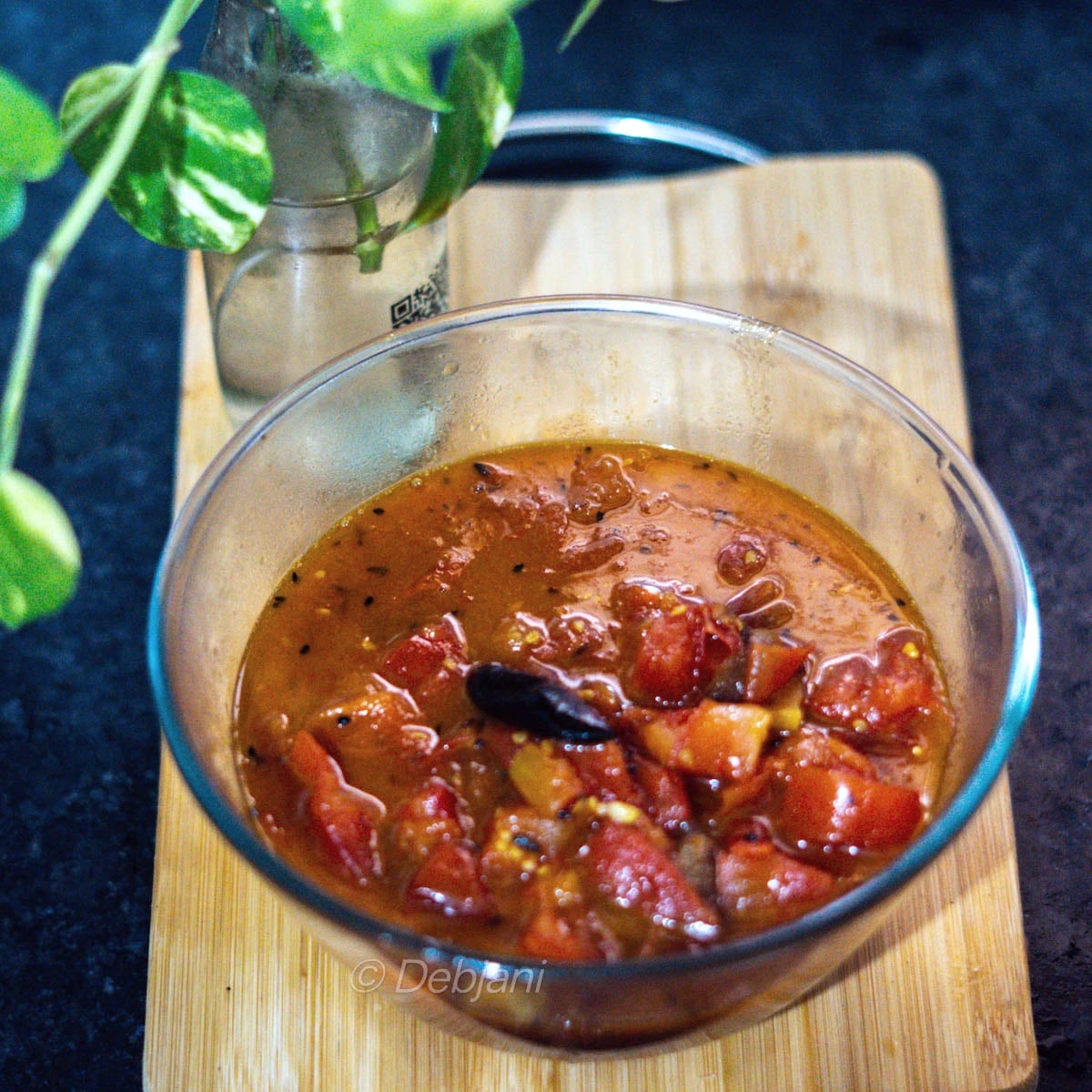
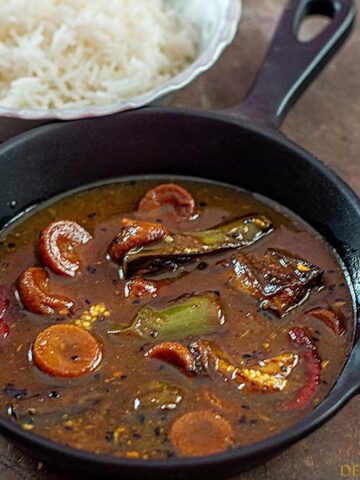
Tomato Chutney Rosogollar Rosh Diye is my latest experiment in making sure nothing goes to waste in a Bengali kitchen. Remember the Rosogollar Dalna recipe I shared earlier? Recently, while revisiting that recipe for its video, I found myself thinking about the leftover Rosogolla syrup again. I had promised to show what I would do with it, and here is the answer! A little mustard oil, panchphoron, ginger, tomatoes and that leftover rosh later, we have a lovely sweet and tangy chutney. The Rosogolla has already had its starring role. Now it is the rosh's turn!
Jump to:
- From Rosogollar Dalna to Tomato Chutney
- Watch the Recipe Video
- What Makes This Tomato Chutney Different?
- A Note on the Flavour
- Ingredients for Tomato Chutney Rosogollar Rosh Diye
- A few notes on the Ingredients
- How to Make Tomato Chutney Rosogollar Rosh Diye
- Debjani's Tips for Making This Chutney
- Variations and Substitutions
- Adjusting the Sweetness and Consistency
- What to Serve with Tomato Chutney
- Can You Prepare This Chutney in Advance?
- How to Store Tomato Chutney Rosogollar Rosh Diye
- Frequently Asked Questions
- Related Chutney Recipes
- A Final Note from Debjanir Rannaghar
- Recipe Card
- Have you tried the Rosogollar Rosh diye Tomato Chutney Recipe from Debjanir Rannaghar?
- Here's the Rosogollar Rosh diye Tomato Chutney Recipe Pin for your Pinterest Board
From Rosogollar Dalna to Tomato Chutney
When I first shared my Rosogollar Dalna recipe, it came with its own share of raised eyebrows. Mehebub was not particularly convinced by the idea of cooking Rosogolla in a savoury gravy. The guests, however, asked for a second helping before discovering what they had actually eaten!
Years later, while making the Rosogollar Dalna video, I revisited the recipe and thought about the syrup left behind after preparing the Rosogollas. That gave me the idea for this chutney.
The Dalna had already given the Rosogollas their savoury transformation. Now the syrup could have its own moment. Quite a productive career for one batch of mishti!
Watch the Recipe Video
Here is the video of Tomato Chutney Rosogollar Rosh Diye. You can watch the entire preparation, from tempering the spices to adding the syrup and cooking the chutney.
What Makes This Tomato Chutney Different?
Bengali tomato chutney often uses sugar, dates or other ingredients for sweetness. This version takes a slightly different route. The leftover Rosogolla syrup does the sweetening, while tomatoes provide the tangy base.
I use mustard oil, dried red chillies, panchphoron and ginger to keep the flavour familiar. The syrup adds sweetness and a gentle aroma, but it does not turn the preparation into a dessert. The tomatoes and spices still have their say!
There is no need to add extra sugar. However, the sweetness of leftover syrup can vary, so I recommend adding it gradually and tasting as you go.
A Note on the Flavour
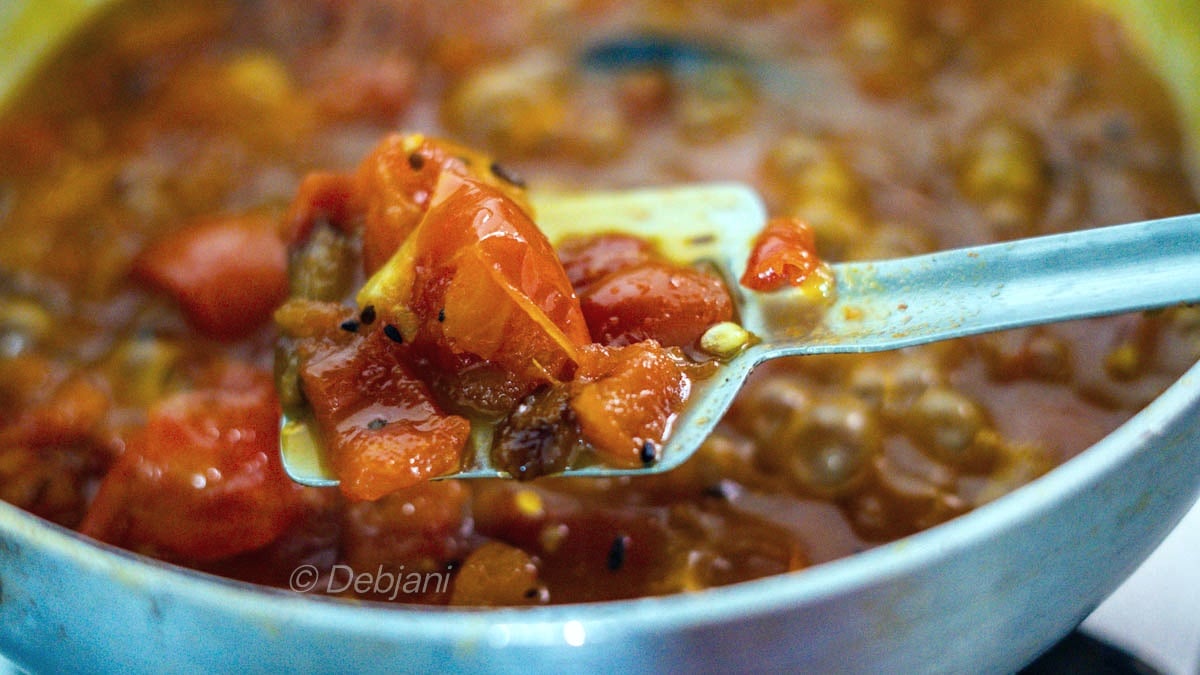
This chutney brings together the tanginess of tomatoes, the aroma of mustard oil and panchphoron, and the sweetness of Rosogolla rosh. Ginger adds warmth, while raisins and cashews contribute little bursts of texture. The final lemon juice keeps the sweetness from taking over the entire show.
Ingredients for Tomato Chutney Rosogollar Rosh Diye
You will need a handful of everyday ingredients for this recipe.
- Tomatoes
- Ginger
- Mustard Oil
- Red Chillies
- Bengali panchphoron
- Salt
- Turmeric powder
- Red chilli powder
- Leftover Rosogolla syrup
- Lemon juice
Check the Recipe card for measurements.
A few notes on the Ingredients
- Tomatoes: Use fresh tomatoes and roughly chop them. They soften during cooking and form the base of the chutney.
- Rosogolla syrup: Start with a smaller quantity and add more after tasting. The sweetness depends on the syrup, so the full quantity may not always be necessary.
- Mustard oil and panchphoron: These bring the familiar Bengali flavour. I prefer mustard oil because its sharpness balances the sweetness.
- Lemon juice: A little lemon juice at the end helps adjust the sourness.
How to Make Tomato Chutney Rosogollar Rosh Diye
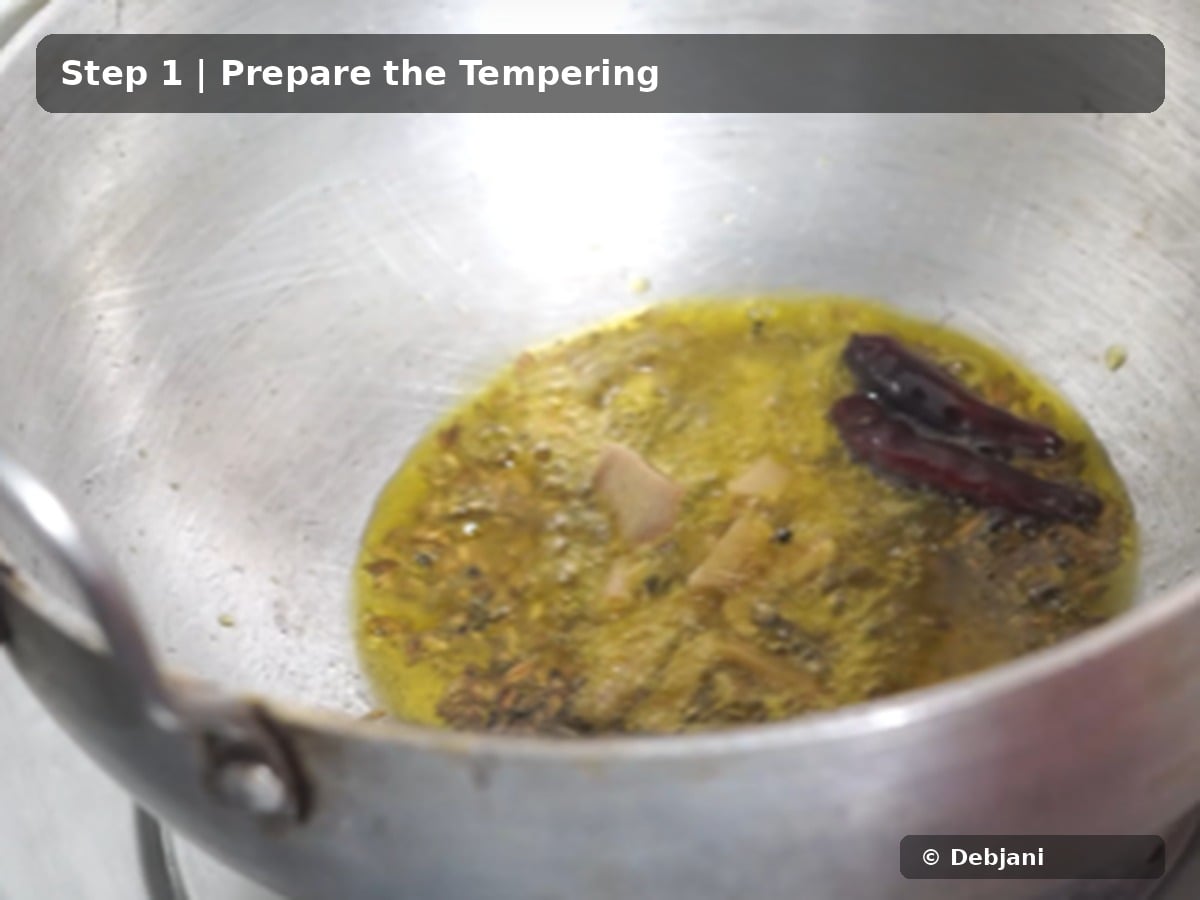
- Prepare the Tempering
Heat 3 tablespoon mustard oil in a kadai. Add 2 dried red chillies and 1 teaspoon Bengali panchphoron. Once aromatic, add 1 tablespoon chopped ginger.
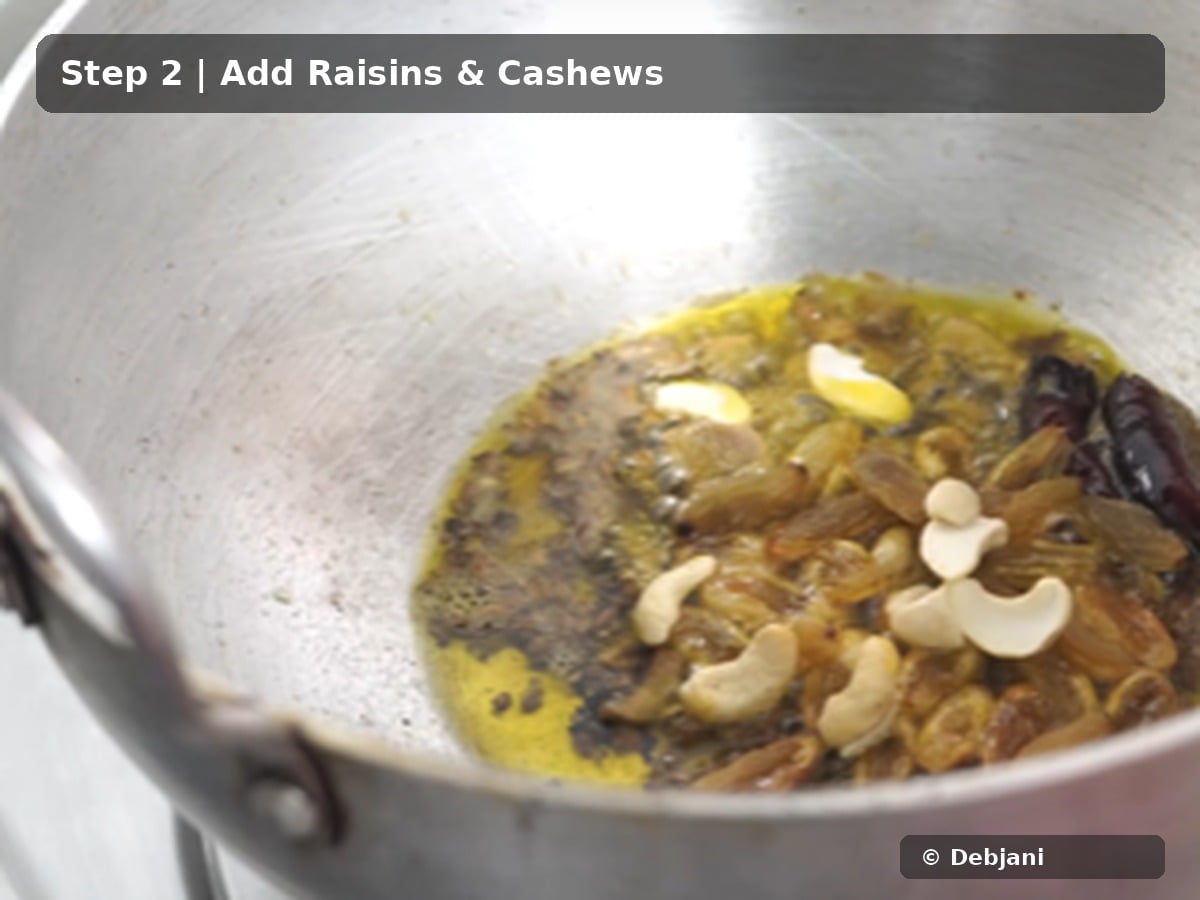
- Add Raisins and Cashews
Add 10-12 raisins and 10-12 cashew nuts. Fry until the raisins puff up, taking care not to burn the spices.
- Cook the Tomatoes
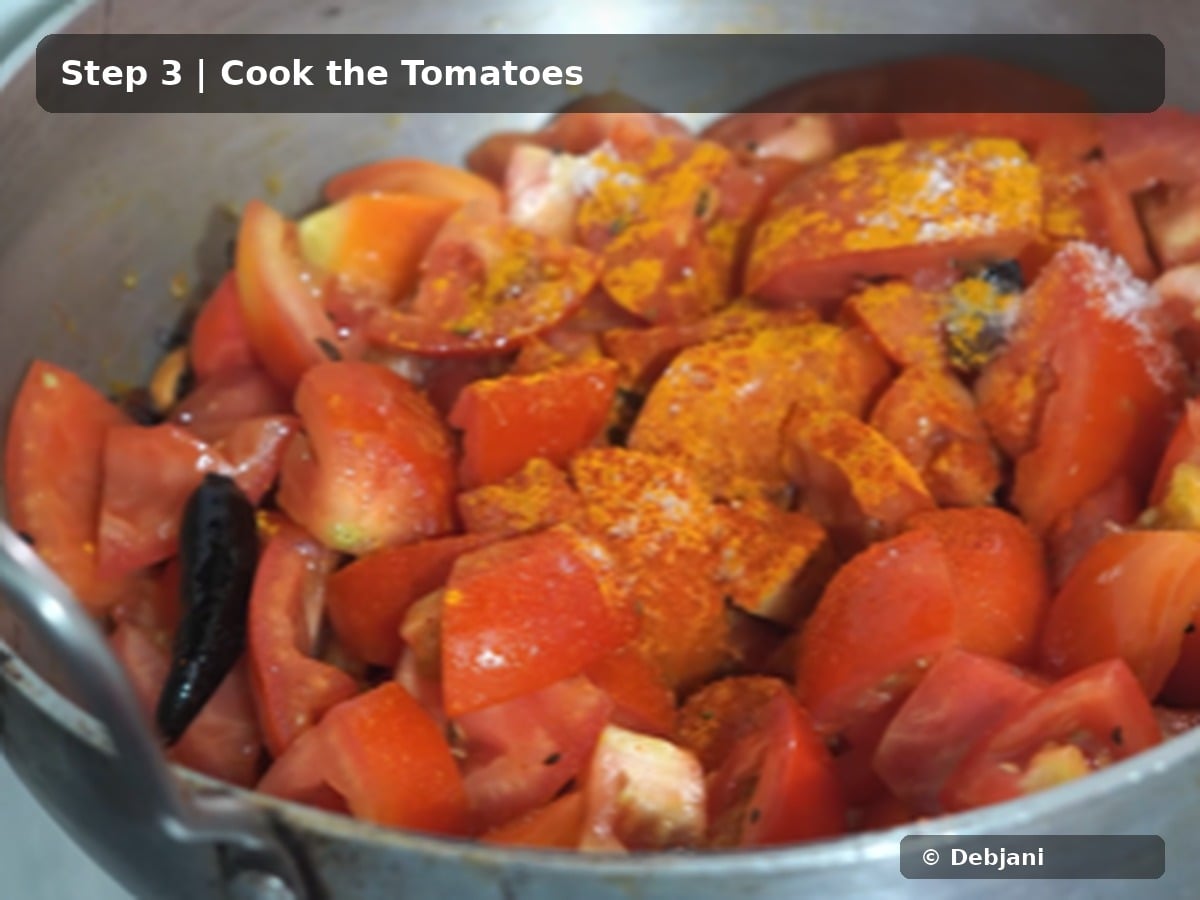
Add 750g roughly chopped tomatoes. Mix well, then add ½ teaspoon salt, ¼ teaspoon turmeric powder and ¼ teaspoon red chilli powder. Cover and cook over medium heat for 5 minutes, followed by another 3 minutes on low heat.
- Add the Rosogolla Rosh
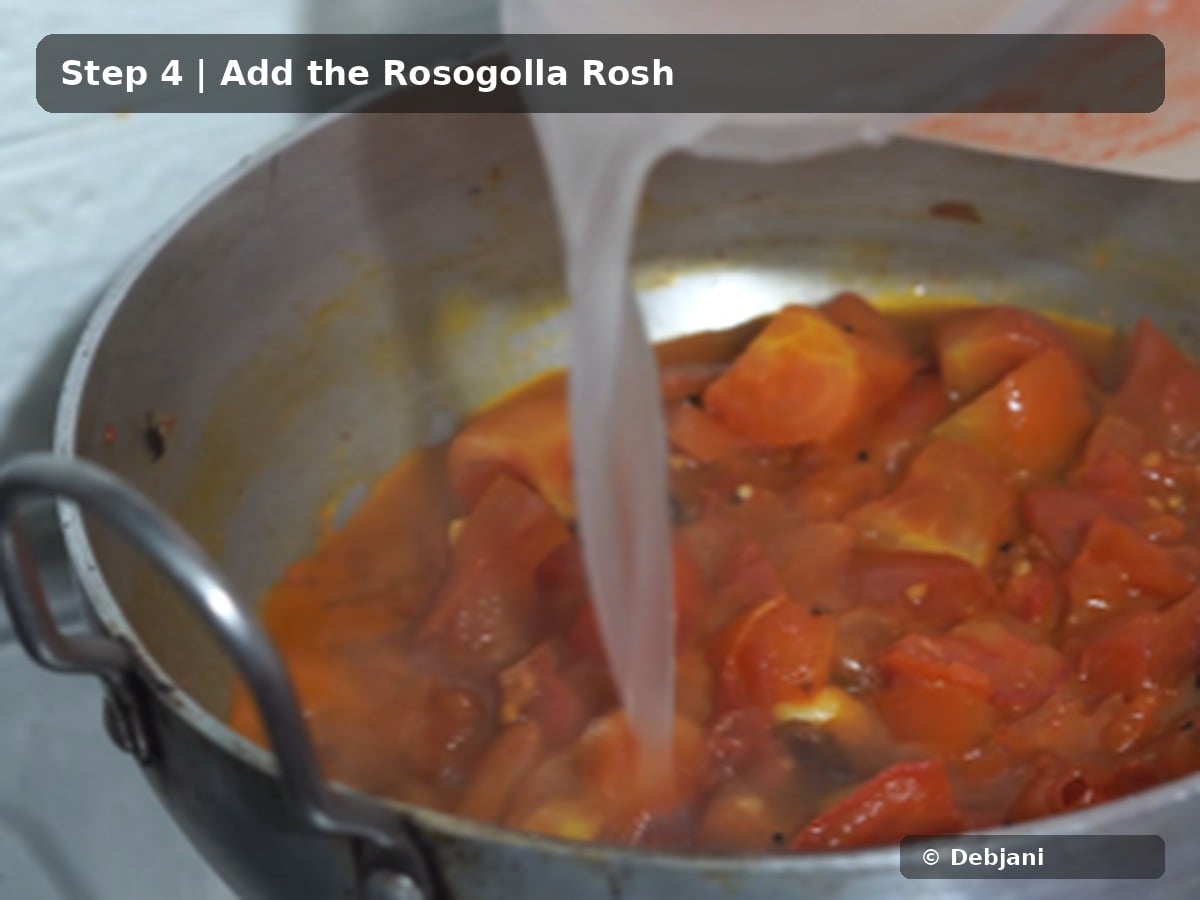
Add leftover Rosogolla syrup gradually. Mix and taste before adding more, as the sweetness and consistency can vary. You can also use Pantooa or Gulab Jamun syrup, although these may be thicker. No extra sugar is needed!
- Cook and Finish
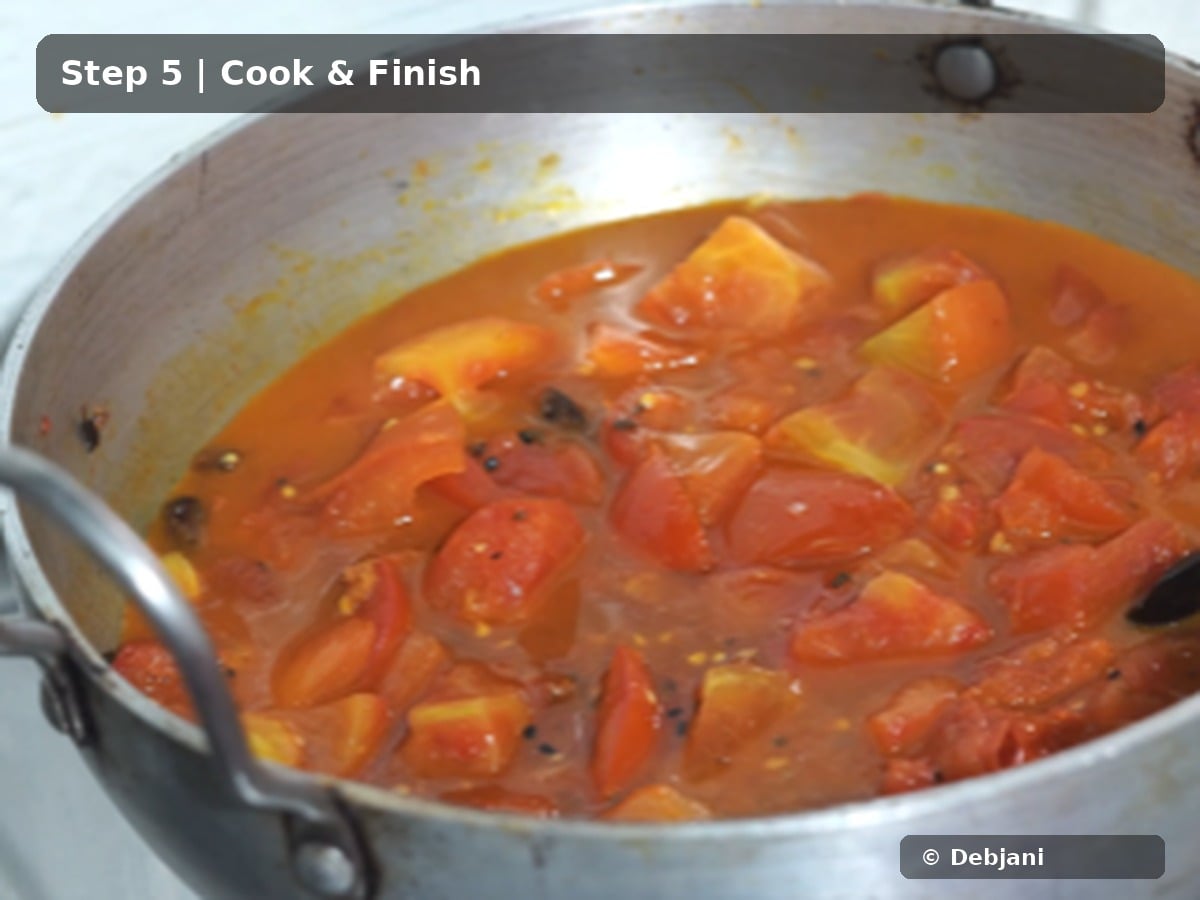
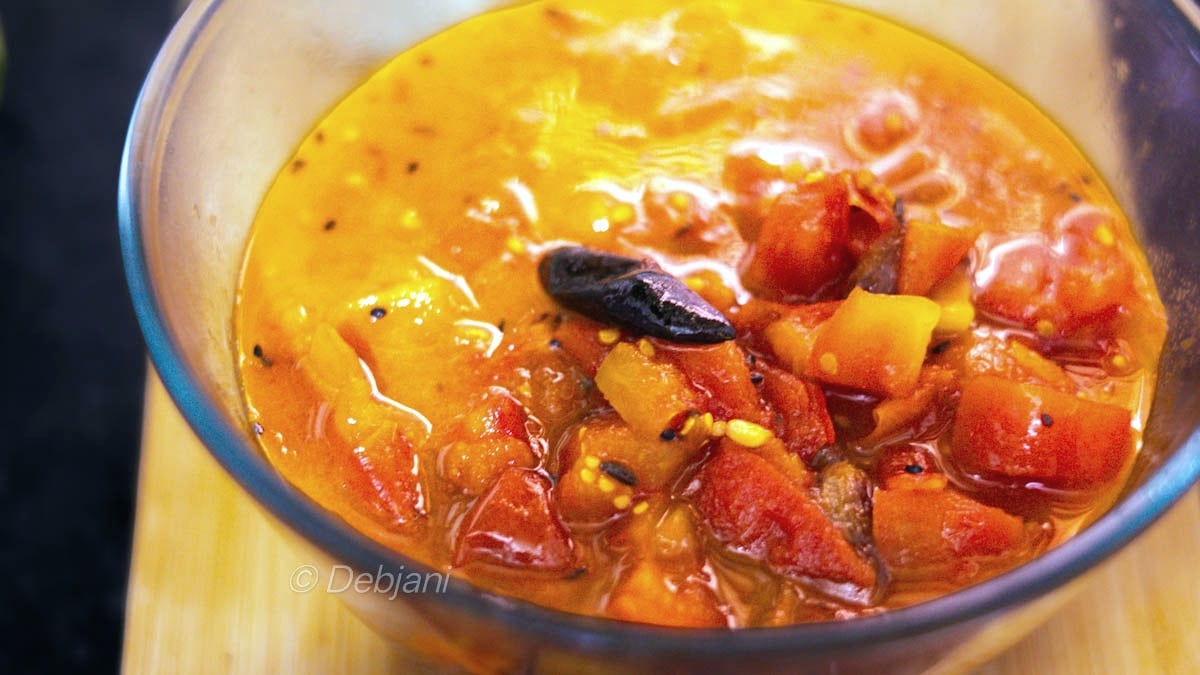
Cover and cook on low heat for another 7 minutes. Finally, add a few drops of lemon juice to balance the sweetness and sourness. Switch off the heat and allow the chutney to cool to room temperature before refrigerating.
Debjani's Tips for Making This Chutney
- Add the Rosogolla syrup gradually. Different batches can have different levels of sweetness.
- Do not add sugar before tasting the chutney. The syrup should provide enough sweetness.
- Allow the tomatoes to soften before adding the syrup.
- Keep the heat low after adding the syrup to prevent the mixture from cooking too quickly.
- If you are using Pantua or Gulab Jamun syrup instead, remember that it may be thicker. Adjust the quantity accordingly.
- Add lemon juice at the end. This makes it easier to balance the final taste.
Debjani's Top Tip: Do not pour all the syrup into the kadai at once. Start small, taste and adjust. We are making chutney, not trying to establish a new record for sweetness!
Variations and Substitutions
You can use leftover syrup from Pantua or Gulab Jamun instead of Rosogolla. However, the consistency and sweetness may differ, so add it gradually.
You can also adjust the amount of dried red chilli according to your preference. I prefer keeping the chutney balanced, with the sweetness of the syrup and the tanginess of tomatoes both coming through.
I would, however, retain the mustard oil and panchphoron. They give this preparation its Bengali character.
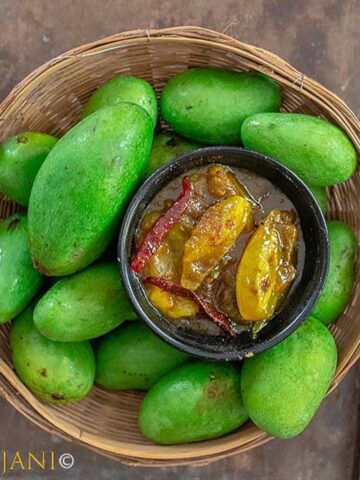
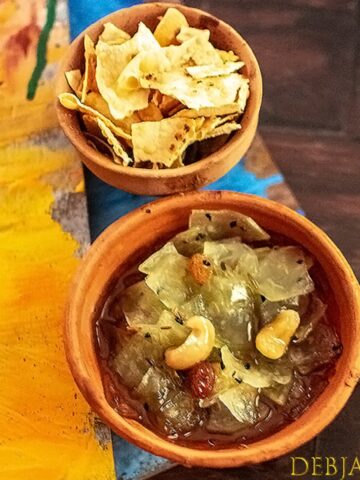
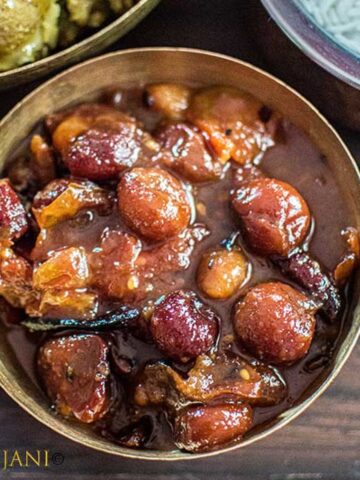
You can also explore my Tomato Amsotto Khejur er Chutney, a richer Bengali chutney made with tomatoes, dates, Aamsotto, cashews and raisins. That one is a different affair altogether, and a rather special one at that!
Adjusting the Sweetness and Consistency
The sweetness of leftover Rosogolla rosh varies. Therefore, start with a smaller quantity and add more after tasting. If the chutney becomes too sweet, a few drops of lemon juice can help balance the flavour.
If you are scaling the recipe, increase the ingredients proportionately, but add the syrup gradually rather than assuming you will need the same proportion every time.
What to Serve with Tomato Chutney
A Bengali chutney usually arrives towards the end of a meal, after the savoury courses and before dessert. This sweet and tangy preparation works well as part of a traditional Bengali lunch or dinner.
- Seddho Chaler Bhat in Microwave | How to cook Parboiled Rice in a Microwave
- Bengali Veg Daal Recipe | Picnic Special Vegetable Daal | Shobji Diye Bhaja Moong Dal | Yellow Split Pea cooked with Veggies
- Gota Posto Diye Aloo Bhaja
- Macher Jhol Piyaj, Aloo, Tomato, Dhonepata diye | Bengali Fish Curry with All-season Vegetables recipe with Video



Can You Prepare This Chutney in Advance?
Yes! You can prepare this chutney ahead of a Bengali meal. In fact, allowing it to cool completely before serving gives the flavours time to settle. Store it in a clean, airtight container in the refrigerator and serve it chilled or bring it closer to room temperature before serving.
How to Store Tomato Chutney Rosogollar Rosh Diye
Allow the chutney to cool completely before transferring it to a clean, airtight container. Refrigerate it and always use a clean, dry spoon while serving.
Since this recipe uses leftover sweet syrup, I prefer keeping it refrigerated. Avoid leaving it at room temperature for extended periods.
Frequently Asked Questions
Yes! Leftover Rosogolla syrup works as the sweetening ingredient in this chutney. Add it gradually and adjust the quantity according to its sweetness.
Yes. Both can work, although the syrup may be thicker or sweeter. Add a little at a time and adjust the consistency.
No. The Rosogolla syrup provides the sweetness, so this recipe does not need additional sugar.
Not really! The syrup adds sweetness and aroma, while the tomatoes, ginger, mustard oil and panchphoron keep the flavour firmly in chutney territory.
Yes, provided it is fresh and has been handled and stored safely. Use it in the same gradual manner.
Related Chutney Recipes
If you enjoy Bengali chutneys and recipes with a little story behind them, here are a few more from my kitchen.

A Final Note from Debjanir Rannaghar
The Rosogollar Dalna started this little story. The leftover syrup gave it a sequel, and the tomatoes happily joined the plot.
In a Bengali kitchen, food rarely has a one-time appearance. Ingredients return, recipes evolve, and yesterday's leftover sometimes becomes today's new recipe. Even the Rosogolla syrup has managed to get its own post!
Now tell me, what do you usually do with the syrup left after finishing a bowl of Rosogolla?
Recipe Card
Tomato Chutney Rosogollar Rosh Diye | Bengali Tometor Chutney Recipe
Ingredients
- 750 g tomatoes roughly chopped
- 1 tablespoon ginger chopped
- 3 tablespoon mustard oil
- 2 dried red chillies
- 1 teaspoon Bengali panchphoron
- 12 raisins
- 12 cashew nuts
- ½ teaspoon salt
- ¼ teaspoon turmeric powder
- ¼ teaspoon red chilli powder
- 3 cups Leftover Rosogolla syrup contains 150g sugar
- 1 teaspoon lemon juice

Instructions
- Roughly chop the tomatoes. There is no need to cut them finely. Chop the ginger as well.
- Heat mustard oil in a kadai. Add dried red chillies and panchphoron.
- Once the spices release their aroma, add chopped ginger.
- Add raisins and cashews. Fry until the raisins puff up, taking care not to burn the tempering.
- Add the chopped tomatoes and mix well with the spices, raisins and cashews.
- Add salt, turmeric powder and red chilli powder. Mix everything thoroughly.
- Cover and cook over medium heat for 5 minutes.
- Reduce the heat and cook for another 3 minutes.
- Add the leftover Rosogolla syrup gradually. Taste and adjust the quantity according to its sweetness. You can also use Pantooa or Gulab Jamun syrup, but remember that these may have a thicker consistency.
- Mix well, cover and cook over low heat for another 7 minutes.
- Add a few drops of lemon juice to balance the sweetness and sourness.
- Switch off the heat. Cool the chutney to room temperature before refrigerating.
Video
Notes
- The leftover Rosogolla syrup adds sweetness, flavour, texture and aroma to the chutney.
- Cool completely before transferring to a clean, airtight container.
- Refrigerate and use a clean, dry spoon when serving.
- The chutney can be stored in the refrigerator for several days.
Nutrition
Have you tried the Rosogollar Rosh diye Tomato Chutney Recipe from Debjanir Rannaghar?
Please share your experience with me, and feel free to send a photo to dolonchttrj@gmail.com. Additionally, you can find me on various social media platforms, including Instagram, YouTube, Facebook, Pinterest, Google News, X, and Thread. Don't forget to use the hashtag #debjanirrannaghar when sharing your attempts at my recipes or if you have any questions or recipe requests.
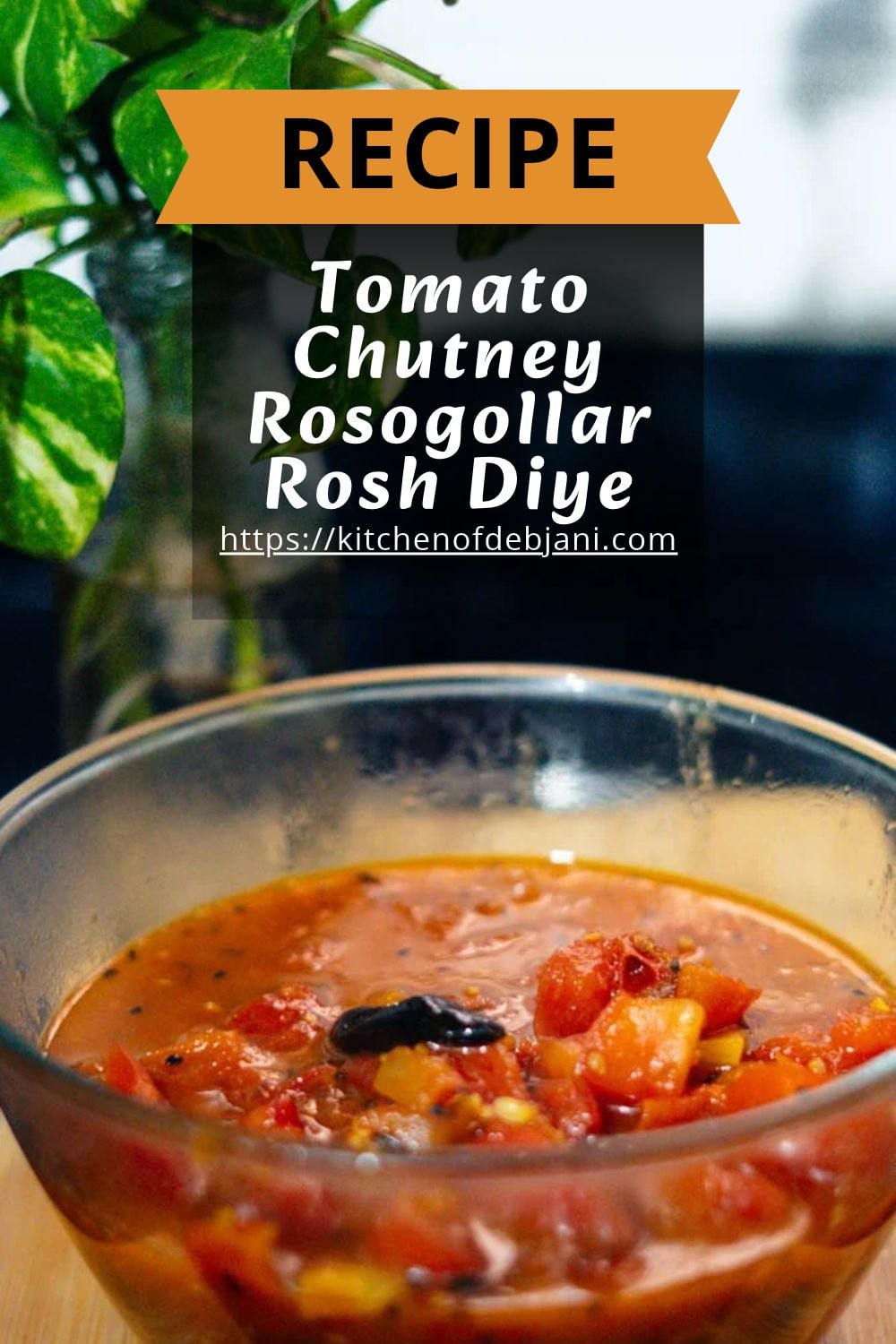
Here's the Rosogollar Rosh diye Tomato Chutney Recipe Pin for your Pinterest Board

About Debjani Chatterjee Alam
I am Debjani Chatterjee Alam, an ESG and Corporate Social Responsibility (CSR) professional by vocation, and a food writer, blogger, and photographer by passion. I live in Kolkata with my husband, Mehebub, an architect by profession, our daughter Pasta, and our two furry daughters: Coffee, our Golden Retriever, and Luchi, our pug. Between my work in sustainability and social impact, my love for food, storytelling, and photography, and the delightful chaos of family life, I find inspiration in the everyday moments that make life meaningful.



Leave a Reply