

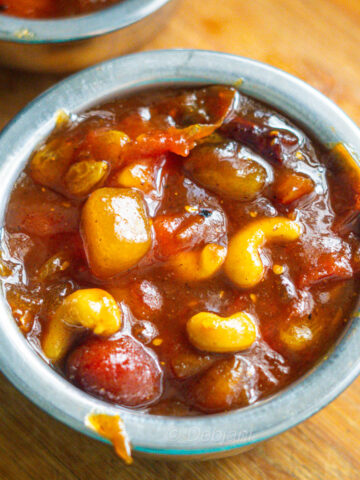
Let's talk about Dishi Amra-r Ambol! You might know it as Amrar Tok, or even the fancier Bengali Hog Plum Chutney. But hold on, it's not quite chutney. This is true Bengali Ambole, a kind of tangy condiment we simply call "ambol" in everyday life. It's made with the seasonal hog plum fruit, and I absolutely adore it.

Jump to:
- Debjani's Note
- Variations of this Dishi Amra-r Ambol
- Dishi Amra Vs. Bilati Amra
- How to make this Dishi Amra-r Ambol or Amra'r Tok
- Top tip
- Frequently Asked Questions
- Recipe Card
- Related Recipes
- Pairing Amrar Ambole
- Have you tried the Bengali Dishi Amra-r Ambol recipe from Debjanir Rannaghar!
- Here's the Aamra'r Tok recipe Pin for your Pinterest Board
Debjani's Note
I've been meaning to share this Dishi Amrar Ambol recipe for ages. Okay, I admit, I'm a bit obsessed with all kinds of ambol! I think there are already at least five ambol recipes on the blog. It works wonderfully as a palate cleanser and is a staple in Bengali cuisine.
I usually cook on weekends because, as a full-time CSR professional, that's when I have time to be in the kitchen. When I do cook, I always try to make at least one Bengali meal. It's not a chore, but a pleasure. A simple Bengali meal is what my family loves most.

To finish a meal, I often like something sour - this is a regular Bengali thing to finish a meal with a condiment. Ambol, a type of sweet and sour condiment, is perfect for this. I usually make it with fruits or vegetables that are in season. One example is Dishi Amrar Ambol, also known as Hog Plum Ambole.
Variations of this Dishi Amra-r Ambol
In Bengali cooking, there are subtle differences between Chutney, Ambol, and Tok. Chutney is usually thick, while Ambol and Tok are more like thin soups. When Ambol is cooked with animal protein, like fish heads and tails, it's called Sambole.
So, to keep it simple, this Deshi Amra-r Ambol isn't really a Hog Plum Chutney or Achar. It's more of a comforting, runny soup.
Dishi Amra Vs. Bilati Amra
Now, for the fun part: the local versus foreign aspect of this recipe. You might have noticed I called it "Deshi Amra-r Ambol." "Deshi" means Indian, because there's also a "bilati" (foreign) version of hog plum. It's simply not the native Indian kind.
The difference? Indian, or Deshi, Hog Plums are small and tangy. The non-native, bilati amra are bigger and sweeter. This recipe uses the Indian Hog Plum, also known as Deshi Amra.
How to make this Dishi Amra-r Ambol or Amra'r Tok
-
Here's what you'll need to make this dish: about 10 unripe Hog Plums, the Indian variety. First, peel the plums. Then, using a mortar and pestle or a Shil-Nora (Shil batta), gently crush each plum two or three times. This will help release their juices, as these plums can be difficult to cut due to their stoniness.

-
Next, heat a little oil and temper it with either mustard seeds or Bengali panch phoron - both work well, but mustard seeds are my preference. Add a dry red chili along with the seeds. Then, add the crushed plums, followed by a little salt and turmeric powder. Cook for about 5 minutes, stirring occasionally.

-
After that, add around 500ml of water and let the plums cook for at least 20 minutes on low heat. The longer they cook, the more juice they'll release. Finally, stir in sugar or jaggery, mix thoroughly, and cook for another 5 minutes before turning off the heat.

-
Remember, Amra-r Ambol should be runny. If it starts to dry out during cooking, add more water to maintain the desired consistency.
-
For the best taste, serve Dishi Amrar Ambol at room temperature. You can also keep it in the fridge.

Top tip
First, cook the hog plums, or Dishi Amra, in water for a long time without any sugar or jaggery. Boil them until they're very soft. This allows them to release all of their tart juice. Once the juice is released, add sugar or jaggery to create that perfect sweet and sour flavor.
Frequently Asked Questions
Amra is called Hog Plum in English. Its scientific name is Spondias mombin. In Sanskrit, Amra is called Amrataka.
Local, or Deshi, Hog Plums are small and sour. The foreign, bilati amra are larger and sweeter. This recipe uses the Local Hog Plum, also called Deshi Amra.
Amra has a lot of vitamin A, which helps keep your eyes, skin, and important body parts healthy. It also has plenty of calcium, so eating amra regularly can help keep your bones strong, your heart and muscles working well, and prevent bone loss.
Yes, you can, especially Bilati Amra, because they are sweet. Local or Dishi amra are used to make chutney, jam, jelly, pickles, and other things.
Recipe Card
Dishi Amra-r Ambol | Bengali Hog Plum Chutney | Amra'r Tok Recipe
Equipment
- 1 Shil Nora
- 1 Knife
- 1 Kadhai
- 1 Spatula
Ingredients
- 10 Hog Plum / Dishi Amra unripe native Indian variety
- 1 tablespoon mustard oil
- 1 teaspoon mustard seed / 1 teaspoon bengali panch phoron either
- 1 dry red chili
- 1 teaspoon turmeric powder
- 1 teaspoon salt
- 10 tablespoon sugar or 150g jaggery
- 500 ml water

Instructions
- You'll need about 10 unripe Hog Plums, the Indian type.
- Peel them. Use something heavy, like a mortar and pestle, to lightly smash each plum a couple of times to break them up slightly. This makes it easier for the juice to come out. These plums are hard to cut because of the pit, so smashing them helps.
- Next, heat 1 tablespoon of mustard oil in a pan.
- Add either 1 teaspoon of mustard seeds or 1 teaspoon of Bengali five-spice as tempering. Either one is fine, but mustard seeds are preferred.
- Toss in a dried red chili too.
- Then, add the smashed plums, followed by 1 teaspoon of salt and ½ teaspoon of turmeric powder.
- Cook for 5 minutes, stirring occasionally.
- After that, add about 500ml of water and let the plums cook on low heat for at least 20 minutes. The longer they cook, the more juice they'll release.
- After 20 minutes, add 10 tablespoons of sugar or 150g of jaggery and mix well.
- Cook for 5 more minutes, then turn off the heat. The Amra-r Ambol should be somewhat liquidy.
- Add more water if it's too thick. Let it sit at room temperature before you eat it. For the best taste, you can also keep Dishi Amrar Ambol in the fridge.
Notes
- This recipe needs small, sour Indian hog plums, called Dishi Amra. The big, sweet kind won't work.
- You can use either mustard seeds or Bengali Panch Phoron for flavoring. But, I like to use just mustard seeds instead of the more complex Bengali five-spice mix.
- A key step is to cook the hog plums for a long time without adding sugar or jaggery, so they become soft while boiling. This helps the hog plums release their sour juice. After the juice comes out, add sugar or jaggery to make it sweet and sour. This makes it easier to get the right taste.
- You can use sugar or jaggery in the same way. Usually, one tablespoon of sugar is used for each hog plum. You can add more or less depending on how it tastes.
Nutrition
Related Recipes
Looking for other recipes like this? Try these:
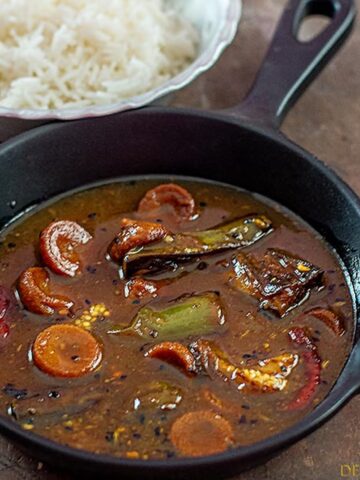
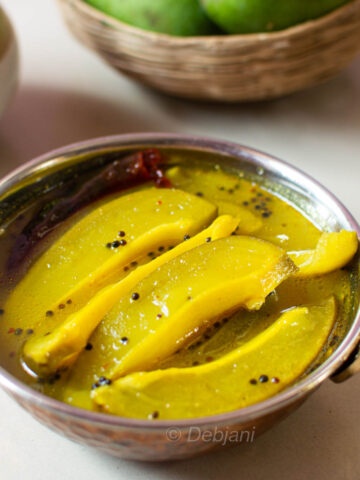

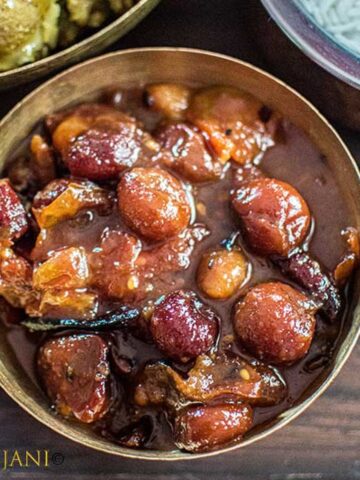
Pairing Amrar Ambole
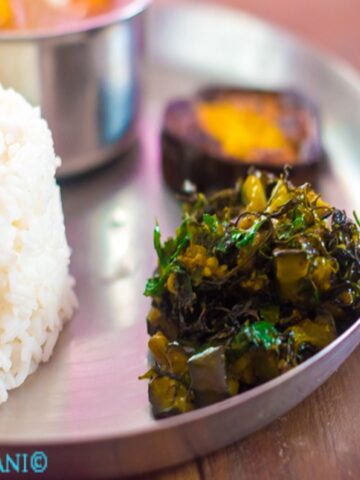
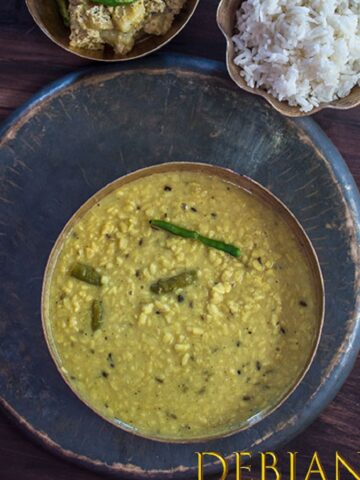
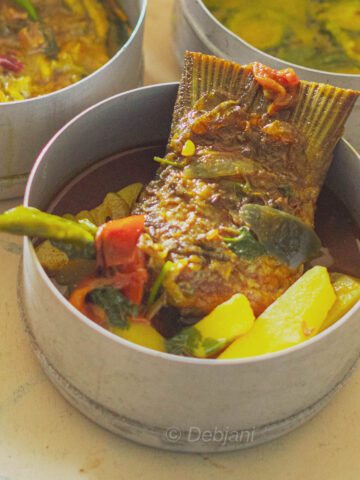
These are my favorite dishes to serve with Dishi Amrar Tok or Ambol:

Have you tried the Bengali Dishi Amra-r Ambol recipe from Debjanir Rannaghar!
Please inform me of your experience, and feel free to send a photo to dolonchttrj@gmail.com. Additionally, you can find me on various social media platforms such as Instagram, YouTube, Facebook, Pinterest, Google News, X, and Thread. Don't forget to use the hashtag #debjanirrannaghar when sharing your attempts at my recipes or if you have any questions or recipe requests.
Here's the Aamra'r Tok recipe Pin for your Pinterest Board


About Debjani Chatterjee Alam
I am Debjani Chatterjee Alam. A CSR specialist by profession and a food writer, food blogger, and food photographer as well. I live in Kolkata along with my Husband Mehebub who is an architect by profession, my daughter Pasta, and also my dog daughters Coffee and Luchi.


Leave a Reply