

Imagine chowmein, but with a distinctly Bengali twist! We are talking about Bengali Holud Chow Mein Recipe, featuring soft noodles, aloo bhaja, badam bhaja and a generous pinch of turmeric. The result is a plate of bright yellow noodles that looks rather different from the usual chowmein.
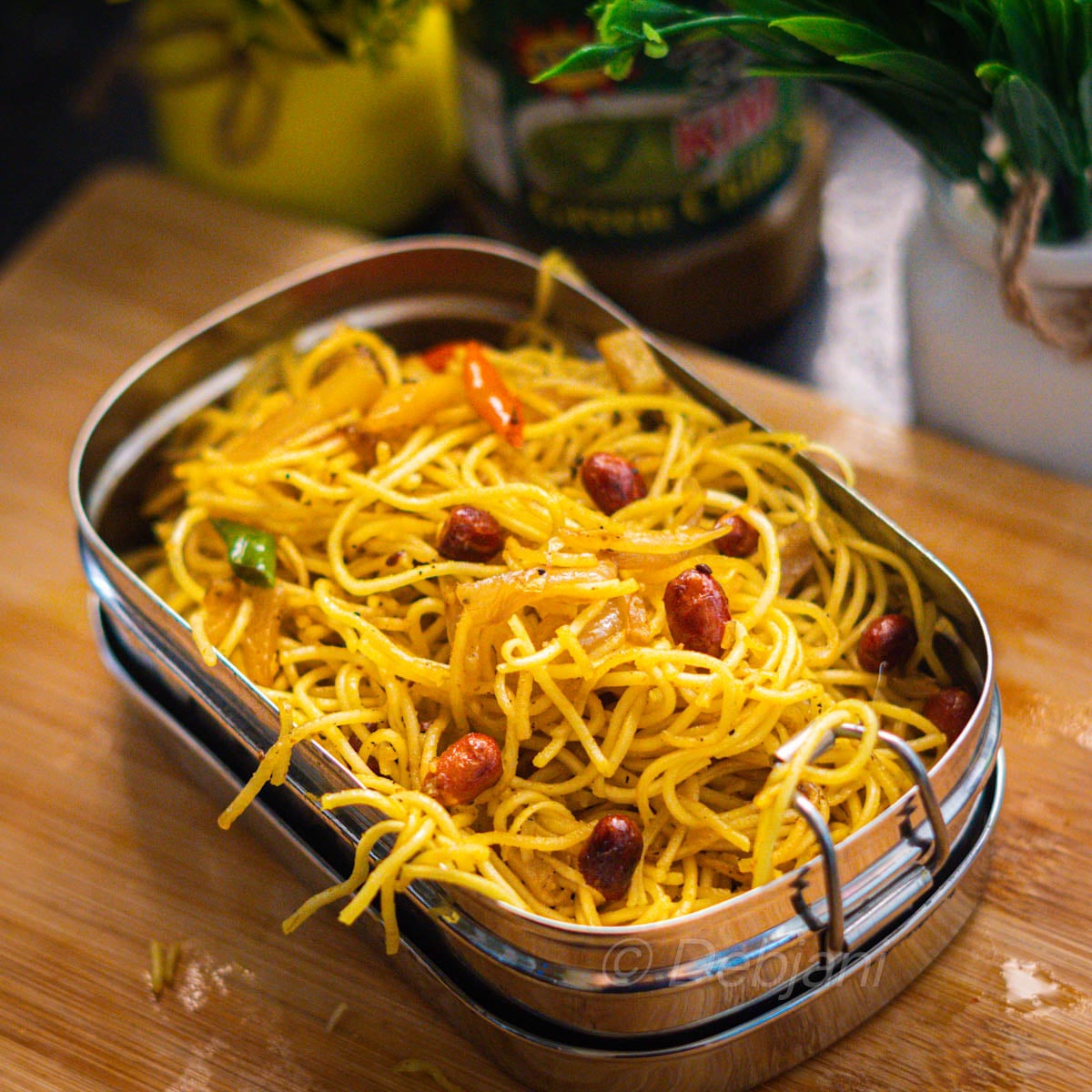
Now, about the taste. Let us just say it was a bit of a family matter! Some people loved it. However, others merely tolerated it. And some probably wondered why perfectly good noodles had to go through this yellow transformation. Opinions were varied, to put it politely. But we aren't here to reopen old culinary disputes. We have a recipe to discuss!
Jump to:
- Sunday Breakfast, School Tiffin and a Little Yellow Nostalgia
- Niramish Chowmein, But Not Always Quite Niramish!
- Every Home Had Its Own Holud Chow
- What is Bengali Holud Chow?
- Why Add Turmeric, Potatoes and Peanuts?
- Debjani's Note
- Ingredients for Bengali Holud Chow
- A Note on the Ingredients
- How to Make Bengali Holud Chow
- Watch How to Make Bengali Holud Chow
- Tips for Making the Best Holud Chow
- Substitutions and Variations
- Advance Preparation and Storage
- What to Serve with Holud Chow?
- Frequently Asked Questions
- Recipe Card
- Related Easy Recipes for School Lunch Box
- Have You Tried This Bengali Holud Chow Recipe?
- Pin This 90s Favourite: Bengali Holud Chow with Aloo Bhaja & Badam Bhaja
Sunday Breakfast, School Tiffin and a Little Yellow Nostalgia
This Holud Chowmein wasn't a restaurant novelty. It was a familiar part of middle-class Bengali childhood, especially during the 1990s.
In fact, it regularly appeared in school tiffin boxes. Picture the anticipation, the clinking of a steel tiffin box and those yellow noodles waiting inside. They were often a little soggy by lunchtime. Did we complain? Some of us probably did. Did we finish them? More often than not!
Over time, the humble chowmein also found its way into Sunday breakfast. Alongside luchi-torkari and porota-aloo bhaja, it held its own in many Bengali homes.
It was inexpensive, filling and easy to prepare. A packet of locally available noodles could feed the family without much fuss. That was quite a practical arrangement, even if the final result divided opinions.
Niramish Chowmein, But Not Always Quite Niramish!
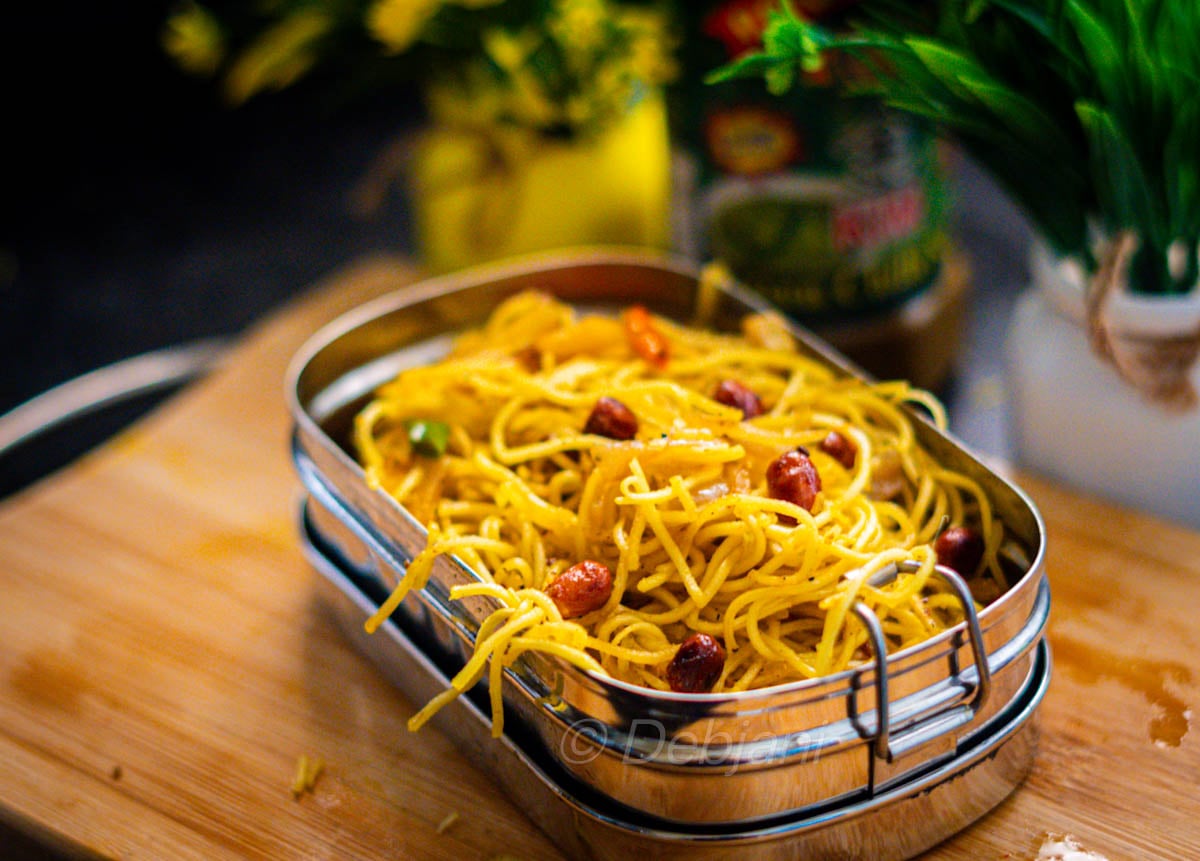
This quirky version became possible because inexpensive chowmein packets were readily available in neighbourhood shops. Bengalis, naturally, found their own ways to experiment with them.
Interestingly, I have often heard this preparation called niramish chowmein. The basic version usually skipped chicken and eggs. However, the ingredients could vary from one household to another.
And then there was my mamar bari version. A spoonful of sugar was non-negotiable! Yes, sugar in chowmein. The sweet counterpoint to the savoury, the unexpected guest nobody had invited but everyone had to accommodate.
Meanwhile, some households added seasonal vegetables too. Potol, kumro and motorshuti could all make an appearance. I remember finding pieces of potol bhaja in my serving. Was it Holud Chow or a vegetable clearance operation? হলুদ চাউ না সবজি উদ্ধার অভিযান?
Every Home Had Its Own Holud Chow
In fact, there was never just one version of this dish. At my home, Ma, Mamoni, Jethima, Dida and Maashi could each have their own interpretation.
Some preferred more aloo bhaja. Others added extra peanuts. A few liked the noodles slightly sweet, while others preferred a sharper, peppery taste.
Some households added Dim bhaja. That is another version altogether, and I plan to share it separately.
A completely onion-free and garlic-free version also deserves its own recipe. This one, however, uses onion and optional garlic. So, while it is vegetarian and eggless, it is not strictly niramish.
That is the thing about home cooking. One dish can have several versions, and every household can be convinced that theirs is the correct one!
What is Bengali Holud Chow?
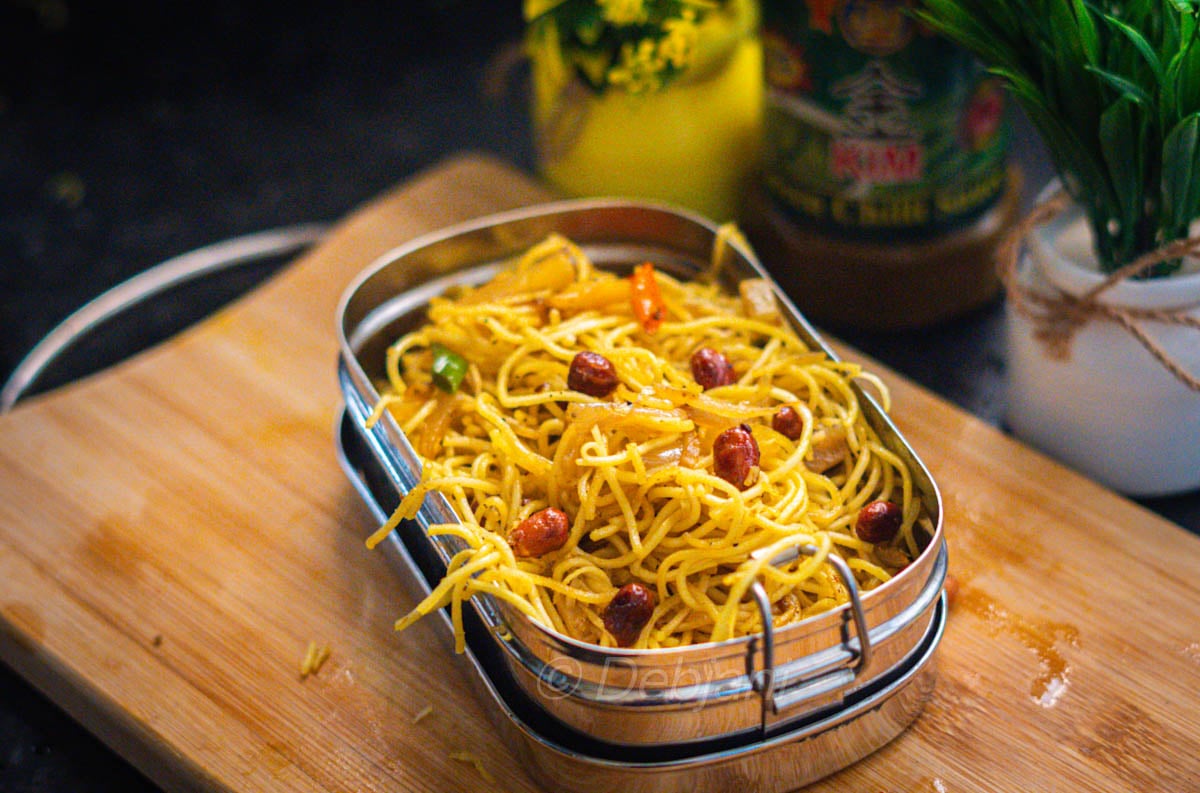
Bengali Holud Chow is a home-style preparation of chowmein noodles cooked with turmeric, fried potatoes, peanuts and everyday spices.
Unlike restaurant-style Chinese chowmein, this version does not depend on sauces or a long list of vegetables. Its flavour comes from mustard oil, turmeric, black pepper and the combination of crispy and soft ingredients.
The name comes from holud, the Bengali word for turmeric. It gives the noodles their distinctive yellow colour.
It is also sometimes called aloo bhaja diye chowmein or niramish chowmein. The names may change between households, but the basic idea remains familiar.
Why Add Turmeric, Potatoes and Peanuts?
Turmeric gives the noodles their signature yellow colour. It also adds a gentle earthy flavour.
Moreover, the potatoes bring a familiar Bengali touch. They soften while cooking and absorb the seasoning. The peanuts add crunch and a slightly nutty flavour.
Black pepper balances the turmeric. Green chillies add heat, while mustard oil gives the dish its unmistakable Bengali character.
The combination is simple. Yet, it makes this preparation quite different from regular chowmein.
Debjani's Note
I use a thin iron kadai to prepare this chowmein. Some households use an aluminium kadai instead.
The important thing is to keep the noodles moving once they go into the pan. A high flame helps, but do not let the spices burn.
I also prefer keeping the noodles long and separate. Overboiled noodles can turn the entire dish into a sticky affair. We want Holud Chow, not yellow noodle paste!
Finally, Garlic is optional. You can skip it if you prefer a simpler flavour.
Ingredients for Bengali Holud Chow
This recipe uses plain Hakka noodles or locally available chowmein noodles. Ching's or a similar brand can also be used.
Ingredients
- plain Hakka noodles or local chowmein noodles
- potato
- onion
- green chilli
- peanuts
- mustard oil
- chopped garlic (optional)
- turmeric powder
- black pepper powder
- salt
Check recipe card for measurements.
A Note on the Ingredients
- Noodles: Use plain Hakka noodles or locally available chowmein noodles. However, the cooking time depends on the brand and noodle thickness.
- Potatoes: Three small potatoes are enough for this quantity. Cut them into thin strips for the aloo bhaja.
- Peanuts: Use raw, unsalted peanuts. Fry them separately and add them towards the end.
- Mustard Oil: This gives the dish its Bengali flavour. Heat it properly before adding the ingredients.
- Turmeric: One teaspoon gives the noodles their characteristic yellow colour. Adjust slightly if your turmeric is particularly strong.
- Black Pepper: It adds warmth and balances the earthy flavour of turmeric.
- Garlic: This is optional. Skip it if you prefer.
How to Make Bengali Holud Chow
- Step 1: Prepare the Vegetables
Peel and cut the potatoes into thin strips. Soak them briefly in water.
Drain the potatoes thoroughly before frying. This helps remove excess starch and reduces splattering.
Slice the onions and chop the green chillies. Keep the chopped garlic ready, if using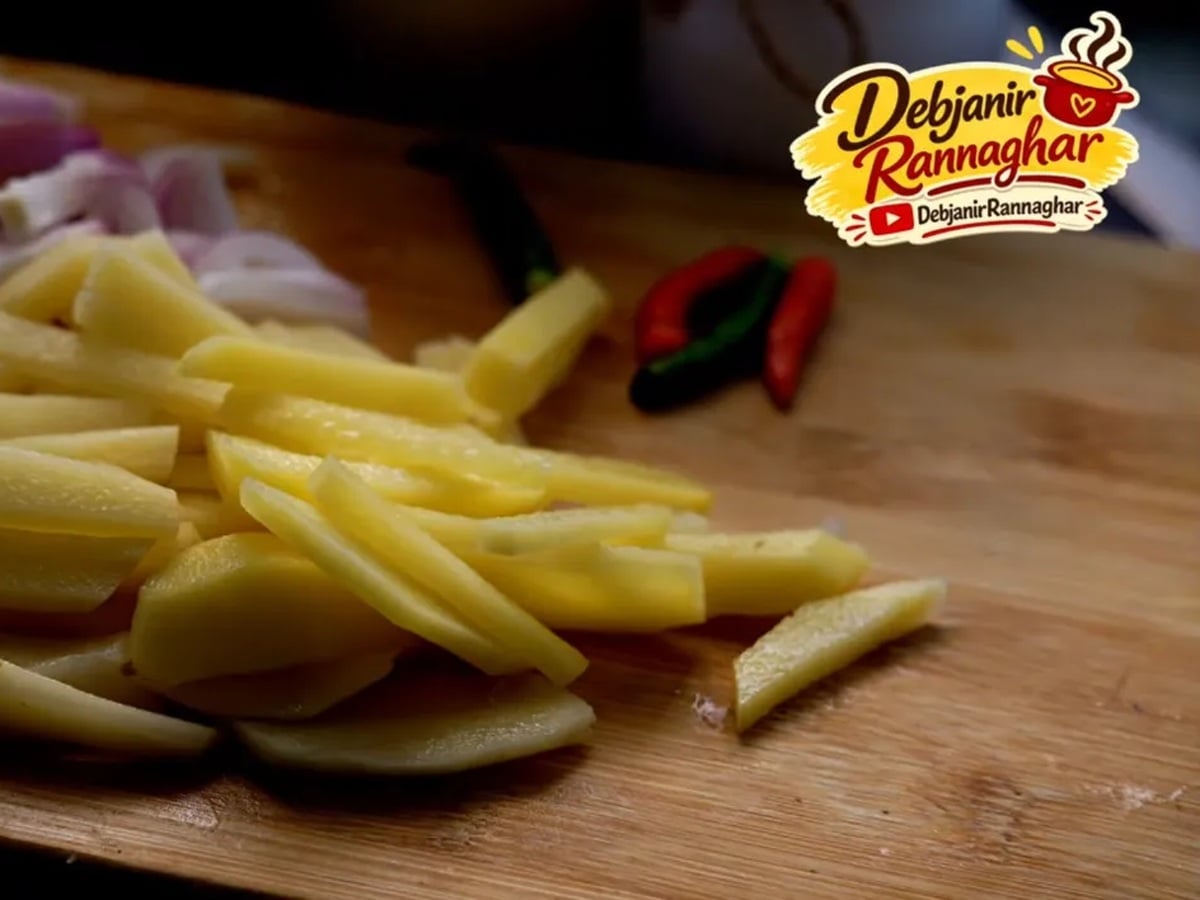
- Step 2: Boil the Noodles
Bring sufficient water to a boil in a large pan. Add two teaspoons of salt.
Add the noodles and cook until just done. Local chowmein noodles may need only about a minute. However, follow the packet instructions for branded Hakka noodles.
Do not overboil them. The noodles should remain long and separate.
Drain immediately. Keep them aside until needed.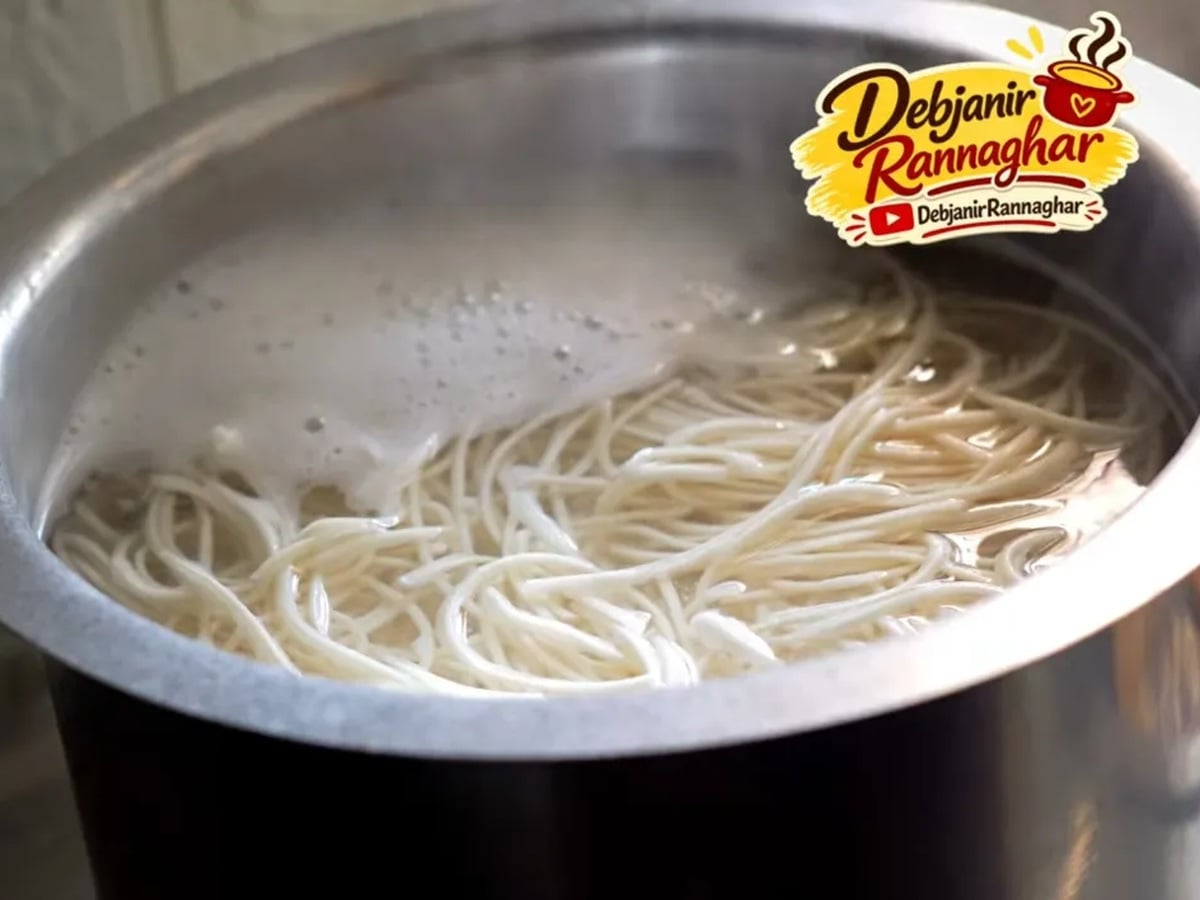
- Step 3: Fry the Peanuts
Heat mustard oil in a kadai.
Add the peanuts and fry them until they become crisp. Remove them from the kadai and keep aside.
Do not discard the remaining oil. We will use it for the vegetables.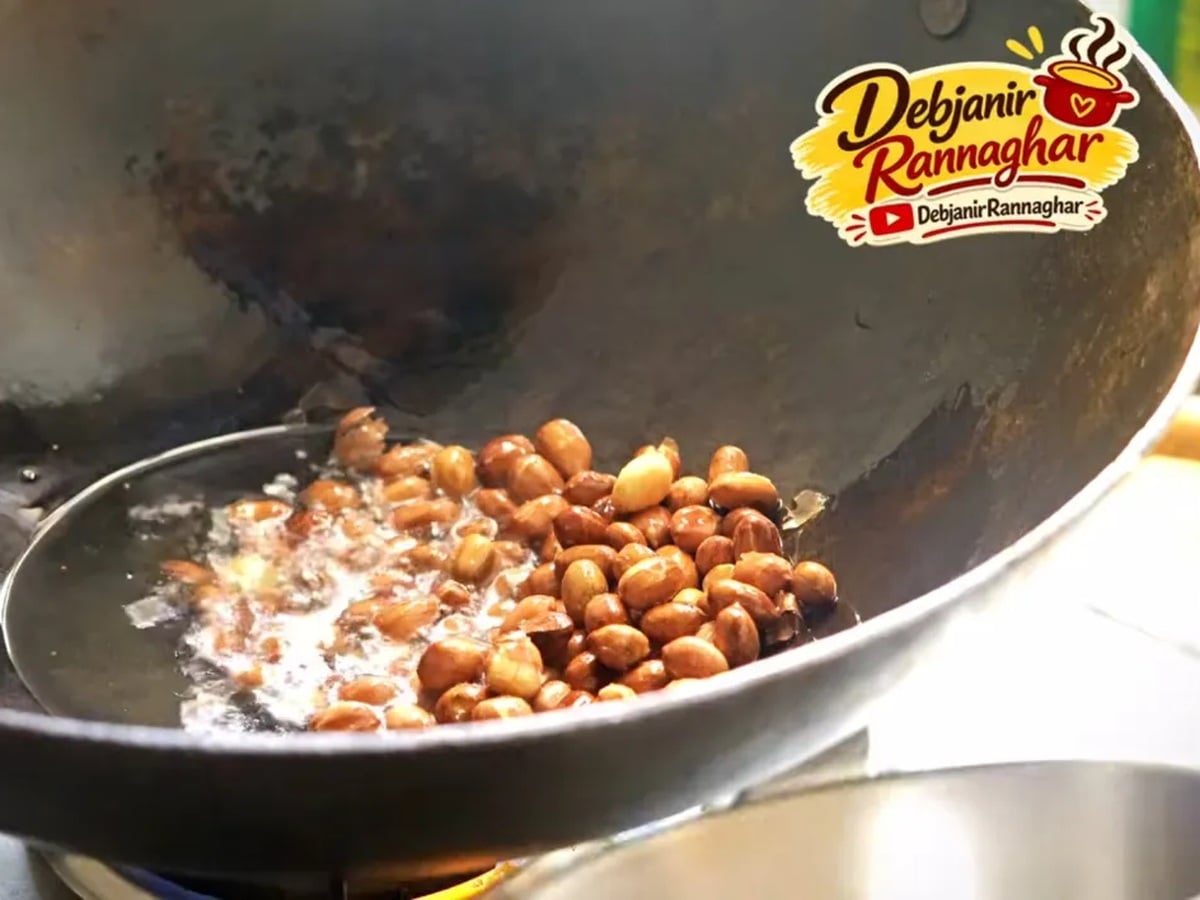
- Step 4: Fry the Garlic and Potatoes
Add chopped garlic to the same oil, if using. Fry briefly until fragrant.
Now add the drained potato strips. Fry them until they are about 70% cooked.
They do not need to become completely crisp. The potatoes will cook further with the onions and noodles.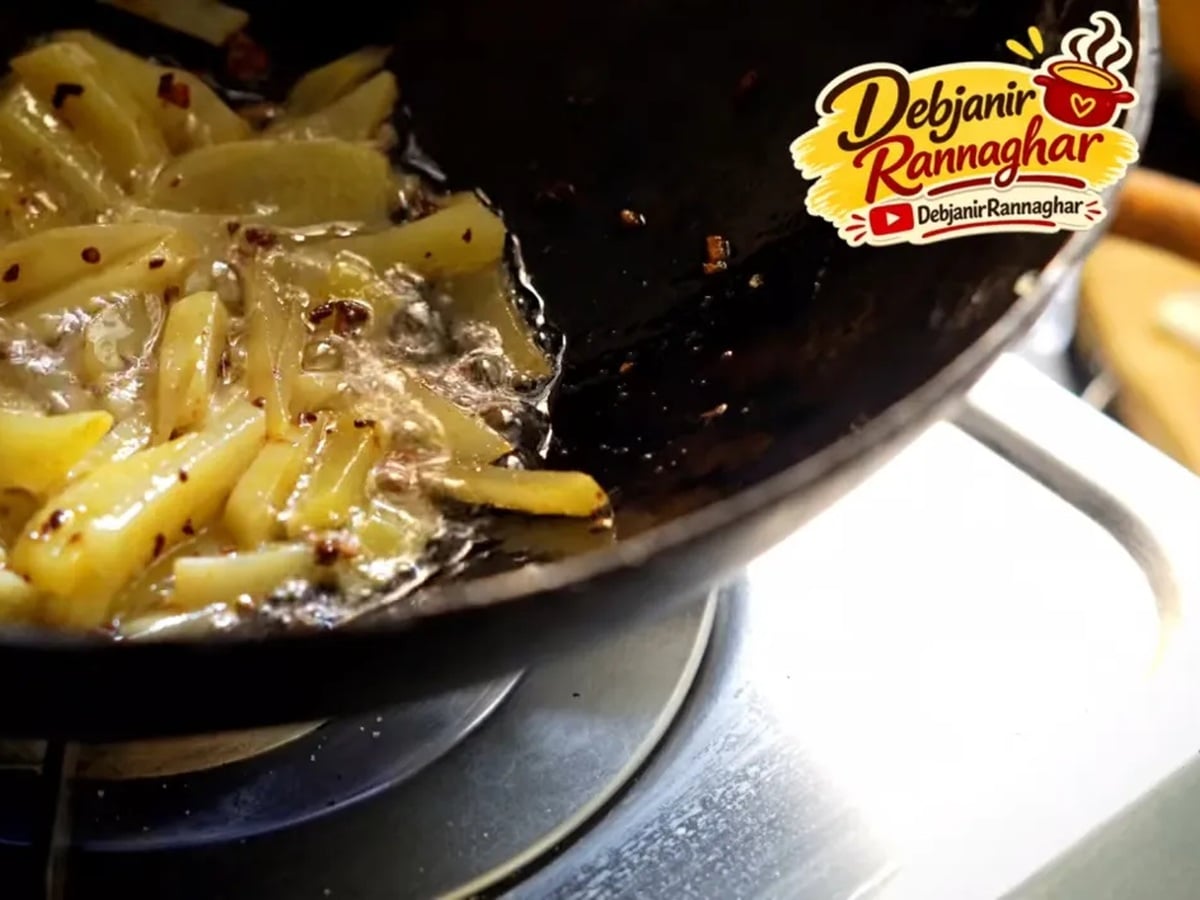
- Step 5: Add the Onions
Add the sliced onions to the kadai.
Mix well and cook until the onions soften. Keep stirring so that the garlic and potatoes do not burn.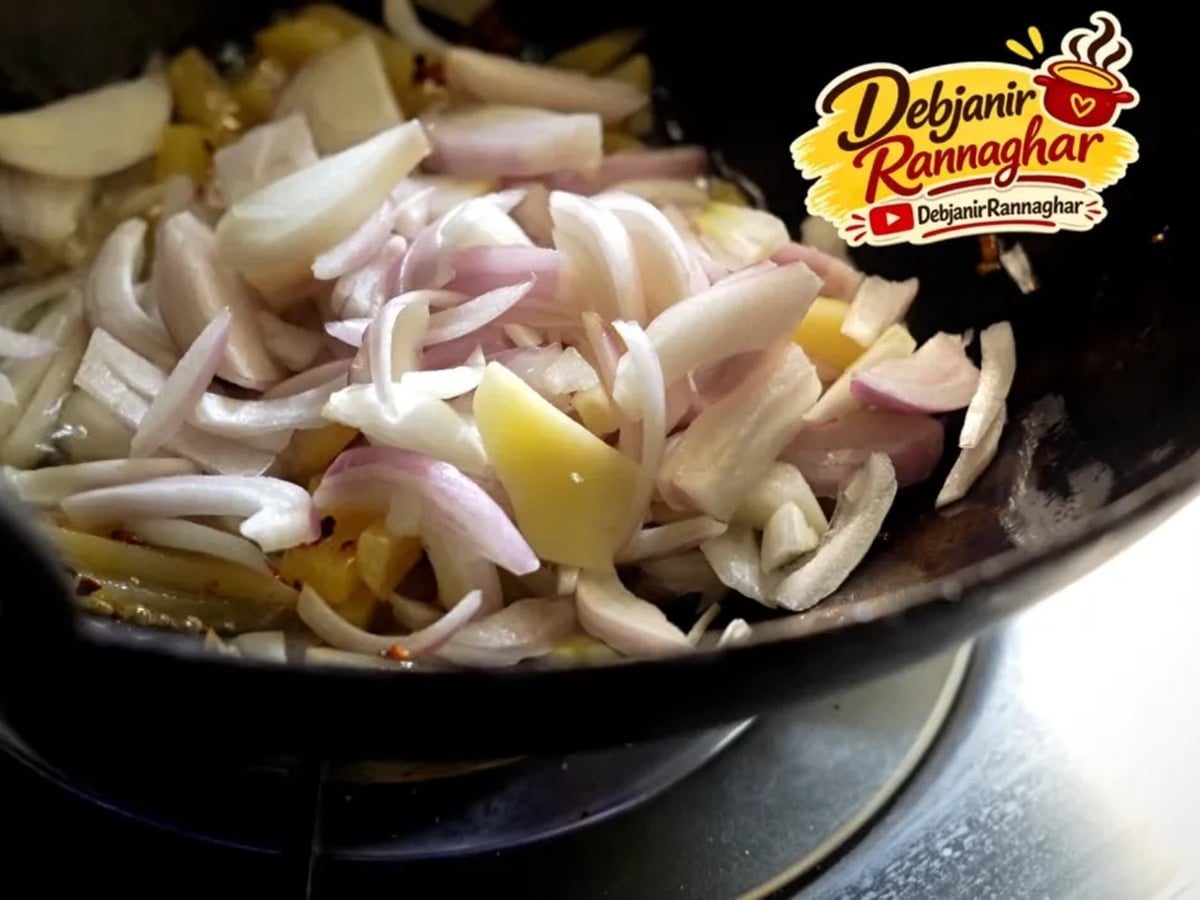
- Step 6: Add the Spices
Add salt, turmeric powder and black pepper powder.
Mix everything well. Cook briefly over medium to high heat.
Make sure the turmeric coats the potatoes and onions evenly. Do not let the spices burn.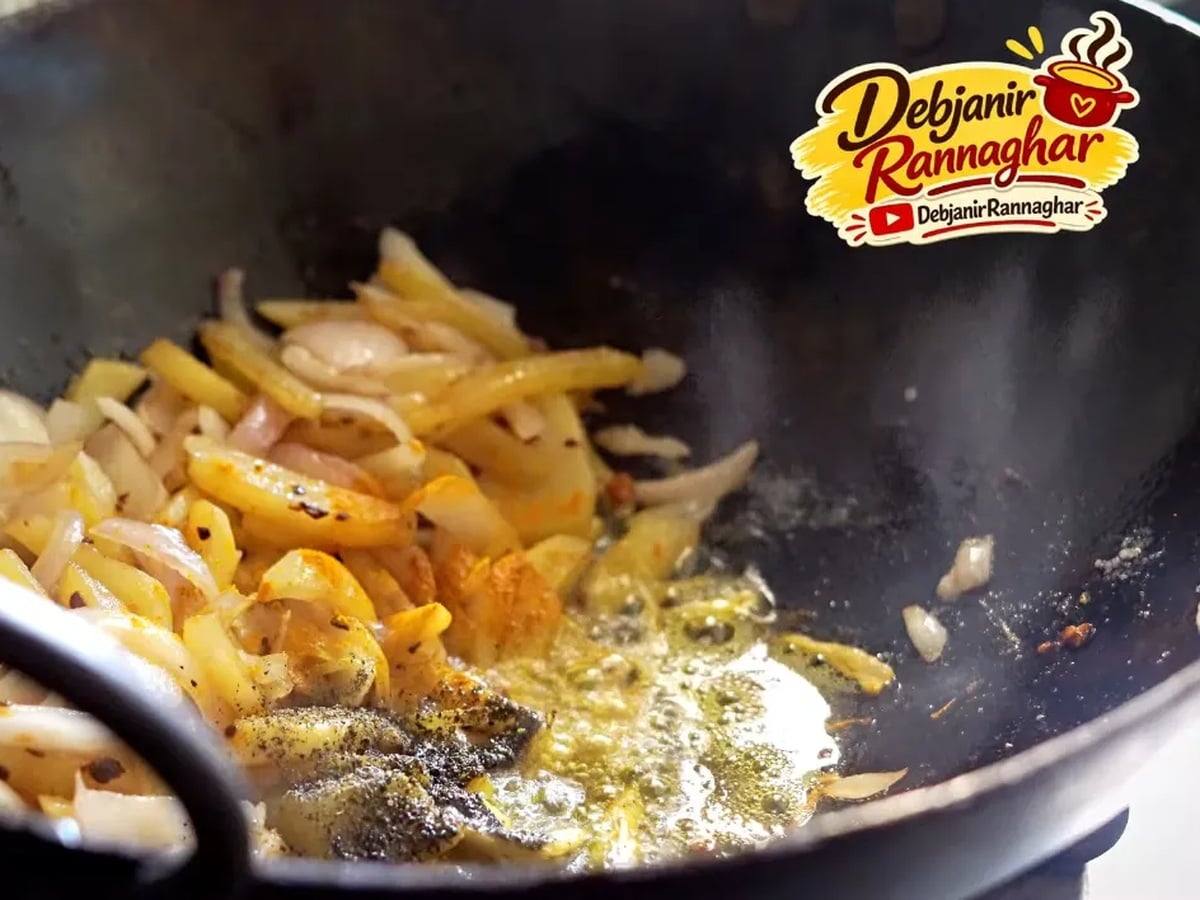
- Step 7: Add the Green Chillies
Add the chopped green chillies.
Mix well and cook for a few seconds. The vegetables should remain coated with the seasoning. - Step 8: Add the Boiled Noodles
Add the boiled noodles to the kadai.
Toss carefully over a high flame. Use a pair of tongs or two spatulas if needed.
Keep the noodles moving so they do not stick to the bottom. Avoid breaking them while mixing.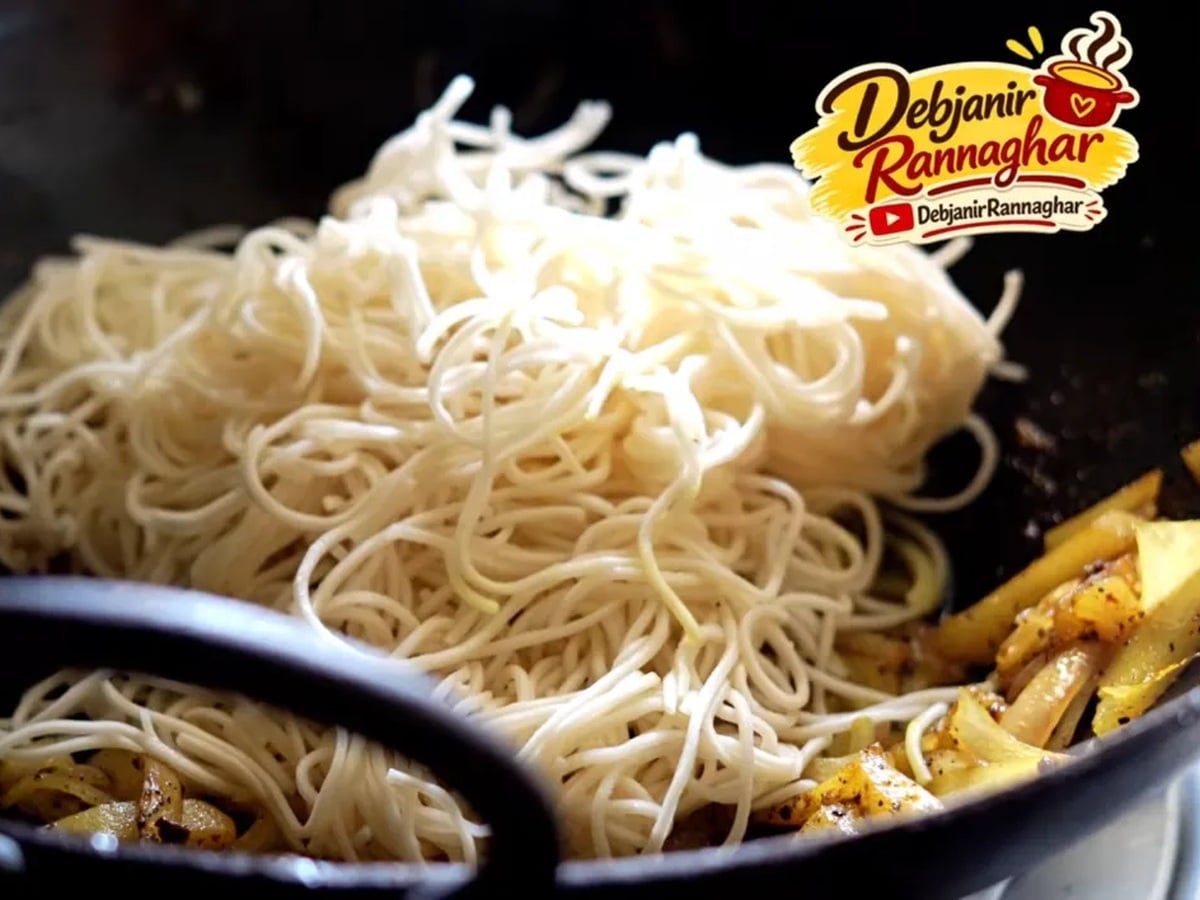
- Step 9: Finish with Fried Peanuts
Add the fried peanuts.
Give everything one final toss. Check the seasoning and adjust salt if required.
The noodles should look yellow, with separate strands, soft potatoes and crunchy peanuts.
Serve hot.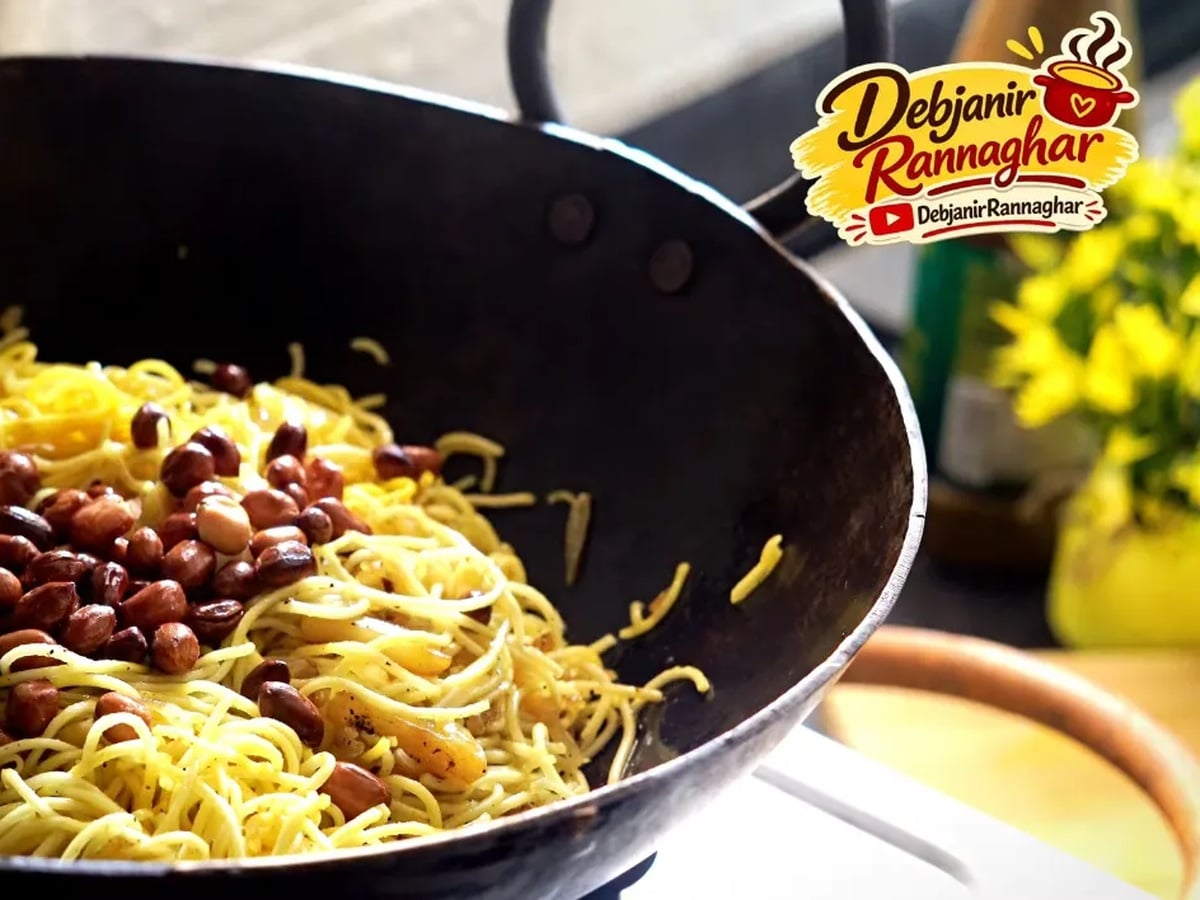
Watch How to Make Bengali Holud Chow
Here is the complete video of my Bengali Holud Chow preparation. You can follow the chopping, boiling and frying steps in real time.
Tips for Making the Best Holud Chow
- Do not overcook the noodles. They will cook a little more in the kadai.
- Drain the noodles thoroughly before adding them to the vegetables.
- Cut the potatoes into thin, even strips for better cooking.
- Additionally, fry the peanuts separately. Add them at the end to retain their crunch.
- Adjust the green chillies according to your preferred spice level.
- Use a high flame while tossing the noodles, but keep stirring.
- Avoid adding too much oil. The noodles should remain separate, not greasy.
- Follow the packet instructions when using a branded Hakka noodle.
Substitutions and Variations
Yes. Use 250 g of plain Hakka noodles and follow the packet's boiling instructions.
Absolutely. Garlic is optional in this recipe.
You can add vegetables such as potol, kumro or motorshuti. However, those additions will take the preparation towards another household variation.
You can prepare a version with egg bhaja. I will share that variation separately.
This recipe already skips meat and eggs. For a stricter "niramish" version, skip onion and garlic too. That version will have a slightly different flavour.
Yes. However, mustard oil gives the dish its characteristic Bengali flavour.
If you are planning a Bengali breakfast spread, you could pair it with other familiar preparations. My Tinkona Porota recipe and Sada Aloo Chorchori are two other ways to make everyday ingredients interesting.
And then there is Bengali Bhat Bhaja. Leftover rice, a few everyday ingredients and a little imagination can make a rather satisfying meal. Similarly, simple ingredients and familiar flavours often make the most satisfying Bengali meals.
Advance Preparation and Storage
This dish tastes best when freshly prepared. The noodles remain separate, and the fried peanuts retain their crunch.
You can prepare the vegetables in advance. Cut the potatoes, onions and green chillies and refrigerate them separately.
You can also fry the peanuts ahead of time. Store them in an airtight container after they cool completely.
If you have leftovers, transfer them to an airtight container and refrigerate. Reheat in a kadai with a little oil. Add a splash of water if the noodles feel dry.
For the best texture, add freshly fried peanuts just before serving.
What to Serve with Holud Chow?
Bengali Holud Chow works well as a breakfast or a filling evening meal. It can also go into a school tiffin box.
Frequently Asked Questions
No. Bengali Holud Chow is a home-style adaptation. It uses turmeric, potatoes and peanuts instead of the sauces and seasonings commonly used in restaurant-style chowmein.
Turmeric powder gives the noodles their bright yellow colour. It is also the reason for the name Holud Chow.
This recipe is vegetarian and eggless. It contains onion and optional garlic, so it is not strictly niramish or vegetarian.
Yes. Plain Hakka noodles work well. Follow the cooking instructions on the packet to avoid overboiling.
Overcooking is a common reason. Drain the noodles properly and avoid leaving them in hot water. Toss them quickly with the vegetables over a high flame.
Yes. You can skip the peanuts. However, they add an important crunchy element to this preparation.
Some households do. At my mamar bari, a spoonful of sugar was a non-negotiable addition. You can add a little if you enjoy that sweet-savoury combination.
Yes. It was a familiar school tiffin preparation in many Bengali homes. Let the noodles cool slightly before packing them in a clean tiffin box.
Recipe Card
Bengali Holud Chow Mien with Aloo Bhaja and Badam Bhaja
Equipment
- 1 Heavy-bottomed kadai or wok
- 1 Large pan for boiling noodles
- 1 Colander or strainer
- 1 Spatula
- 1 Chopping Board
- 1 steel tiffin box
Ingredients
For the Noodles
- 250 g Plain Hakka noodles or local chowmein noodles
- Water as required
- 2 teaspoon Salt for boiling
For the Chowmein
- 3 potatoes Small, cut into thin strips
- 3 onions Small, sliced
- 4 Green chillies chopped
- 50 g Peanuts
- 3 tablespoon Mustard oil
- 1 tablespoon Chopped garlic optional
- 1 teaspoon Turmeric powder
- 1 teaspoon Black pepper powder
- 1½ teaspoon Salt or to taste

Instructions
- Peel and cut the potatoes into thin strips. Soak them briefly in water and drain thoroughly.
- Slice the onions and chop the green chillies. Keep the chopped garlic ready, if using.
- Bring sufficient water to a boil. Add two teaspoons of salt and the noodles. Cook until just done, following the packet instructions. Drain and keep aside.
- Heat mustard oil in a kadai. Add the peanuts and fry until crisp. Remove and keep aside.
- In the same oil, fry the chopped garlic briefly, if using. Add the potato strips and fry until about 70% cooked.
- Add the sliced onions and cook until softened. Add salt, turmeric powder and black pepper powder. Mix well.
- Add the chopped green chillies, followed by the boiled noodles. Toss everything over a high flame until the noodles are evenly coated and remain separate.
- Add the fried peanuts. Give everything a final toss and serve hot.
Video
Notes
- Use plain Hakka noodles or locally available chowmein noodles. Ching's or a similar brand works well.
- Cooking time varies by noodle brand. Follow the packet instructions and avoid overboiling.
- Keep the boiled noodles separate and drain them thoroughly before adding them to the kadai.
- Fry the peanuts separately and add them towards the end to retain their crunch.
- Garlic is optional and can be skipped.
- This recipe is vegetarian and eggless. However, it is not strictly niramish because it contains onion and optional garlic.
- Some Bengali households add sugar or seasonal vegetables. Those are variations and are not included in this recipe.
- Serve immediately for the best texture.
Nutrition
Related Easy Recipes for School Lunch Box


Have You Tried This Bengali Holud Chow Recipe?
Have you eaten Holud Chow during your school days or Sunday breakfasts? Did your family add sugar, extra potatoes or seasonal vegetables? Or did your version follow an entirely different recipe?
I would love to know which version you grew up eating. Please share your experience in the comments. You can also send me a photograph of your preparation at dolonchttrj@gmail.com.
If you try this recipe, do share a photograph on social media and tag @foodofdebjani. Don't forget to use #debjanirrannaghar when sharing your attempts. I would love to see your version!
You can also follow Debjanir Rannaghar on:
- Instagram: @foodofdebjani
- YouTube: Debjanir Rannaghar
- Facebook: Debjanir Rannaghar
- Pinterest: @foodofdebjani
- X: @foodofdebjani
- Threads: @foodofdebjani
- Google News: Follow Debjanir Rannaghar for new recipes and food stories.
Have a question about the recipe, a suggestion, or a dish you'd like me to cook next? Leave a comment. I enjoy hearing from you!
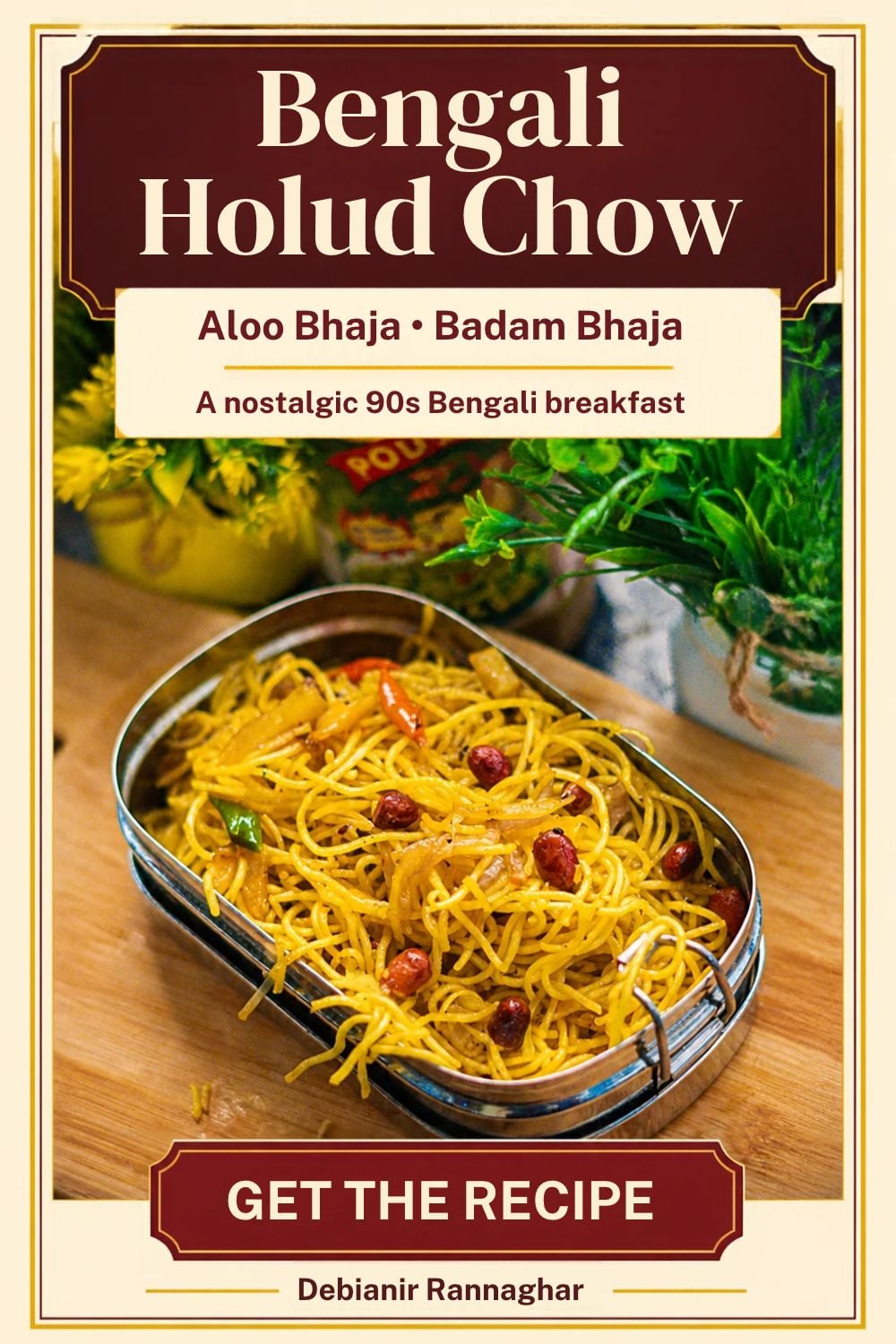
Pin This 90s Favourite: Bengali Holud Chow with Aloo Bhaja & Badam Bhaja


About Debjani Chatterjee Alam
I am Debjani Chatterjee Alam, an ESG and Corporate Social Responsibility (CSR) professional by vocation, and a food writer, blogger, and photographer by passion. I live in Kolkata with my husband, Mehebub, an architect by profession, our daughter Pasta, and our two furry daughters: Coffee, our Golden Retriever, and Luchi, our pug. Between my work in sustainability and social impact, my love for food, storytelling, and photography, and the delightful chaos of family life, I find inspiration in the everyday moments that make life meaningful.



Leave a Reply