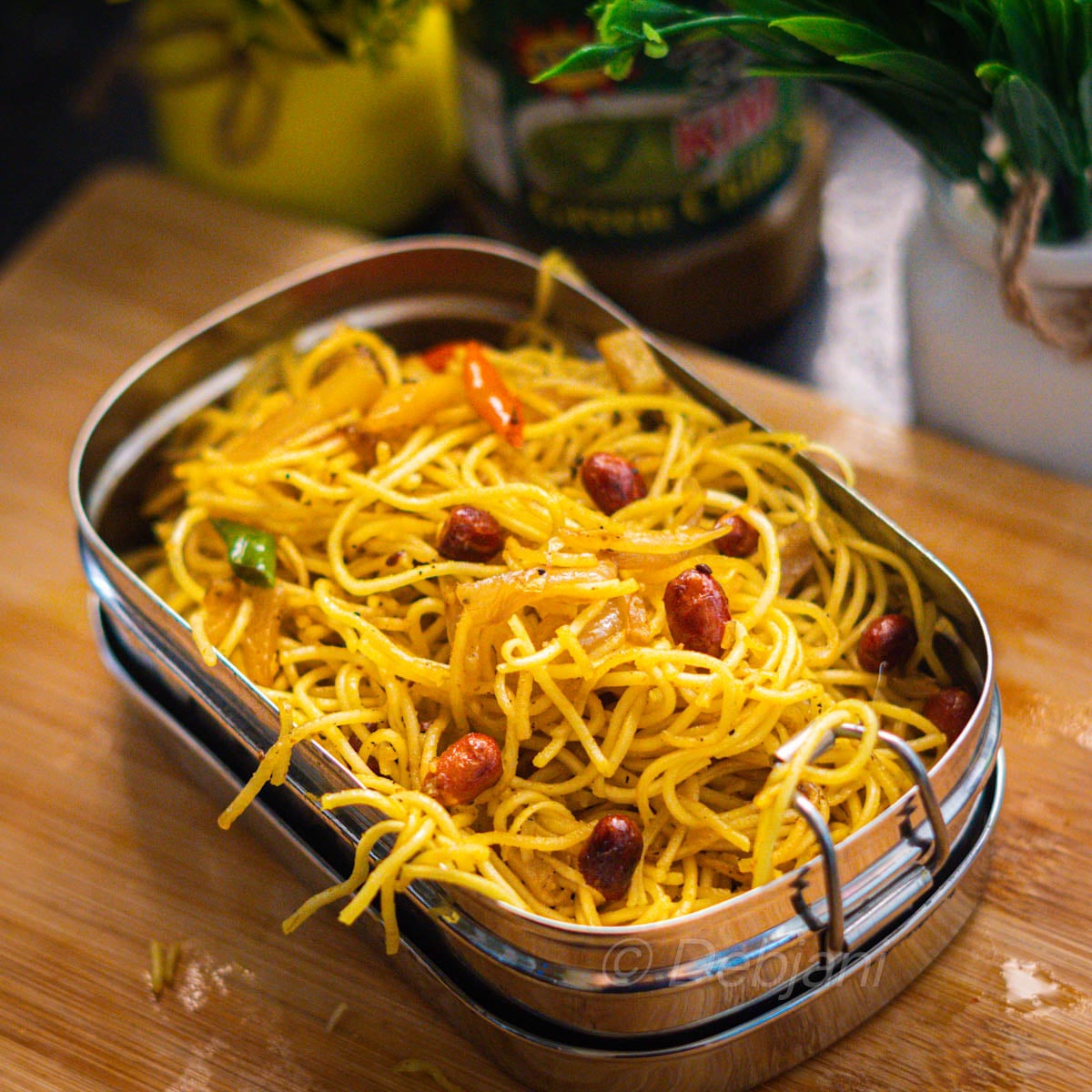
Bengali Holud Chow Mien with Aloo Bhaja and Badam Bhaja
Bengali Holud Chow is a home-style yellow chowmein preparation made with noodles, fried potatoes, peanuts, turmeric and black pepper. This eggless Bengali breakfast recipe brings back memories of 1990s school tiffin boxes and Sunday breakfasts.
Print
Pin
Servings: 4 people
Calories: 470kcal
Cost: Rs 50
Equipment
- 1 Heavy-bottomed kadai or wok
- 1 Large pan for boiling noodles
- 1 Colander or strainer
- 1 Spatula
- 1 Chopping Board
- 1 steel tiffin box
Ingredients
For the Noodles
- 250 g Plain Hakka noodles or local chowmein noodles
- Water as required
- 2 teaspoon Salt for boiling
For the Chowmein
- 3 potatoes Small, cut into thin strips
- 3 onions Small, sliced
- 4 Green chillies chopped
- 50 g Peanuts
- 3 tablespoon Mustard oil
- 1 tablespoon Chopped garlic optional
- 1 teaspoon Turmeric powder
- 1 teaspoon Black pepper powder
- 1½ teaspoon Salt or to taste

Instructions
- Peel and cut the potatoes into thin strips. Soak them briefly in water and drain thoroughly.
- Slice the onions and chop the green chillies. Keep the chopped garlic ready, if using.
- Bring sufficient water to a boil. Add two teaspoons of salt and the noodles. Cook until just done, following the packet instructions. Drain and keep aside.
- Heat mustard oil in a kadai. Add the peanuts and fry until crisp. Remove and keep aside.
- In the same oil, fry the chopped garlic briefly, if using. Add the potato strips and fry until about 70% cooked.
- Add the sliced onions and cook until softened. Add salt, turmeric powder and black pepper powder. Mix well.
- Add the chopped green chillies, followed by the boiled noodles. Toss everything over a high flame until the noodles are evenly coated and remain separate.
- Add the fried peanuts. Give everything a final toss and serve hot.
Drain the potatoes well before frying. Excess water can cause oil to splatter.
Prepare all the vegetables before heating the kadai. The cooking process moves quickly.
Do not overboil the noodles. Local chowmein noodles may need only about a minute, while packaged Hakka noodles may take longer.
Fry the peanuts over medium heat and remove them as soon as they turn crisp. They can burn quickly.
Keep the potatoes moving so they cook evenly. They will continue cooking with the onions and noodles.
Keep stirring after adding turmeric. This prevents the spice from catching at the bottom of the kadai.
If needed, use two spatulas or tongs to toss the noodles gently. Avoid breaking the strands.
Add the peanuts at the end to retain their crunch.
Video
Notes
- Use plain Hakka noodles or locally available chowmein noodles. Ching's or a similar brand works well.
- Cooking time varies by noodle brand. Follow the packet instructions and avoid overboiling.
- Keep the boiled noodles separate and drain them thoroughly before adding them to the kadai.
- Fry the peanuts separately and add them towards the end to retain their crunch.
- Garlic is optional and can be skipped.
- This recipe is vegetarian and eggless. However, it is not strictly niramish because it contains onion and optional garlic.
- Some Bengali households add sugar or seasonal vegetables. Those are variations and are not included in this recipe.
- Serve immediately for the best texture.
Nutrition
Serving: 250g | Calories: 470kcal | Carbohydrates: 66g | Protein: 13g | Fat: 17g | Saturated Fat: 2g | Polyunsaturated Fat: 4g | Monounsaturated Fat: 8g | Trans Fat: 0g | Cholesterol: 0mg | Sodium: 860mg | Potassium: 500mg | Fiber: 6g | Sugar: 5g | Vitamin A: 20IU | Vitamin C: 17mg | Calcium: 35mg | Iron: 2.5mg
