

Some recipes come into our lives through cookbooks, some through elaborate food research, and some simply because someone happens to share a plate of something delicious. The Bihari Thekua Recipe belongs to the last category for me.

My association with this humble sweet goes back to my childhood in Central Kolkata, much before I moved to Bihar for work in 2008. There was a stand of hand-pulled rickshaws near our ancestral home. Most of the rickshaw pullers were from Bihar, and Baba had a very good relationship with Budhiram Kaku, one of them.
During Chhath Puja, Kaku and his fellow rickshaw pullers would prepare Thekua. Baba would make sure I received my share every year. Apparently, a father's food-distribution policy does not need to be particularly complicated. If his daughter likes something, she gets it.
Later, my two years in Bihar gave me a much more immersive experience of Chhath Puja. I stayed as a paying guest with a Bengali family who had been born and brought up in Bihar. Uncle and Auntie were wonderfully at home with the local culture and were quite popular in the community. They received invitations to several Chhath celebrations, and naturally, so did I.
I got to experience the festival, the rituals, the food, and the warmth of the people who celebrate it. Thekua, meanwhile, had already secured its place in my list of favourite festive treats.
And here we are, years later, still discussing a fried cookie. Some food memories are clearly more persistent than others.
Jump to:
- What Is Thekua?
- The History of Thekua and Chhath Puja
- Why Is Thekua Prepared During Chhath Puja?
- Bihari Thekua Recipe with Gur
- Ingredients for Thekua
- A Note on the Ingredients
- How to Make Thekua at Home
- Watch how to make Thekua at home
- Variations of Thekua
- How Long Does Thekua Stay Fresh?
- Thekua: A Festive Sweet Beyond Chhath Puja
- Frequently Asked Questions
- Recipe Card
- Indian Dessert Recipes
- Have you tried the Bihari Thekua recipe from Debjanir Rannaghar!
- Here's the Thekua Recipe Pin for your Pinterest Board!
What Is Thekua?

Thekua is a traditional sweet snack from Bihar, Jharkhand, and parts of eastern Uttar Pradesh. At its heart, it is a simple combination of whole wheat flour, jaggery or sugar, ghee, and a few flavourings such as cardamom or coconut. I love how a handful of everyday ingredients can come together to create something so distinctive. The dough goes into a traditional wooden mould, called a saancha, or gets shaped by hand before a deep-fry in oil.
Thekua has a rustic, crisp texture with a proper bite. It is certainly not one of those delicate mithais that melt in your mouth. Instead, it has character, a little crunch, and a rather satisfying way of keeping company with a cup of tea. For me, that is part of its charm.
Interestingly, Thekua goes by several regional names, including Khajur, Khajuria, Kajuria, Tikari, Thikari, Thokwa, Thokni, and Thekari. The names and shapes change from one region to another, and sometimes even from one household to the next. In some places, people call the elongated version Khajur.
And then comes the recipe itself! There is no single ingredient list that every family follows. Some stick to atta and gur, while others add coconut, cardamom, sesame seeds, fennel, or dry fruits. Naturally, every family has its own little recipe secret, and I rather enjoy that.
The History of Thekua and Chhath Puja

Thekua is more than a traditional sweet from Bihar, Jharkhand, and eastern Uttar Pradesh. Its story is closely woven into the cultural and culinary traditions of these regions, particularly Chhath Puja.
Chhath Puja honours Surya, the Sun God, and Chhathi Maiya. Devotees observe the festival through rituals that include offering arghya to the setting and rising sun. Meanwhile, food plays an equally important role, and Thekua remains one of the most cherished offerings. Families prepare it at home and offer it as prasad during the festival.
Traditionally, Thekua brings together a few simple ingredients: wheat flour, jaggery, and ghee. Families knead the dough, shape it with wooden or metal moulds, and fry it until golden and crisp. These moulds create the beautiful patterns that give Thekua its distinctive appearance. Moreover, its longer shelf life makes it convenient to prepare ahead of the festivities. Families also share it with relatives, neighbours, and friends, extending the spirit of Chhath beyond their own homes.
Interestingly, some accounts connect Thekua with Apupa, an ancient sweet mentioned in Vedic literature. Although we cannot establish a direct link with certainty, the association offers an intriguing glimpse into India's culinary past.
The origin of the name Thekua also remains uncertain. Some explanations link it to thokna, which refers to pressing or shaping.
Over generations, Thekua has travelled beyond its regional roots. Nevertheless, its association with Chhath Puja remains strong. For many households, the festival simply feels incomplete without a fresh batch of this jaggery-sweetened delicacy.

Why Is Thekua Prepared During Chhath Puja?
Thekua is offered as prasad during Chhath Puja. The ingredients are simple, the preparation is rooted in household traditions, and the finished sweet can be stored and distributed.
The festival itself is not just about the food. It involves fasting, ritual bathing, offerings to the setting and rising Sun, and community participation. Thekua brings the ritual and the everyday kitchen together.
In my experience, the food associated with a festival often tells you as much about the people celebrating it as the ritual does. In Bihar, Thekua is one such food. It is not merely a sweet to be picked up from a shop. It is often made at home, with the kind of attention that does not necessarily come with a written recipe or a measuring cup.
Which is also why asking someone for their family's Thekua recipe can be a rather interesting exercise. You may receive measurements, or you may receive a confident "just add as much as needed." Good luck to the weighing scale.
Bihari Thekua Recipe with Gur
This version of Thekua uses whole wheat flour, jaggery, desiccated coconut, ghee, and green cardamom. I have also added a little whole sugar for texture. The coconut lends a gentle nuttiness, while the jaggery gives the Thekua its characteristic flavour.
The dough should be soft enough to shape but not sticky. The final Thekua should be golden, crisp, and properly cooked through. No one wants a beautifully moulded cookie that turns out to be raw in the middle. The mould may be decorative, but the inside still has responsibilities.
Ingredients for Thekua
This recipe makes approximately 25 Thekua.
- 250 g whole wheat flour (atta)
- 150 g jaggery powder (gur or bura)
- 150 g desiccated coconut
- 2 tablespoon whole sugar
- 4 tablespoon ghee, for moyan
- 1 teaspoon green cardamom powder
- Water, to dissolve the jaggery
- Vegetable oil, for deep-frying
- 1 tablespoon ghee, to mix with the frying oil
A Note on the Ingredients
Atta: Whole wheat flour is the base of traditional Thekua. I prefer using atta rather than maida for this recipe.
Gur: Jaggery gives Thekua its earthy sweetness and distinctive flavour. The taste will vary depending on the type of jaggery used. That is part of the charm.
Desiccated coconut: Coconut adds a subtle nutty flavour and texture. It is not merely there to make the ingredient list look festive.
Ghee: Ghee is used for moyan, the process of rubbing fat into flour before adding liquid. This helps create the texture of the finished Thekua.
Cardamom: Green cardamom adds warmth and fragrance. It complements jaggery beautifully.
Whole sugar: A little sugar adds another layer of sweetness and texture to this version.
How to Make Thekua at Home
- Step 1: Prepare the Jaggery Water
Take the jaggery powder in a bowl and add water to dissolve it. Use the same bowl in which you measured the jaggery to measure the water, as in the recipe method.
Stir until the jaggery dissolves. If needed, warm the mixture gently. Allow it to cool completely before using it to knead the dough.
Do not use hot jaggery water directly. The dough needs to be handled comfortably, not treated to a surprise spa session.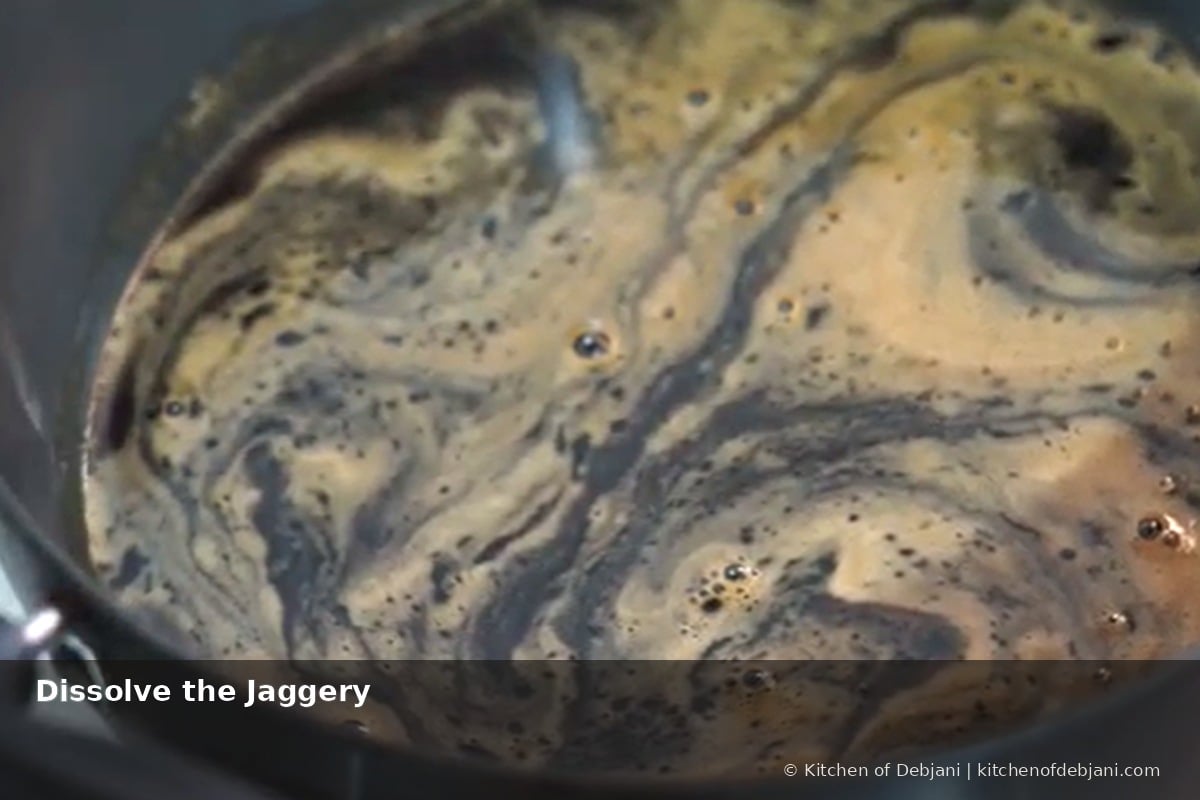
- Step 2: Mix the Dry Ingredients
Take the whole wheat flour in a large mixing bowl. Add the desiccated coconut and whole sugar.
Mix everything thoroughly so that the ingredients are evenly distributed.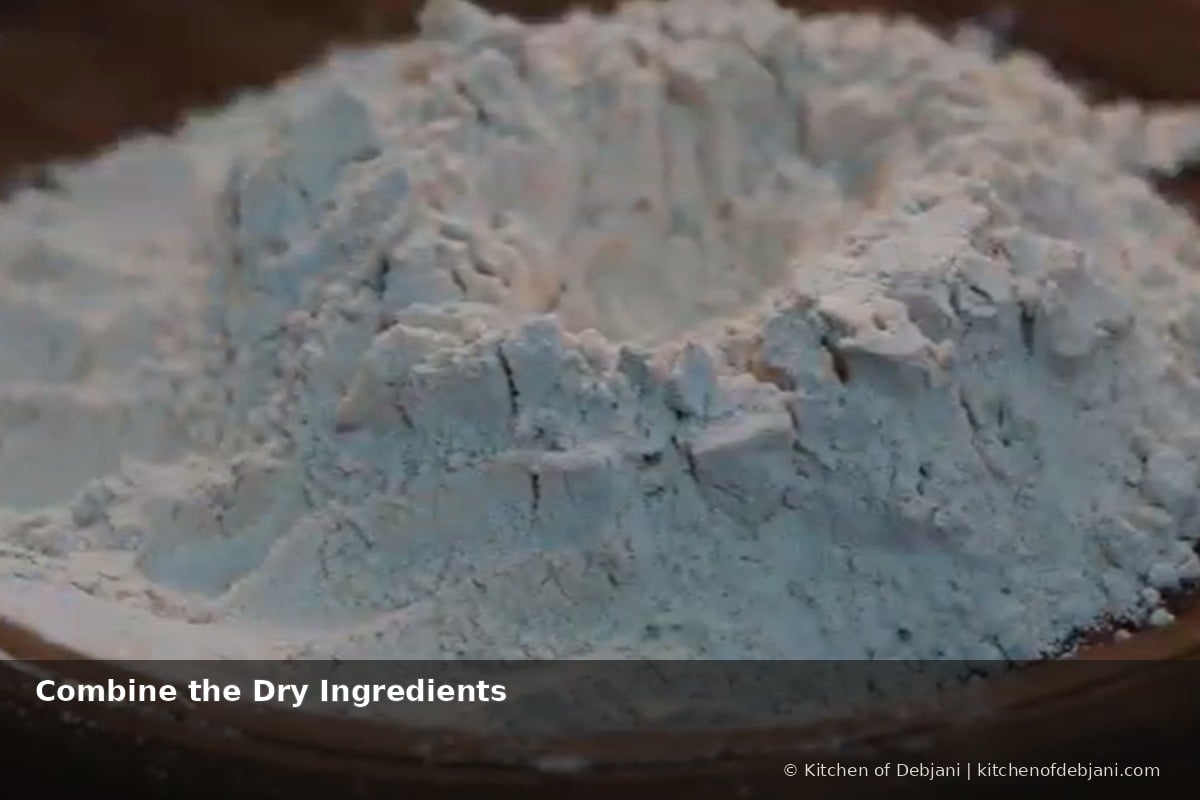
- Step 3: Add Ghee and Cardamom
Add the ghee and green cardamom powder to the flour mixture.
Rub the ghee into the flour using your fingertips. This is the moyan stage. The mixture should begin to feel slightly crumbly.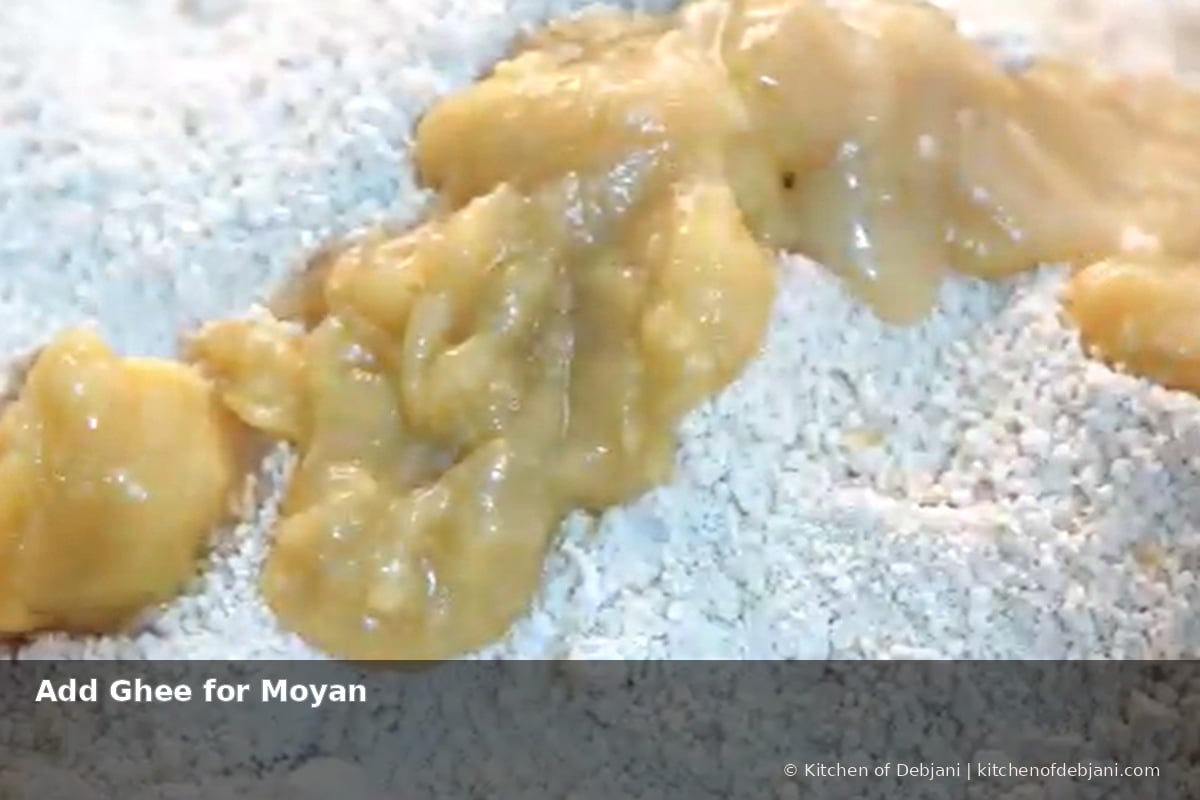
- Step 4: Check the Moyan
Take a small portion of the flour mixture and press it between your palms.
If it holds its shape when pressed, the moyan is ready. If it falls apart immediately, the mixture may need a little more rubbing.
This small check is useful. It is also a reminder that some of the best kitchen techniques are not particularly complicated. They simply require you to use your hands. - Step 5: Knead the Thekua Dough
Gradually add the cooled jaggery water to the flour mixture.
Bring the mixture together and knead it into a soft, non-sticky dough. Add the jaggery water little by little instead of pouring it all in at once.
The dough should be pliable enough to shape but not loose or sticky. Avoid over-kneading it.
If the dough is too dry, add a little more jaggery water. If it becomes sticky, adjust carefully with a little flour.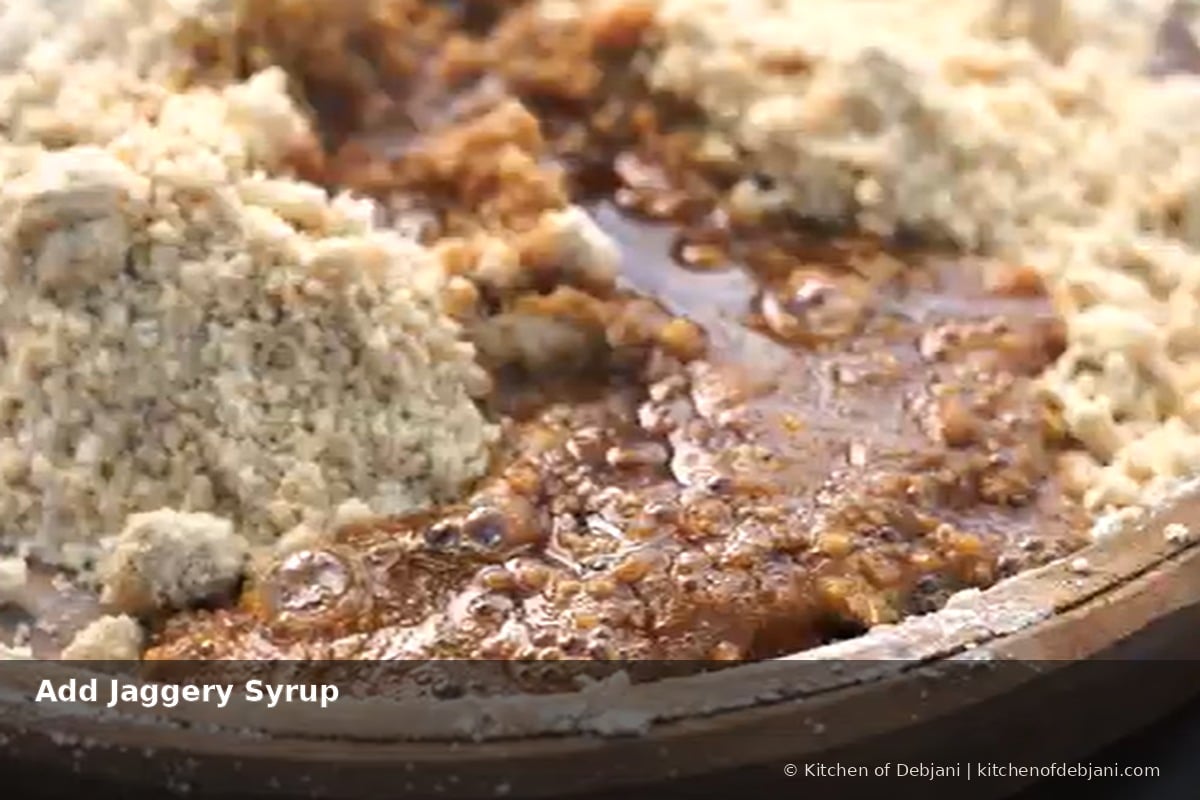
- Step 6: Shape the Thekua
Grease a traditional Thekua mould or saancha lightly.
Take a small portion of dough and press it against the mould to create the decorative pattern. Carefully release it.
If you do not have a Thekua mould, use a fork to create a pattern. You can also flatten the dough by hand.
The traditional moulds are lovely, but a lack of specialised kitchen equipment should not be the reason a person is denied Thekua.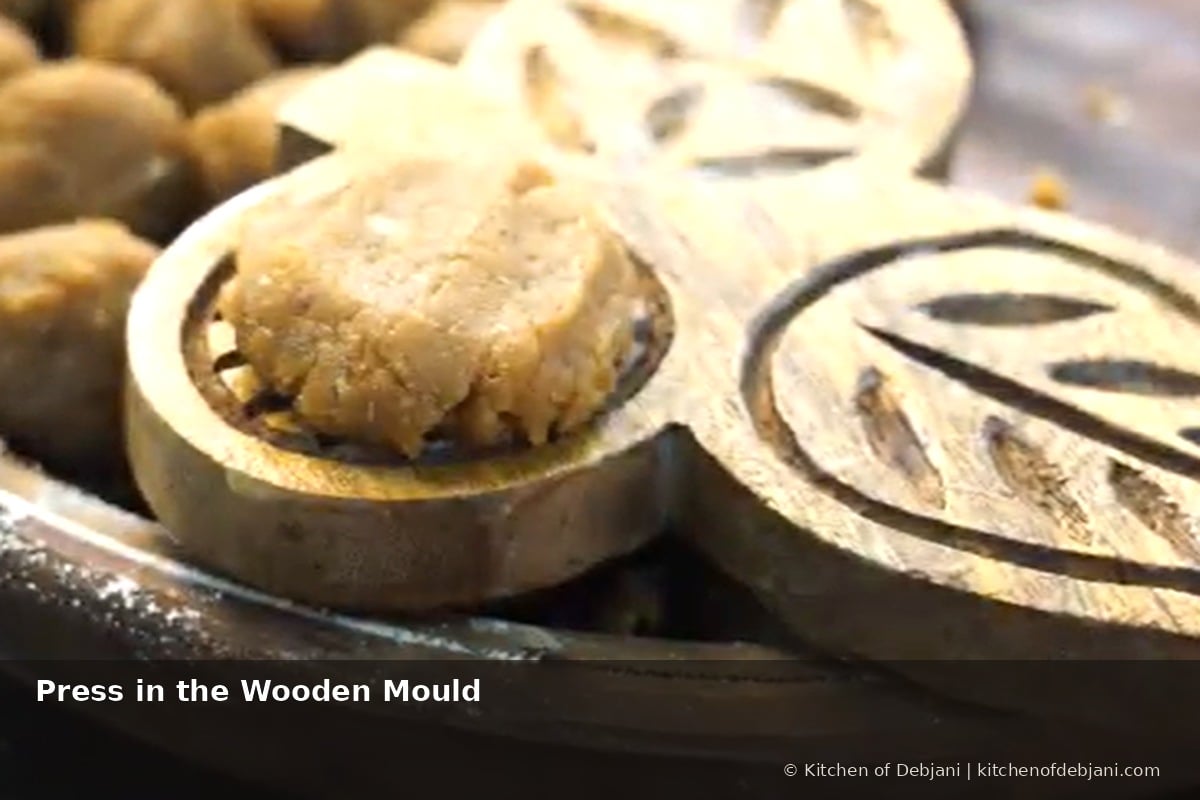
- Step 7: Deep-Fry the Thekua
Heat vegetable oil in a deep pan or kadai. Add 1 tablespoon ghee to the oil.
Fry the Thekua in batches over medium heat until they turn golden brown. Do not overcrowd the pan.
The temperature of the oil matters. If the oil is too hot, the outside may brown before the inside is cooked. If it is too cool, the Thekua may absorb excess oil.
Turn them gently while frying so that they cook evenly.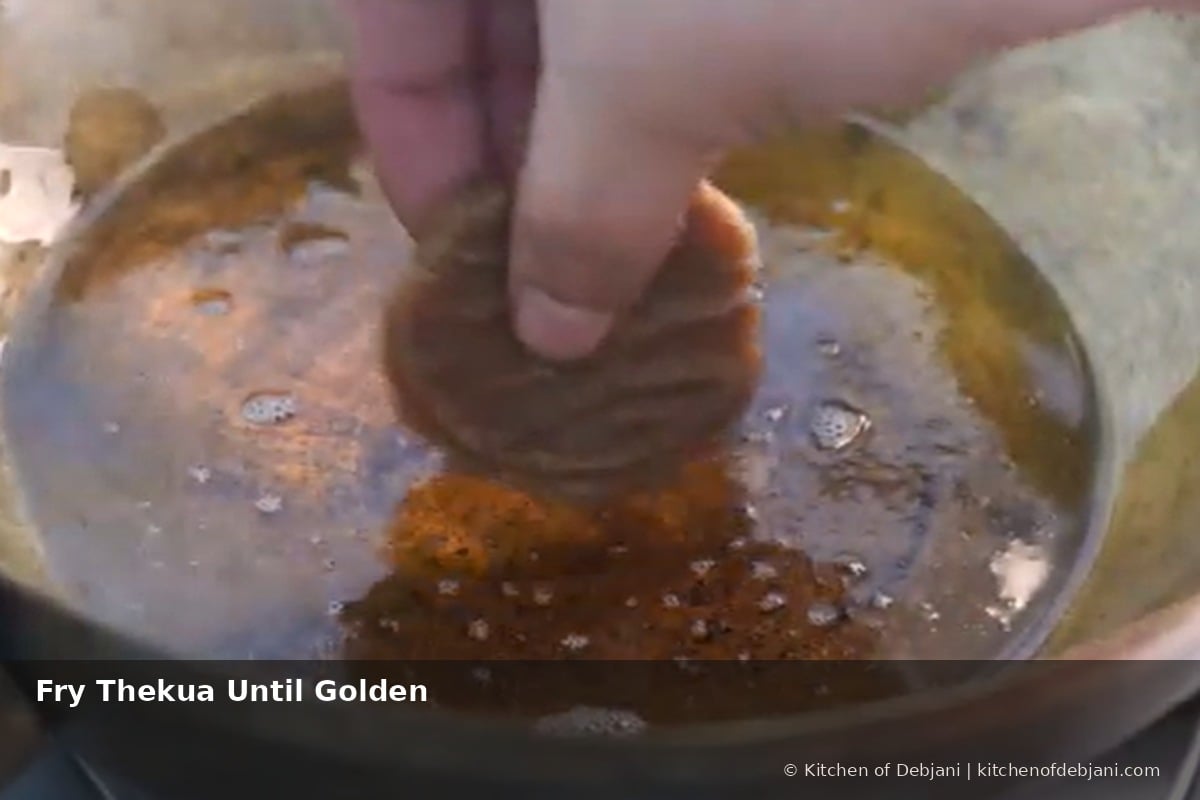
- Step 8: Cool and Store
Remove the fried Thekua and place them on a plate or tray to cool.
Allow them to cool completely before storing. Thekua becomes crisp as it cools, so do not judge the texture immediately after frying.
Once completely cooled, store them in an airtight container.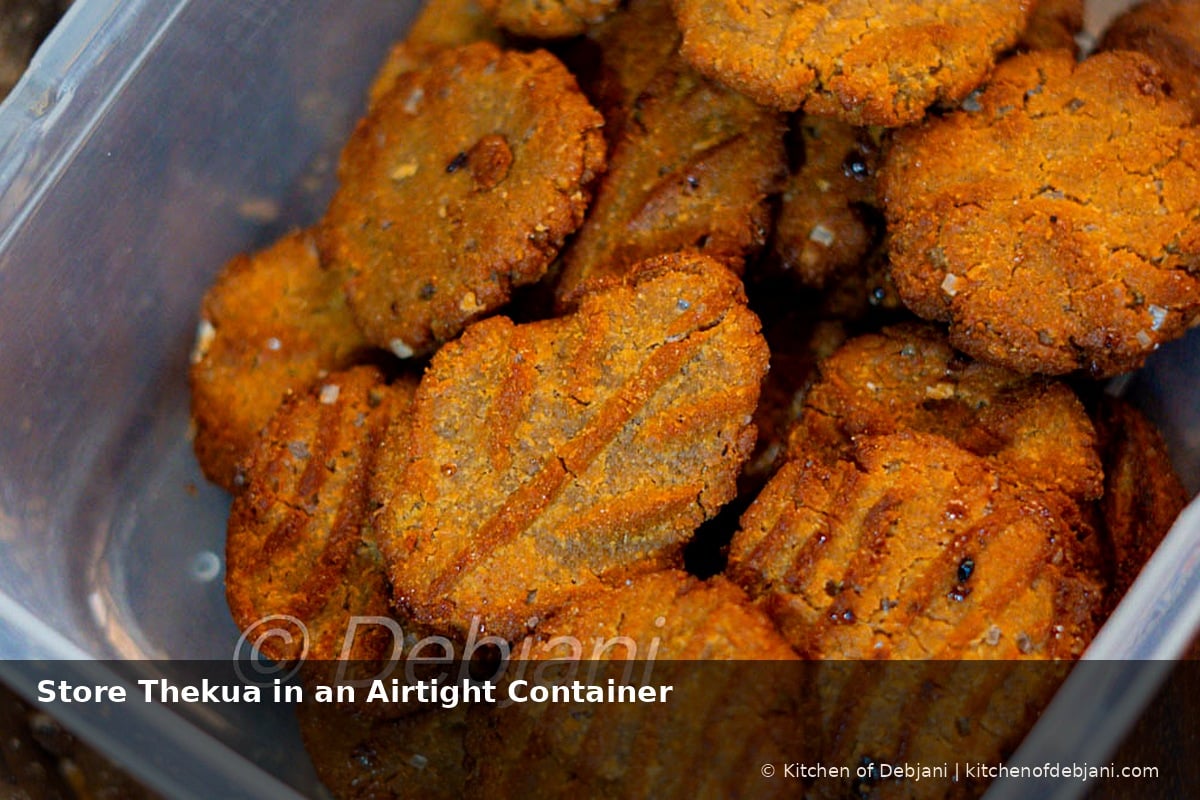
Watch how to make Thekua at home
Variations of Thekua
Like many traditional Indian recipes, Thekua varies from household to household. Some families prefer a simple dough made with atta, jaggery, and ghee, while others add coconut, cardamom, fennel seeds, sesame seeds, or chopped dry fruits. The choice of sweetener also varies. Jaggery gives Thekua its earthy flavour, whereas sugar-based versions tend to have a different sweetness and colour.
The shape is another point of variation. Traditional wooden moulds create decorative patterns, while some households shape Thekua by hand or use a fork. The elongated version is often referred to as Khajur in certain regions. There is no single shape that gets to claim the entire family.
For this recipe, I have used desiccated coconut, whole sugar, jaggery, and cardamom. It is a version that brings together the flavours I enjoy while keeping the traditional character of Thekua intact. Naturally, if your family recipe says otherwise, the kitchen committee may proceed with its objections.
How Long Does Thekua Stay Fresh?
Thekua can be stored for approximately 15-20 days in an airtight container, provided it is properly fried, cooled completely, and kept away from moisture.
Do not put warm Thekua into the container. Trapped moisture can affect the texture and shelf life. Instead, spread the fried Thekua on a plate or tray and allow them to cool fully before storing.
Thekua is one of those festive sweets that can be prepared ahead of time. This is particularly useful during Chhath Puja, when the kitchen already has enough to do without adding last-minute frying to the schedule.
For best results, use a clean, dry container and always handle the Thekua with dry hands.
Thekua: A Festive Sweet Beyond Chhath Puja
Although Thekua is strongly associated with Chhath Puja, it is enjoyed beyond the festival as well. It makes a lovely tea-time snack and is often prepared in households for other occasions.
I have always found it interesting how a food can be so closely connected with a particular festival and yet become part of everyday food memories. For me, Thekua is connected not only with Chhath Puja but also with Baba, Ram Khilawan Kaku, my childhood in Kolkata, and my years in Bihar.
That is quite a lot of history for a little fried cookie.
And perhaps that is why I have always liked Thekua. It is not an elaborate sweet trying to impress anyone. It is made with simple ingredients, has a rustic texture, and carries a generous amount of cultural memory. Sometimes, that is more than enough.
Frequently Asked Questions
I make Thekua with wheat flour, jaggery, ghee, coconut, and cardamom. However, every family seems to have its own recipe, and that is what makes traditional sweets so interesting.
Yes, Thekua has strong roots in Bihar, Jharkhand, and eastern Uttar Pradesh. My own association with this sweet goes back to childhood, and my years in Bihar helped me understand its cultural significance better.
Thekua is an important prasad offered to Surya and Chhathi Maiya. Moreover, families prepare and share it during the festival. Honestly, a Chhath kitchen seems to run at full capacity!
Of course! I use a traditional mould for the patterns, but a fork or even your hands will do the job. So, please don't let the absence of a mould stop you from making Thekua.
Of course. A traditional wooden saancha gives Thekua its lovely decorative pattern, but it is not compulsory. You can use a fork or shape the dough by hand. I would not let the absence of a wooden mould stand between anyone and a batch of homemade Thekua.
Thekua naturally has a firm, crisp texture. However, overworking the dough or frying it at very high heat can make it harder than intended. Nobody wants their festive sweet to require a formal appointment with the dentist!
Once it cools completely, store it in a dry, airtight container. In my experience, properly stored Thekua can stay fresh for around 15-20 days.
Yes, you can. However, jaggery gives Thekua its characteristic flavour, and personally, I prefer the warmth and personality of gur.
Recipe Card

Bihari Thekua Recipe | Gur Thekua for Chhath Puja
Ingredients
- 250 g whole wheat flour atta
- 150 g jaggery powder gur
- 150 g desiccated coconut
- 2 tablespoon whole sugar
- 4 tablespoon ghee for moyan
- 1 teaspoon green cardamom powder
- Water as required, to dissolve jaggery
- Vegetable oil for deep frying
- 1 tablespoon ghee for frying oil

Instructions
- Dissolve the jaggery in a little water and allow it to cool completely.
- In a mixing bowl, combine whole wheat flour, desiccated coconut, whole sugar, and cardamom powder.
- Add ghee and mix thoroughly. Check the moyan by squeezing a little flour mixture in your palm. It should hold its shape.
- Gradually add the cooled jaggery water and knead into a soft, non-sticky dough. Avoid over-kneading.
- Shape the dough using a traditional Thekua mould (saancha). Alternatively, flatten small portions and create patterns with a fork.
- Heat vegetable oil with 1 tablespoon ghee in a kadai.
- Deep-fry the Thekua over medium heat until golden brown and crisp. Avoid frying over high heat, as the outside may brown before the inside cooks.
- Remove and place on a plate lined with kitchen paper.
- Allow the Thekua to cool completely before storing in an airtight container.
Video
Notes
- The dough should be soft but not sticky.
- Avoid adding all the jaggery water at once. Add gradually while kneading.
- Fry over medium heat to ensure the Thekua cooks evenly inside and develops a golden crust.
- The traditional wooden mould is optional. A fork or hand-shaped pattern works well too.
- Allow the Thekua to cool completely before transferring to an airtight container.
- When stored in a dry, airtight container, Thekua stays fresh for approximately 15-20 days.
Nutrition
Indian Dessert Recipes
- Narkel Chapa | Narkel Tokti | Bengali Coconut Sondesh
- Taler Patishapta Pitha
- Sheer Khurma
- Halwai Style Balushahi!
- Motichur Ladoo | Motichur Laddu | Motichoor Laddu
- Chaler Payesh aka Bengali Rice Kheer
- Nolen Gurer Sandesh
Have you tried the Bihari Thekua recipe from Debjanir Rannaghar!
I would love to see a picture if you are making it following my recipe. You can share here on dolonchttrj@gmail.com. You can use my hashtag #debjanirrannaghar and share it through Instagram as well. and in addition, you can tag me at @foodofdebjani.
Here's the Thekua Recipe Pin for your Pinterest Board!



About Debjani Chatterjee Alam
I am Debjani Chatterjee Alam, an ESG and Corporate Social Responsibility (CSR) professional by vocation, and a food writer, blogger, and photographer by passion. I live in Kolkata with my husband, Mehebub, an architect by profession, our daughter Pasta, and our two furry daughters: Coffee, our Golden Retriever, and Luchi, our pug. Between my work in sustainability and social impact, my love for food, storytelling, and photography, and the delightful chaos of family life, I find inspiration in the everyday moments that make life meaningful.



Leave a Reply