

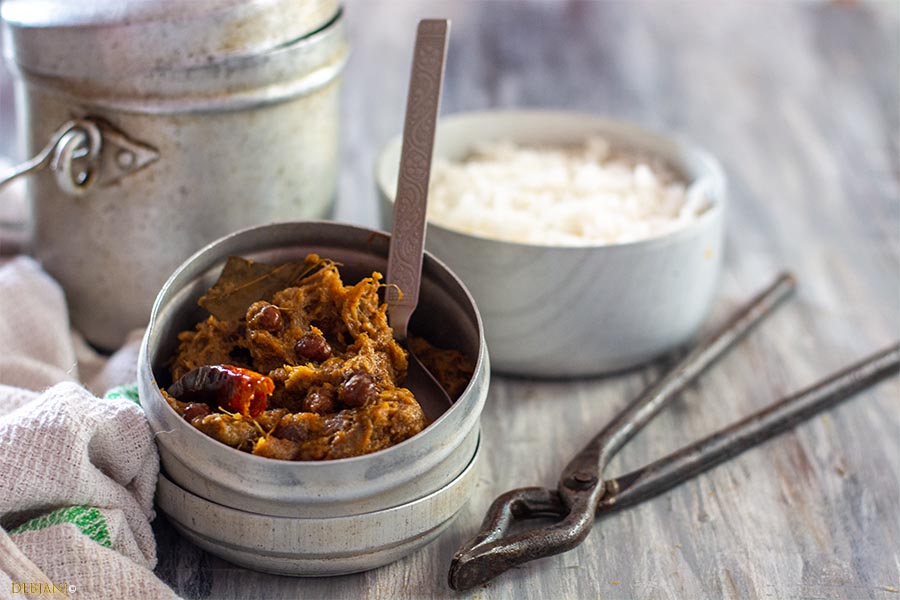
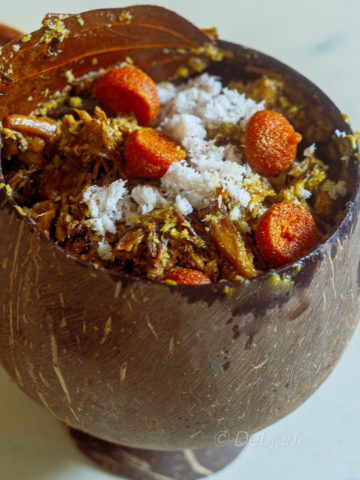
Kochu Saag er Ghonto is a classic Bengali dish made with taro leaves.
"Ghonto" refers to a thick vegetable preparation, often mashed, and sometimes includes fish, particularly the head. Today, I'm sharing my recipe for Kochu Shak er Ghonto, also known as taro leaf mishmash. "Kochu" is the Bengali name for taro, known as "Arbi" in Hindi. The greenish-purple stem of the taro plant is called "Kochu Shak" (or "Saag") in Bengali. Both the root and the stem are commonly used in Bengali cooking.

Jump to:
- Frequently Asked Questions
- The Ghonto Kobita by Prajnasundari Devi!
- Debjani's Note
- Recipe Variations - Kochu shager ghonto
- Tips
- Kochu Shag on Special Occations
- Here's how I make Kochu Shaker Ghonto at Debjanir Rannaghar!
- Recipe Card
- Related Recipes
- Bengali vegetarian recipes from Debjanir Rannaghar
- Have you tried the Kochu Shaker Ghonto recipe from Debjanir Rannaghar!
- Here's the Kochu Shak er Ghonto Pin for your Pinterest Board!
Frequently Asked Questions
The name "Ghonto" itself tells you a lot about the dish. It's a flavorful medley of spices, typically including bay leaf, asafoetida, and whole cumin for tempering. Ginger paste is essential, along with milk, sugar, and a paste made from cumin and green chilies. A generous amount of ghee is stirred in at the end, and the dish is mashed to the right consistency.
The Ghonto Kobita by Prajnasundari Devi!
The famous Bengali food writer Prajnasundari Devi beautifully described Ghonto in her book Amish o Niramish Ranna.
নামেতে যেমন ঘন্ট, কাজেও তাহাই।
ঘন্ট রাঁধিতে অনেক মশলা চাই।
ফোড়নের মশলা তেজপাতা, হিং, জিরা।
ভুলোনাকো দিতে তাতে আদা এক গিরা।
দুধ, চিনি আরো জিরা মরিচ বাটা।
সাতলাবে শেষে ঘিয়ে , কর ঘাঁটা ঘাঁটা।
-Pragnasundari Devi (Amish o Niramish Ahar- 1st Part)
It means Ghonto is all about bringing flavors together with plenty of spices. Bay leaf, asafoetida, and whole cumin are essential for tempering the oil. Ginger paste, milk, sugar, and a paste of cumin and green chili are also vital for the perfect taste. The final touch is a generous dollop of ghee, ensuring a wonderfully mashy consistency.
Debjani's Note

My fondest memory of Kochu Shak er Ghonto takes me back to Ulto Rath night at my mother's family home in Dhaniakhali, a charming village in West Bengal's Hooghly district, where it was served as part of the bhog offering to Thakur Madanmohon.
There's a sweet story connected to this Kochur Shak er Ghonto, a special offering. It was served to "Madanmohan Jeu" when he returned from his Aunt's house during the Ulto Rath festival. Apparently, his partner, Radharani, was a little upset and served Kochur Shak er Ghonto as a playful punishment!
I honestly can't understand why Kochu Shak is sometimes seen as punishment food because it's incredibly delicious! This vegetarian version, Kochu Saager Ghonto, is made without onion and garlic in our home. However, Kochu Saag is also popularly cooked with Hilsa fish head or medium-sized prawns, especially among people with roots in Bangladesh. That version is simply divine! I'll definitely share my recipe for Kochu Saag with fish in the future!
Recipe Variations - Kochu shager ghonto
When I decided to try making Kochu Shak er Ghonto, I was in luck - I found plenty of Kochu Shak at the Bypass Market near my home. I wasn't sure about buying it when I was shopping for vegetables the other day because I'm not very good at cutting Kochu. Thankfully, my Sabji Mashi, the kind lady I buy vegetables from, helped me out! She offered to cut and chop about 1 kg of Kochu Shak while I finished the rest of my shopping. It only took her 15 minutes!

To prepare, I looked at three vegetarian Kochu Shaker Ghonto recipes in Pragnasundari Devi's "Amish o Niramish Ahar." Then, I talked to my sister-in-law, who is of Bangal origin. She makes a fantastic Kochu Saag. The main difference I noticed was that she adds boiled black chickpeas, which I decided to include in my recipe as well, even though it wasn't mentioned in the book.
Tips
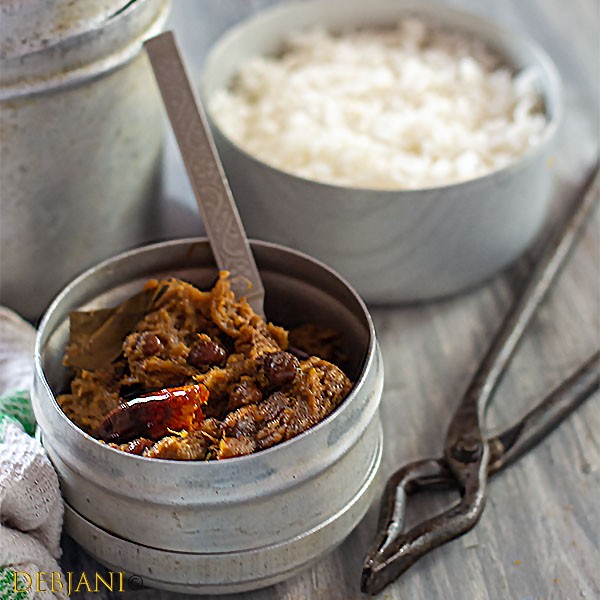
Boudi also suggests a clever trick: adding a tablespoon of tamarind paste or vinegar while cooking. Sometimes, Kochu Saag (Taro Leaf) can cause a sore throat, but this can be prevented by including a souring agent. Otherwise, it's a simple cooking process that results in Kochu Saag er Ghonto served with plain rice - a truly authentic Bengali meal.
Kochu Shag on Special Occations
Kochu shag er ghonto, the vegetarian delight made with taro leaves, holds a special place in Bengali cuisine. It's often prepared in Bengali homes for festive celebrations. For instance, some families consider Kochu shag er ghonto a must-have dish on the eve of Ulto Rath or Rathyatra. Similarly, others include Kochu shag in their Dashami feast during Durgapuja.
Here's how I make Kochu Shaker Ghonto at Debjanir Rannaghar!
Recipe Card
Kochu Shak er Ghonto |Taro leaf mishmash
Ingredients
- 1 kg Taro Leaf/ Kochu Saag
- 75 g Black Chickpeas / Chola/ Kala Chana ½ Cup
- 1 Coconut medium size
- 1 tablespoon Ginger Paste
- 4 Green Chili
- 150 ml Milk 1 Cup
- 1 teaspoon Whole Cumin Seed
- 2 Bay Leaf
- ½ teaspoon Asafoetida
- 1 teaspoon Cumin Powder
- 1 teaspoon Coriander Powder
- 1 teaspoon Turmeric Powder
- 1 tablespoon Sugar
- 1 teaspoon Salt to taste
- 1.5 tablespoon Ghee/ Clarified Butter
- 1 tablespoon Tamarind Paste Optional

Instructions

- Let the black chickpeas sit in water overnight before using those.
- Shred the coconut using a grater, either by hand or with a machine.
- You will need about ⅔ cup of shredded coconut for this recipe.
- Grind the green chilies into a paste.
- Cook the Black Chickpeas with ½ teaspoon of salt in a pressure cooker. Place the weight on the cooker and cook over medium heat until you hear 3 whistles.
- Once the pressure is gone, open the cooker and see if the chickpeas are cooked well.
- Peel the outer part of the taro leaves and cut them into long pieces.
- Wash the taro leaves well and put them in a large, deep pan with ½ teaspoon of salt.
- Cook over low heat, with the pan covered.
- You don't need to add any water during cooking.
- The taro leaves will soften and release enough water after about 10 minutes.
- Turn off the heat and let the cooked leaves cool down completely.
- Squeeze all the water out of the leaves.
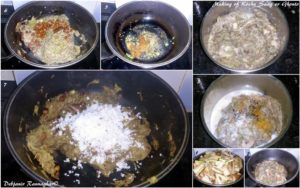
- Put the cooked leaves in a bowl and mix in the milk, turmeric powder, ½ teaspoon of salt, cumin powder, coriander powder, and sugar.
- Mash the leaves well using a masher.
- I used my potato masher. If you don't have one, you can mash it with your hand.
- Put 1 tablespoon of ghee in a pan and heat it until it's hot enough.
- Cook the clarified butter with bay leaf and cumin.
- Dissolve asafoetida in a tablespoon of water and pour it into the pan.
- Cook quickly for one minute, then stir in green chili paste and ginger paste.
- Mix in the mashed greens and boiled black chickpeas.
- Add tamarind paste if desired.
- Cook over low heat until the water is gone.
- Taste and add more spices if needed.
- Stir in grated coconut and a teaspoon of clarified butter to finish.
- Serve the Kochu Shak er Ghonto with rice.
Notes
- You can substitute vinegar for tamarind if you prefer.
- Feel free to adjust the amount of ghee to control the calorie content.
- Also, using black chickpeas, or chola, is optional.
Nutrition
Related Recipes
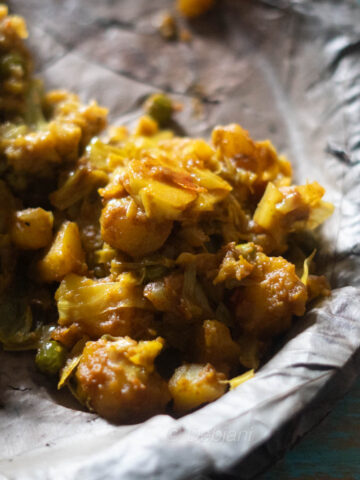
Bengali vegetarian recipes from Debjanir Rannaghar
- Bori Aloor Jhal ( also known as Bengali Bori'r Jhal)
- Lau Shaker Chorchori (also known as Bengali Vegetarian Mishmash with Bottle Gourd Greens)
- Katoya Data Chorchori (also known as Bengali Style Mix-veg with Drumsticks)
- Sada Aloo Chorchori (Also known as Bengali Aloo chorchori)
- Shukto (Also known as Bengali Shuktuni)
- Panch Mishali Tarkari (Also known as Bengali Panch MEshuli Tarkari)
- Dhokar Dalna (also known as Dhoka r Torkari)
- Aloo Phulkopir Dalna (Also known as Bengali Potato and Cauliflower curry)
- Rosogollar Dalna (Also known as Roshogolla r Torkari)
- Sheemer Jhal (also known as Bengali Shorshe Sheem or Broad Bean Curry with Mustard Paste)
- Narkel diye Cholar Dal (also known as Bengali Cholar Dal)
- Chanar Dalna (also known as Bengali Paneer and Potato Curry)
- Narkel diye Niramish Ghugni (Also known as Bengali No Onion No Garlic Ghugni or Yellow Peas Curry with Fried Coconut)
- Bengali Niramish Khichuri (Also known as Bhoger Khichuri or Bengali Khichuri)
- Gota Sheddho ( Also known as Bengali Gota Shiddho)
- Tok Dal (also known as Kancha Aam diye Toker Dal)
- Papor er Dalna (Also known as Bengali Papad Curry)
- Natun Aloor Dum (Also known as Bengali Niramish Aloor Dum)
Have you tried the Kochu Shaker Ghonto recipe from Debjanir Rannaghar!
Please inform me of your experience, and feel free to send a photo to [email protected]. Additionally, you can find me on various social media platforms such as Instagram, YouTube, Facebook, Pinterest, Google News, X, and Thread. Don't forget to use the hashtag #debjanirrannaghar when sharing your attempts at my recipes or if you have any questions or recipe requests.
Here's the Kochu Shak er Ghonto Pin for your Pinterest Board!


About Debjani Chatterjee Alam
I am Debjani Chatterjee Alam. A CSR specialist by profession and a food writer, food blogger, and food photographer as well. I live in Kolkata along with my Husband Mehebub who is an architect by profession, my daughter Pasta, and also my dog daughters Coffee and Luchi.

Leave a Reply