

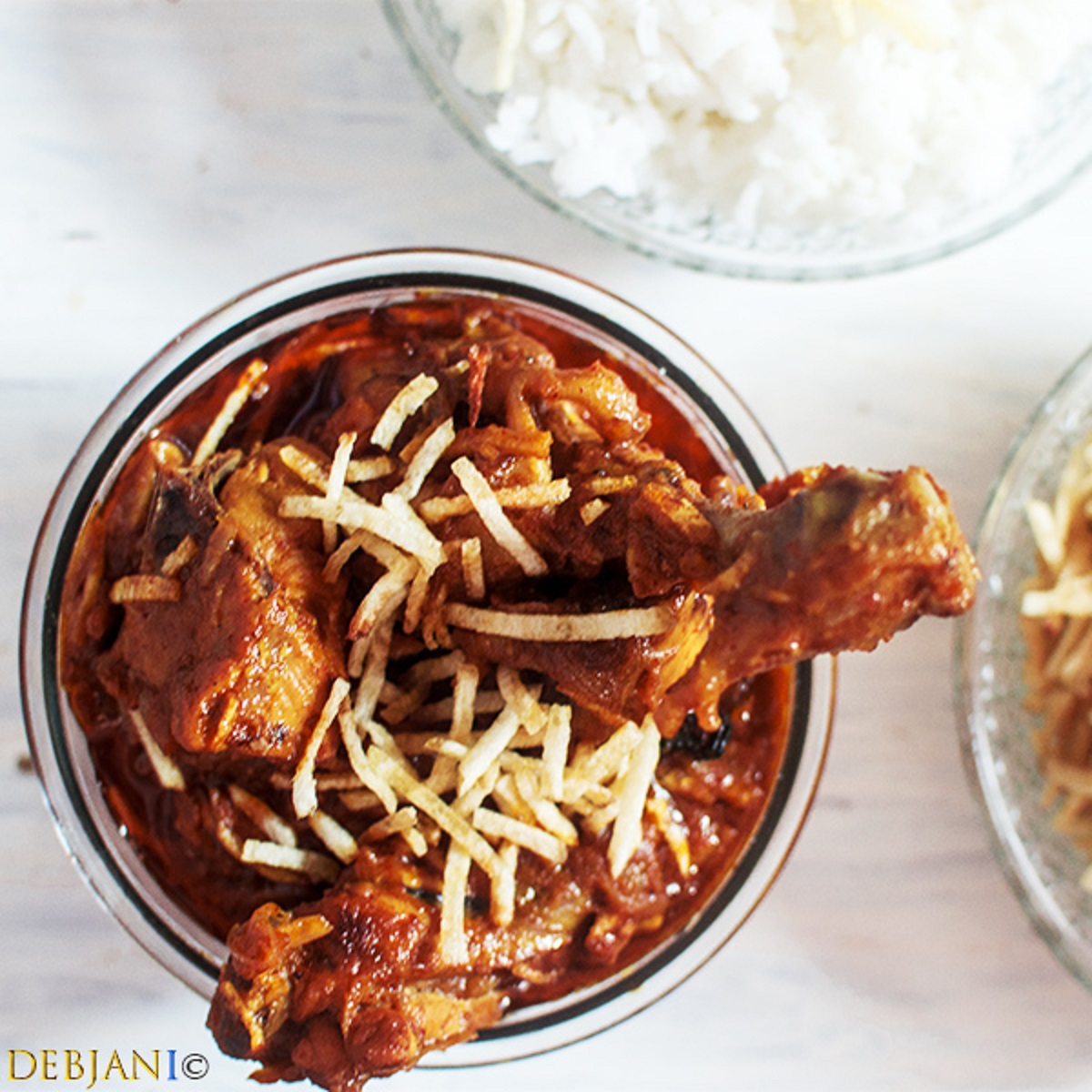
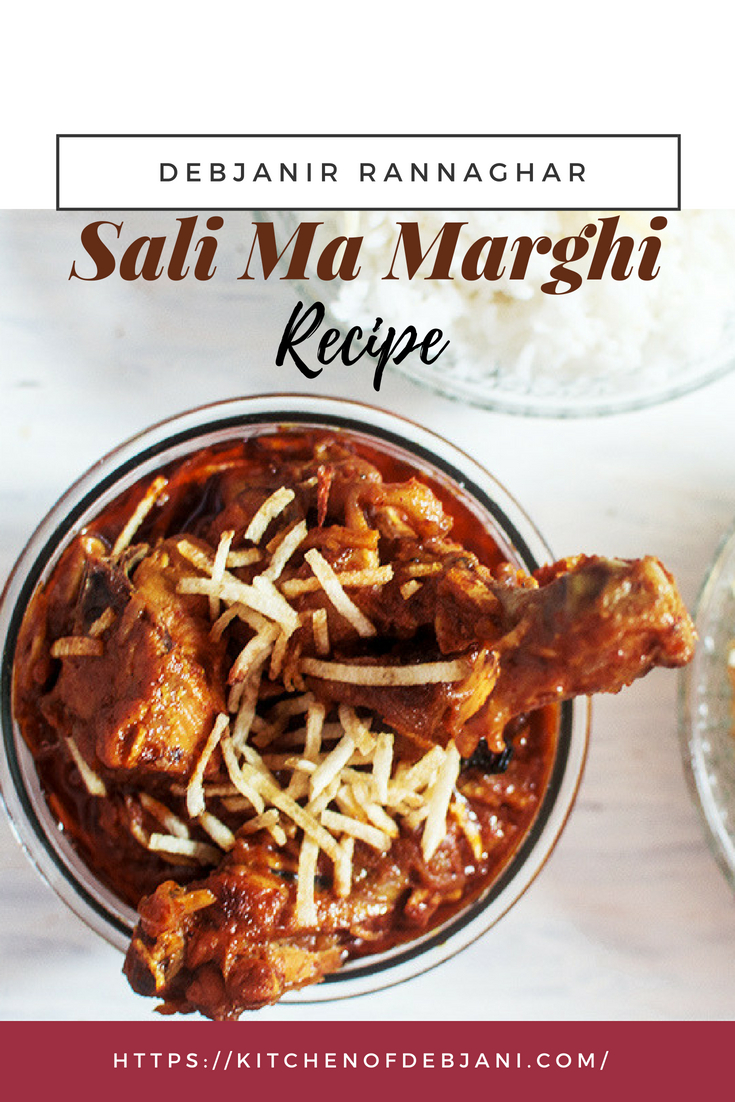
Sali Ma Marghi is a classic chicken curry from Parsi cuisine, and despite its special appeal, it's surprisingly simple to make! "Sali" refers to matchsticks, which in this dish means crispy fried potatoes cut into that shape and served alongside the chicken curry. And just so you know, "Marghi" simply means chicken.
Jump to:
Debjani's Note
Some days, nothing satisfies like chicken curry with potatoes, that perfect mix of spice and tender chicken. But when I'm looking for something beyond the usual big chunks of chicken and potato, I crave Sali Ma Marghi. This Parsi dish isn't just curry; it's a delightful experience. Instead of large pieces of potatoes, it features matchstick-like fried potatoes along with chicken, all in a flavorful gravy. It's both comforting and elegant, a refreshing change from the ordinary, and my favorite when I want chicken and potato curry with a special, delicious touch.
The Love Story of Chicken and Potatoes in Indian Cuisine
I adore a good Indian-style meat curry with potatoes; they just seem to make everything taste better. A perfect marriage it is. Whether it's a Bengali Chicken Curry, Kochi Pathar Jhol, or Parsi Sali Ma Marghi, potatoes always add something special. Today, I'm excited to share one of my absolute favorite chicken dishes from Parsi cuisine: Sali Ma Marghi - Parsi Chicken with Potato Strips. As mentioned before, "Sali" refers to those delicious fried potato strips, and "Marghi" means chicken. If you use mutton instead, it's called Sali Boti.
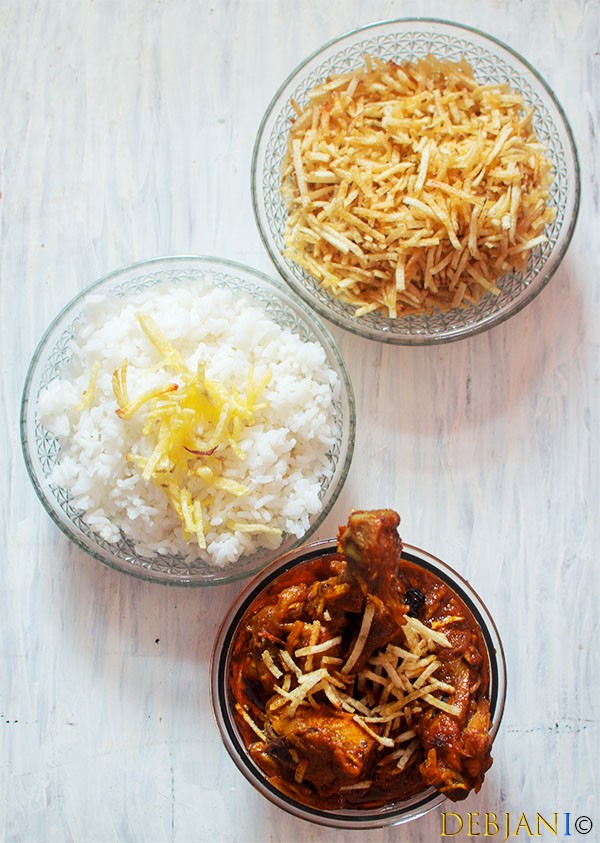
What makes Sali ma Marghi special is how it uses potatoes. Instead of large pieces, it's topped with crispy fried potato strips. The chicken curry itself, though, is your typical flavorful Indian chicken curry.
Parsi Sali Ma Marghi Recipe
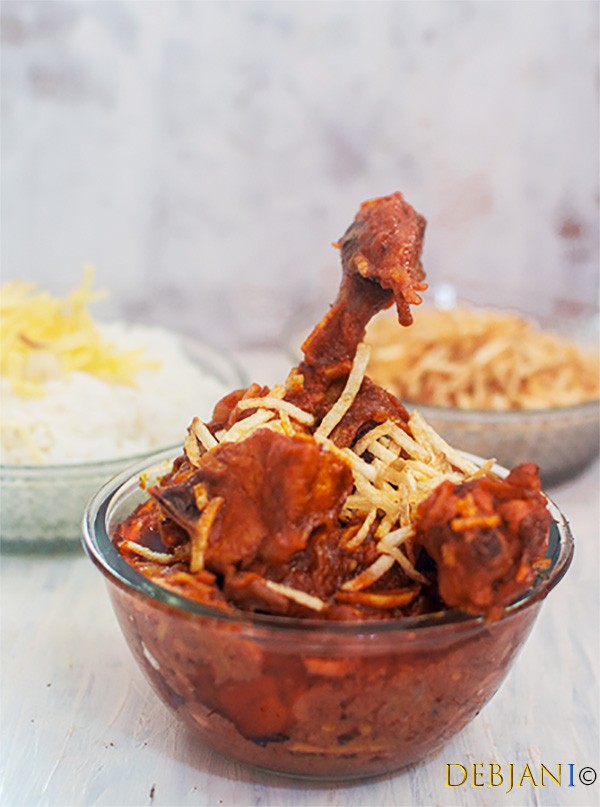
What sets this curry apart is the delightful combination of vinegar and jaggery, creating a flavor that's both sweet and tangy. The jaggery provides a subtle sweetness, while the vinegar adds a refreshing sourness, making Sali Ma Margi truly special. It pairs perfectly with plain rice or roti, and the mix of fried potatoes and chicken is simply irresistible.
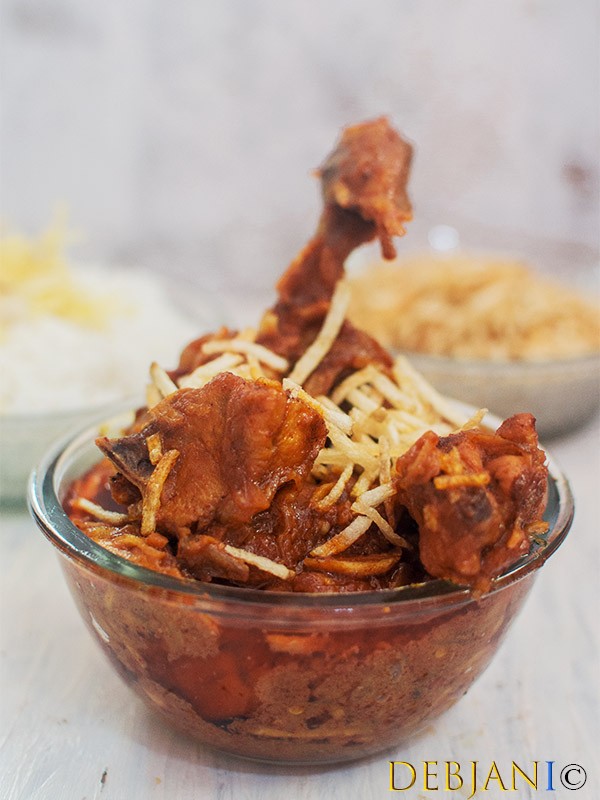
Bhicoo J. Manekshaw beautifully describes this dish in her book, "Parsi Food and Customs." The book explains how the basic Parsi chicken curry can be transformed with the addition of different ingredients. Sali Ma Margi is one such variation, where the addition of fried potato strips elevates the chicken curry to a new level.
Recipe Card
Sali ma Marghi | Jardaloo Salli Murghi Recipe
Equipment
- 1 Bowl to marinate
- 2 Wok
- 1 Lid
- 2 Spatula
Ingredients
To make the Chicken Curry
- 1 kg Chicken preferably leg and breast pieces
- 4 Onion medium sized finely chopped
- 1 Onion paste optional
- 1 tablespoon Ginger paste half for marination and half during cooking
- 2 tablespoon Garlic Paste half for marination and half during cooking
- 200 g Yogurt
- 4 Green chilies paste
- 2 Tomato Pureed/chopped
- 1 teaspoon Chilli powder
- 1 teaspoon Turmeric powder
- 1 teaspoon Cumin Powder
- ½ teaspoon Coriander Powder
- ½ teaspoon Garam Masala
- 1 teaspoon Jaggery
- 2 tablespoon Vinegar
- 4 tablespoon Vegetable oil
- 2 teaspoon Black Pepper Powder
- 2 Bay Leave
- 1- inch Cinnamon Stick
- 1 Black Cardamom
- 3 green Cardamom
- 1 teaspoon Salt or to taste
- 2 cups Water
To make Sali
- 5 Potatoes
- 1 tablespoon Salt
- 100 ml Vegetable Oil for Deep Frying

Instructions
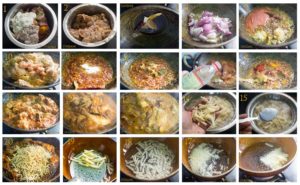
How to cook Chicken Curry:
- First, wash the chicken well and then mix it with ginger paste, garlic paste, onion paste, green chili paste, yogurt, salt, and turmeric powder. Let it sit overnight, or for at least 2-3 hours. I like to let it sit overnight (8 hours).
- Next, heat oil in a heavy pan. Add bay leaves, cinnamon, and green and black cardamom to the hot oil.
- Add chopped onions and cook until they are golden or light brown.
- Now, add chopped or pureed tomatoes and cook for another 2-3 minutes over medium heat.
- Add ginger and garlic paste and cook until the oil separates from the mixture.
- Add cumin powder, coriander powder, turmeric powder, and jaggery. Cook for 5 more minutes.
- Add vinegar and jaggery and stir well.
- Add the chicken and cook for 10 minutes on low heat.
- Add hot water (about 2 cups), cover the pan, and cook for about 10 minutes.
- Add salt to taste.
- Cook until the sauce gets thick and turns red.
How to make Sali:
- Cut potatoes into thin, matchstick-like pieces.
- Put the potato sticks in a bowl of water with 1 tablespoon of salt and let them soak for 15 minutes.
- Heat oil in a pan for deep frying the potatoes.
- Fry the potatoes a little at a time.
- Cook them over low heat until they are crispy and golden.
- Take the fried potatoes out of the oil and then fry the rest.
Finishing the Chicken Dish - Sali ma Marghi
- Add about two-thirds of the fried potatoes to the cooked chicken curry and gently stir.
- Put the remaining fried potatoes on top of the curry and serve it hot with bread or rice.
Notes
Nutrition
Chicken Recipes from Debjanir Rannaghar
- Doi Murgi (also known as Bengali Curd Chicken)
- Deshi Murgir Dum (also known as Bengali Country Chicken Curry)
- Chicken Kosha (also known as Bengali Kosha Murgir Mangsho)
- Instant Chicken Pulao Recipe (also known as Chicken Pulao in Pressure Cooker)
- Bangladeshi Chicken Roast
- Restaurant-style Chicken Malai Kebab (also known as murgh malai kebab)
- Chicken Bhorta
- Tandoori Chicken
- Bengali Chicken Stew
- Robibarer Murgir Jhol (also known as Bengali Runny Chicken Curry)
- Kerala Style Chicken Stew
- Kacha Lonka Murgi
- Goalondo Chicken Curry (also known as Boatman Style Chicken Curry)
- Kolhapuri Chicken
Have you tried the Sali Ma Marghi recipe from Debjanir Rannaghar!
Please inform me of your experience, and feel free to send a photo to [email protected]. Additionally, you can find me on various social media platforms such as Instagram, YouTube, Facebook, Pinterest, Google News, X, and Thread. Don't forget to use the hashtag #debjanirrannaghar when sharing your attempts at my recipes or if you have any questions or recipe requests.
Here's the Perfect Bengali Sali Ma MArghi Recipe Pin for your Pinterest Board!

About Debjani Chatterjee Alam
I am Debjani Chatterjee Alam. A CSR specialist by profession and a food writer, food blogger, and food photographer as well. I live in Kolkata along with my Husband Mehebub who is an architect by profession, my daughter Pasta, and also my dog daughters Coffee and Luchi.

Leave a Reply