

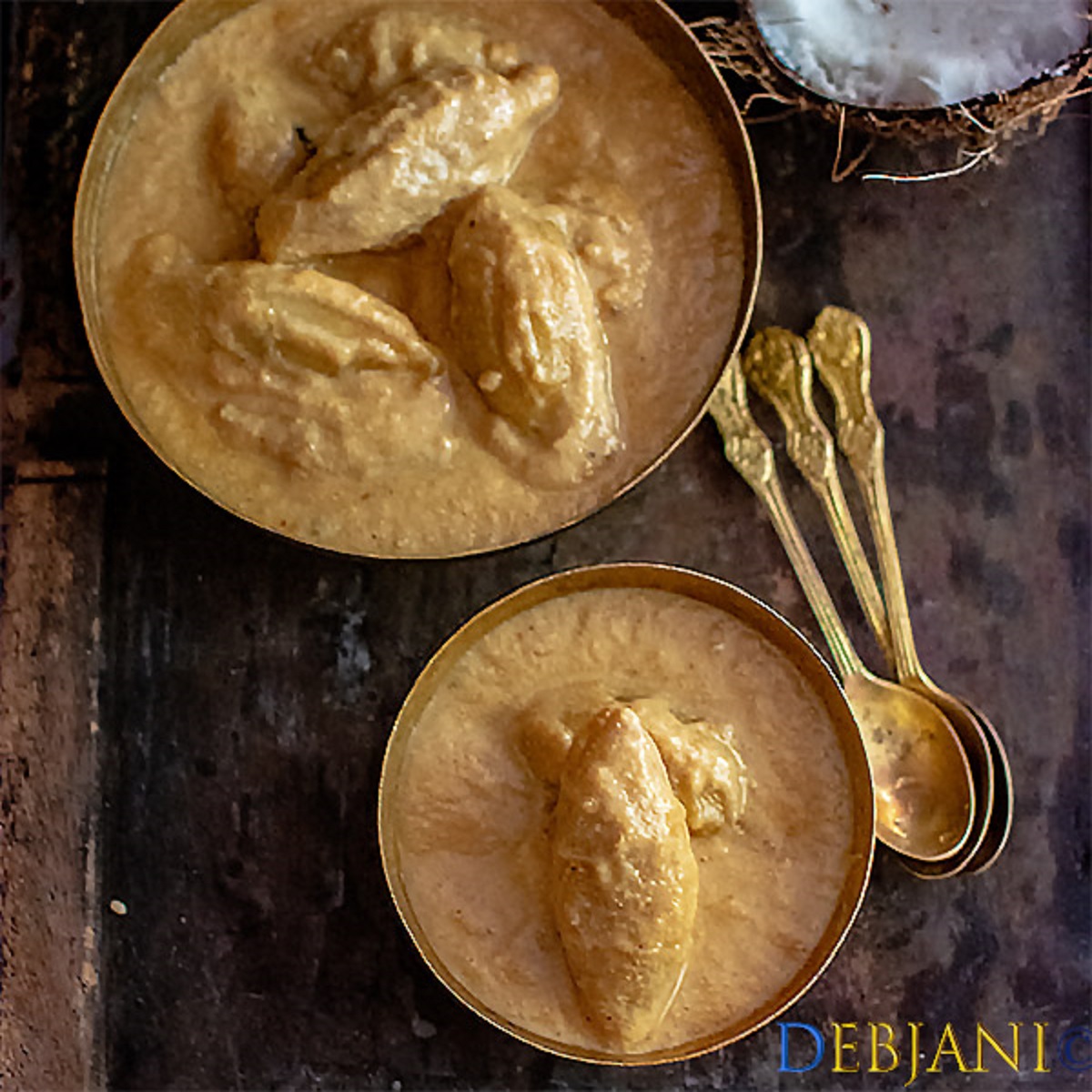
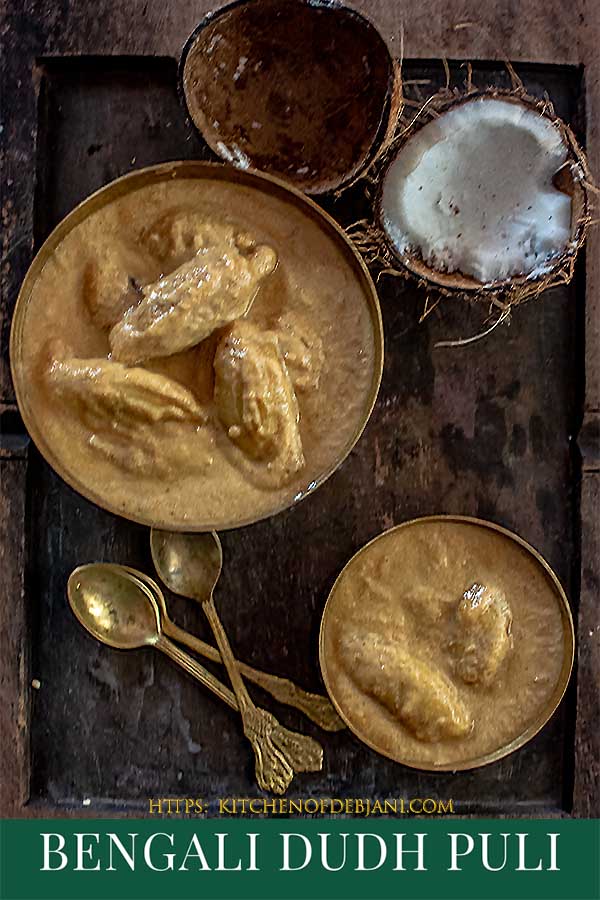
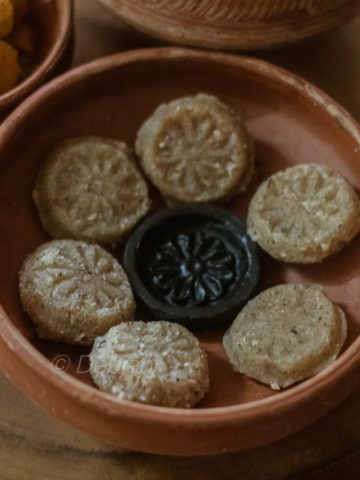
Dudh Puli is a well-known Bengali winter dessert made with milk and coconut stuffing filled steamed dumplings. For this dish, rice flour dumplings, called Puli, are filled with a coconut mixture. These are then gently cooked in milk with jaggery, specifically Patali Gur, or sugar.
Jump to:
Debjani's Note
"Maa, when should I add the Patali Gur when making Dudh Puli? Also, exactly when should I add the Puli so they are soft but fully cooked?" My kitchen was a complete mess last night when I called my mom!
To celebrate the harvest festival of Makar Sankranti, I decided to make just one dish. It's a family favorite, and my mother is an expert at preparing it. After a tiring day at work, I had little time and energy to make a full spread for Poush Sankranti. Thankfully, Pasta and Mehebub, along with Rosie, Pasta's nanny, helped me a lot. Pasta was in charge of handing me all the ingredients, Mehebub grated the coconut, and Rosie made the dough for the Puli.
Makar Sankranti Spread
With their help, I made Dudh Puli, along with some Koraishutir Kochuri and Notun Aloor Dum, last night.
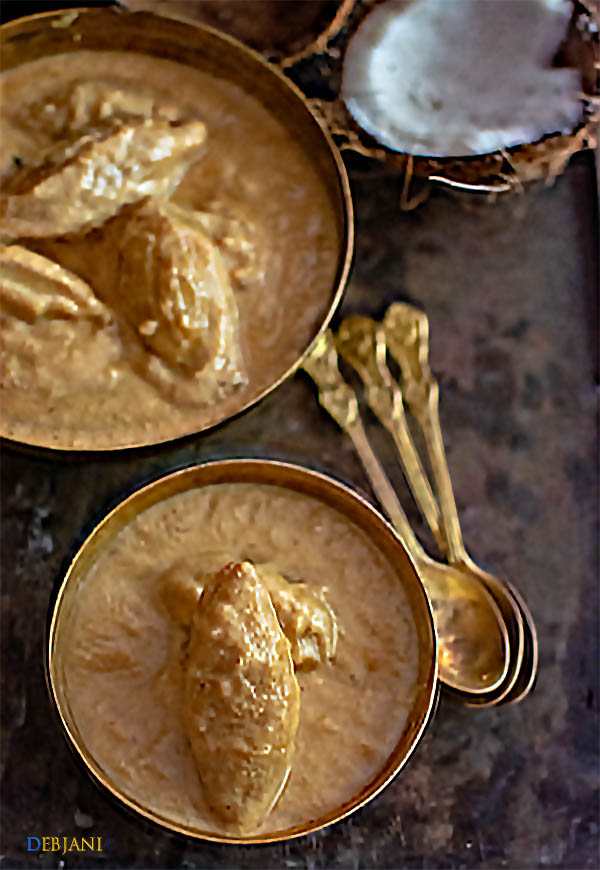
I finished writing the post around 2:30 AM, then took the pictures early in the morning and set the post to go live on Makar Sankranti evening.
Maa gave me a great tip: mix the jaggery with a little milk before adding it to the boiling milk. This stops the milk from curdling. She also told me to add the Puli when the milk had reduced by a third. I followed her advice exactly, and for the first time ever, my Dudh Puli turned out as good as hers!
I love following traditions, especially ones that involve food. Makar Sankranti is one such festival where I try to make a traditional Bengali dish at home. My last post featured a recipe for Narkeli Jam Pitha, which I learned from my mother-in-law. This time, I'm sharing about Dudh Puli, a dish I've enjoyed since childhood. My mother and aunts make incredible Dudh Puli, and my grandmother used to make it just as well.
Dudh Puli Recipe Variations!
I've encountered two distinct ways of preparing Dudh Puli. At my family home, Dudh Puli has always been, and still is, made with Notun Gur or Patali Gur. However, my grandmother used sugar for hers. Consequently, the Dudh Puli at my house always had a light brown color, while my grandmother's was always creamy. Both versions tasted delicious, but I've always preferred the one made with Gur over sugar.
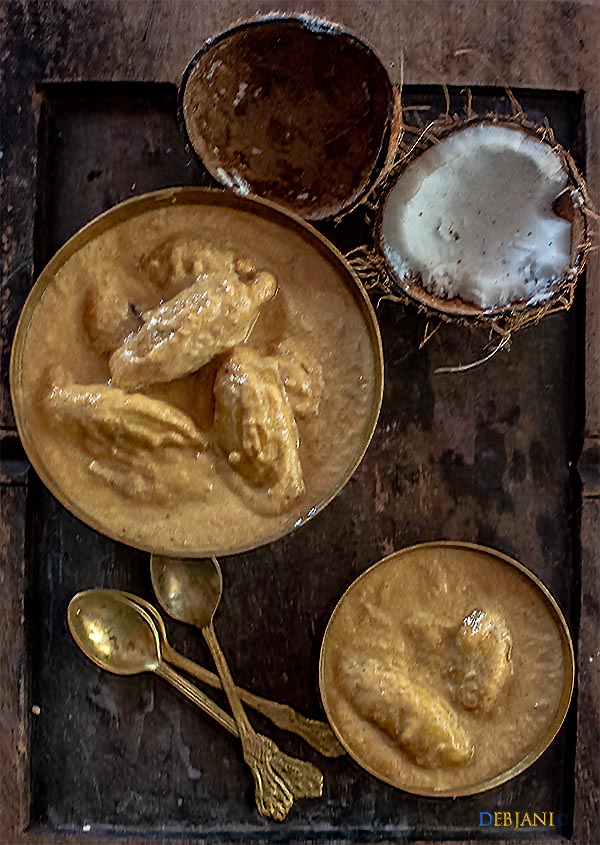
At my ancestral home, Dudh Puli is a must-have dish on the day of Poush Masher Lokkhi Pujo. My aunt is in charge of both the puja and preparing all the food, including this winter treat.
Frequently Asked Questions
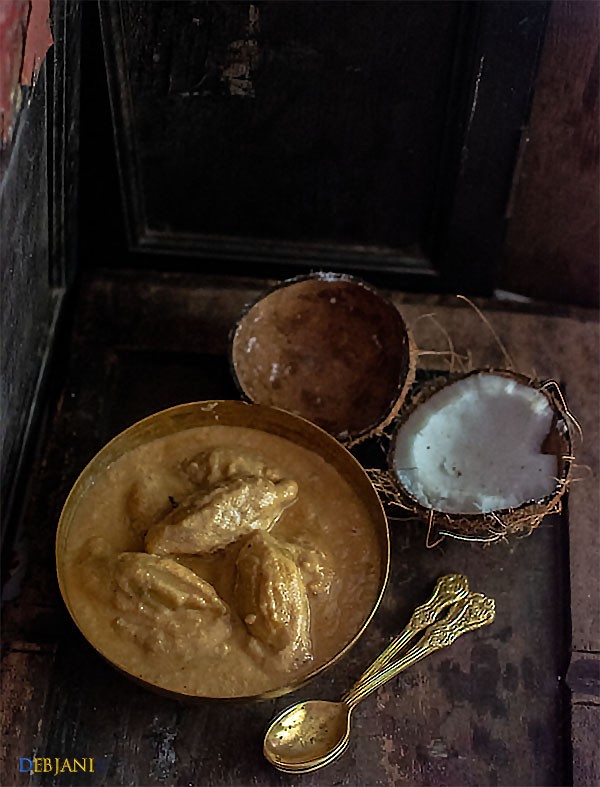
Dudh Puli is a well-known Bengali dessert, similar to a milk pudding or kheer, made by slowly cooking milk with Puli-rice flour dumplings filled with cooked coconut.
One thing was consistent in both households: I never saw anyone use store-bought rice flour to make Dudh Puli. It was always prepared with homemade rice flour, with Gobindobhog rice being the primary ingredient. Dudh Puli gets its wonderful and unique smell from Gobindobhog Rice. My in-laws, however, use Badshabhog rice to make the rice flour. Most of our Pithe are made with flavorful short-grain rice.
For soft and fluffy puli in Dudh Puli, here's a helpful tip:
A small amount of semolina is added to the rice to help bind the dumplings together properly. Grated coconut is slowly cooked with date palm jaggery, and this mixture becomes the delicious filling. This dish truly benefits from slow cooking. I will now share the recipe for Dudh Puli with jaggery, but you can also use an equal amount of sugar, or a mix of both.
Here's how I make Dudh Puli at Debjanir Rannaghar!
Recipe Card
Dudh Puli
Dudh Puli is a famous Bengali Winter special dessert, from the category of Pithe Puli. It is prepared with milk. In this dessert, dumplings prepared with rice flour and stuffed with a coconut mixture known as Puli are slow-cooked with milk and Jaggery/ sugar.
Ingredients
- 2 Liters Full Cream Milk
- 200 g Rice Flour
- 2 tablespoon Semolina
- 2 Cup Grated Coconut
- 800 g Patali Gur / Date Palm Jaggery

Instructions
- Break the Gur / Jaggery slabs into small chunks.
To make the Puli

- Place the grated coconut in a pan and cook over a low flame until the moisture evaporates.
- Add ⅓ of the Gur and cook on a low flame until the Gur dissolves and the mixture reduces to ⅓.
- Keep stirring to avoid burning.
- Switch the flame off once the mixture starts leaving the edge of the pan.
- Transfer the mixture to a bowl and keep it aside.
- Meanwhile, take Rice Flour and Semonila in a bowl and mix both.
- Add hot water little by little to make a soft dough.
- Cut the dough into 20 pieces and make small balls.
- Take a ball and flatten it with the palm of your hand and your fingers, as shown in the picture.
- Place 1 tablespoon of the stuffing in the middle, seal from both sides, and give the puli a half-moon shape.
- Keep both edges sharp, and the filling will be in the middle. Refer to the picture for the shape.
- Make all the puli following the process mentioned.

Dudh Puli Recipe; final step:
- Take the Milk in a deep-bottom vessel and start boiling it on a low flame, adding 1 cup of water, until the milk reduces to ⅔.
- Now take 1 cup of the boiling milk and mix it with Jaggery.
- Add this mixture to the boiling milk and, using a ladle, dissolve the Jaggery.
- Now add Pulis one by one and keep cooking over low flame for around 15 minutes to reduce the moisture.
- The Milk will get thickened by then.
- Once the desired consistency is reached, switch off the flame.
- Cover the Vessel with a lid and wait at least one hour to serve Dudh Puli.
- To get the best of the flavor, serve Dudh Puli after at least 8 hours of cooking.

Notes
- When I prepare Dudh Puli with Date Palm Jaggery and rice flour made from Gobindobhog rice, I avoid adding extra flavors like cardamom or bay leaf. This helps the natural tastes of the jaggery and rice stand out.
- You can make the rice flour yourself using Basmati rice instead of short-grain rice, or simply buy pre-made rice flour.
- Instead of jaggery - Notun Gur or Patali Gur, you can use sugar, or even a mix of both. If you choose to use sugar or regular rice, it's a good idea to add a few cardamoms and bay leaves for extra flavor.
- While you can use fat-free milk instead of full-cream milk, be aware that it will make the dish less rich. For an even richer taste, you can add condensed milk, but if you do, remember to use less sugar or jaggery.
Nutrition
Bengali Pithe/ Puli/ Payesh Recipes from Debjanir Rannaghar:
- Bengali Soru Chakli Pithe Also known as Soru Chakuli Pitha)
- Narkeli Jam Pitha (also known as Jam pithe)
- Nolen Gurer Sandesh (also known as Date Palm Fudge with cottage cheese)
- Gurer Narkel Naru (Also known as Bengali Narkel Naru/ Nariyal ki Laddu)
- Patishapta (Also known as Bengali Patishapta Pitha)
- Taler Bibikhana Pitha (Also known as Taler Pithe or Sugar Palm Cake)
- Chaler Payesh (also known as Bengali Rice Kheer)
- Choshir Payesh (also known as Chosi Payesh)
- Khejur Gurer Payesh (Also known as Bengali Rice Kheer with Date Palm Jaggery)
- Rosh Bora (Also known as Bengali Sweet Fritters served with Runny Sugar/ Jaggery syrup)
Have you tried the Dudh Puli recipe from Debjanir Rannaghar!
Do let me know how it came out. Also, I would love to see a picture of the same which you can share here at [email protected]. Meanwhile, on Instagram, you can use my hashtag #debjanirrannaghar and in addition, you can tag me at @foodofdebjani.
Doodh Pooli Recipe Pin!

About Debjani Chatterjee Alam
I am Debjani Chatterjee Alam. A CSR specialist by profession and a food writer, food blogger, and food photographer as well. I live in Kolkata along with my Husband Mehebub who is an architect by profession, my daughter Pasta, and also my dog daughters Coffee and Luchi.


Pampa Banerjee says
ASADHARAN