

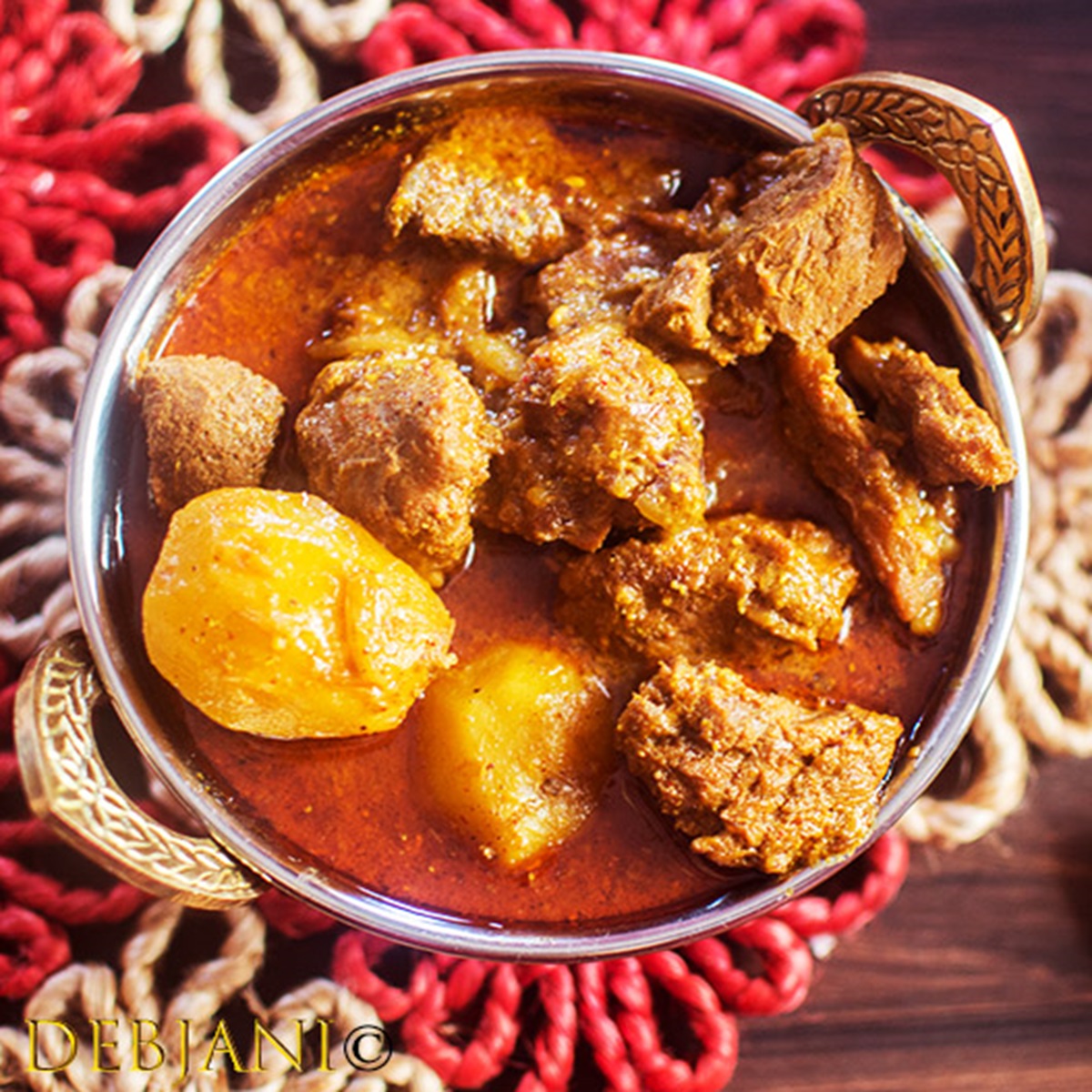
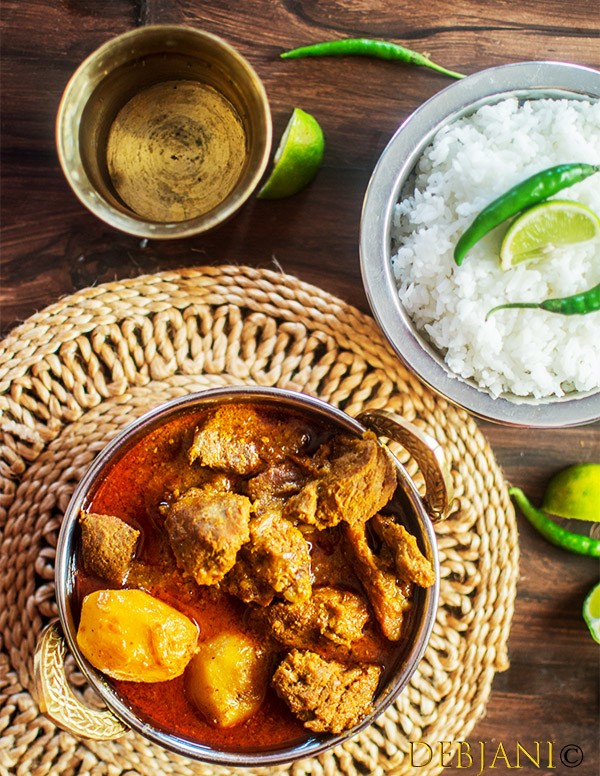
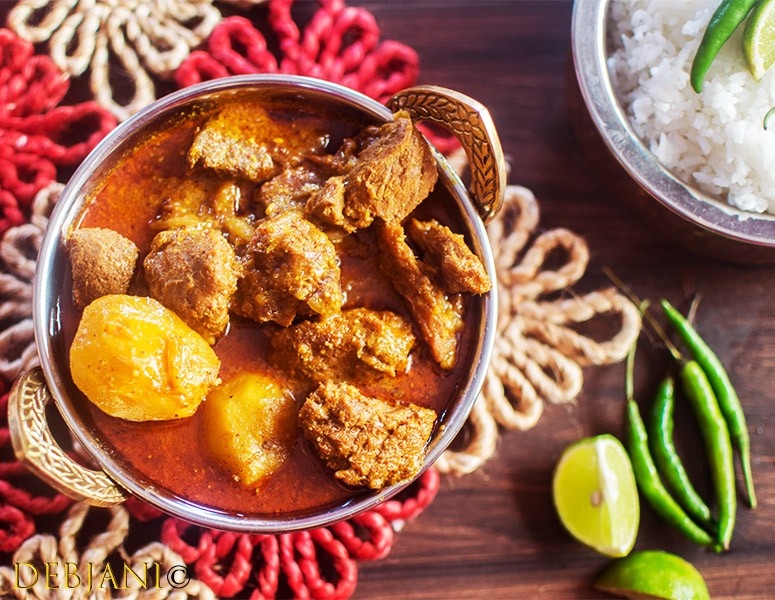
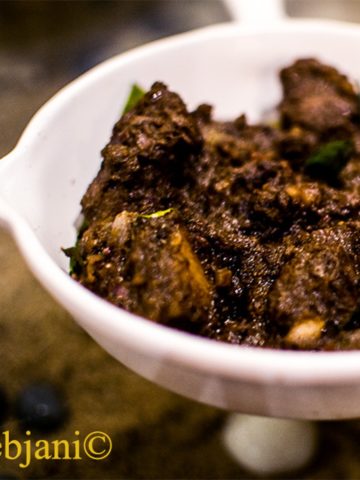
Imagine tender pieces of pork simmered with generous chunks of potato in a rich, flavorful gravy - that's Bengali Pork Jhol. This Bengali-style pork curry, made with a special blend of spices, is a delightful dish best enjoyed with a generous serving of hot, fluffy steamed rice.
Jump to:
- Debjani's Note
- Difference between Roadside Pork Jhol and Homestyle Pork Jhol!
- Here's how I make Pork Jhol at Debjanir Rannaghar- Recipe Steps
- Recipe tips and tricks - Aloo chara (without) or Aloo diye pork er jhol (with Potato)!
- Frequently Asked Questions
- Recipe Card
- Recipe Tips
- Craving for a typical Bengali Jhol! Well, here are the options from Debjanir Rannaghar apart from Pork Jhol
- Similar Recipes
- Have you tried the Pork er Jhol aka Bengali Pork Curry Recipe from Debjanir Rannachar!
- Pork Jhol Pin for your Pinterest board!
Debjani's Note
Pork Jhol, that delicious Bengali pork curry with a runny gravy, wasn't a Sunday staple at our house growing up. While I do cook it, I don't make it as often as Murgir Jhol (chicken curry) or Khashi/ Pathar Mangshor Jhol (mutton curry). I only prepare pork dishes about once a month, especially now that we're in Kolkata. Back in Gurgaon, from 2010 to 2014, it was a different story. Finding Bengali-style pork curry there was tough, so I cooked it at home much more often. In Kolkata, thankfully, Pork Jhol is readily available, though it's not quite the same as my homemade version. The roadside versions often feature a rich, thick gravy and don't include potatoes.
Difference between Roadside Pork Jhol and Homestyle Pork Jhol!
These days, Pork-er Jhol seems to be quite trendy in Kolkata, at least according to social media. It's not a new culinary creation, though. It's been a common Sunday lunch dish for families who enjoy pork for years. Many roadside stalls sell Pork Jhol, and places like the shop near Garia Station and Fatikdar dokan in Howrah are almost legendary for their Pork Jhol.
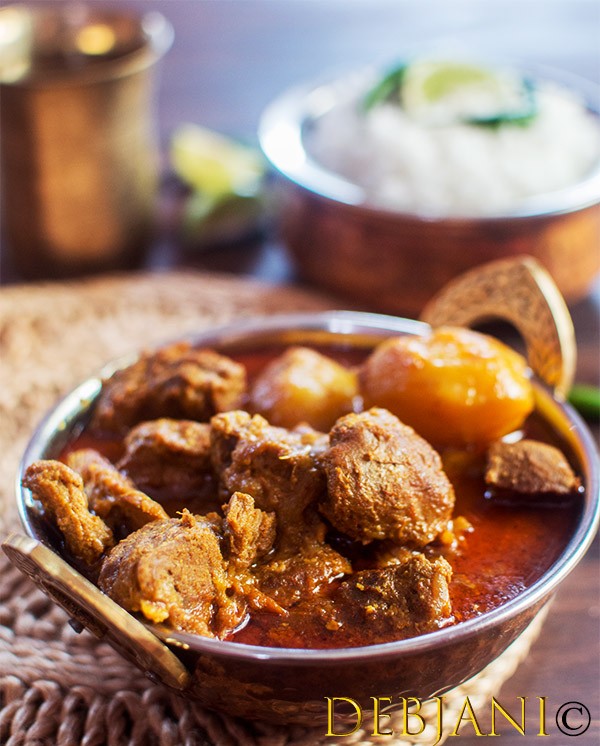
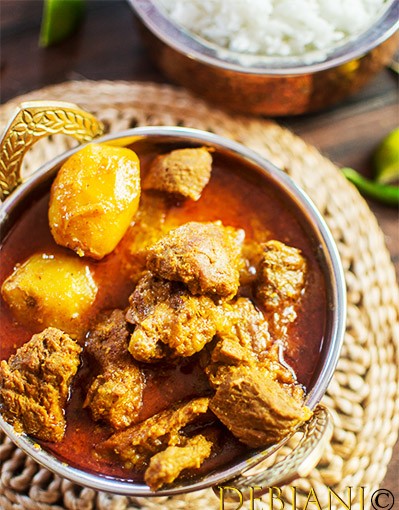
The Pork Jhol you often find in the roadside shop is usually a spicy pork curry. But the Pork Jhol I make at home is a truly comforting version with potatoes! Being Bengali, I can't imagine any meat stew without a big chunk of potato. We love to eat it with a spoonful (or maybe a few!) of fragrant Gobindobhog rice. I should also mention that my family and I generally don't like too much fat with our meat, though we do make an exception for pork belly. While Mehebub and I enjoy the roadside Pork Jhol occasionally, I prefer to cook it at home these days since Pasta loves pork! Actually, she loves both beef and pork. I'm not always confident about the quality of pork from the roadside shops, so I always buy from trusted butchers when I'm cooking at home.
Here's how I make Pork Jhol at Debjanir Rannaghar- Recipe Steps
-
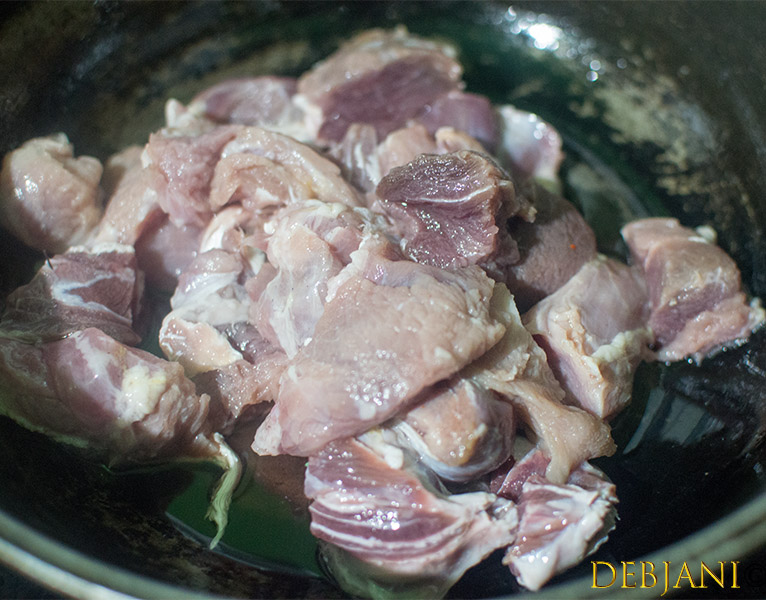
Before you marinate the pork meat, wash it well and dry it with a towel.

-
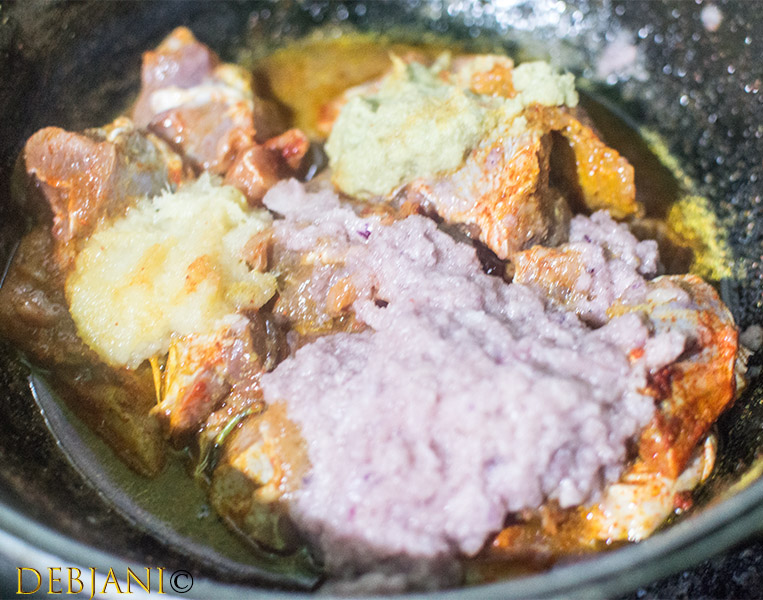
Mix pork pieces with a paste made of onion, ginger, garlic, cumin, coriander, Kashmiri chili powder, sugar, and mustard oil. Let it sit overnight or for 8 hours.

-
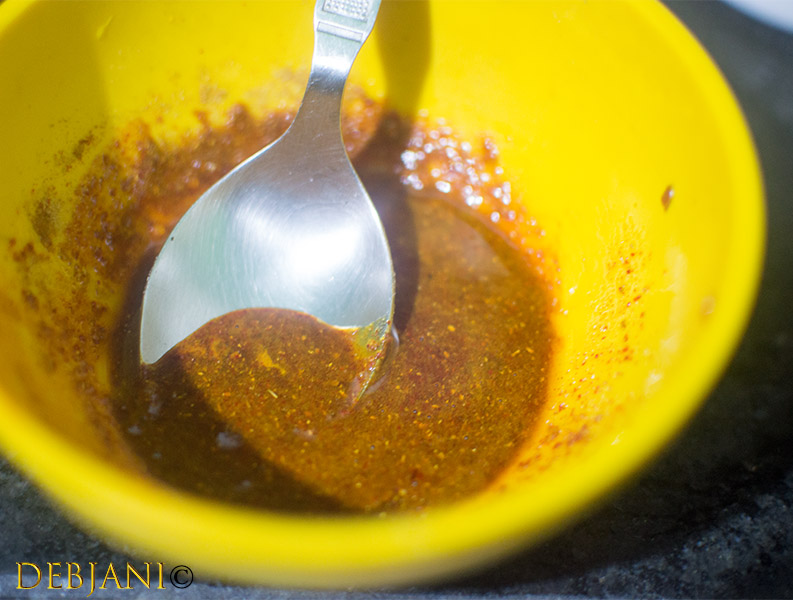
Combine cumin, coriander, Kashmiri chili powder, and sugar with mustard oil to create a thick paste. Let it rest for 15 minutes before you use it in the curry.

-
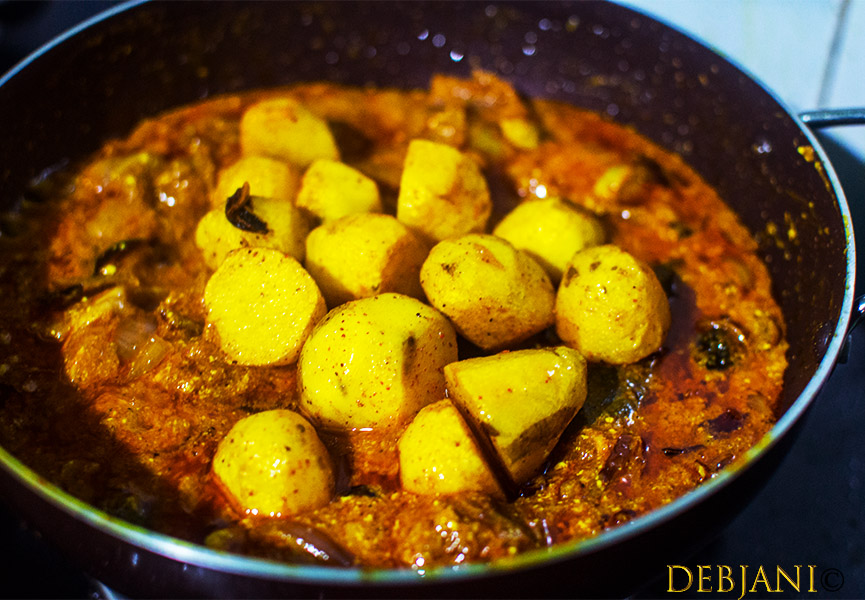
Peel the potatoes and cut them in half or into fourths. Chop the onions into small pieces, but thin slices are fine too.
-
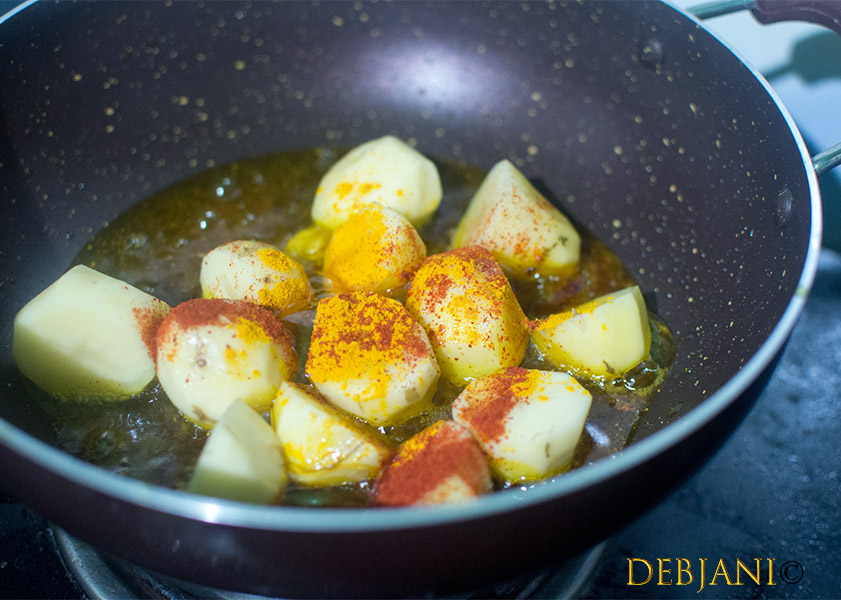
Heat oil in a large, deep pan. Add turmeric and red chili powder to the potatoes, then fry them.

-
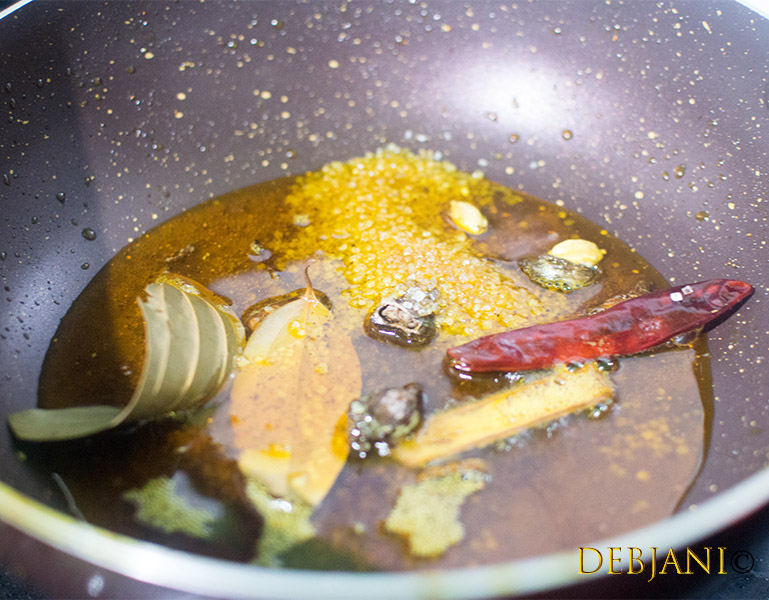
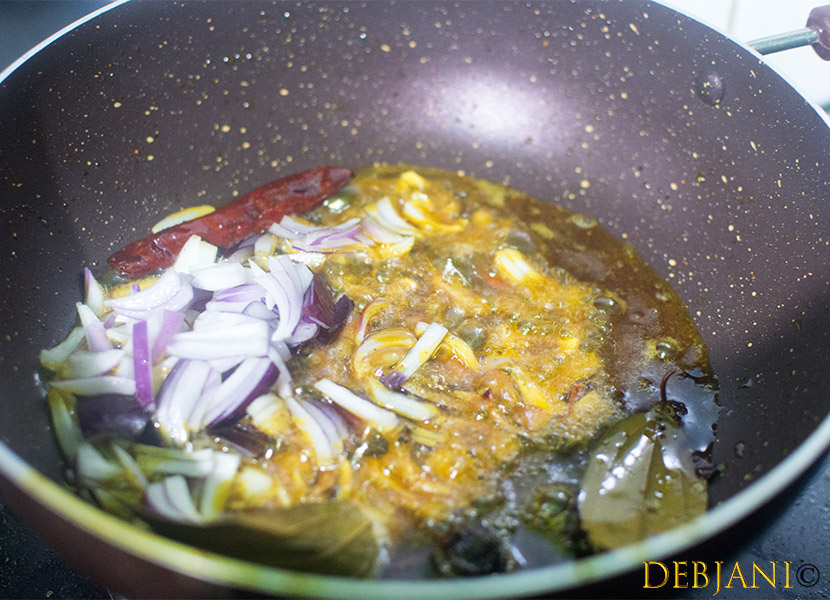
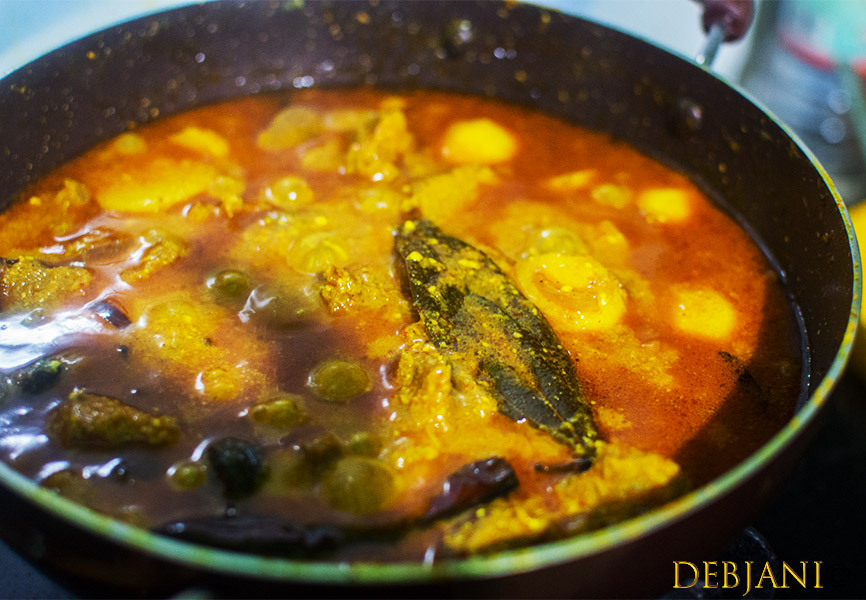
Now, add red chili, bay leaf, cinnamon stick, clove, green cardamom, and black cardamom to the remaining hot oil in the pan. Add sugar and let it melt and turn brown.

-
Next, add the chopped onion and cook it over low heat until it becomes clear.

-
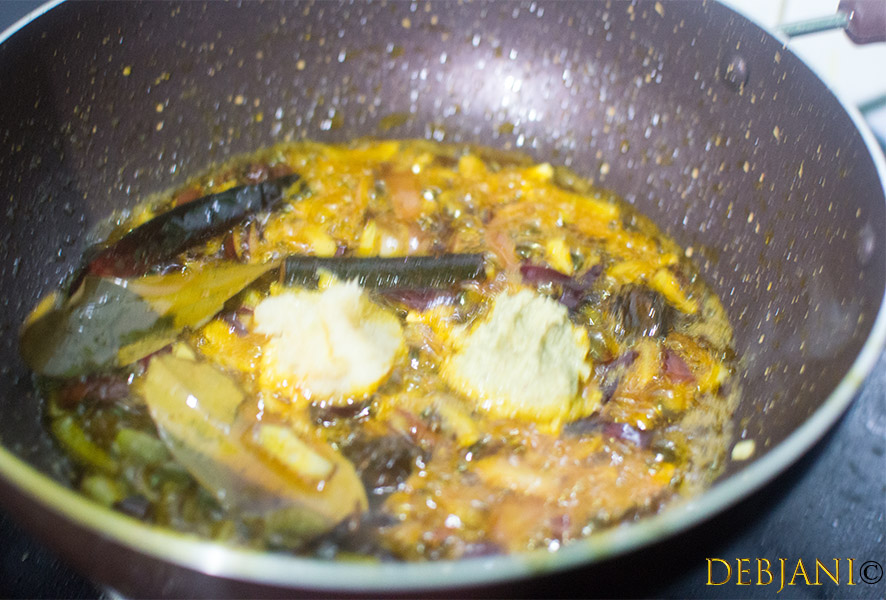
Cook ginger and garlic paste with a tablespoon of water on low heat until the strong, raw garlic smell disappears.

-
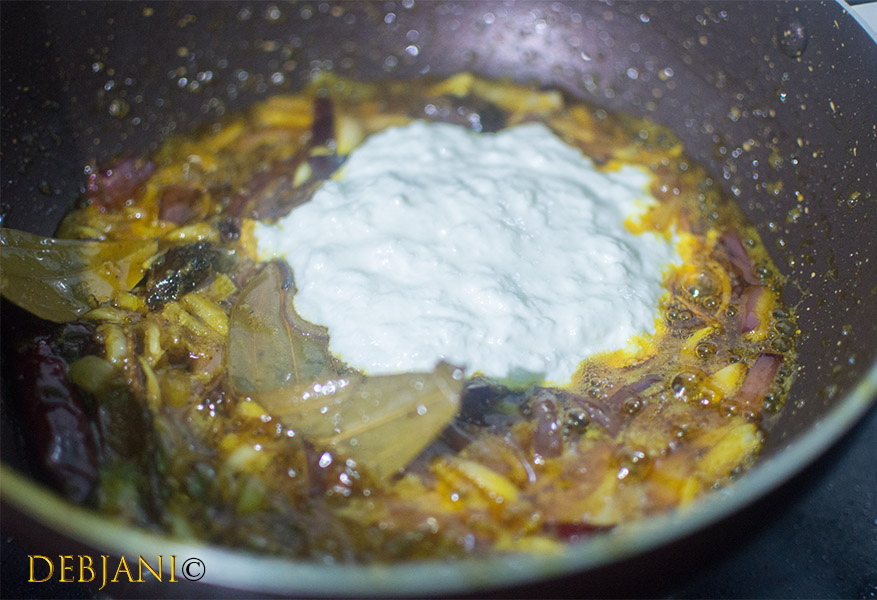
Mix in plain yogurt quickly to prevent it from separating or curdling.

-
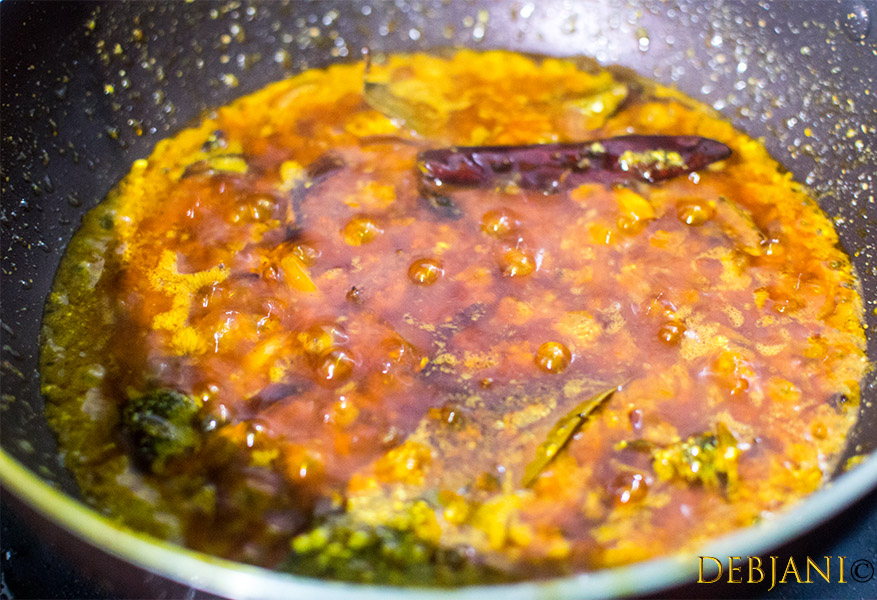
Then, stir in the spice paste and cook on low heat until oil separates from the mixture's sides in the pan.
-
Add salt and stir to combine.
-
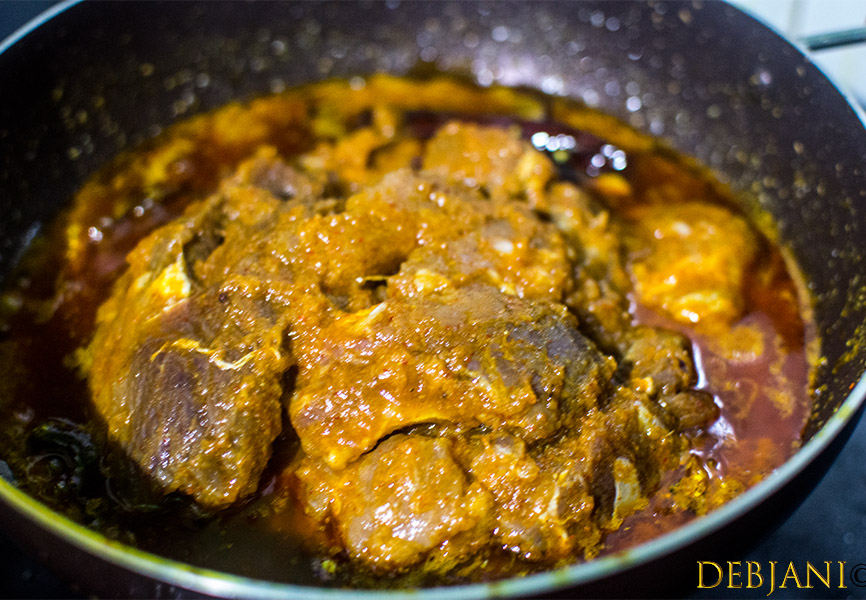
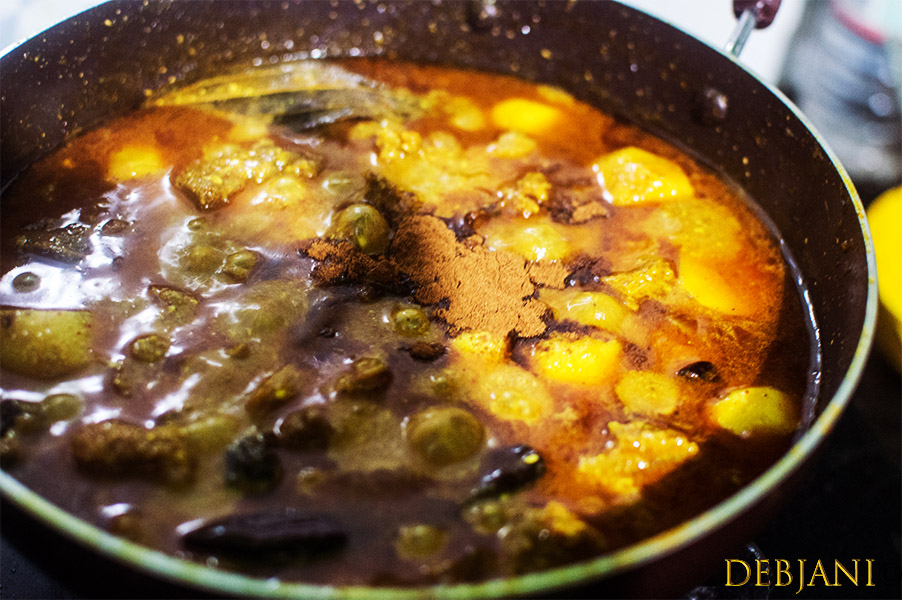
Next, add the pork along with its marinade and mix everything well. Cook over low heat, stirring occasionally.

-
Cook for about 10 minutes. The pork will release its own liquid, so no extra water is needed.
-
Cover the pan and cook for 15-20 minutes.
-
When the pork is partly cooked, add the fried potatoes.

-
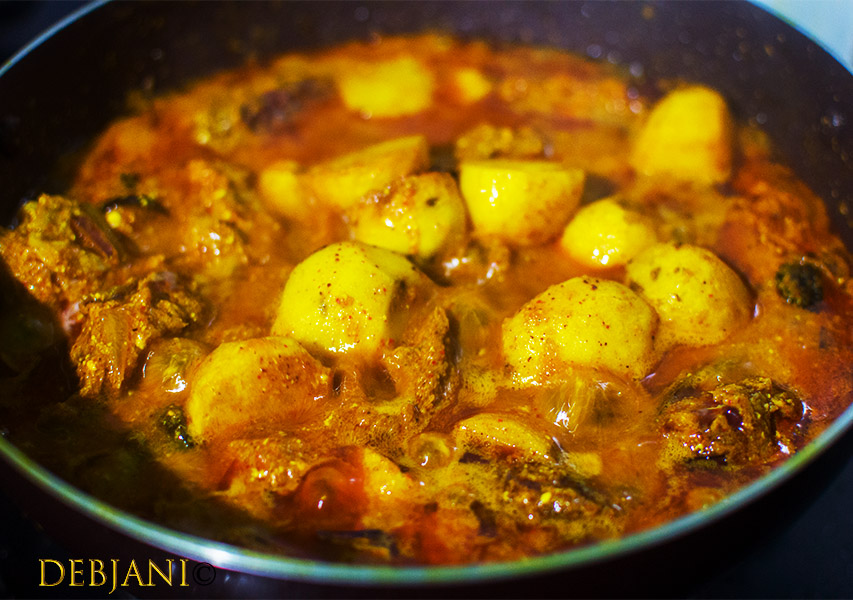
Continue cooking until the pork is as tender as you like, which should take about an hour in total. If needed, add a little water and bring it to a simmer.

-
Finish the Pork Jhol, also known as Bengali Pork Curry, with Garam Masala and Ghee (optional)!

-
Serve the hot Bengali Pork Jhol with your favorite carbohydrate. We like it with Gobindobhog Chaler Bhat.
Recipe tips and tricks - Aloo chara (without) or Aloo diye pork er jhol (with Potato)!
As I already mentioned above, my Bengali Pork Curry absolutely needs potatoes. I also always use Bengali Garam Masala to get that special "Bong" taste. My recipe uses plain curd and no tomatoes. Here's a tip I learned from our landlady in Gurgaon: she always said never to mix curd with tomatoes when making Bengali or Odia meat curries, as it might upset your stomach if you eat too much!
I'm not sure how true that is, but I always skip tomatoes when making this runny curry with pork. Plain curd works great to make the meat tender and adds a lovely sour flavor. If you do want to use tomatoes, just use less curd to keep the flavors balanced. Oh, and my recipe for Bengali Pork Jhol also uses ghee (like when I cook mutton or beef), but you can definitely leave that out if you want! One last thing - I like to make a spice paste and add it at the end, instead of adding the spices directly while cooking.
Frequently Asked Questions
Absolutely! Try using bone-in pork chunks and slowly cook them according to the recipe I recommended. You'll love it!
Yes! Including pork in your meals can be both healthy and delicious, offering a flavorful and nutritious experience. However, remember to watch your portion sizes. Like with any food, moderation is key.
In an Indian-style pork curry, it usually takes about an hour or so to cook, unless you're using a pressure cooker. Personally, I prefer the slow cooking method.
Yes, you can safely reheat pork curry in the microwave, oven, or on the stovetop. Just make sure it's thoroughly heated before serving. As a tip, cooking the curry a day ahead and reheating it actually enhances the flavor!
Recipe Card
Pork Jhol | Bengali Pork Curry (with Aloo!)
Ingredients
- 500 g Pork curry cut
- 4 Potato big
- 2 Onion
- 1 teaspoon Ginger Paste
- 1 teaspoon Garlic Paste
- 200 g Plain Curd preferably hung curd
- 1 teaspoon Bengali Garam Masala Powder
- ½ tablespoon Sugar
- ⅓ teaspoon Kashmiri Red Chili Powder:
- ⅓ teaspoon Turmeric Powder
- 1.5 teaspoon Salt or to taste
- 1 tablespoon Ghee optional
- 4 tablespoon Mustard Oil
For Marination:
- 2 tablespoon Onion Paste
- ½ teaspoon Ginger Paste
- 1 teaspoon Garlic Paste
- ½ teaspoon Cumin Powder
- ½ teaspoon Coriander Powder
- 1 teaspoon Kashmiri Red Chili Powder
- ½ tablespoon Sugar
- 1 tablespoon Mustard Oil
For tempering:
- 1 Red Chili
- 1 Bay Leaf
- 1 inch Cinnamon Stick
- 6 Clove
- 4 Green Cardamom
- 2 Black Cardamom
To make the Spice Paste:
- ½ teaspoon Cumin Powder
- ½ teaspoon Coriander Powder
- 1 teaspoon Kashmiri Red Chili Powder
- ½ tablespoon Sugar
- ½ tablespoon Mustard Oil

Instructions
- Before marinating, wash the meat well and dry it with a cloth.
Marination

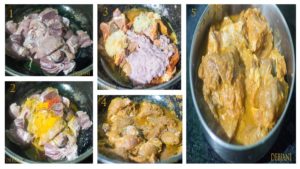
- Mix pork pieces with ground onion, ginger, garlic, cumin, coriander, Kashmiri red chili, sugar, and mustard oil. Let it sit overnight or for 8 hours.
Spice mix for Bengali Pork Jhol
- Combine cumin, coriander, Kashmiri red chili, and sugar with mustard oil to form a thick mixture. Set aside for 15 minutes before adding it to the curry while cooking.
Prep Work
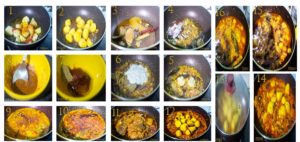
- Peel potatoes and cut them in half or into quarters, depending on their size. You can look at the picture for reference.
- Roughly chop the onions. Thin slices will also work.
Bengali Pork Curry Cooking Process

- In a large pot, heat the oil and begin frying the potatoes after dusting them with turmeric and red chili powder. These spices help give the potatoes and sauce a nice color.
- After frying, remove the potatoes from the oil and set them aside. Frying the potatoes well on medium heat should take about 3 minutes.
- Next, add red chili, bay leaf, cinnamon stick, clove, green cardamom, and black cardamom to the remaining oil in the pot to flavor it.
- Add sugar and let it brown.
- Now, add the chopped onion and cook over low heat until it becomes clear.
- Add ground ginger and garlic along with 1 tablespoon.
- Simmer the mixture in water until the paste no longer smells raw.
- Mix in plain yogurt quickly to prevent it from separating.
- Add the spice paste and cook on low heat until the oil separates from the mixture's edges.
- Add salt and stir.
- Add the pork, including the marinade, and combine everything well.
- Cook on low heat, stirring occasionally.
- Cook for about 10 minutes.
- The pork will release its own liquid, so there's no need to add extra water.
- Cover the pan and cook for 15-20 minutes.
- When the pork is partially cooked, add the fried potatoes.
- Continue cooking until the meat is as tender as you like, which should take about an hour overall.
- If needed, add a bit of water and bring to a boil.
- Finish the Pork Jhol, or Bengali Pork Curry, with Garam Masala and Ghee if you like.
- Serve the Bengali Pork Jhol hot with your favorite carbohydrate. We like it with Gobindobhog rice.
Notes
Recipe Tips
- Add salt to taste, but only after the meat has marinated. Feel free to adjust the chili powder to your desired level of spiciness. I love using Kashmiri red chili because it gives the gravy a gorgeous color and just the right amount of warmth.
- While ghee and garam masala are optional, I highly recommend including them if you want to achieve that authentic Bengali flavor.
- I like to use mustard oil for Pork Jhol, but you can use vegetable oil instead. Keep in mind that mustard oil provides a unique aroma that you won't get with other oils.
- If you don't have curd on hand, yogurt makes a perfect substitute.
- Lastly, I find that lean pork works best for this Bengali curry. If your pork is fattier, like 80/20 or 70/30, be sure to reduce the amount of oil you use, as the pork will cook in its own rendered fat.
- One last tip: Cooking time will depend on the kind of pork you're using, so keep a close watch. I prefer slow cooking, but you can certainly use a pressure cooker if you're short on time.
Nutrition
Craving for a typical Bengali Jhol! Well, here are the options from Debjanir Rannaghar apart from Pork Jhol
- Bori Begun Aloo diye Ilish Macher Tel Jhol (also known as ilish tel jhol)
- Aloo Fulkopi diye Macher Jhol (also known as macher jhol with veggies)
- Piajkoli ar Aloo diye Tangra Macher Jhol (also known as Bengali Light fish curry prepared with Tyangra Maach, Onion Stalks and Potato)
- Mangshor Jhol (also known as Bengali light Mutton curry)
- Charapona Macher Kabiraji Jhol (also known as Charapona Macher Jhol)
- Aloo Potol Diye Macher Jhol (also known as Macher patla jhol with Potato and pointed gourd)
- Tangra Macher Aloo Begun o Bori Diye Jhol (also known as tangra macher tel jhol)
- Mangsha Tarkari ( also known as Oriya Mutton Curry)
- Robibarer Murgir Jhol
- Kochi Pathar Jhol (also known as Aloo diye Mangshor Jhol or Bengali Mutton Curry)
Similar Recipes



Have you tried the Pork er Jhol aka Bengali Pork Curry Recipe from Debjanir Rannachar!
Do let me know how it came out. Also, I would love to see a picture of the same, which you can share here on [email protected]. On Instagram you can use my hashtag #debjanirrannaghar or you, in addition, you can tag me at @foodofdebjani.
You can follow me on Facebook, and Twitter, Pinterest, and Instagram for updates and recipes from Debjanir Rannaghar. Furthermore, I would love to receive recipe requests and would try my best to come up with more recipes.
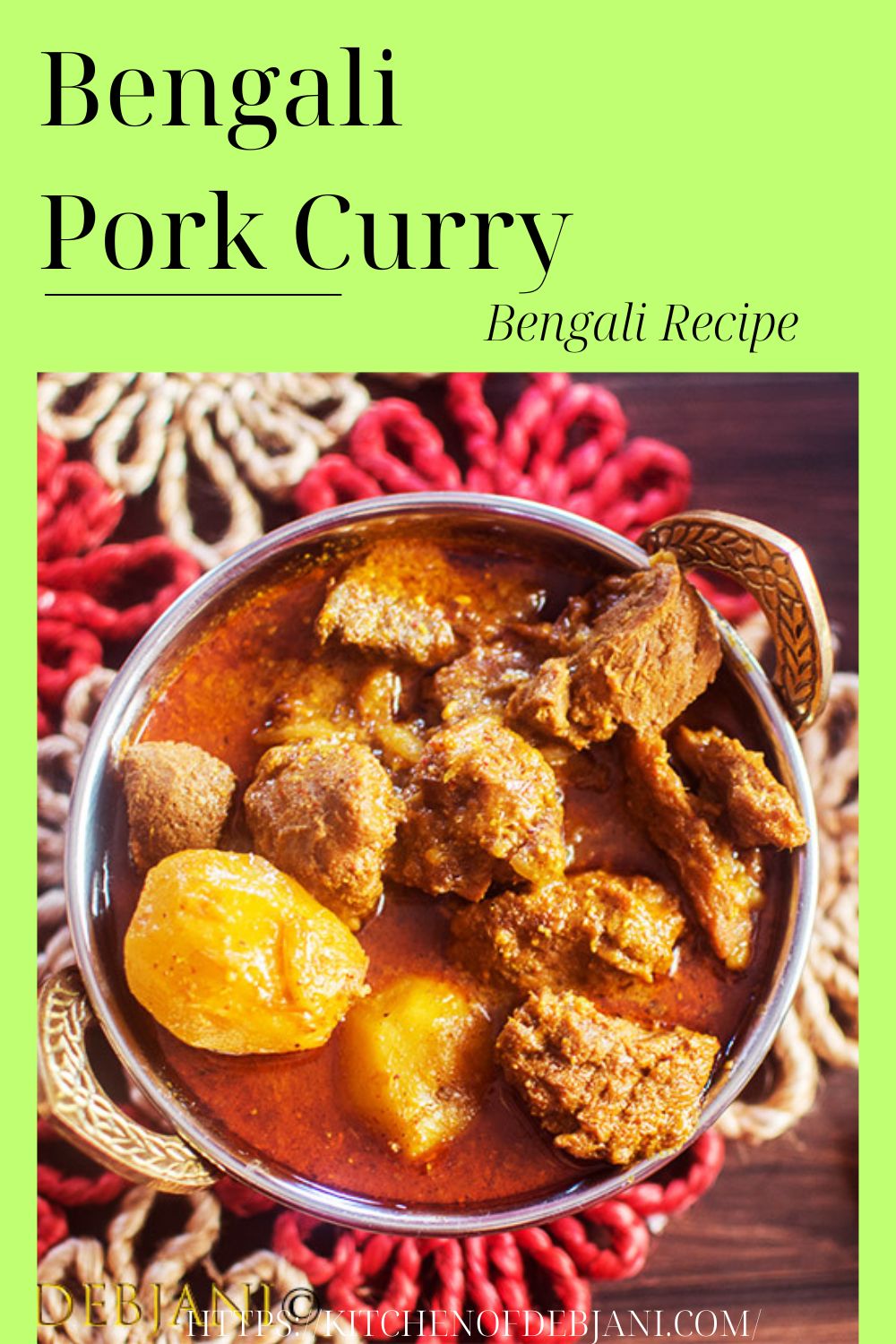
Pork Jhol Pin for your Pinterest board!

About Debjani Chatterjee Alam
I am Debjani Chatterjee Alam. A CSR specialist by profession and a food writer, food blogger, and food photographer as well. I live in Kolkata along with my Husband Mehebub who is an architect by profession, my daughter Pasta, and also my dog daughters Coffee and Luchi.


Dr Swapan kumar Sur. says
Nice Direction for pork preparation
Can I get interconnecting number for culinary training. . Dr Swapan kumar Sur.
9903418494 my number, I am giving training for pig farming.
Debjani says
Thank you so much for your comment. I would love to know more about the Pig farming training.