

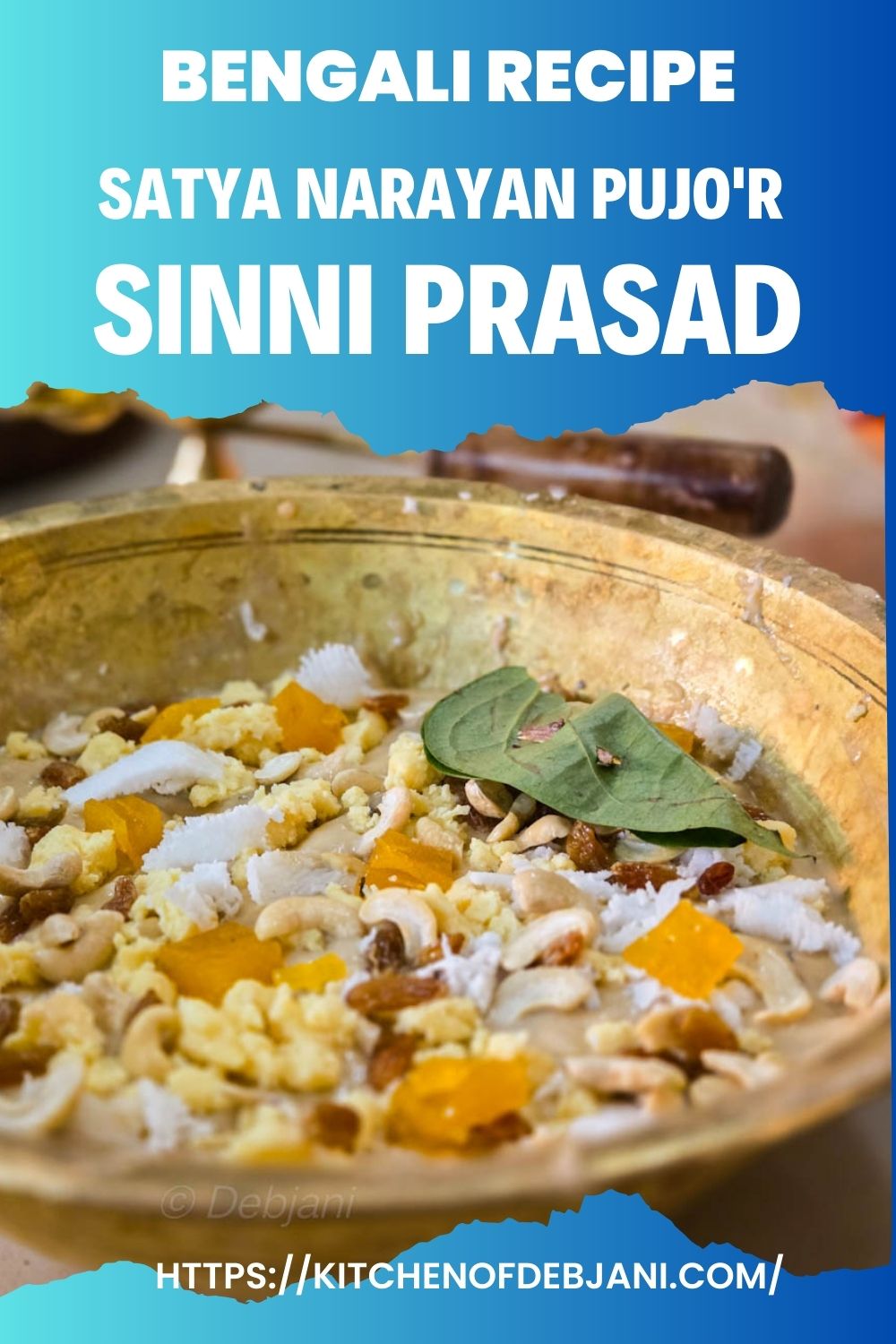
Shinni, or Sinni, is a signature Bengali offering, or prasad, that we usually make for Satya Narayan Pujo (and on some other occasions). In Bengali Muslim culture, a similar offering is made in occations, both cooked and uncooked. I'm going to show you how to make this Bengali sweet Shinni Prasad in this recipe post. It's essentially a sweet, uncooked dessert kind of thing made with whole wheat flour, milk, bananas, sugar, and some dried fruits - you can add other stuff too.
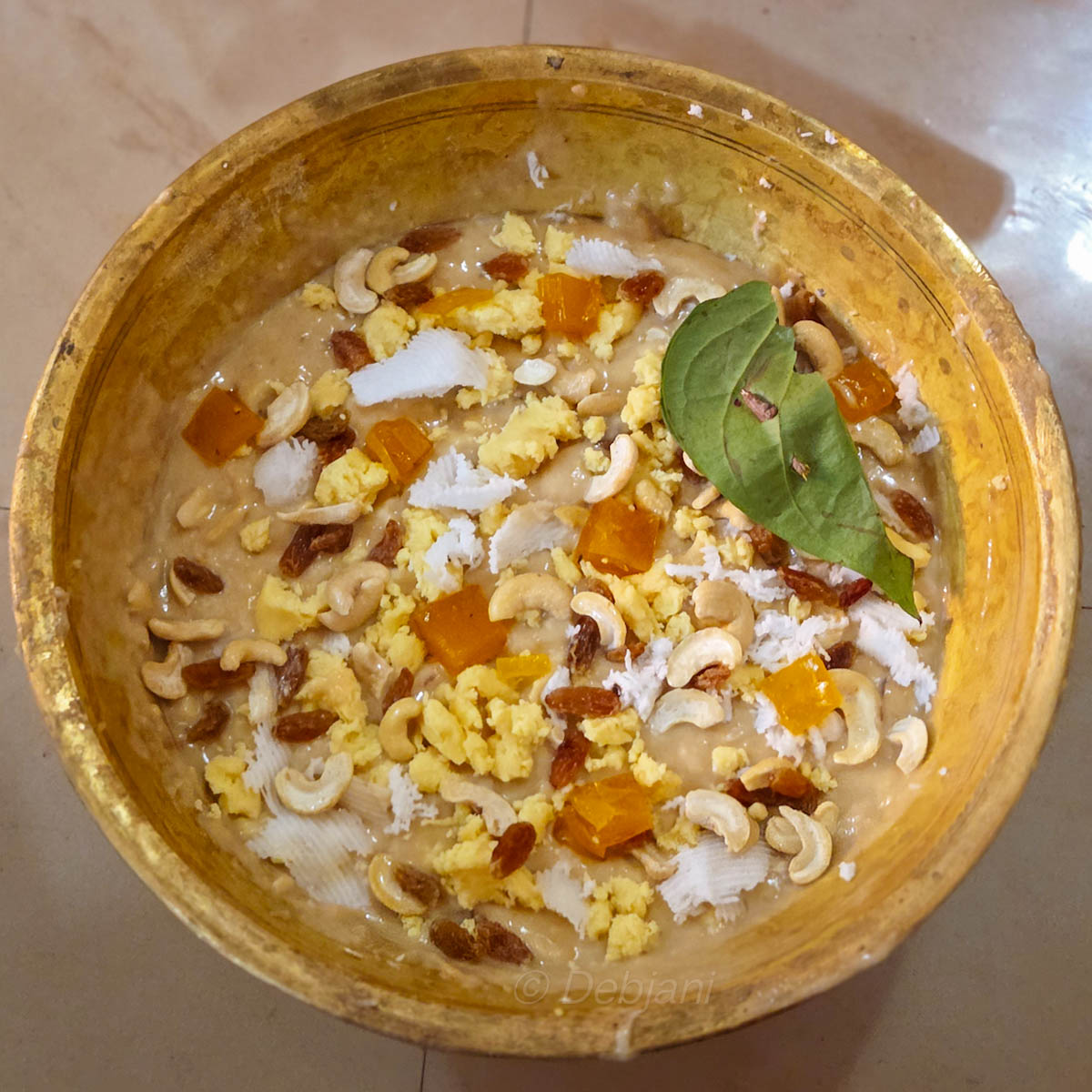
Okay, first off, just a heads-up about the pictures in this post. They're not my usual fancy ones; my husband actually took them on his phone while I was busy with the puja and making the Shinni. I've wanted to share this recipe on Debjanir Rannaghar for ages, but we don't make Sinni all the time. It's usually for Satya Narayan Pujo, so I had to wait quite a while to get these pictures!
Jump to:
- Debjani's Note
- Dolpurnima - Moth, Phutkorai, and Kodma - signature Bengali candies
- Ingredients to make Shinni Prasad - how to measure them
- Bengali Shinni Prasad Recipe - Steps with Pictures
- Substitutions and Variations - Shinni Recipe
- Equipment
- Storage
- Top tip
- Food safety
- Frequently Asked Questions
- Related Recipes for Bengali Puja
- Recipe Card
- Have you tried the Bengali Shinni Prasad recipe from Debjanir Rannaghar!
- Here's the Bengali Satyanarayan Pujo'r Shinni recipe Pin for your Pinterest Board
Debjani's Note
I've been meaning to share this Shinni recipe, but I wasn't sure if I should. There were a few reasons for my hesitation. I grew up in a large family in Central Kolkata, and I learned to make Shinni as a teenager. My family celebrated many important Bengali events where Shinni prasad is offered, such as Rakhi Purnima, Guru Purnima, Dol Purnima, Magha Purnima, and Kartik Purnima, for which Satya Narayan Pujo is an integral part. Making Shinni, or Shinni Makha as we call it, was always a must, and we made it in large quantities to serve over 50 people. Naturally, I picked up the skill early on. I loved the process, so my Jethima - aunt gave me the responsibility. Of course, my mother and other aunts always guided me. That's how it all began.
After leaving home for my studies, followed by my career and marriage, I only ever ate shinni; I never actually made it myself. At my in-laws' house, I discovered a completely different kind of shinni. Since I married a Bengali Muslim, I've realized that shinni is prepared in both Hindu and Muslim homes as an offering, and it's perfect for distributing to many people. Even at my in-laws', I only ever ate it and never prepared it.
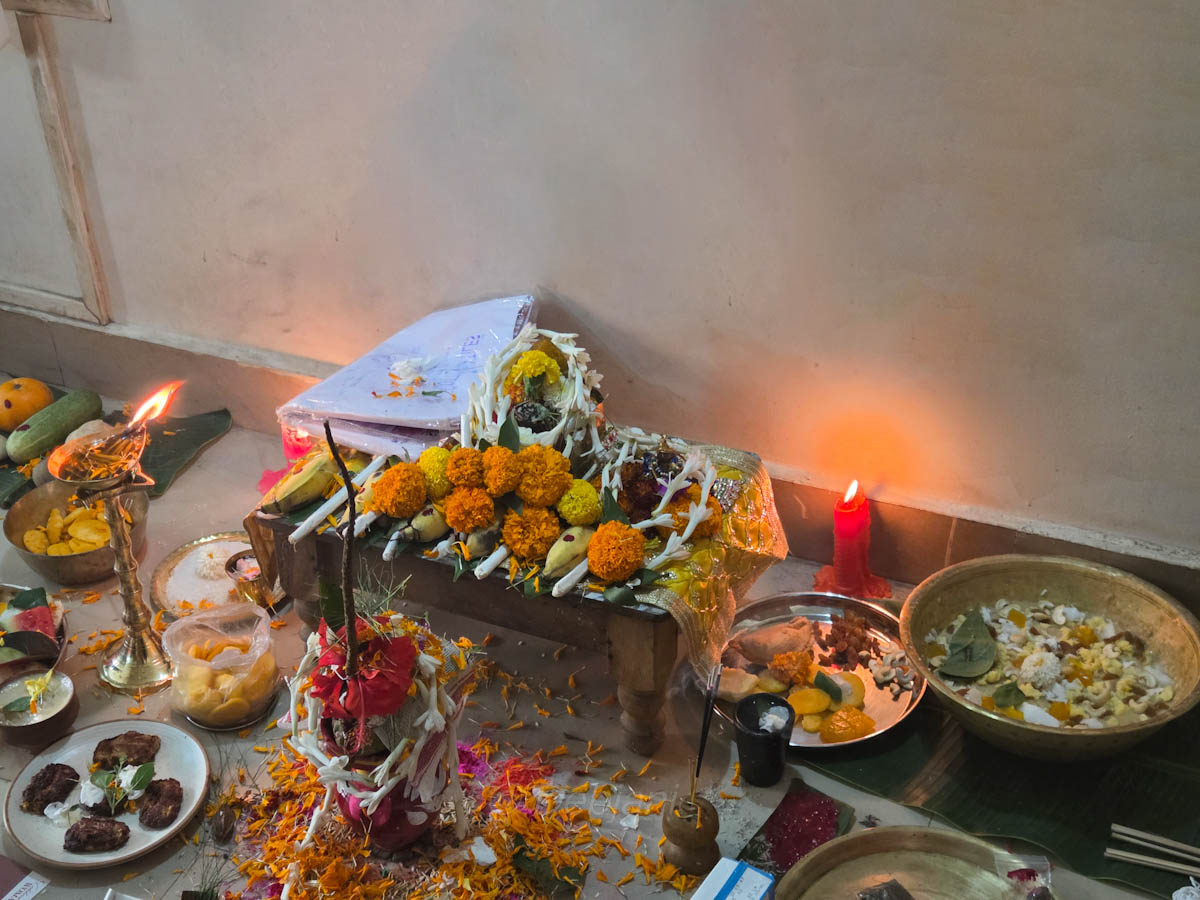
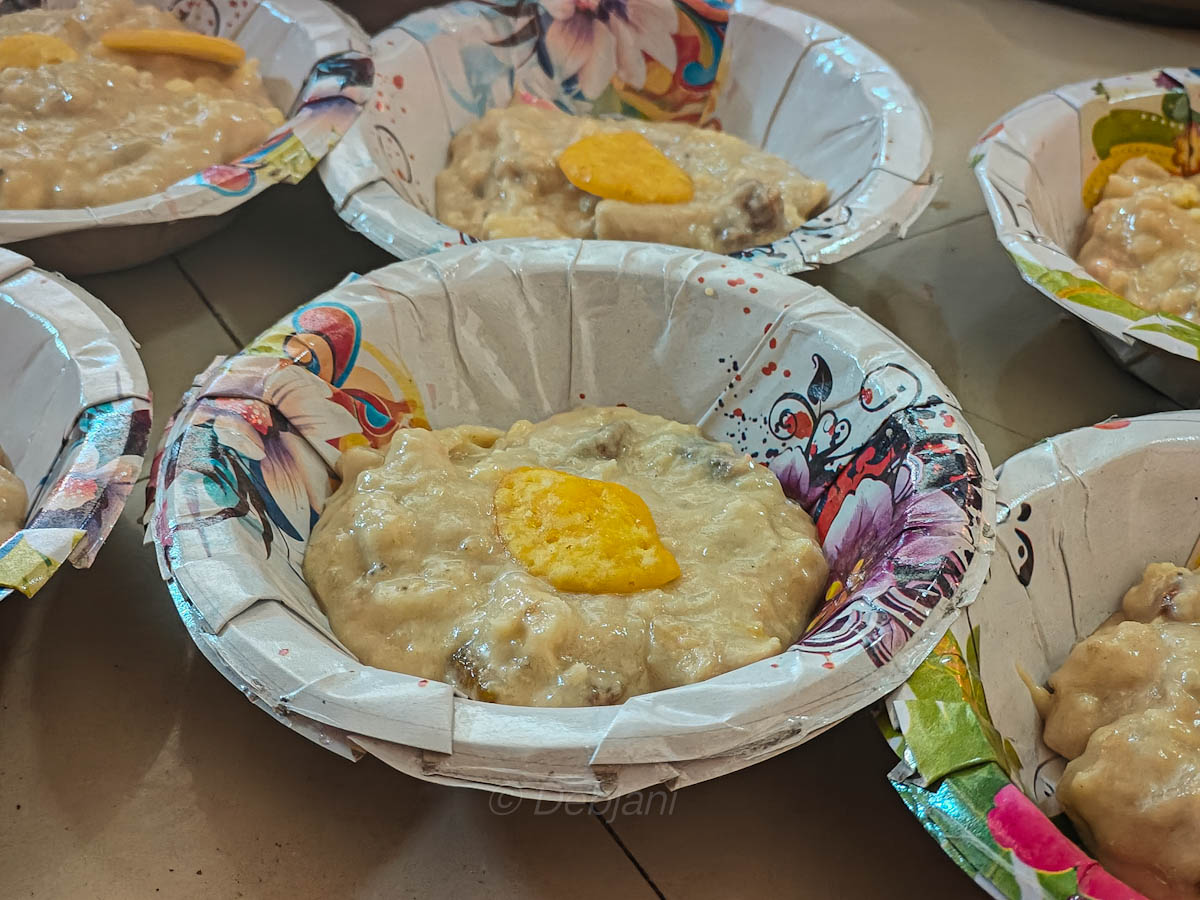
Recently, we had a Narayan Pujo at our home, and I made shinni for the first time in about 20 years. That's when I thought about writing down the recipe, especially how to measure the ingredients. I couldn't take pictures at the time. So, during Dol Purnima in 2026, we had another Narayan Pujo at home, and I was finally able to get some photos.
Dolpurnima - Moth, Phutkorai, and Kodma - signature Bengali candies
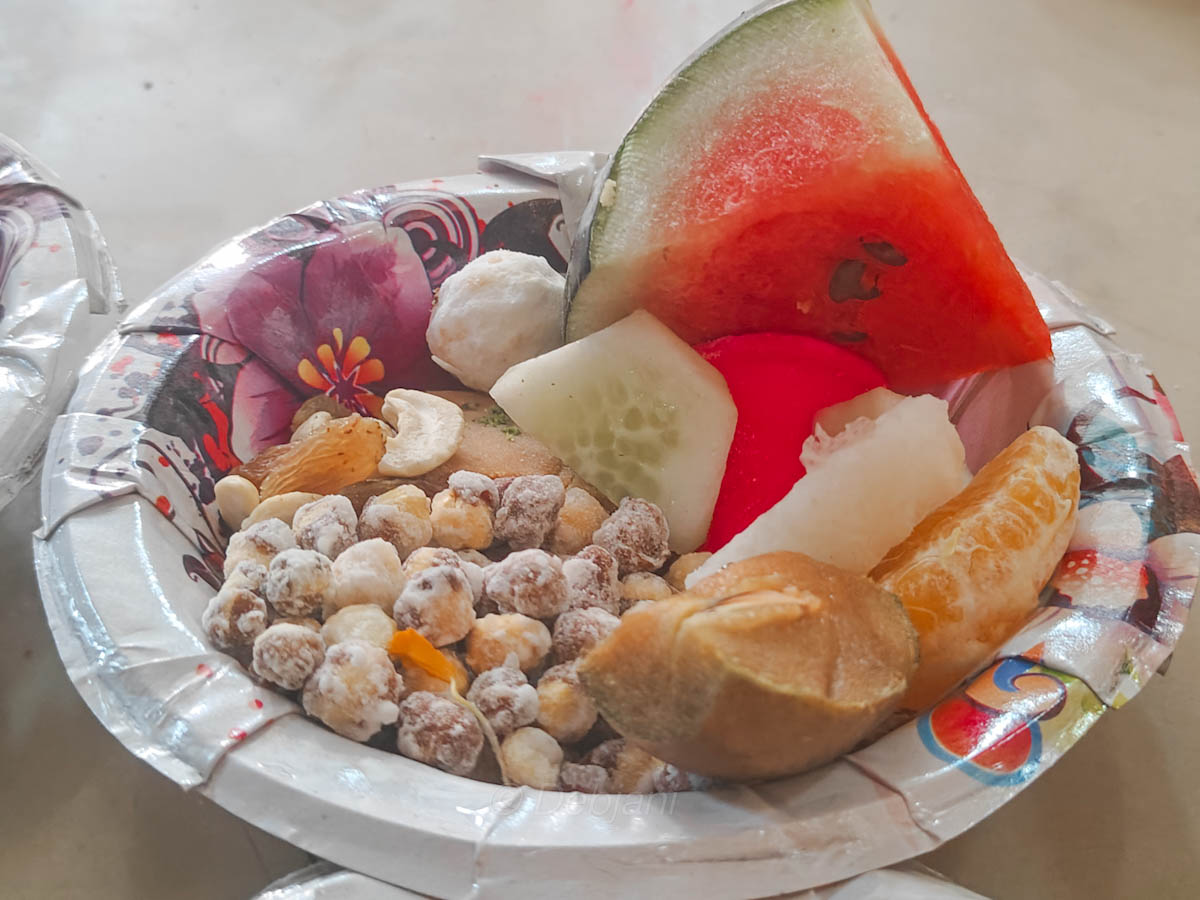
Dol Purnima, also known as Holi, is a vibrant festival of colors. In Bengal, we simply call it Dol. Although this post focuses on a shinni recipe, I felt it was important to mention some of the traditional offerings that are essential to the Dol Purnima puja, much like colors are essential to the festival itself. These include Math, Phutkorai, and Kadma. These traditional sugar candies and snacks are closely associated with Dol Purnima (Holi) celebrations in Bengal, especially in places like Kolkata, Howrah, and Hooghly.
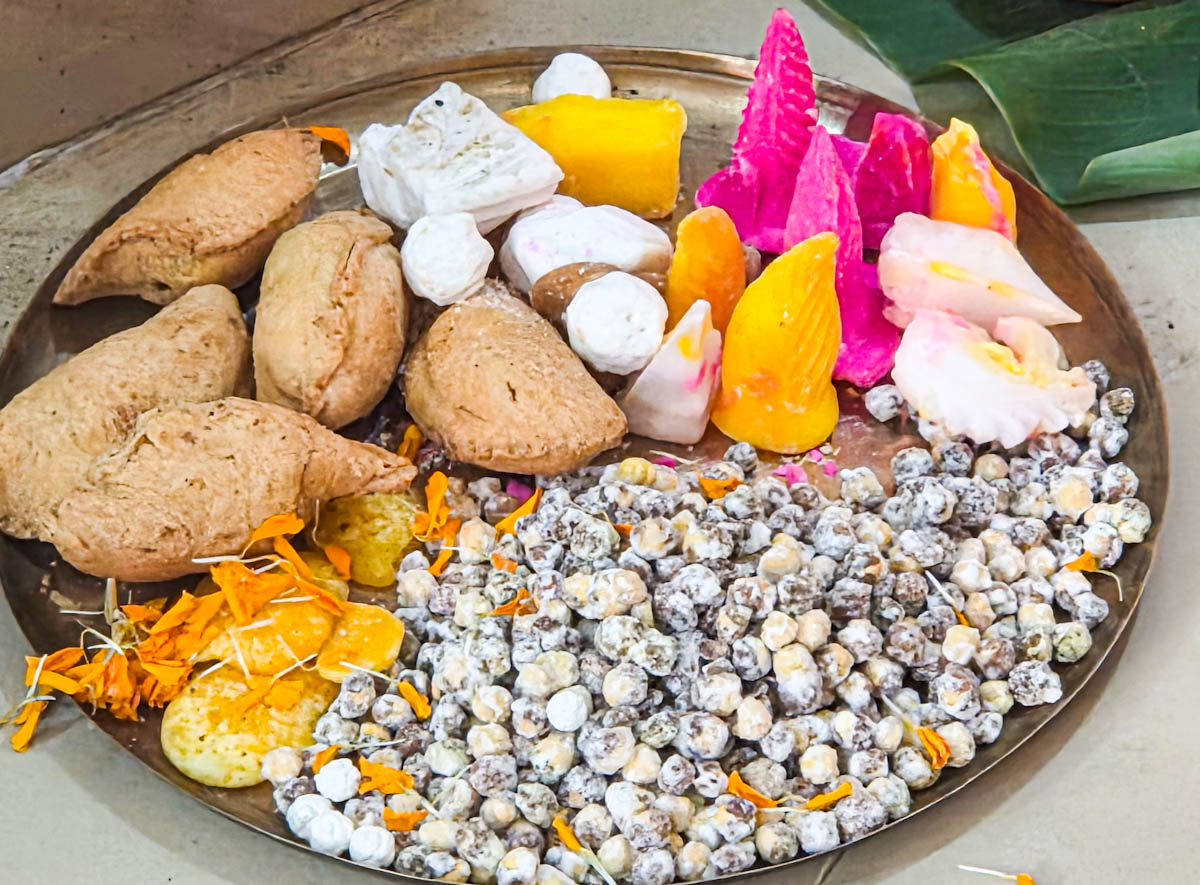
These items are a big part of the traditional Dol Yatra festival. We often use them as offerings during the festival, which honors Radha and Krishna.
Here's what they are:
- Phutkorai / Futkorai - These are traditional Bengali sweet treats, commonly eaten during the doljatra festival, prepared with Chola - roasted chickpeas with a thick, crunchy layer of sugar.
- Moth - This is a hard sugar candy, usually white or colored, shaped in different ways.
- Kadma - These are small, round, hard sugar sweets, often white.
Ingredients to make Shinni Prasad - how to measure them
For this Shinni recipe, accurate ingredient measurements are crucial. While not everything needs precise measuring, some items absolutely do, as my mother and the priest taught me. You must carefully measure the wheat flour (atta), sugar or jaggery, bananas, and milk. For the smallest batch, you will need 250g of atta (plus extra if needed), 250ml of milk (plus extra if needed), 5 bananas (plus extra if needed), and 250g of sugar or jaggery (plus extra if needed). You'll also add other ingredients like coconut, dry fruits, khowa/mawa, or sondesh.
At my home in central Kolkata, they often prepared large amounts of Shinni. The usual amounts for those batches were 1.25kg of atta, 1.25 liters of milk, 1.25kg of sugar, 25 bananas, and other ingredients in suitable proportions.
Here, I'm sharing the recipe based on the smaller quantities: 250g of atta, 250ml of milk, and 5 bananas. This is the smallest size you can choose to make.
See recipe card for quantities.
Bengali Shinni Prasad Recipe - Steps with Pictures
-
First, crack open the coconut and set aside both the water and the shredded coconut. In a separate bowl, soak cashews, raisins, and dates in water. Remove the pits from the dates and chop them into small pieces. Also, cut the aamsotto - dried mango sheets into small pieces.
-
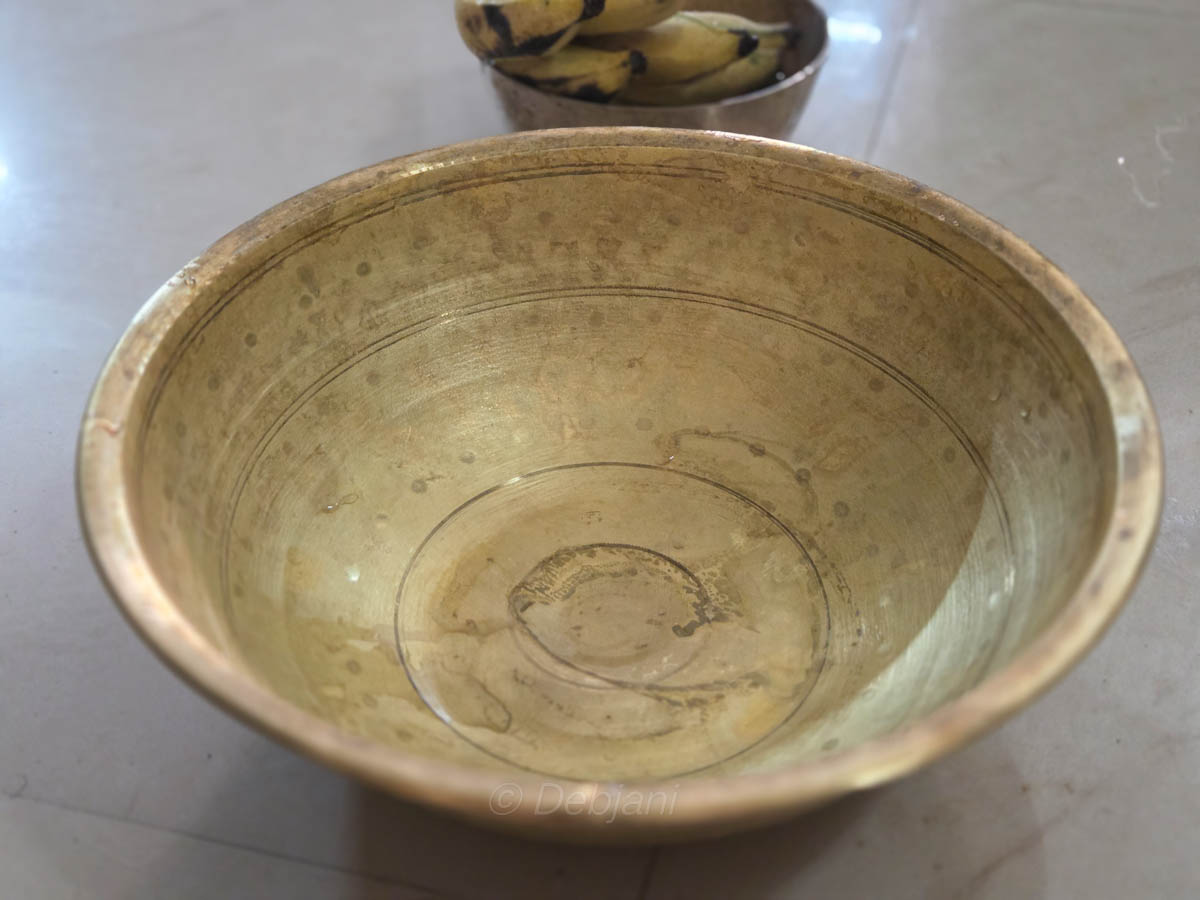
You'll need a deep pot, often called a Gamla or Dekchi. I use a brass Gamla specifically for making Sinni.

-
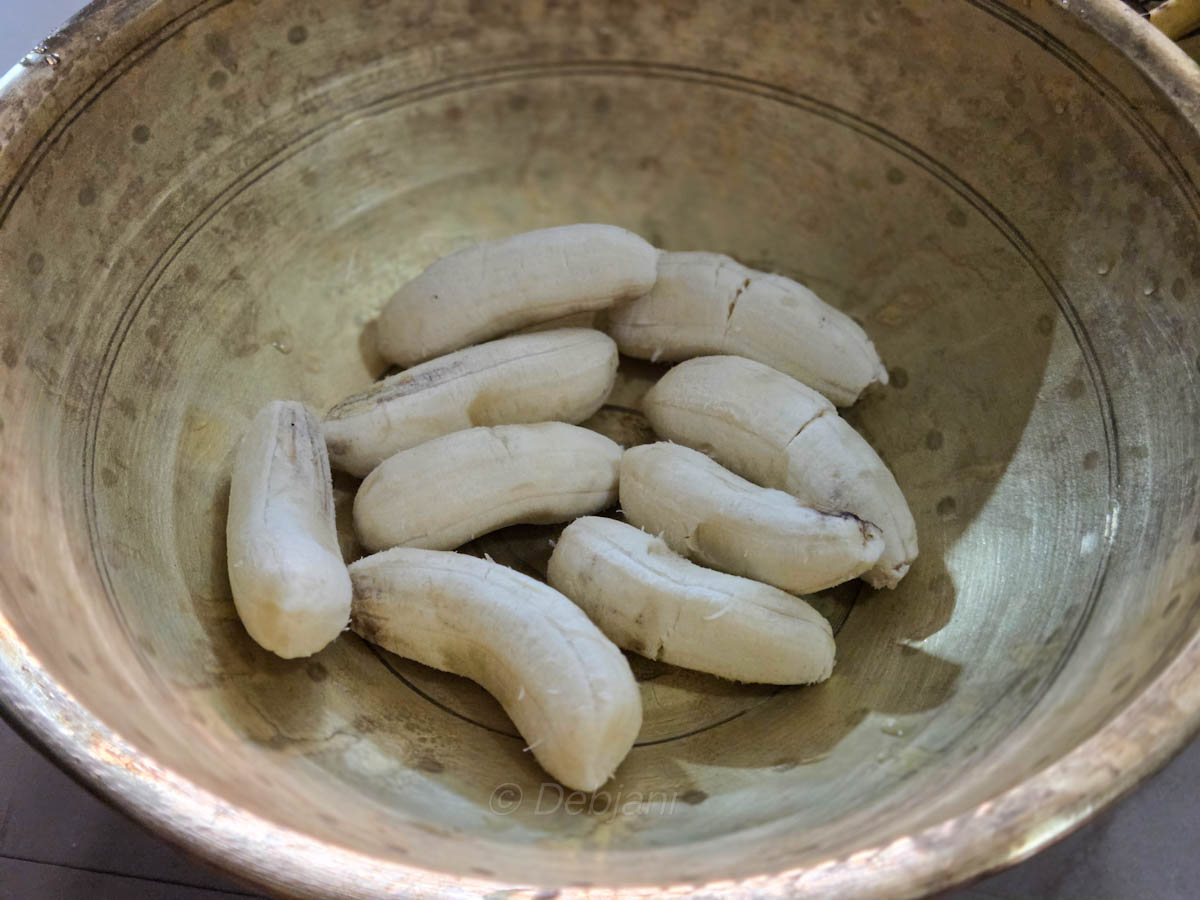
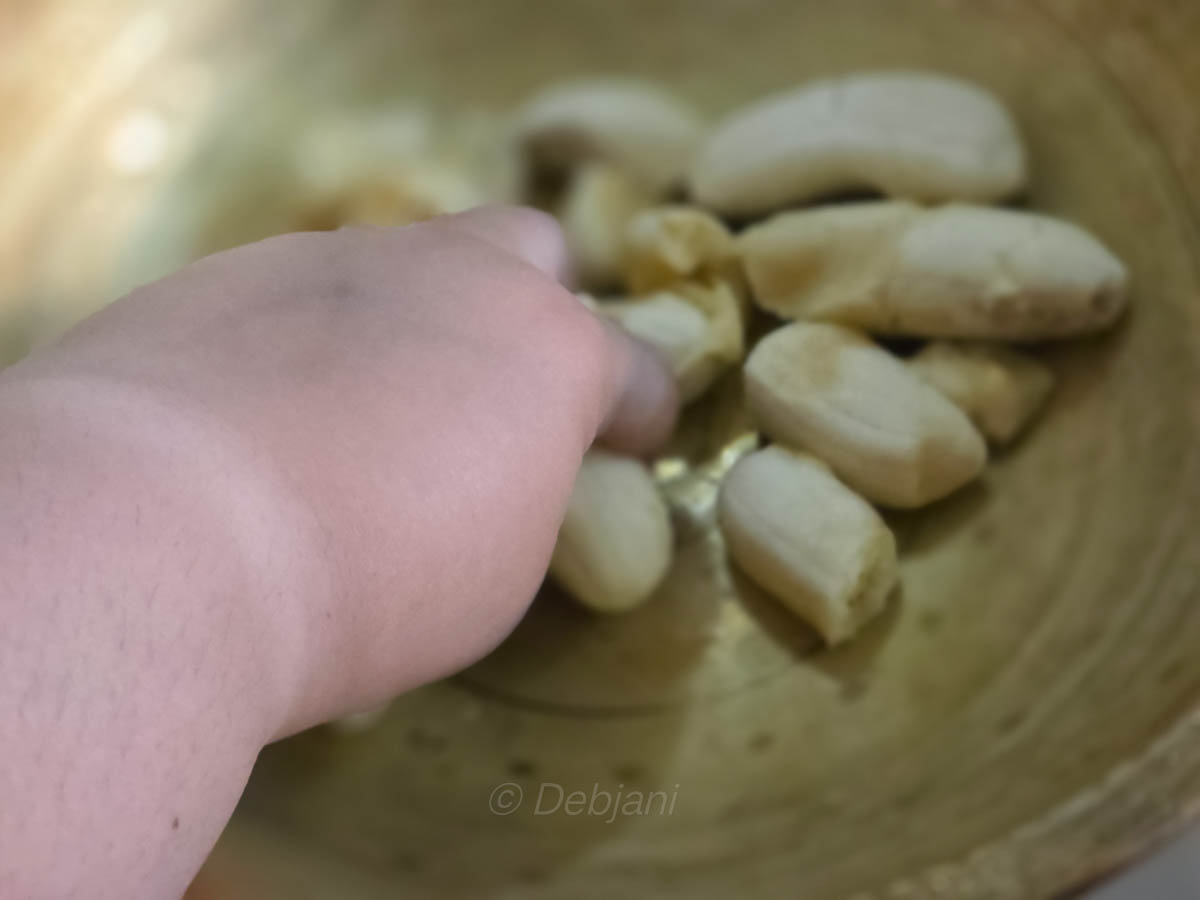
Peel the bananas and break them into pieces by hand, placing them in the pot. For the amount of Sinni I'm preparing, five bananas are the minimum, but I used nine to enhance the flavor. They say it's best to use an odd number of bananas.
-
Now, with your right hand, mash the bananas until they form a smooth paste.
-
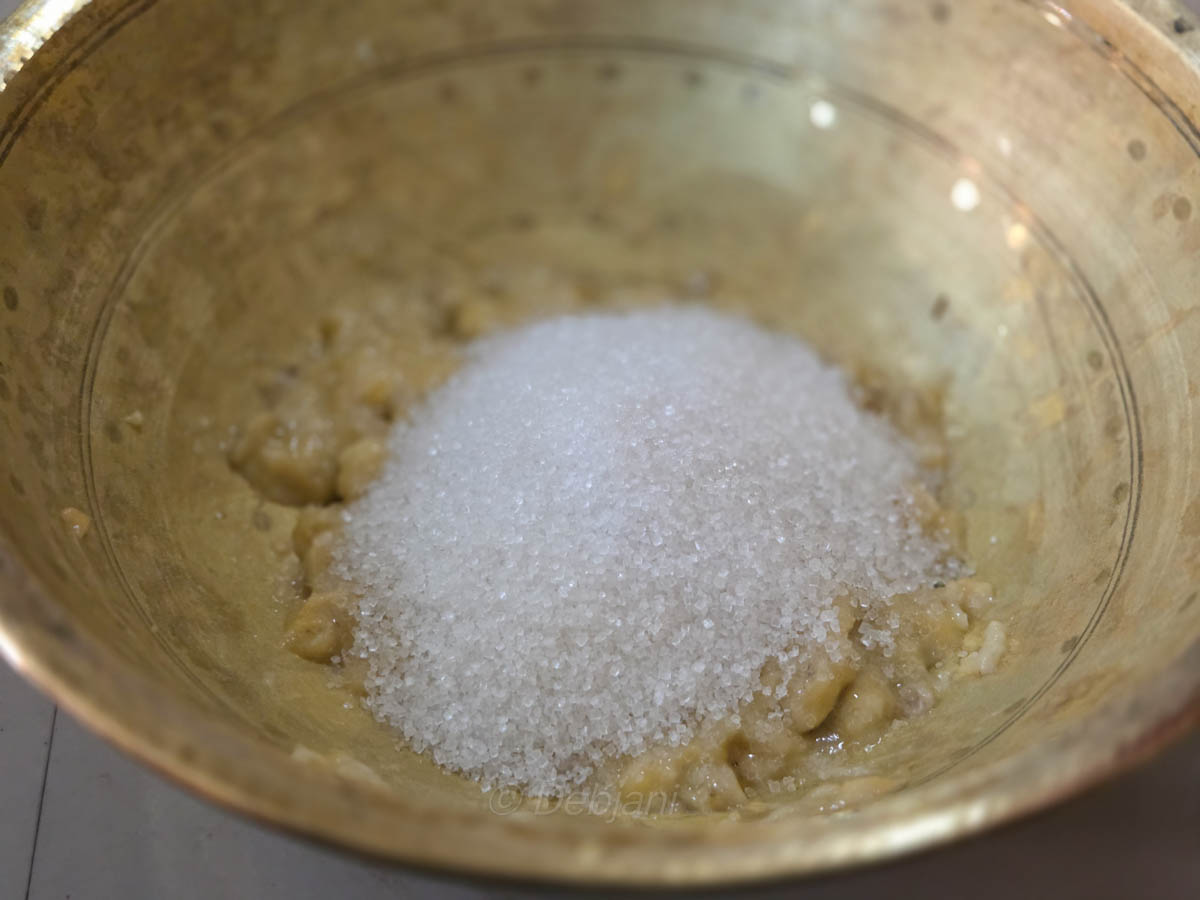
Add 250 grams of sugar, or an equal amount of semi-liquid sugarcane jaggery (Akher Gur), and mix it thoroughly with the mashed bananas.
-
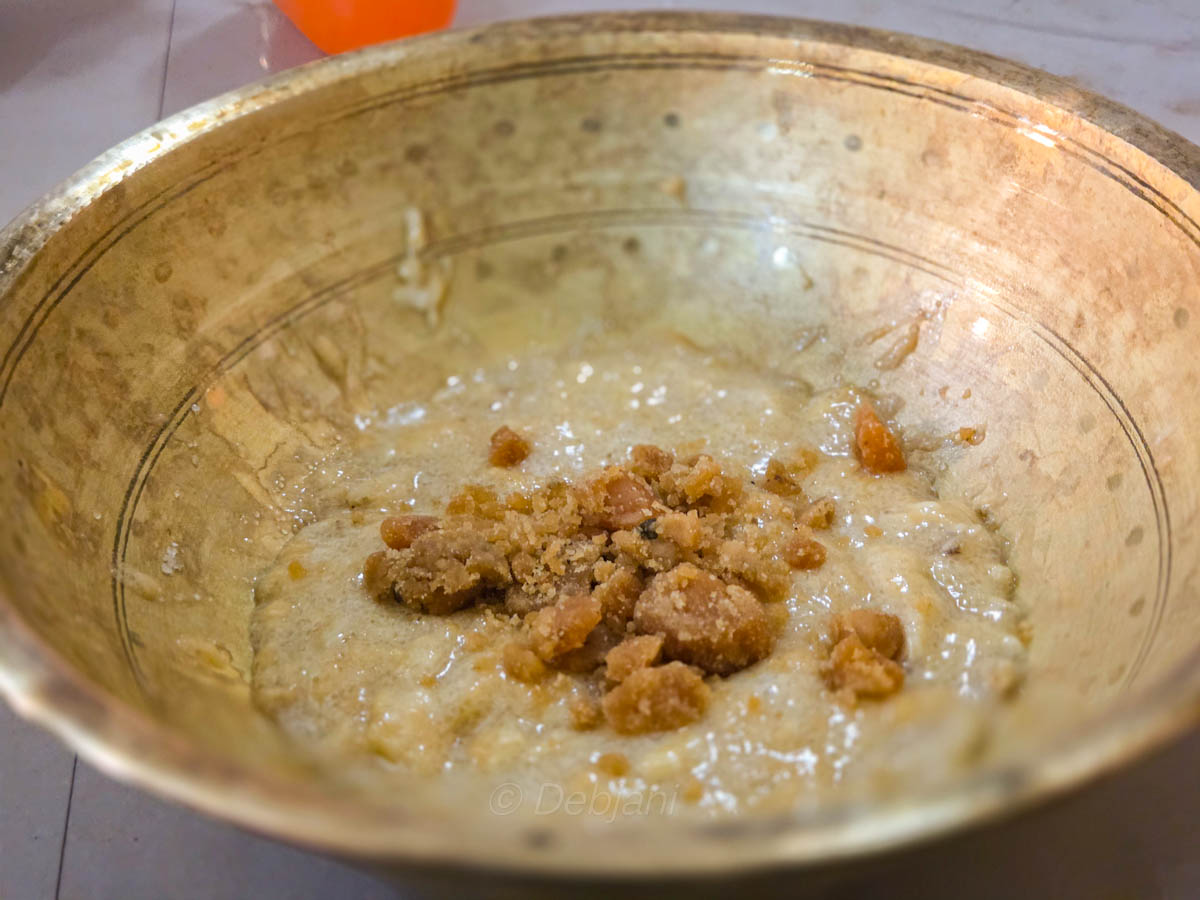
I then added another 100 grams of jaggery to adjust the sweetness, but this step is optional. If you choose to add more jaggery, mix it in well. This means you'll use a total of 250 grams of sweetener for 250 grams of wheat, plus the additional 100 grams.
-
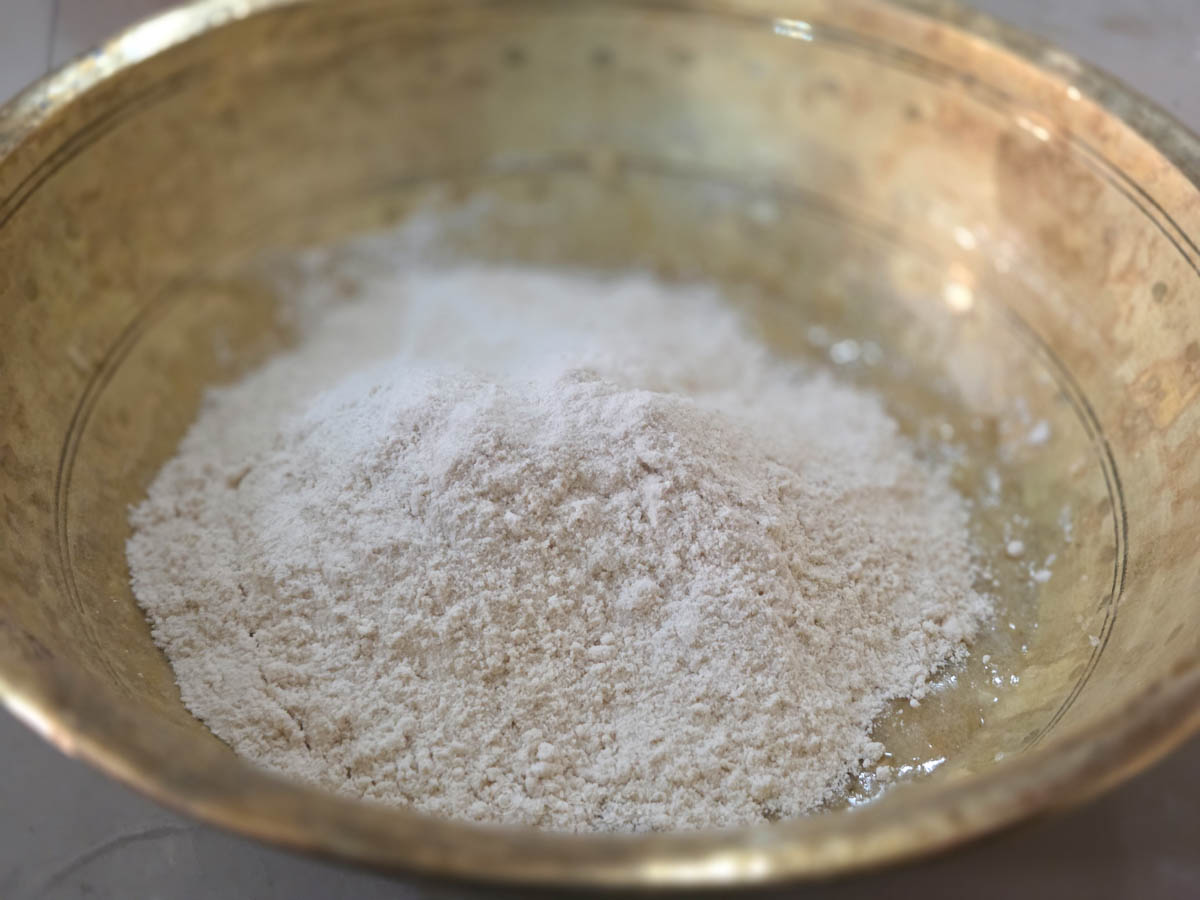
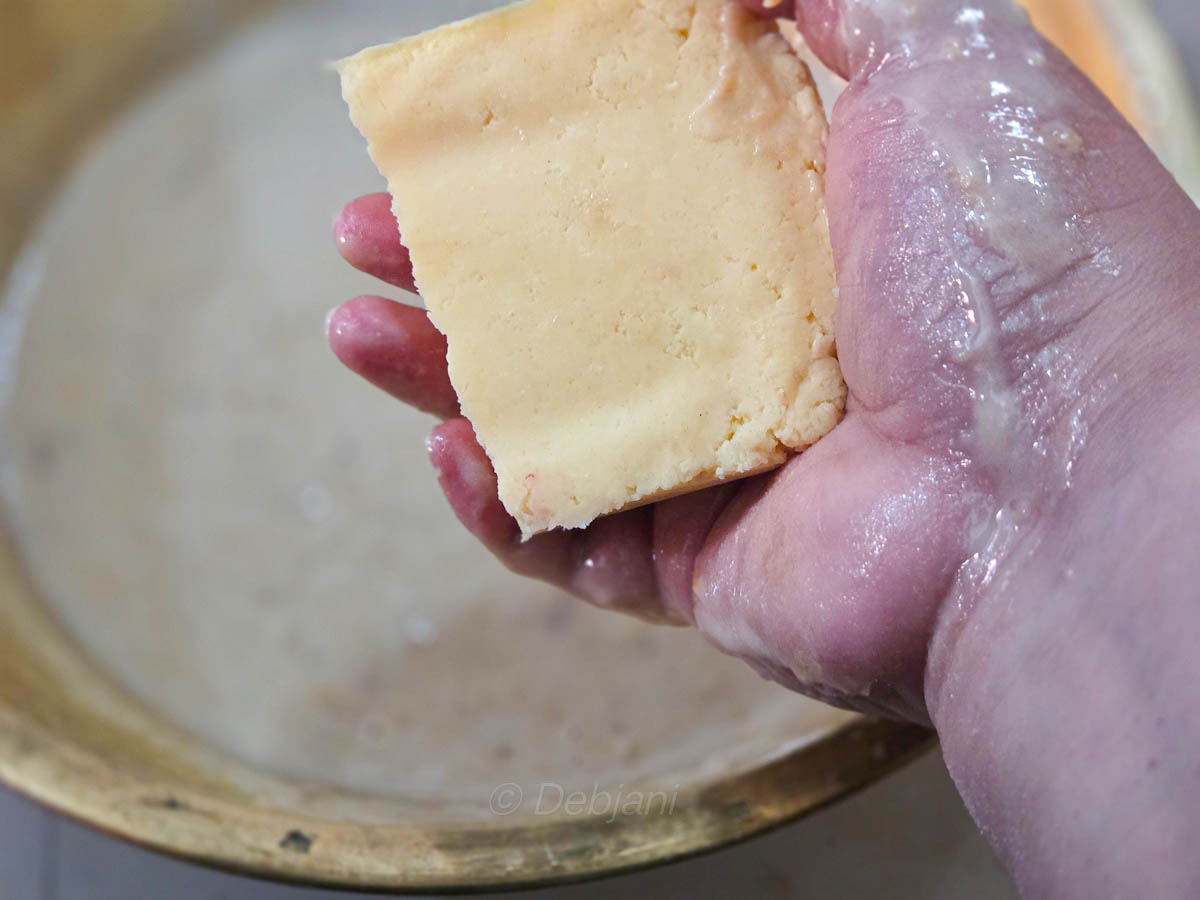
Now add 250g of Atta. You can also use all-purpose flour instead.
-
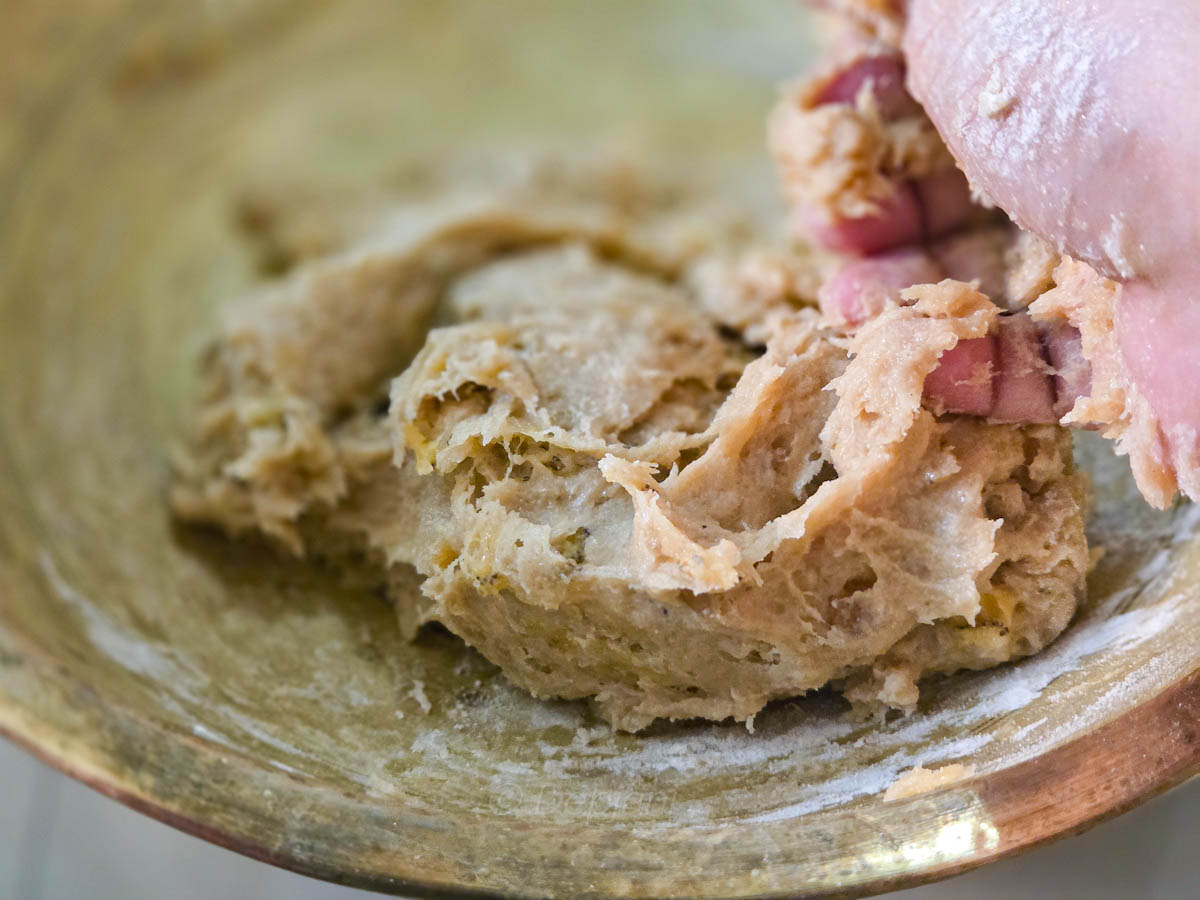
Mix until you form a dough-like consistency.
-
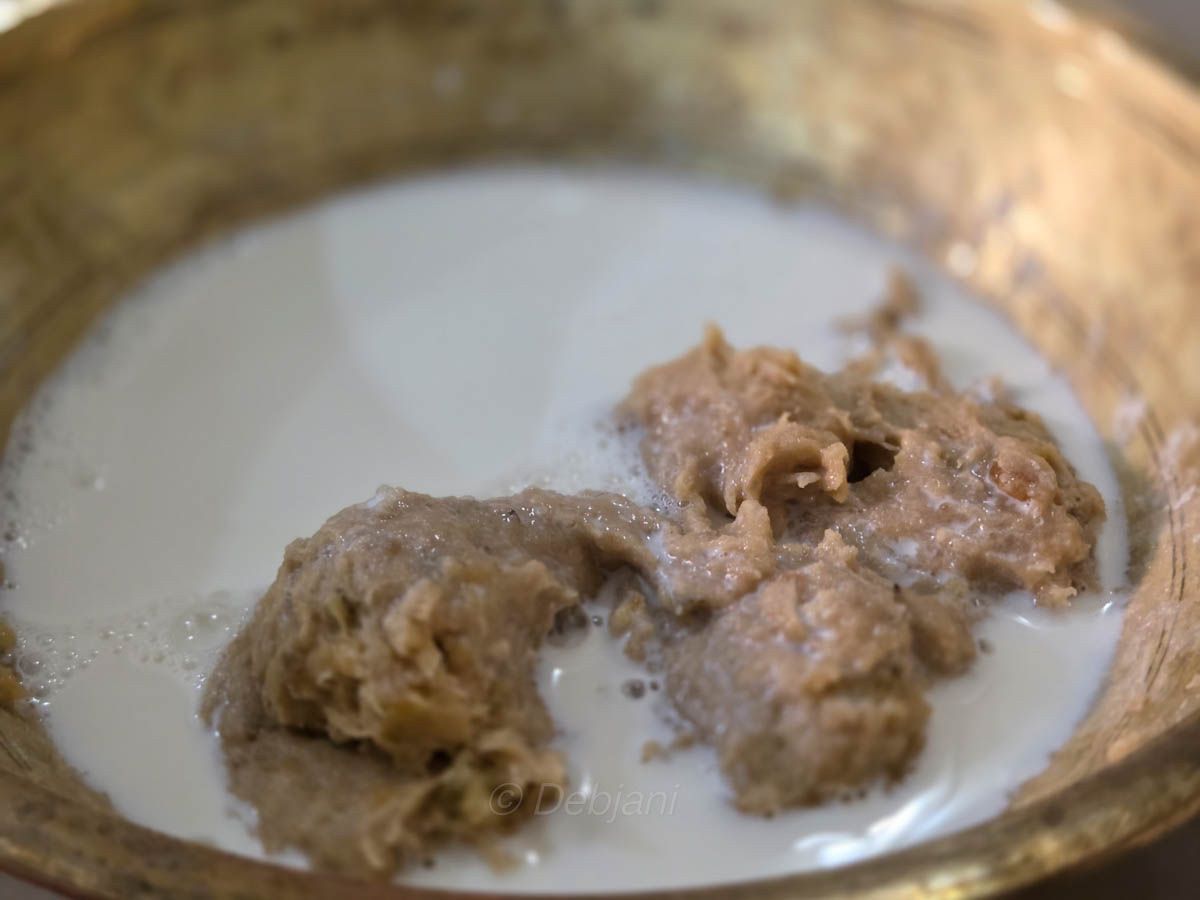
Next, add 250ml of uncooked, unboiled milk and stir. Y
-
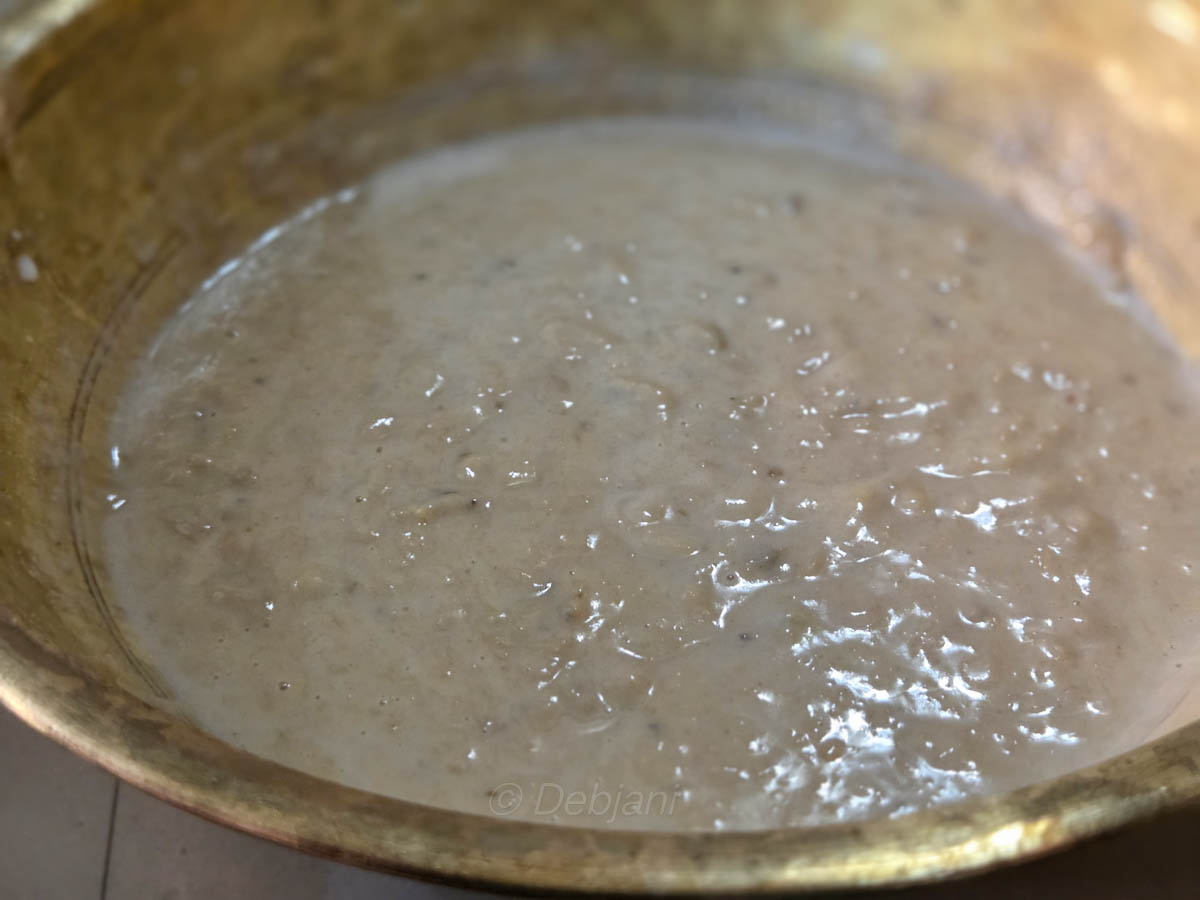
ou might need an additional 100ml of milk to achieve a semi-thick mixture. If you prefer a thinner shinni, add more milk.
-
Now, break apart 2-3 batasas and mix them in.
-
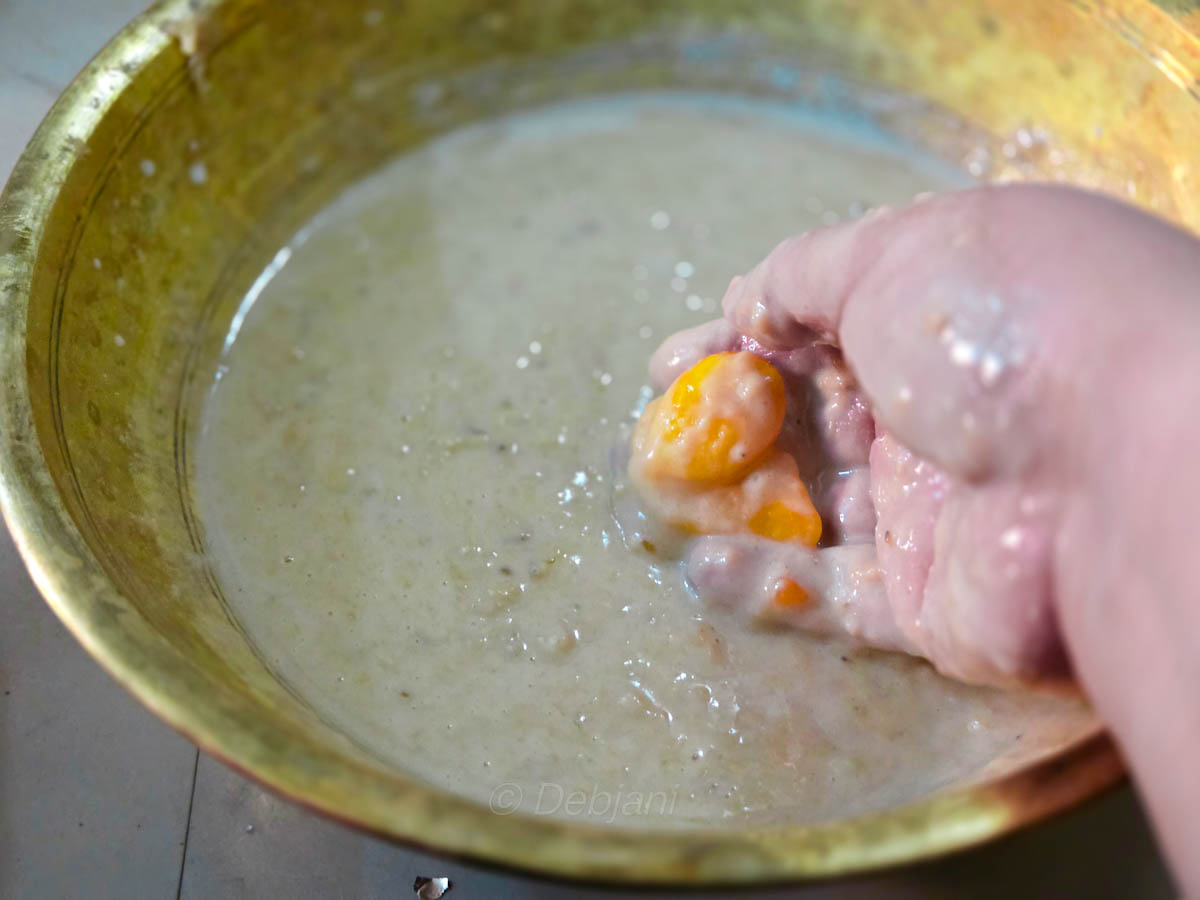
Crumble 150g of Khowa or Mawa and incorporate two-thirds of it into the shinni mixture. This step is optional, as some people prefer to add peda or sondesh instead.
-
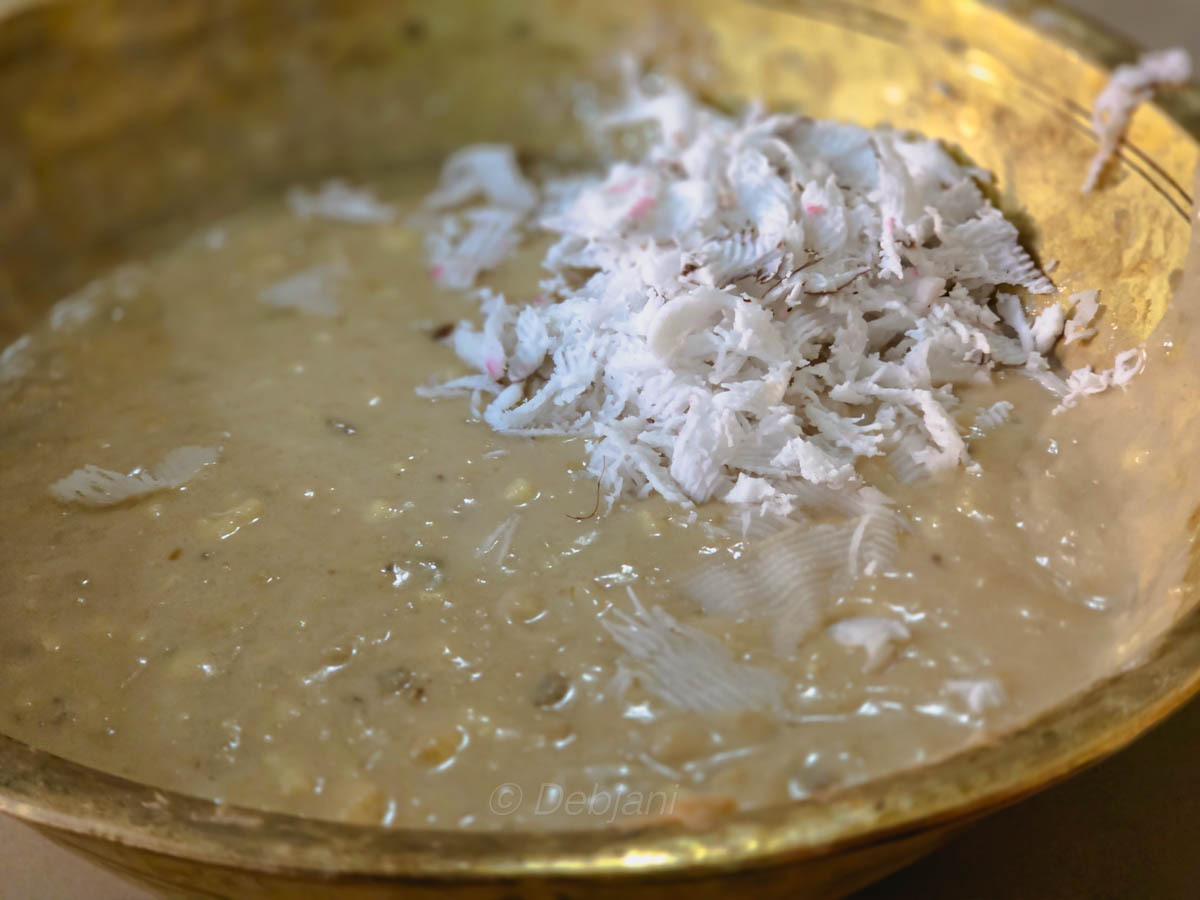
Add two-thirds of the shredded coconut and mix it in. You can also add a small amount of coconut water. Coconut is optional.
-
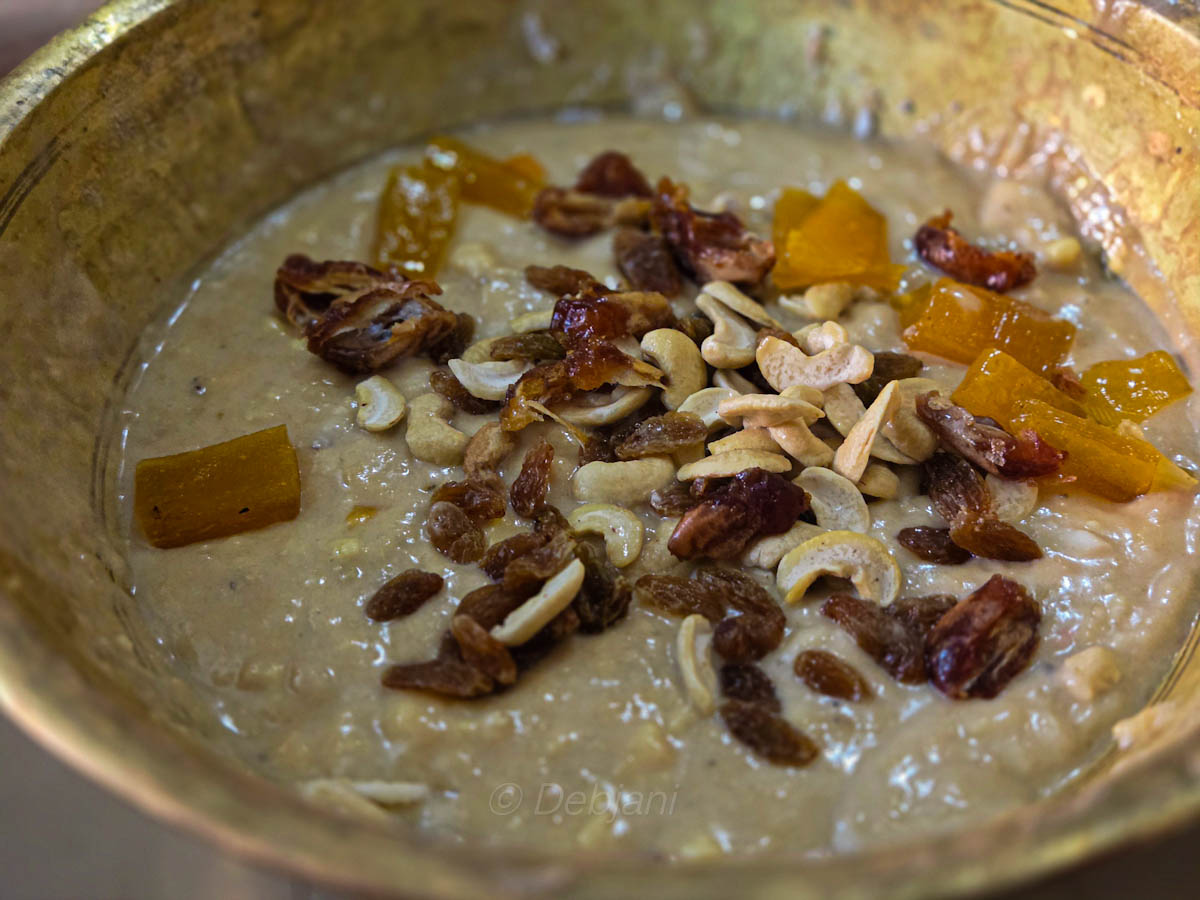
Stir in two-thirds of the cashews, raisins, dates, and aamsotto pieces.
-
If it's a family tradition, add a pinch of edible camphor and a quarter teaspoon of ghee, then mix well.
-
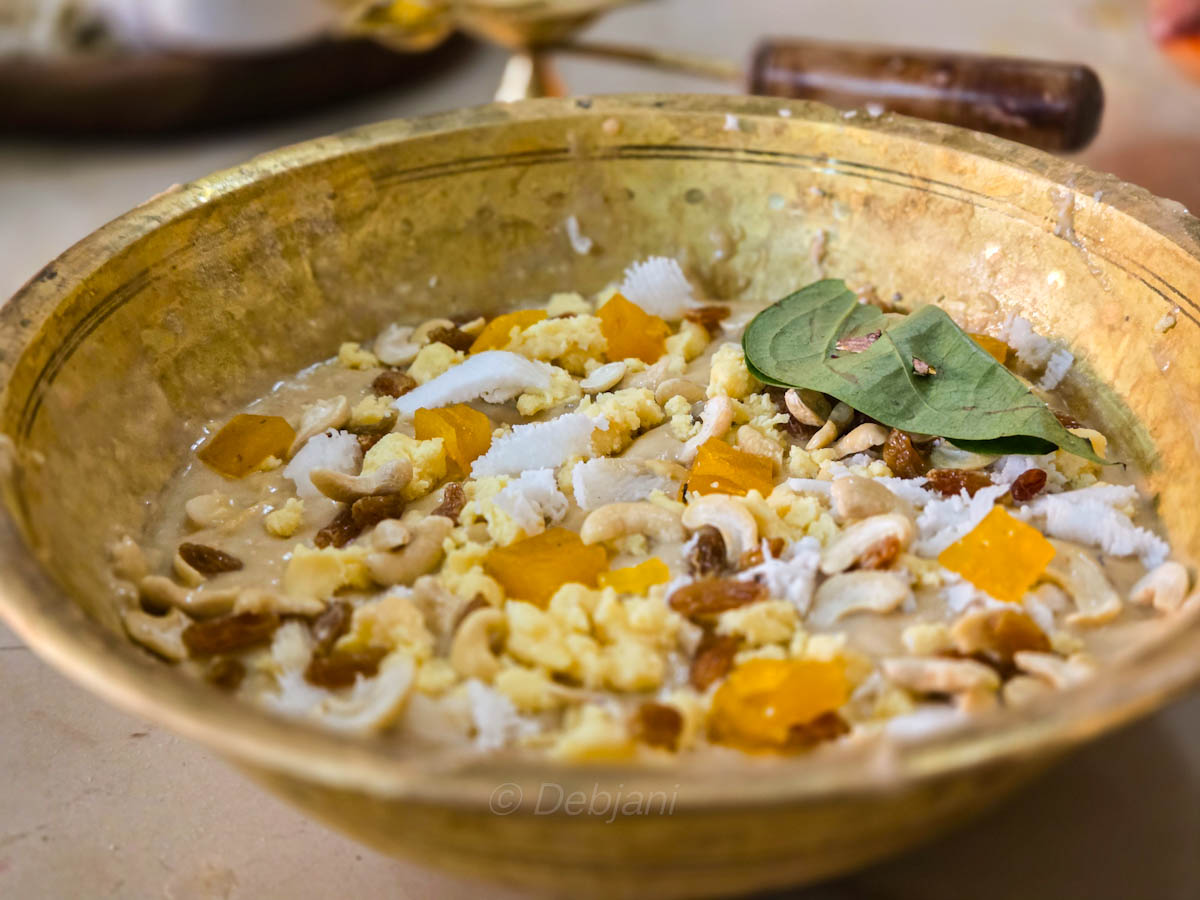
To garnish the shinni, top it with the remaining shredded coconut, Khowa, cashews, raisins, dates, and aamsotto.
-
Your shinni is now ready for the puja.
Substitutions and Variations - Shinni Recipe
Here's a look at the interesting substitutions you can make when preparing Sinni Prasad:
- Flour - While whole wheat flour (Atta) is most commonly used for Shinni, some families opt for all-purpose flour (Maida) instead. I personally prefer using Atta for this recipe.
- Sweetener - You have a few choices for sweetness. Some families use only sugar, others use jaggery (Aakher Gur), and some combine both. My recipe uses sugar as a base, then adds both sugarcane jaggery and Batasa.
- Milk - Since this is a no-cook recipe, you'll need to use uncooked milk. In Kolkata, people often use packaged milk. For my Shinni, I chose full-cream milk from a tetra-pack.
- Banana - Typically, small banana varieties like Kathali Kola or Mortoman Kola are used.
- Coconut - I use freshly grated coconut and its water in my recipe. If fresh coconut isn't available, you can use packaged coconut (not the dried kind).
- Dry Fruits - To give your Shinni a gourmet touch, consider adding cashew nuts, raisins, dates, and Aamsotto (Aampapad).
Equipment
You'll need a deep, round-bottomed pot, often called a Gamla or Dekchi. I personally use a brass Gamla for making sinni. Additionally, gather a coconut scraper, a few bowls, and a knife for cutting ingredients.
Storage
Remember, shinni is an uncooked offering made from flour and uncooked milk, so handle it with care. It is usually served and eaten immediately after puja. However, you can store it in the refrigerator and eat it within 24 hours.
Top tip
I've used more ingredients than the typical 205g/250ml and 5 bananas because I'm aiming for a specific texture for the shinni. They say it's best to use odd numbers, so I opted for nine bananas instead of five, and 300ml of milk instead of 250ml. The shinni we make at home is of medium thickness - not too dry, nor too runny. If you prefer a runnier shinni, just add more milk. If you want it thicker, increase the amount of flour. The bananas really boost the flavor. For other ingredients, like coconut or dried fruits, you can either follow the amounts I've given or adjust them to your liking.
Food safety
When preparing this recipe, it's important to keep food safety in mind because we're using raw flour and milk. In the past, people often used fresh cow's milk for making Shinni, but that's not a practical choice anymore. I recommend using milk from a carton rather than regular packaged milk. Also, it's best to eat Shinni right after you make it. If you need to store it, keep it in the refrigerator and eat it within 24 hours.
Frequently Asked Questions
Shinni Prasad is a traditional Bengali offering made for Lord Vishnu during the Satya Narayan Puja, especially on a full moon day, also known as Purnima. Some well-known Purnima celebrations include Rakhi Purnima, Guru Purnima, Dol Purnima, Magha Purnima, and Kartik Purnima.
The essential ingredients are whole wheat flour or all-purpose flour, uncooked milk, bananas, sugar or jaggery, and batasa (sugar drops). To enhance the flavor, you can also add optional ingredients such as cashew nuts, raisins, dates, aamsotto (dried mango pulp), shredded coconut, mawa (reduced milk solids), or any type of sondesh (Bengali sweet).
To make Shinni Prasad, you'll need at least 250 grams of flour, 250 milliliters of milk, 5 bananas, and 250 grams of sugar or jaggery. You can then adjust the amount of milk to achieve the desired texture. Adding more bananas will make it richer, and you can increase the sugar or jaggery for more sweetness. For a gourmet touch, feel free to add more dried fruits.
Related Recipes for Bengali Puja
Looking for other recipes like this? Try these:
Recipe Card
Bengali Shinni Prasad Recipe | Satya Narayan Pujo'r Sinni
Ingredients
- 250 g whole wheat Flour / Atta
- 250 ml milk full cream, I used total 300ml milk
- 5 banana I used 9 in total
- 250 g sugar
- 100 g sugarcane jaggery Aakher Gur
- 2 batasa
- 1 coconut
- 150 g khowa/ mawa
- 50 g cashew nuts
- 50 g raisins
- 200 g amsotto
- 10 dates
- ¼ teaspoon ghee
- 1 pinch edible camphor / karpur

Instructions
Prep work
- First, crack open the coconut, collect its water, and then scrap it and set aside the shredded coconut.
- Next, soak cashews, raisins, and dates in water. Remove the seeds from the dates and chop them into small pieces. Also, cut the Aamsotto into small pieces.
Making Shinni Prasad
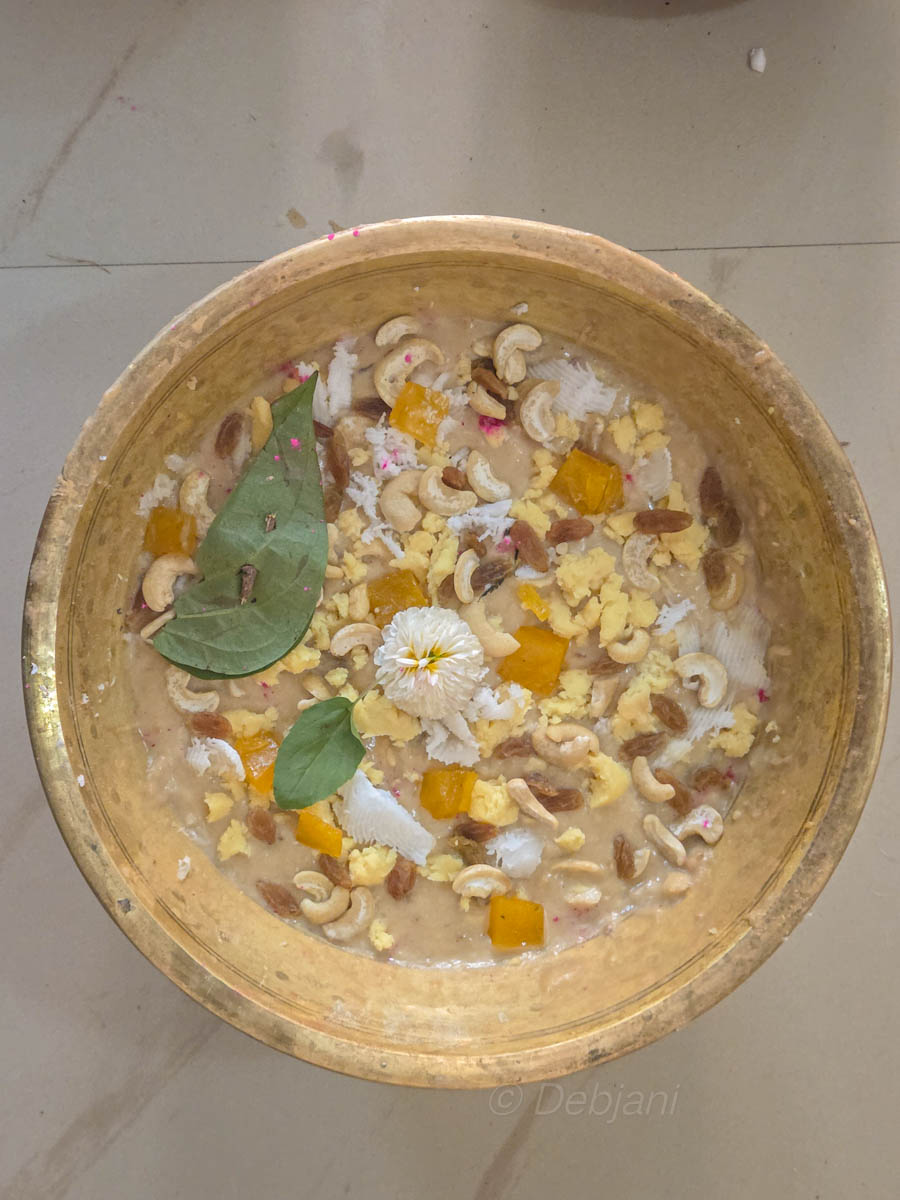
- Now, grab a deep pot, like a "Gamla" or "Dekchi." I use my brass Gamla, which is perfect for making sinni.
- Peel the bananas and break them by hand into this pot. For the amount of sinni I'm making, at least five bananas are needed, but I used nine for extra flavor. They also say it's best to use an odd number of bananas.
- Using your right hand, mash the bananas until they are smooth.
- Then, add 250 grams of sugar, or an equal amount of semi-liquid sugarcane jaggery (Akher Gur), and mix it thoroughly with the mashed bananas.
- For extra sweetness, I added another 100 grams of jaggery, but this step is optional. If you choose to add more jaggery, make sure it's well mixed with the rest of the ingredients. This means I used 250 grams of sweetener for 250 grams of wheat, plus an additional 100 grams of jaggery.
- Now mix in 250g of Atta- whole wheat flour to the mixture. You can also use all-purpose flour for this. Mix until it forms a dough-like mixture.
- Next, add 250ml of uncooked, unboiled milk and mix thoroughly. You might need an additional 100ml of milk to achieve a semi-thick consistency. If you prefer a runnier shinni, simply add more milk.
- Now, break 2-3 batasa into the mixture and stir them in.
- Crumble 150g of Khowa or Mawa and add two-thirds of it to the shinni mixture. This step is optional; some people also include peda or sondesh.
- If desired, now is the time to add two third of the shredded coconut and mix it in. You can also incorporate a little coconut water with the mixture.
- Add two-thirds of the cashews, raisins, dates, and aamsotto pieces, then mix everything together.
- If it's a tradition in your home, add a pinch of edible camphor and a quarter teaspoon of ghee, then mix well.
Serving Shinni Prasad
- We typically garnish shinni. To do this, sprinkle the remaining shredded coconut, Khowa, cashews, raisins, dates, and aamsotto over the prepared shinni.
- Your shinni is now ready for the puja process.
Notes
- Flour: While whole wheat flour (atta) is commonly used for Sinni, some families prefer all-purpose flour (maida). I personally use atta for my recipe.
- Sweetener: You can sweeten your Sinni with sugar, jaggery (Aakher Gur), or a combination of both. I start with sugar and then add both sugarcane jaggery and batasa.
- Milk: Since this is an uncooked recipe, use unboiled milk. In Kolkata, packaged milk is often used. For my Sinni, I chose full-cream milk from a tetra-pack.
- Banana: Small banana varieties like Kathali kola or Mortoman kola are typically used.
- Coconut: I use freshly shredded coconut and its water in my recipe. If fresh coconut isn't available, you can use packaged coconut (not the dried kind).
- Dry Fruits: To make your Sinni extra special, you can add various dry fruits. Common choices include cashews, raisins, dates, and Aamsotto (Aampapad).
Nutrition
Have you tried the Bengali Shinni Prasad recipe from Debjanir Rannaghar!
Please inform me of your experience, and feel free to send a photo to [email protected]. Additionally, you can find me on various social media platforms such as Instagram, YouTube, Facebook, Pinterest, Google News, X, and Thread. Don't forget to use the hashtag #debjanirrannaghar when sharing your attempts at my recipes or if you have any questions or recipe requests.
Here's the Bengali Satyanarayan Pujo'r Shinni recipe Pin for your Pinterest Board

About Debjani Chatterjee Alam
I am Debjani Chatterjee Alam. A CSR specialist by profession and a food writer, food blogger, and food photographer as well. I live in Kolkata along with my Husband Mehebub who is an architect by profession, my daughter Pasta, and also my dog daughters Coffee and Luchi.



Leave a Reply