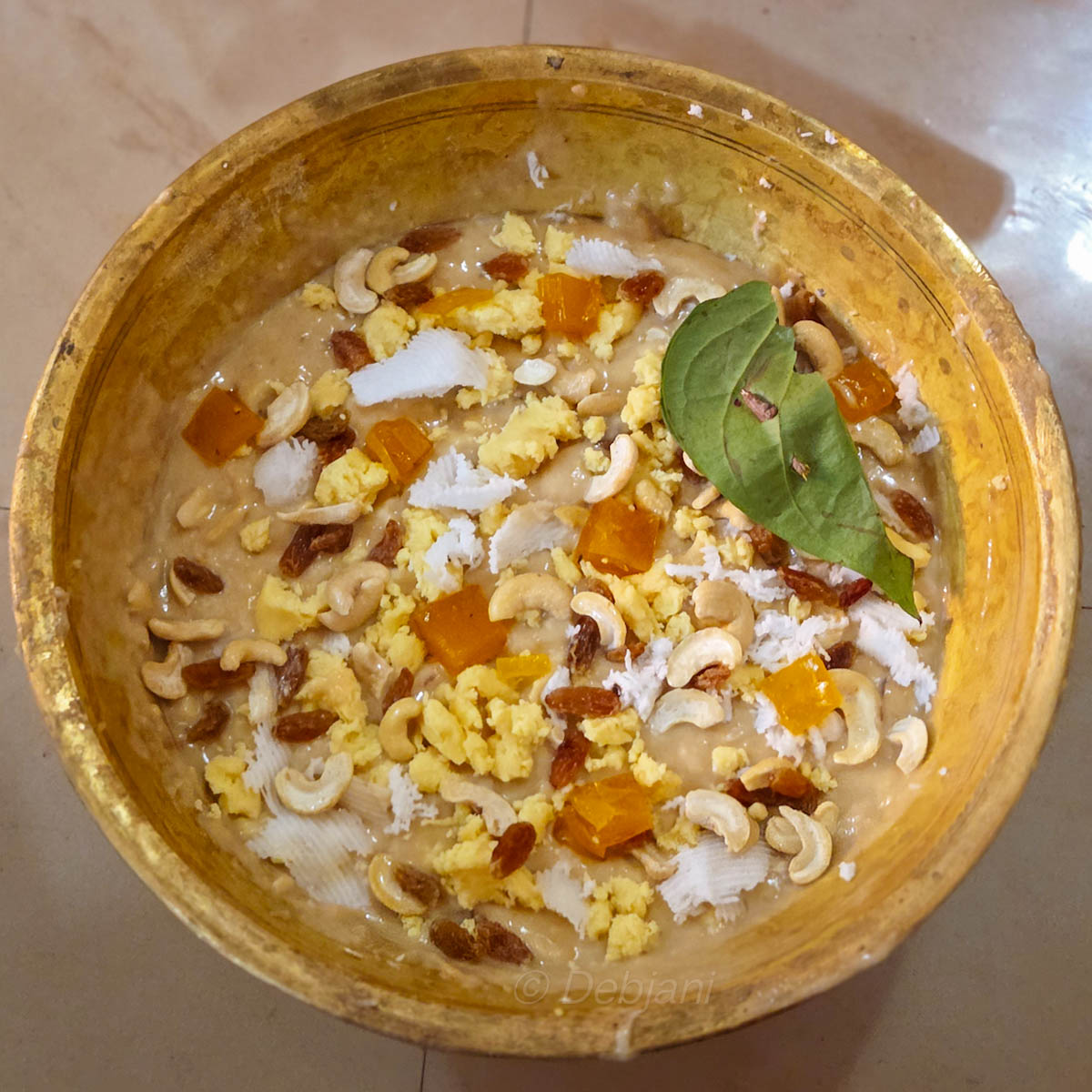
Bengali Shinni Prasad Recipe | Satya Narayan Pujo'r Sinni
Shinni, also known as Sinni, is a special Bengali offering, or prasad, commonly prepared for Satya Narayan Pujo and other festive occasions. In this recipe, I will guide you through making this sweet Bengali Shinni Prasad. It is basically a sweet, uncooked dessert made from whole wheat flour, milk, bananas, sugar, and various dried fruits; you can also include other ingredients to your liking.
Print
Pin
Servings: 10 people
Calories: 630kcal
Cost: Rs 500
Ingredients
- 250 g whole wheat Flour / Atta
- 250 ml milk full cream, I used total 300ml milk
- 5 banana I used 9 in total
- 250 g sugar
- 100 g sugarcane jaggery Aakher Gur
- 2 batasa
- 1 coconut
- 150 g khowa/ mawa
- 50 g cashew nuts
- 50 g raisins
- 200 g amsotto
- 10 dates
- ¼ teaspoon ghee
- 1 pinch edible camphor / karpur

Instructions
Prep work
- First, crack open the coconut, collect its water, and then scrap it and set aside the shredded coconut.
- Next, soak cashews, raisins, and dates in water. Remove the seeds from the dates and chop them into small pieces. Also, cut the Aamsotto into small pieces.
Making Shinni Prasad
- Now, grab a deep pot, like a "Gamla" or "Dekchi." I use my brass Gamla, which is perfect for making sinni.
- Peel the bananas and break them by hand into this pot. For the amount of sinni I'm making, at least five bananas are needed, but I used nine for extra flavor. They also say it's best to use an odd number of bananas.
- Using your right hand, mash the bananas until they are smooth.
- Then, add 250 grams of sugar, or an equal amount of semi-liquid sugarcane jaggery (Akher Gur), and mix it thoroughly with the mashed bananas.
- For extra sweetness, I added another 100 grams of jaggery, but this step is optional. If you choose to add more jaggery, make sure it's well mixed with the rest of the ingredients. This means I used 250 grams of sweetener for 250 grams of wheat, plus an additional 100 grams of jaggery.
- Now mix in 250g of Atta- whole wheat flour to the mixture. You can also use all-purpose flour for this. Mix until it forms a dough-like mixture.
- Next, add 250ml of uncooked, unboiled milk and mix thoroughly. You might need an additional 100ml of milk to achieve a semi-thick consistency. If you prefer a runnier shinni, simply add more milk.
- Now, break 2-3 batasa into the mixture and stir them in.
- Crumble 150g of Khowa or Mawa and add two-thirds of it to the shinni mixture. This step is optional; some people also include peda or sondesh.
- If desired, now is the time to add two third of the shredded coconut and mix it in. You can also incorporate a little coconut water with the mixture.
- Add two-thirds of the cashews, raisins, dates, and aamsotto pieces, then mix everything together.
- If it's a tradition in your home, add a pinch of edible camphor and a quarter teaspoon of ghee, then mix well.
Serving Shinni Prasad
- We typically garnish shinni. To do this, sprinkle the remaining shredded coconut, Khowa, cashews, raisins, dates, and aamsotto over the prepared shinni.
- Your shinni is now ready for the puja process.
Notes
Top Tips!
- Flour: While whole wheat flour (atta) is commonly used for Sinni, some families prefer all-purpose flour (maida). I personally use atta for my recipe.
- Sweetener: You can sweeten your Sinni with sugar, jaggery (Aakher Gur), or a combination of both. I start with sugar and then add both sugarcane jaggery and batasa.
- Milk: Since this is an uncooked recipe, use unboiled milk. In Kolkata, packaged milk is often used. For my Sinni, I chose full-cream milk from a tetra-pack.
- Banana: Small banana varieties like Kathali kola or Mortoman kola are typically used.
- Coconut: I use freshly shredded coconut and its water in my recipe. If fresh coconut isn't available, you can use packaged coconut (not the dried kind).
- Dry Fruits: To make your Sinni extra special, you can add various dry fruits. Common choices include cashews, raisins, dates, and Aamsotto (Aampapad).
Nutrition
Serving: 400g | Calories: 630kcal | Carbohydrates: 104g | Protein: 19g | Fat: 18g | Saturated Fat: 19g | Cholesterol: 40mg | Sodium: 163mg | Potassium: 1051mg | Fiber: 7g | Sugar: 67g | Vitamin A: 847IU | Vitamin C: 16mg | Calcium: 508mg | Iron: 2mg
