

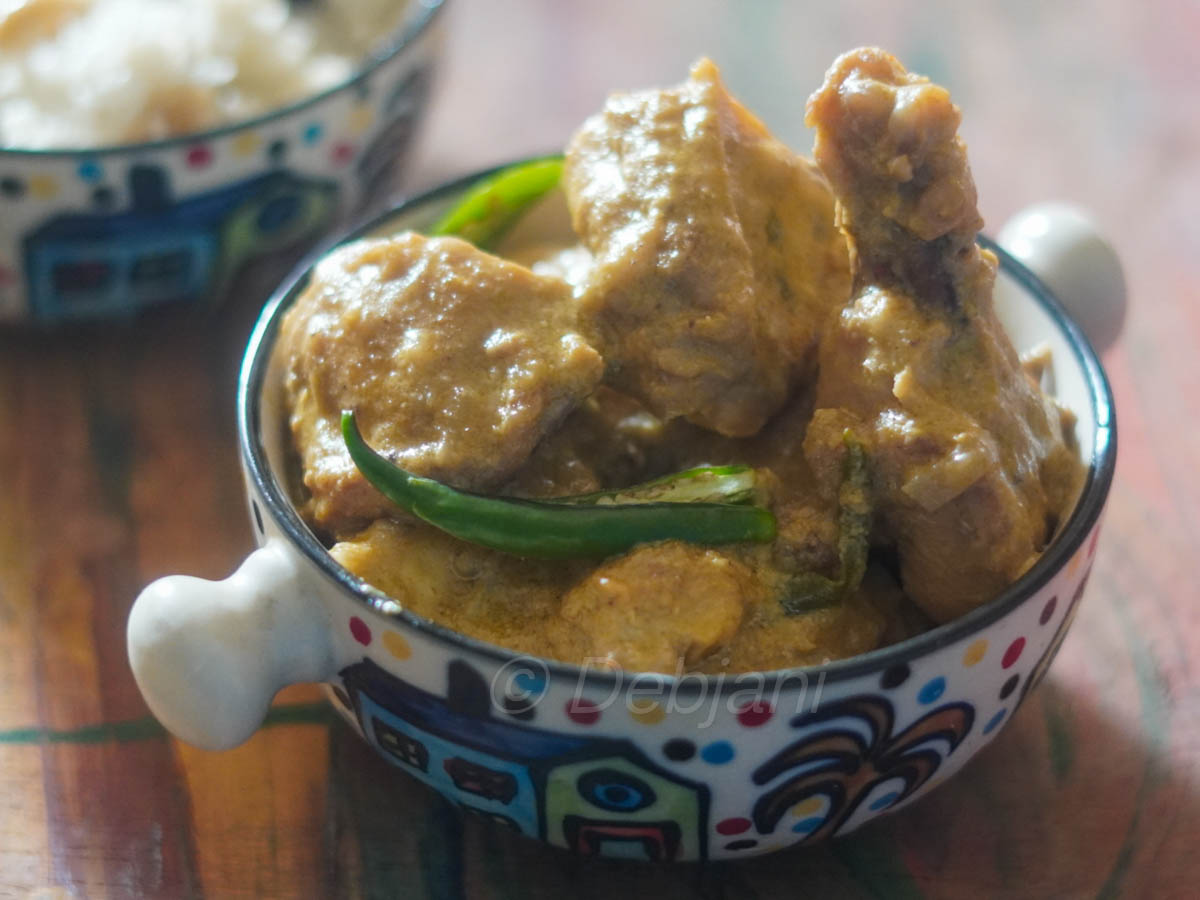
Posto Murgi is the classic Bengali chicken curry made with poppy seed paste, known in Bengali as "posto bata." This signature Bengali dish is both easy to prepare and can be cooked in just 30 minutes. Intrigued? Then keep reading!
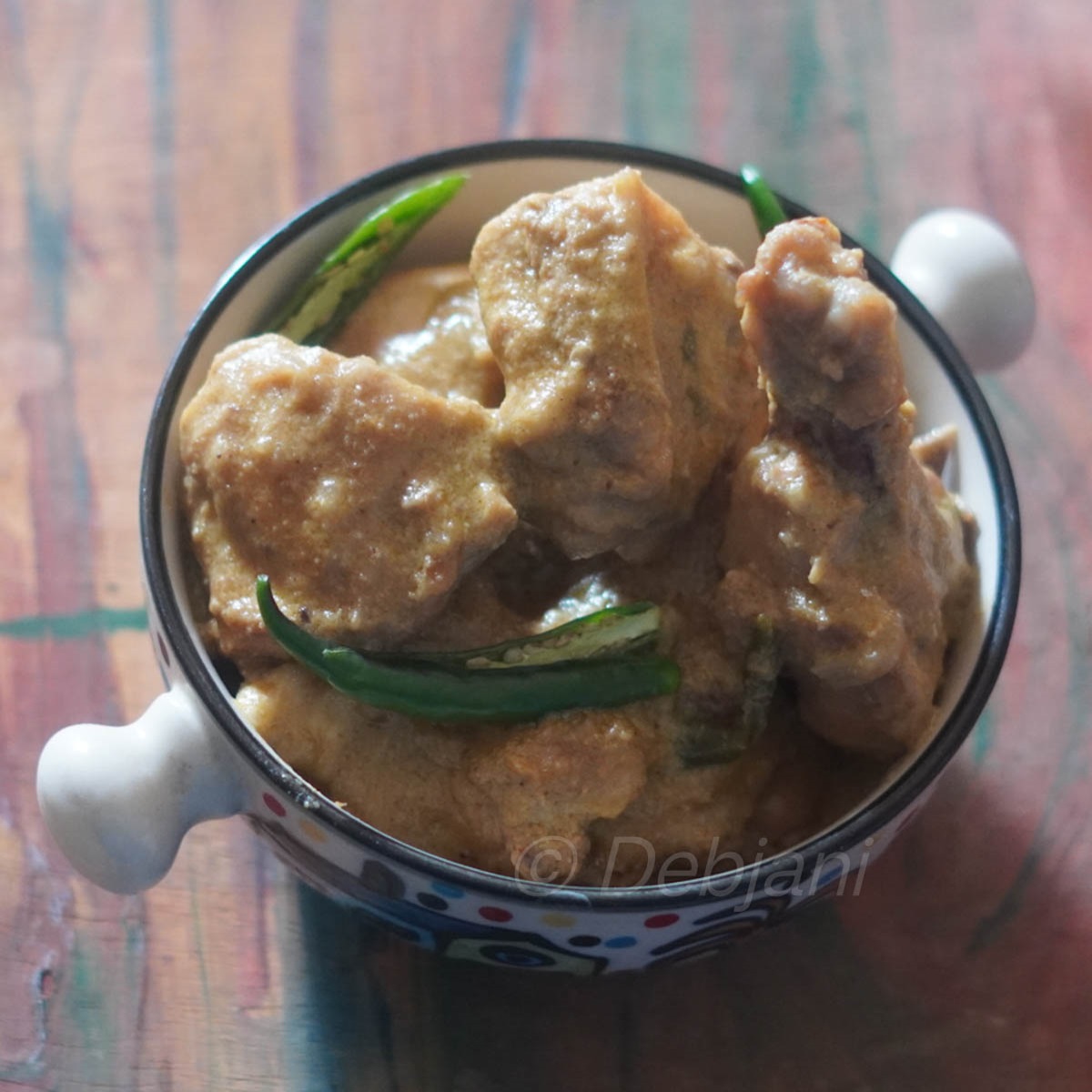
You might also be interested in my previous recipe for Posto Mangsho, a Bengali-style mutton curry made with poppy seed paste. This is a great alternative if you prefer mutton over chicken. Both Posto Murgi and Posto Mangsho pair wonderfully with steamed rice, especially aromatic varieties like Gobindobhog chaler bhat or Basmati chaler bhat.
Jump to:
Debjani's Note
Yes, here's another recipe using posto, this time with chicken!
I know, I know-we make so many wonderful dishes with posto in Bengali kitchens, and they all taste amazing! Naturally, I plan to share these recipes with you as I cook them at home. As you know, I only post recipes that I have personally prepared and photographed in my own kitchen. I've never created a recipe solely for the blog. I've cooked posto murgi countless times over the years, but I just never took the pictures needed to create a proper recipe post.
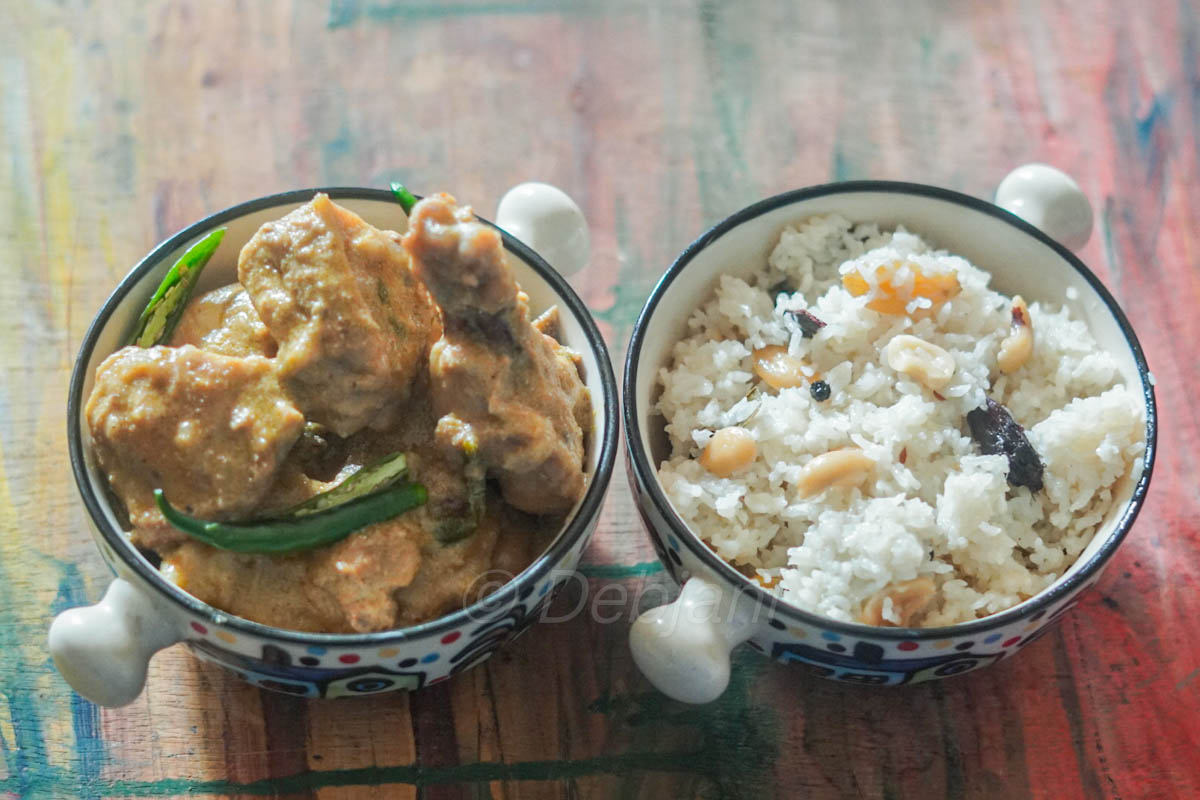
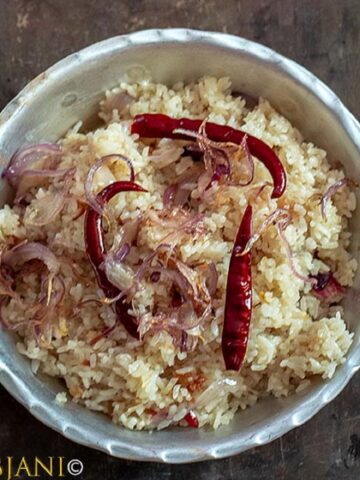
A few days ago, on a Sunday, my daughter Pasta requested a Bengali meal of "Polao-Mangsho." This classic combination is a favorite among Bengalis, enjoyed on special occasions or simply on Sundays. We either cook it at home, visit Bengali restaurants, or order in. That day, I prepared two dishes: Posto Murgi and Sada Kaju-Kishmish Pulao, two regulars. I took pictures of them, but then, due to the current LPG situation (this post is from April 2026), I've been cooking a lot more microwave meals and writing about those. I thought this might be helpful for people looking for alternative cooking methods.
However, with Poila Boisakh (or Pohela Boisakh, as some call it, though I don't) - Noboborsho, the Bengali New Year - approaching, I decided it was the perfect time to share these two recipes. After all, both posto murgi and sada kaju kishmish pulao are simple to make, taking hardly 30 minutes.
About the Recipe
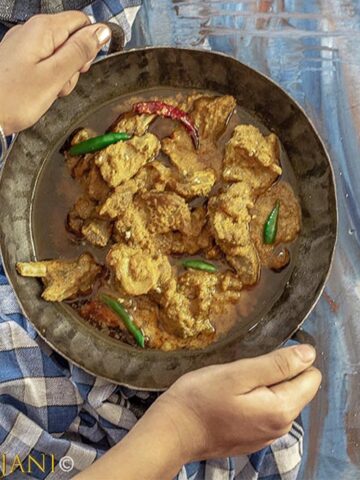
Posto Murgi is a classic Bengali chicken dish, similar to a kosha, but its flavor is truly defined by the iconic posto bata (poppy seed paste). You'll notice that the photos of my Posto Murgi recipe show a lighter color, and that's on purpose. My recipe is not about dominating the posto murgi with turmeric and red chili powder so that the delicate taste of the poppy seeds can shine through. The poppy seed paste is the star here, providing the main flavor. So, the combination of posto bata, the color and zing from mustard oil, and the heat from green chilies is what makes this dish uniquely Posto Murgi, distinct from a chicken kosha or murgir jhol.
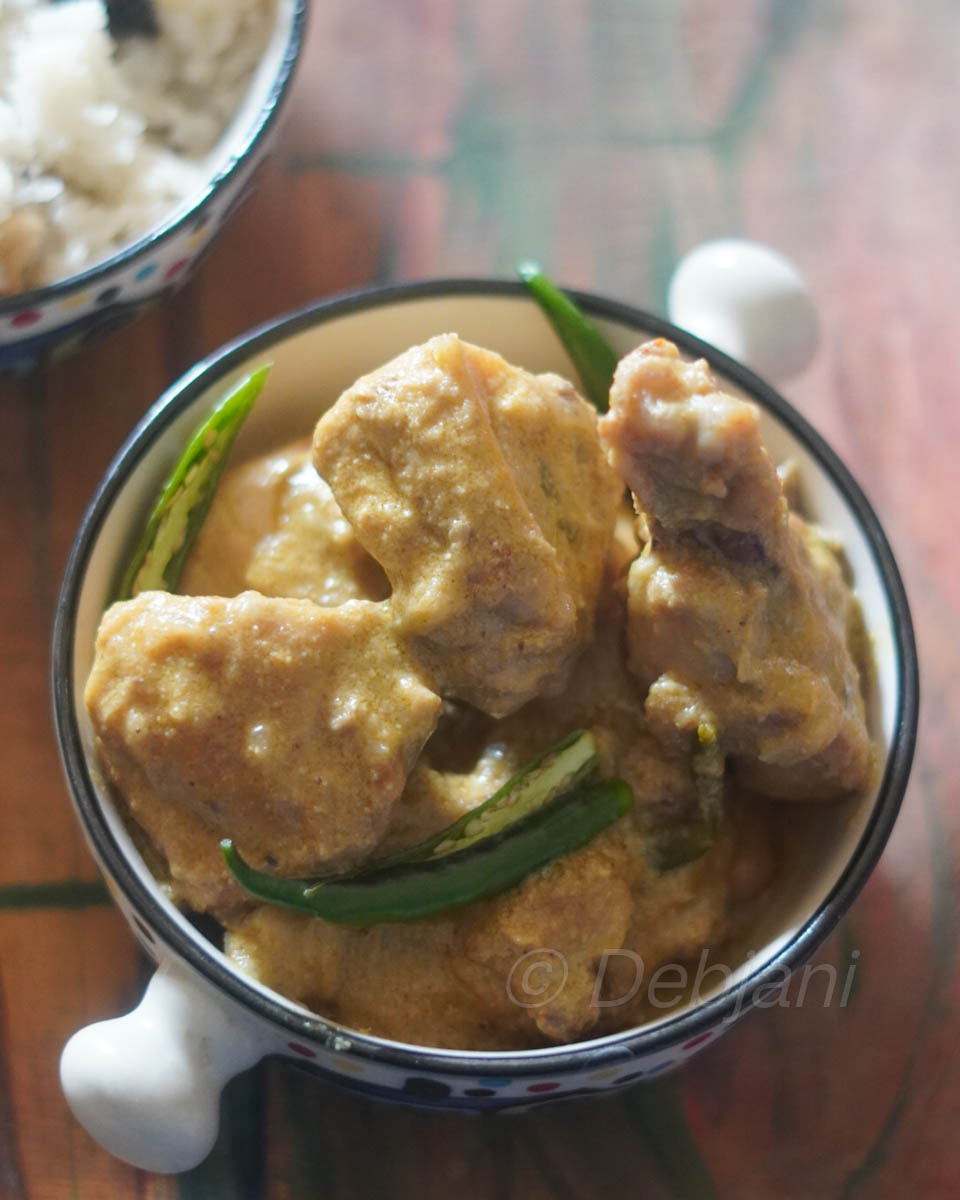
You might come across other versions of Posto Murgi, as it's a popular Bengali chicken recipe. However, the method I've shared below is how I personally prepare it. I'm sure all the other available recipes are delicious. Indeed, there are many ways to use poppy seeds in Bengali cooking, so variations in recipes are perfectly normal. It's up to each of us to choose a recipe that best suits our taste. The best way to understand how a dish will taste is to check its ingredients.
Ingredients
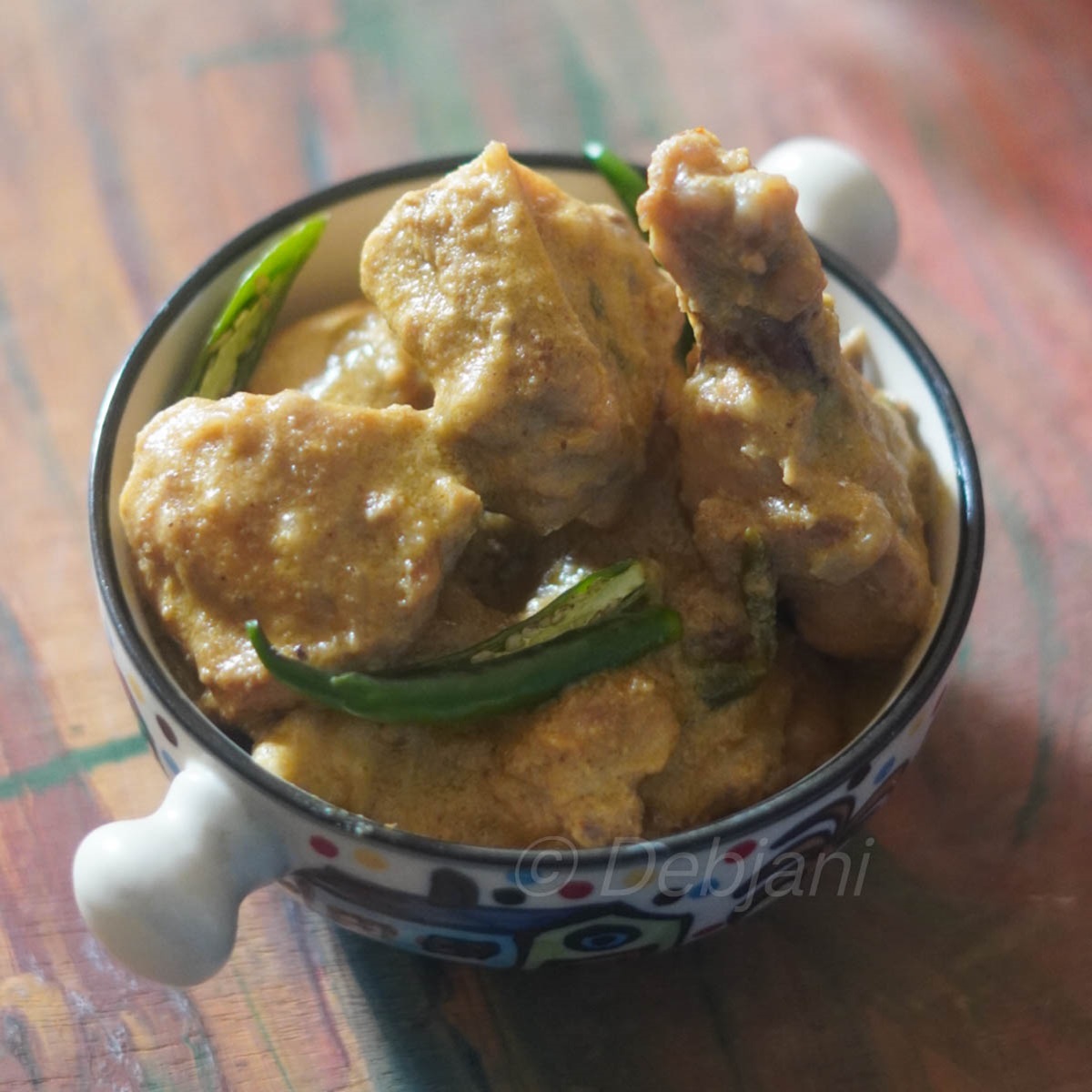
- Chicken, curry-cut
- Posto / Poppy seed
- Onion
- Green Chilli
- Ginger paste
- Garlic Paste
- Tawk Doi / Plain Yogurt
- Salt
- Mustard Oil
See recipe card for quantities.
How to make Posto Murgi - Stepwise with Pictures
-
Here's how you cook Bengali Posto Murgi!

-
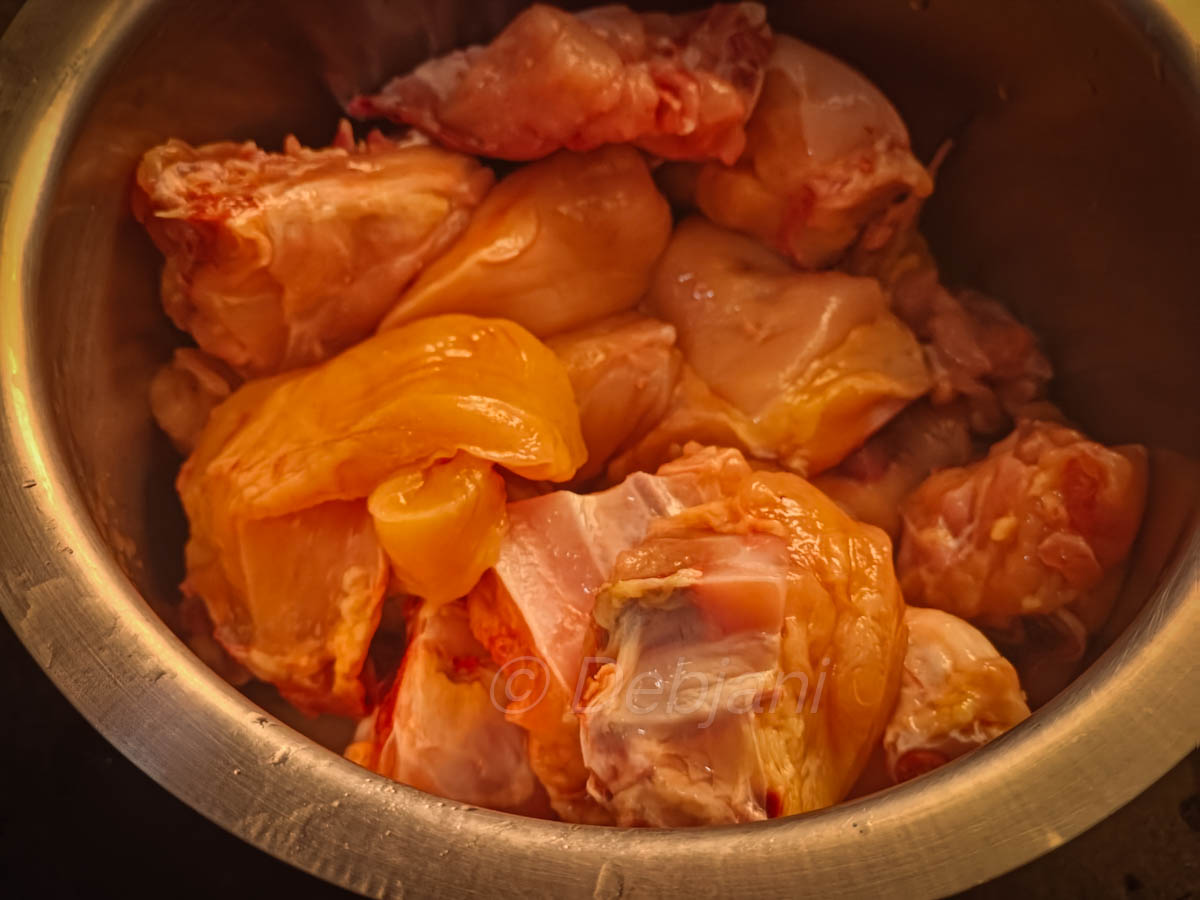
For this recipe, you'll need curry-cut chicken, ensuring the skin is removed. After washing the chicken, pat it dry.
-
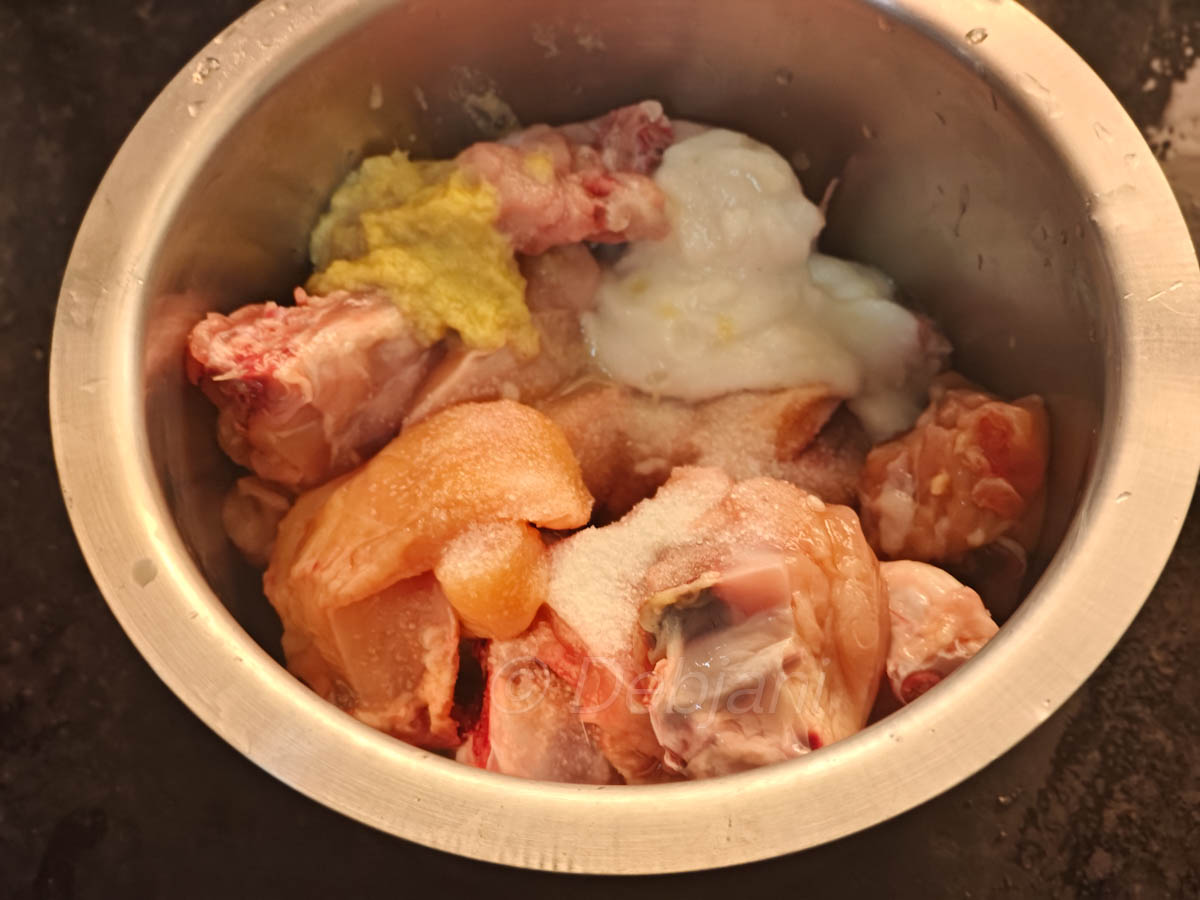
Begin by marinating the chicken. Combine 1 tablespoon of ginger paste, 1 tablespoon of garlic paste, half of the plain yogurt, and ½ teaspoon of salt. Let this sit for 10 minutes.
-
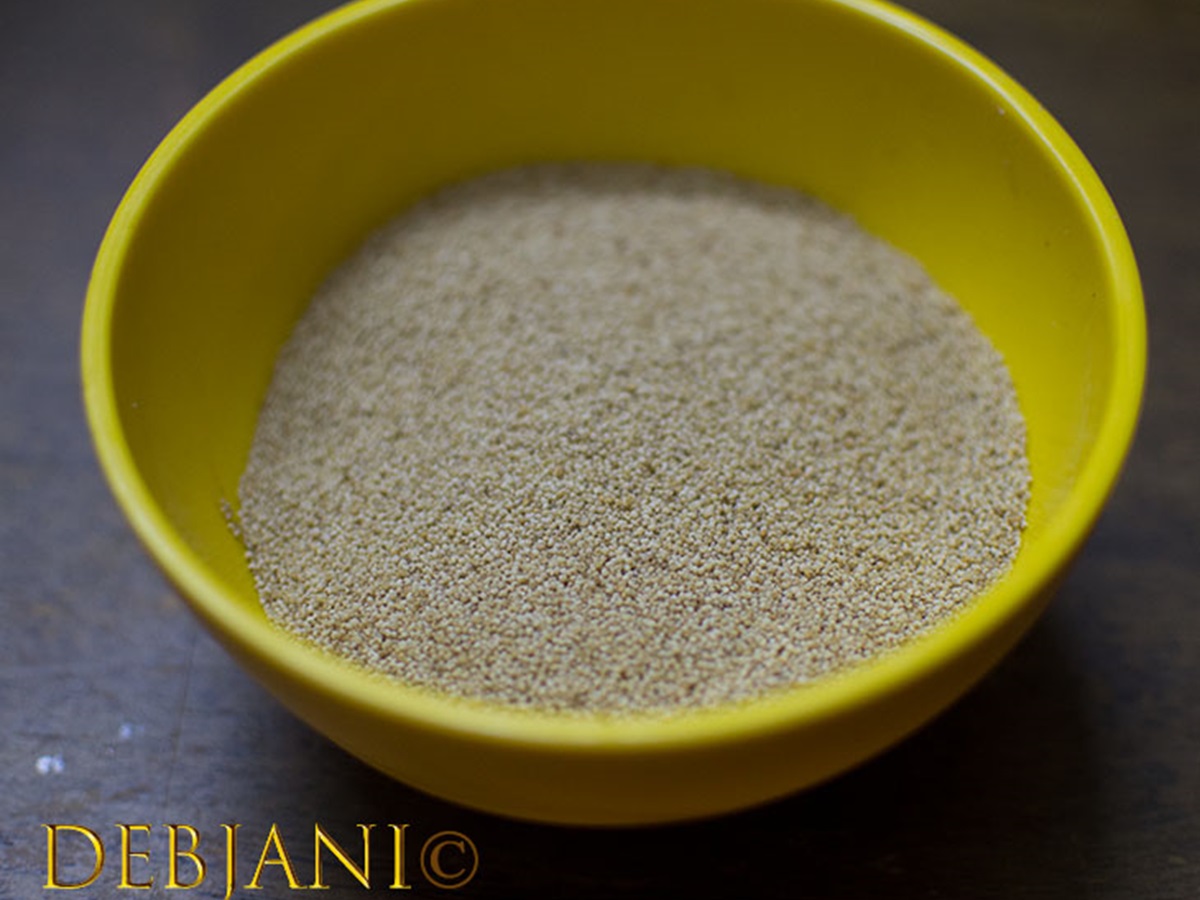
While the chicken marinates, prepare the poppy seed paste (posto bata). I typically use 100 grams of poppy seeds for 1 kilogram of chicken, but feel free to use less if you prefer a milder flavor or want to save money, as poppy seeds can be expensive.
-
First, soak the poppy seeds in water for 10 minutes.
-
Then, drain the water and blend the soaked poppy seeds with 2 green chilies and ¼ teaspoon of salt until smooth. A mixer grinder works well for this, but you can also use a traditional mortar and pestle.
-
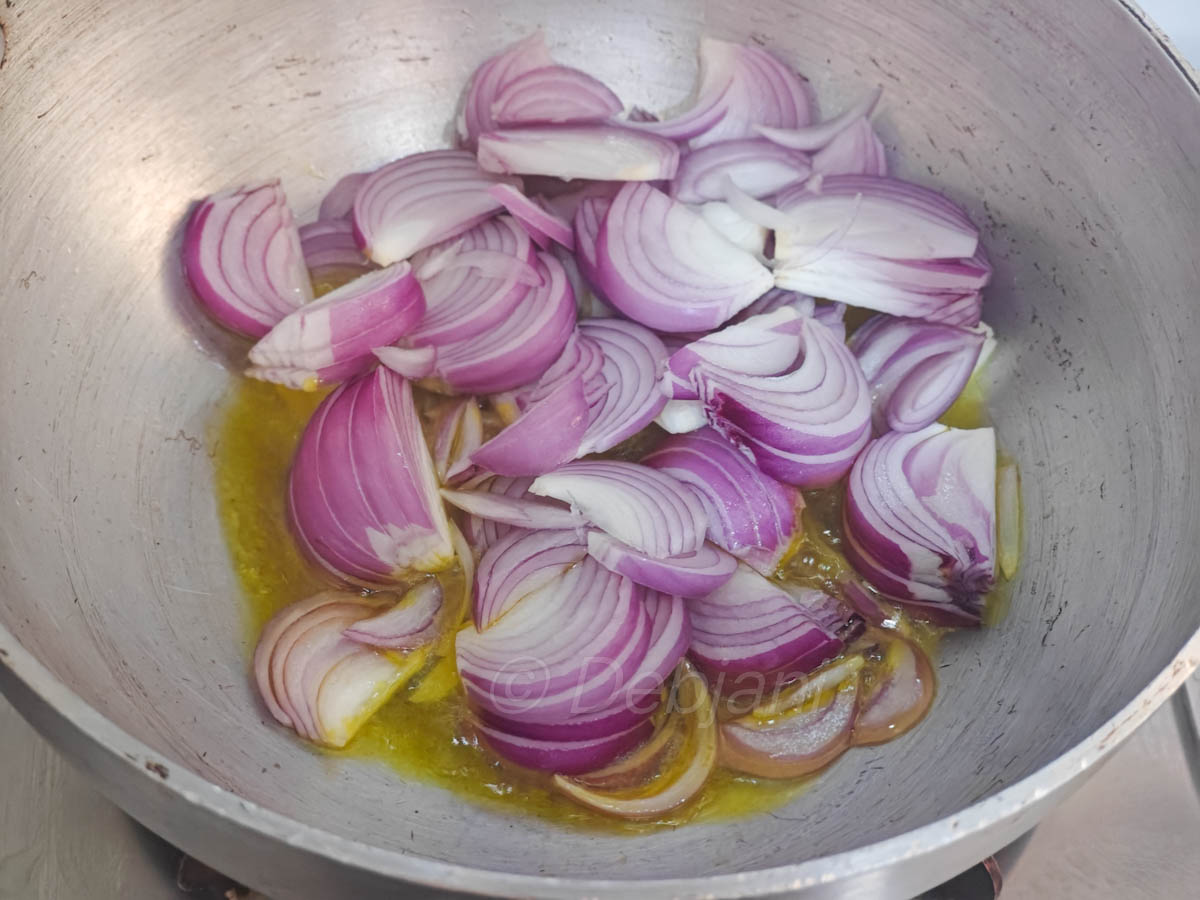
Next, thinly slice the onions. For 1 kilogram of chicken, I use two large onions. Adjust the quantity if you're using smaller onions. I prefer red onions for their strong flavor.
-
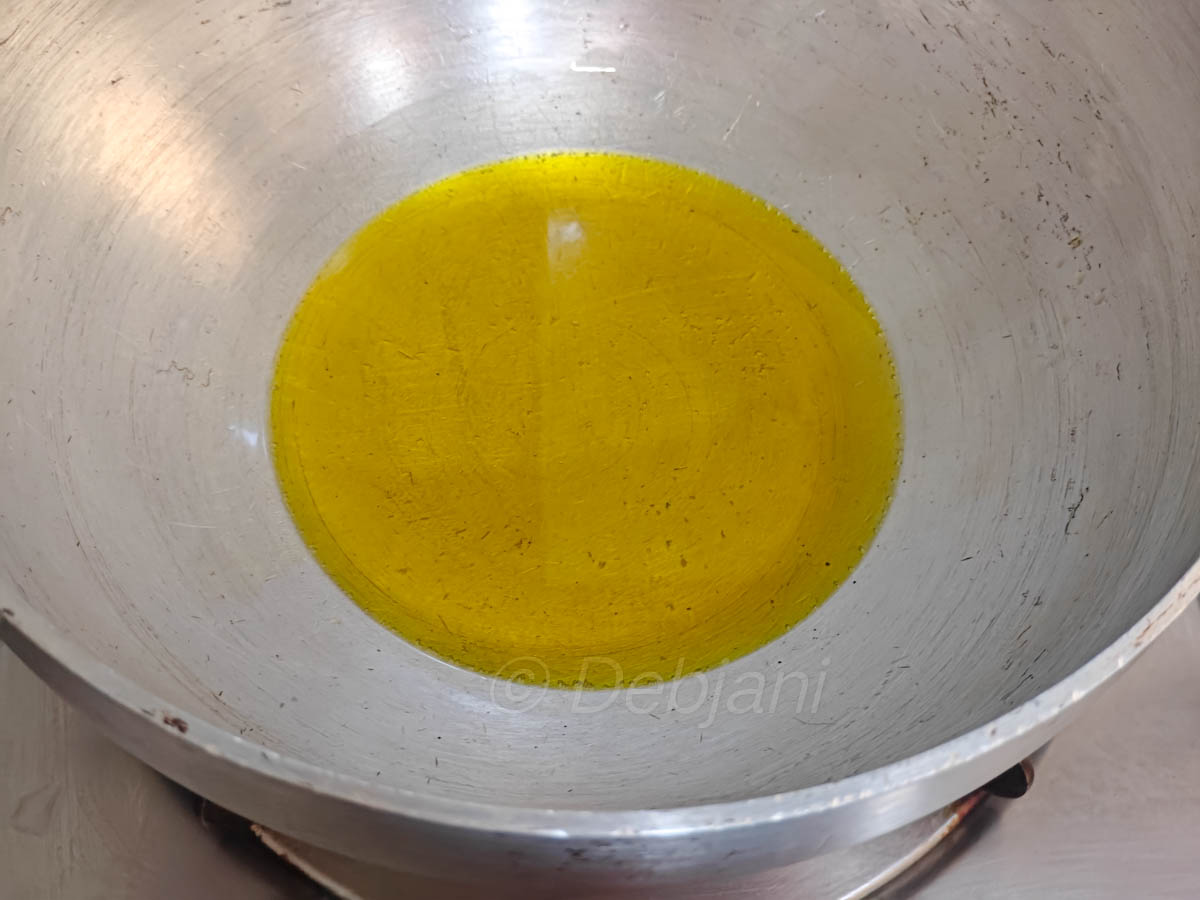
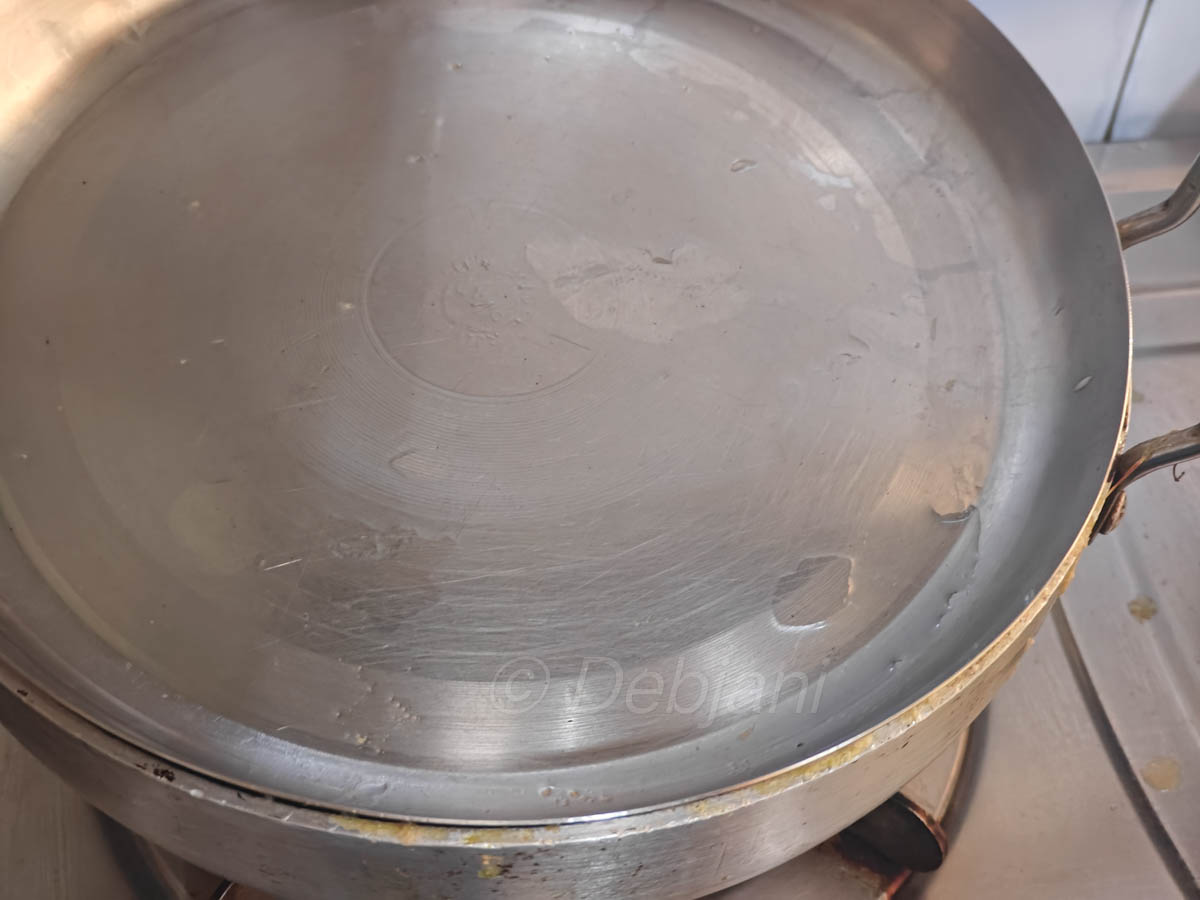
Heat four tablespoons of mustard oil in a sturdy, deep pan - Kadhai.
-
Once the oil changes color, add the sliced onion.
-
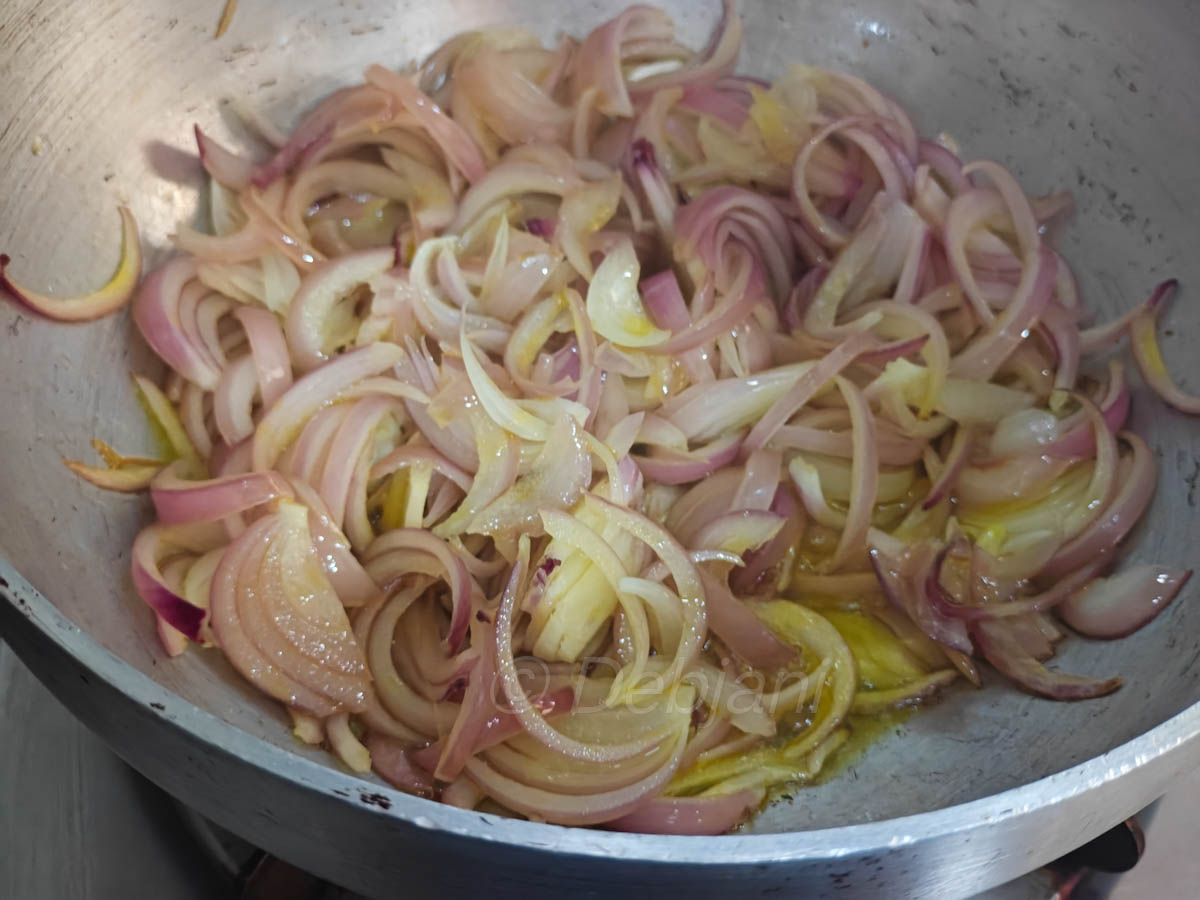
Fry the onion until it turns light pink; avoid over-frying, as this can make the curry bitter.
-
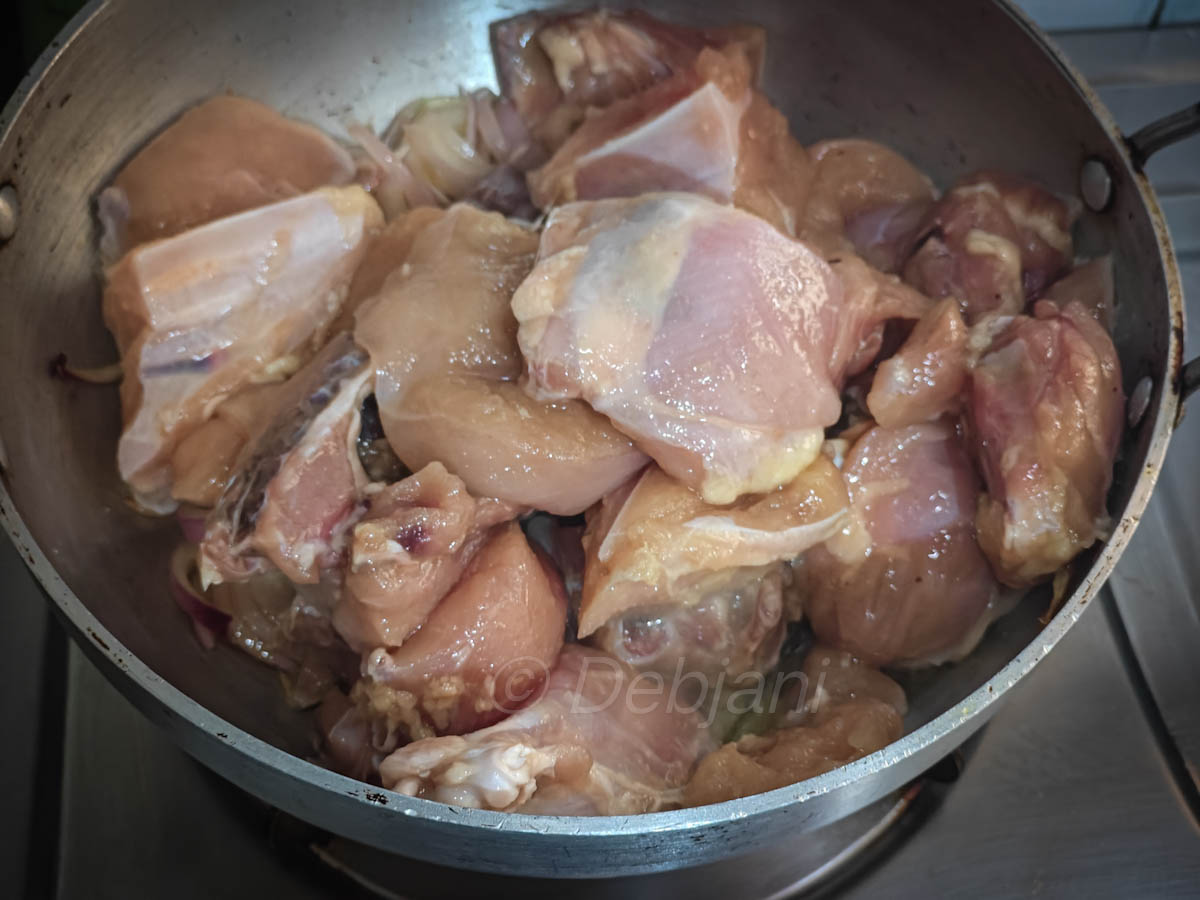
Next, add the marinated chicken and mix well.
-
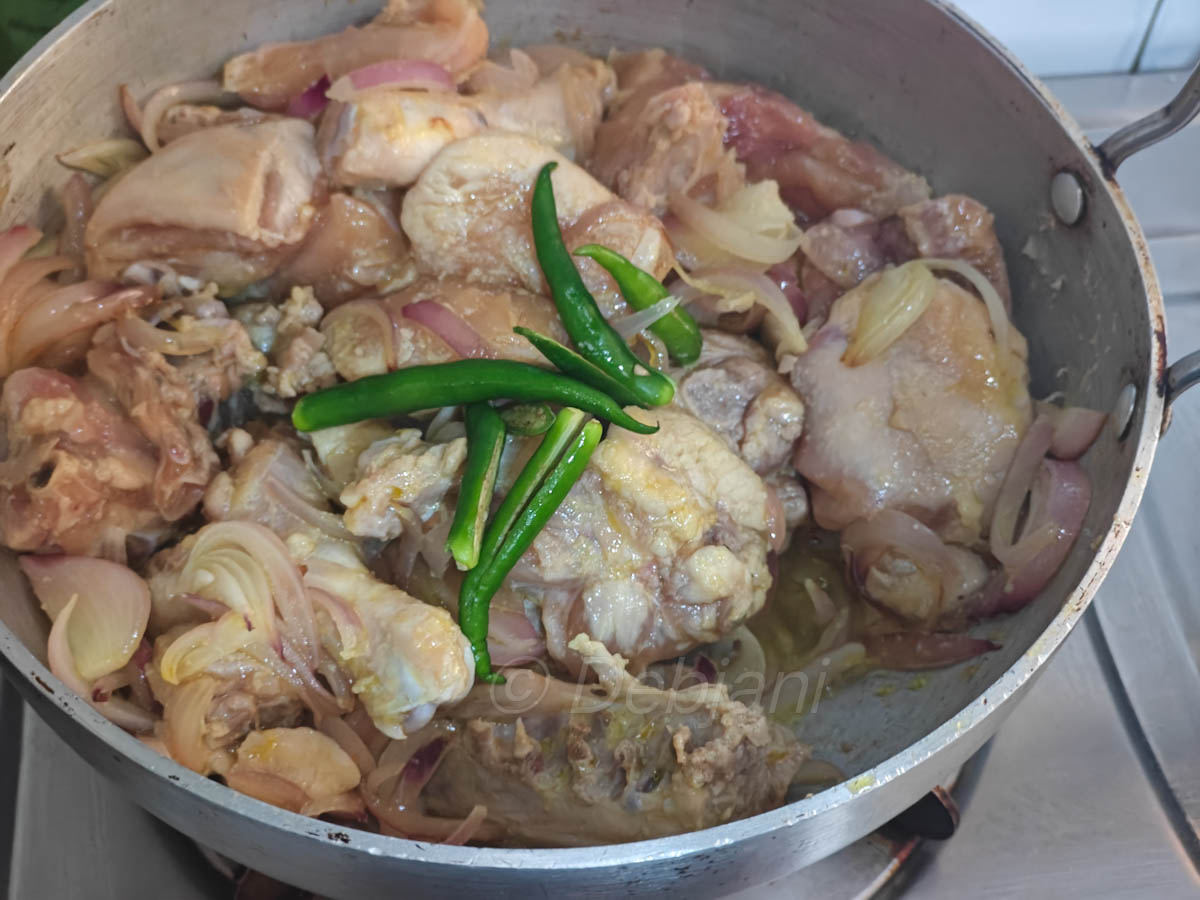
Now, add 5-6 green chilies-I use sliced ones-and mix again.
-
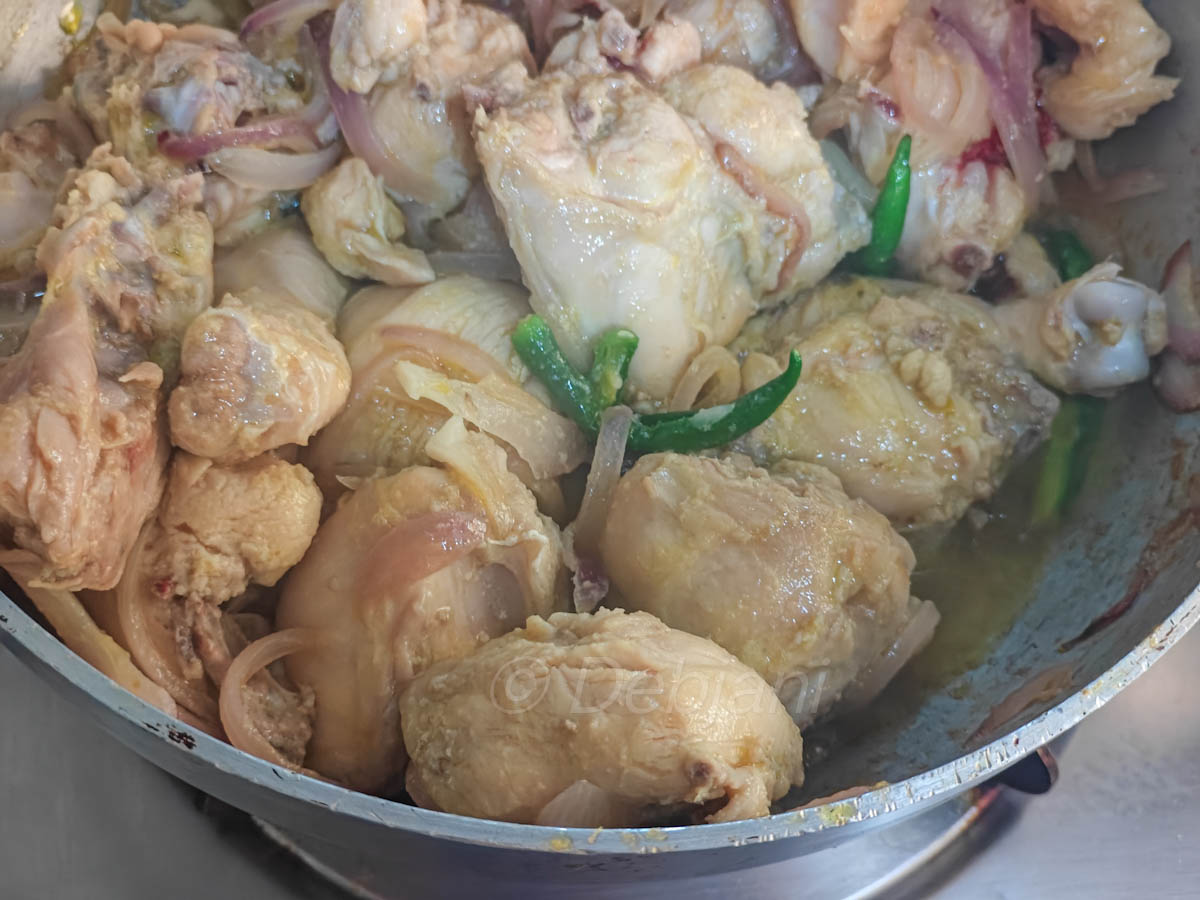
Cook on medium heat for about 5 minutes, at which point you'll notice the chicken releasing its own juices.
-
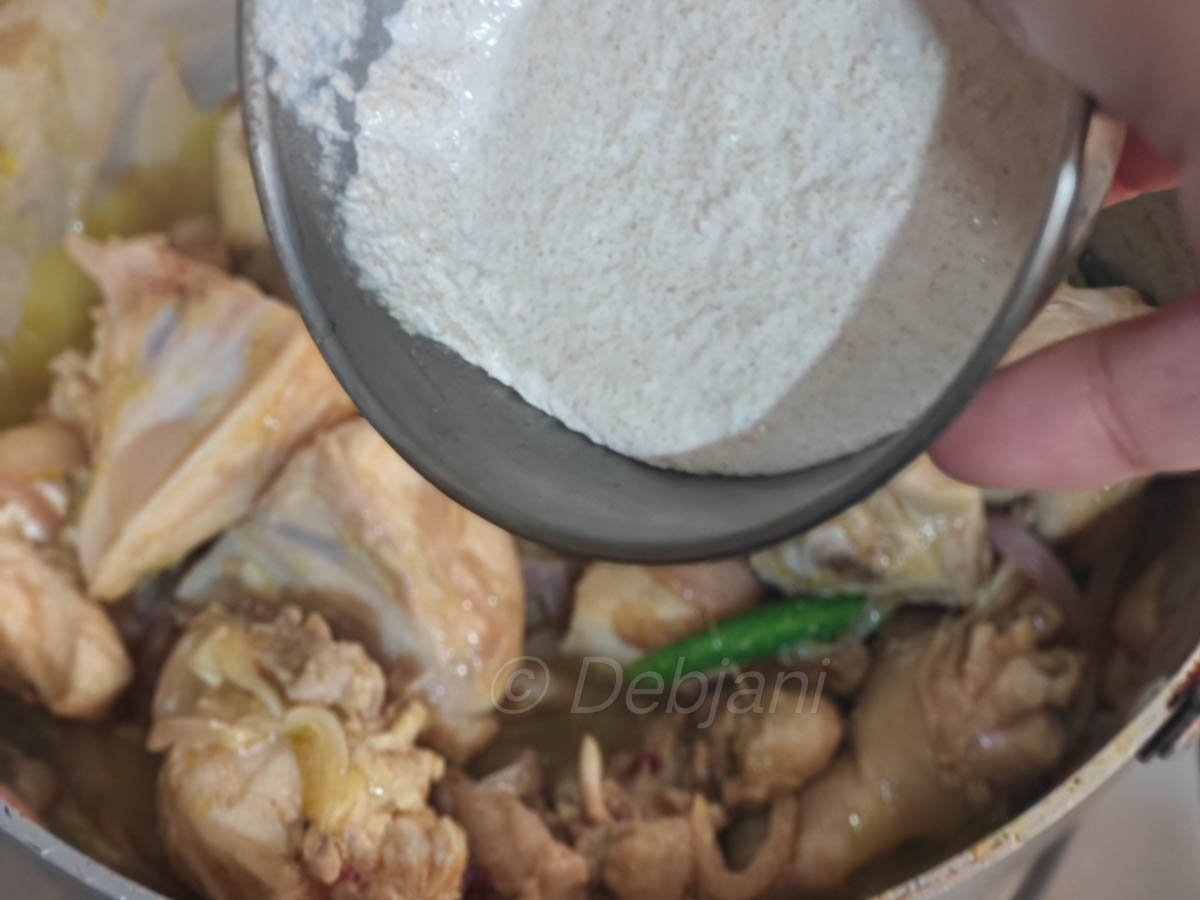
Once the chicken has released all its moisture, stir in the poppy seed paste - posto bata.
-
Mix thoroughly and cook over medium heat for 2 minutes.

-
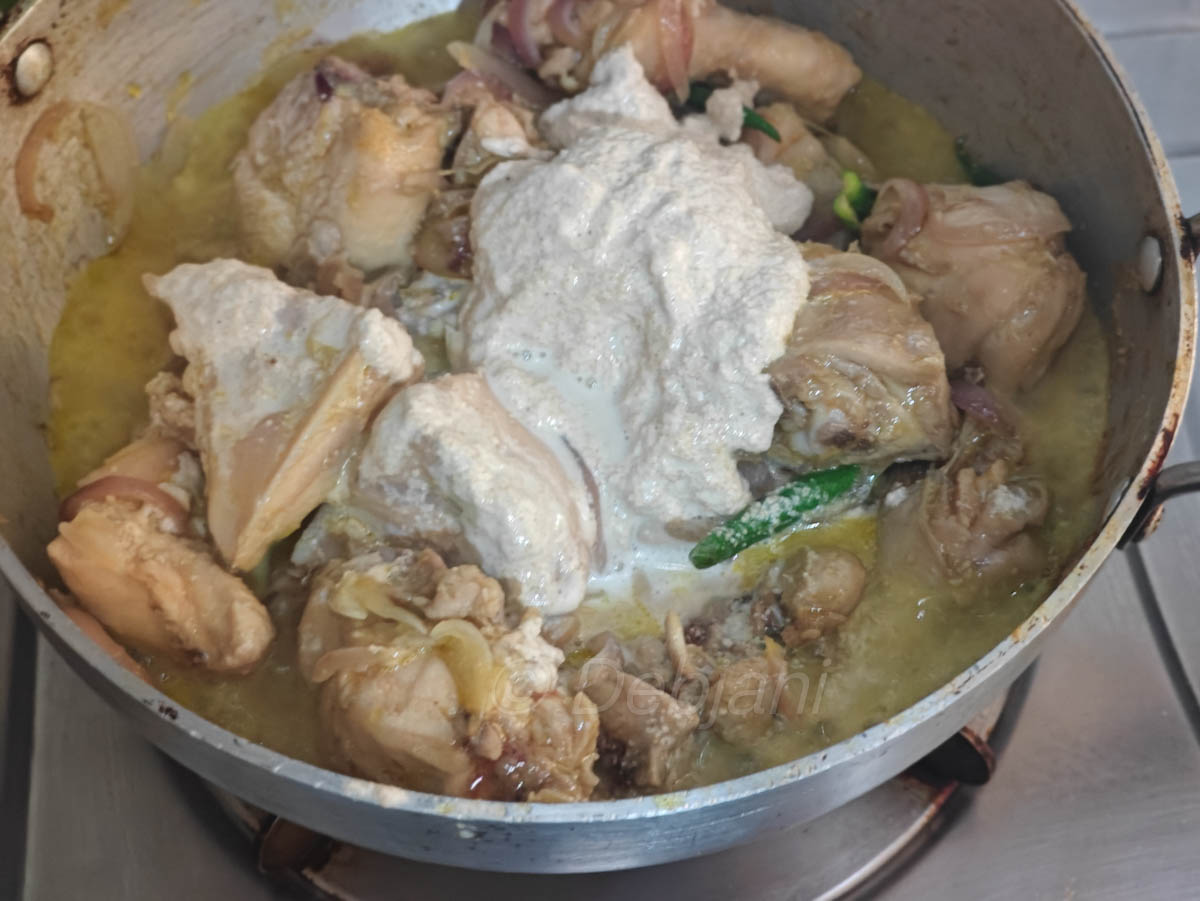
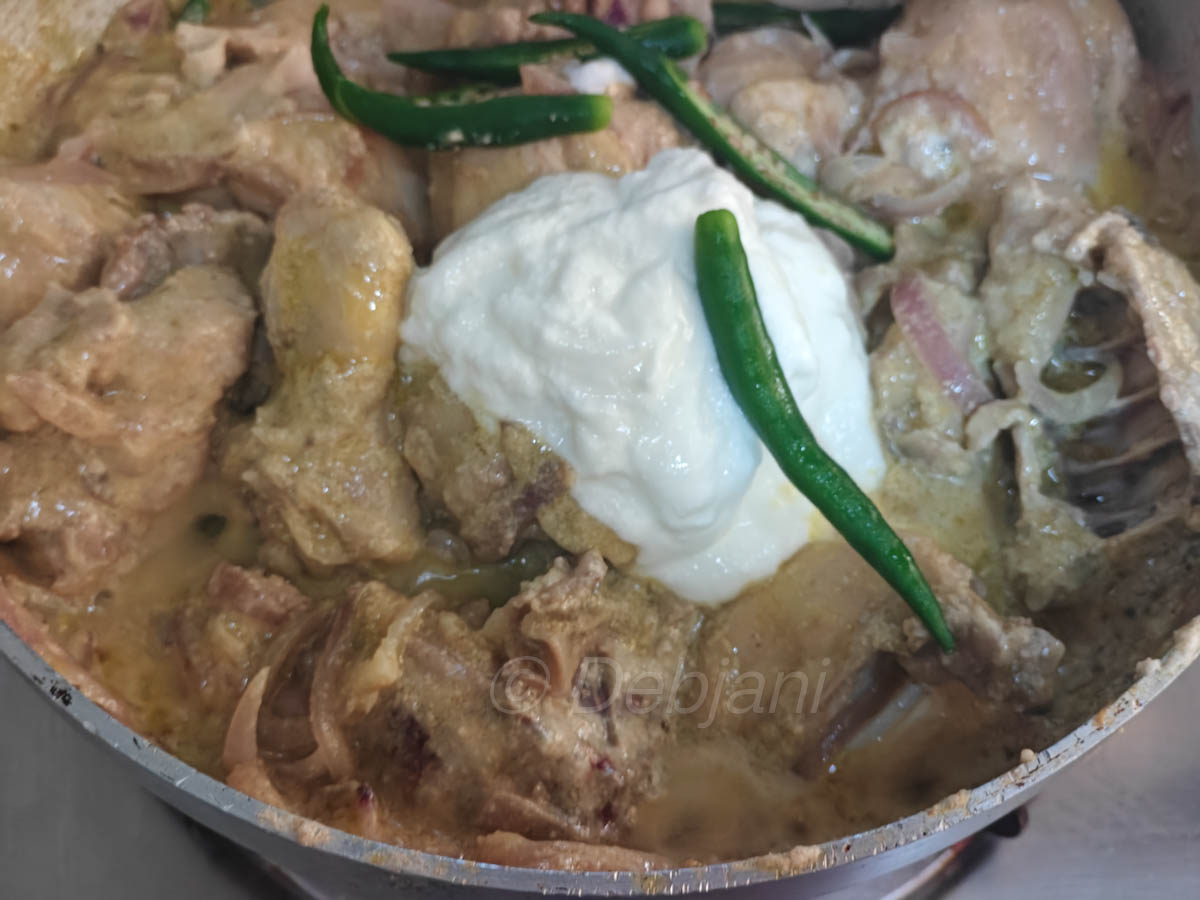
Now, add the remaining yogurt- tawk doi. If you like extra spice, you can add a few more green chilies at this point, but this is optional.
-
Combine everything well and cook for another 2-3 minutes.
-
Next, add ½ cup of hot water and mix. Never add room-temperature water, as this will make the chicken tough and chewy, not tender.
-
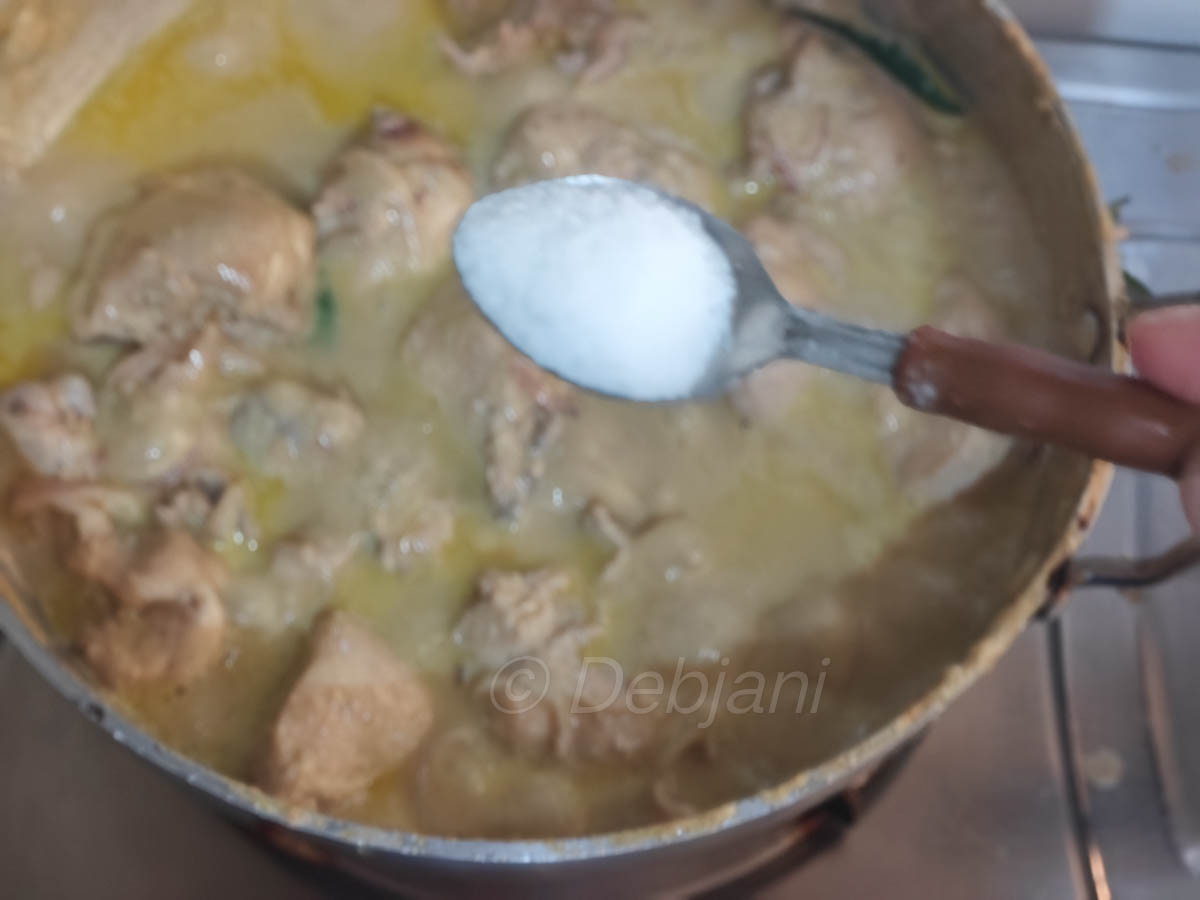
Then, add ½ teaspoon of salt, adjusting the amount to your taste, remembering that salt was already used when marinating the chicken and in the poppy seed paste.
-
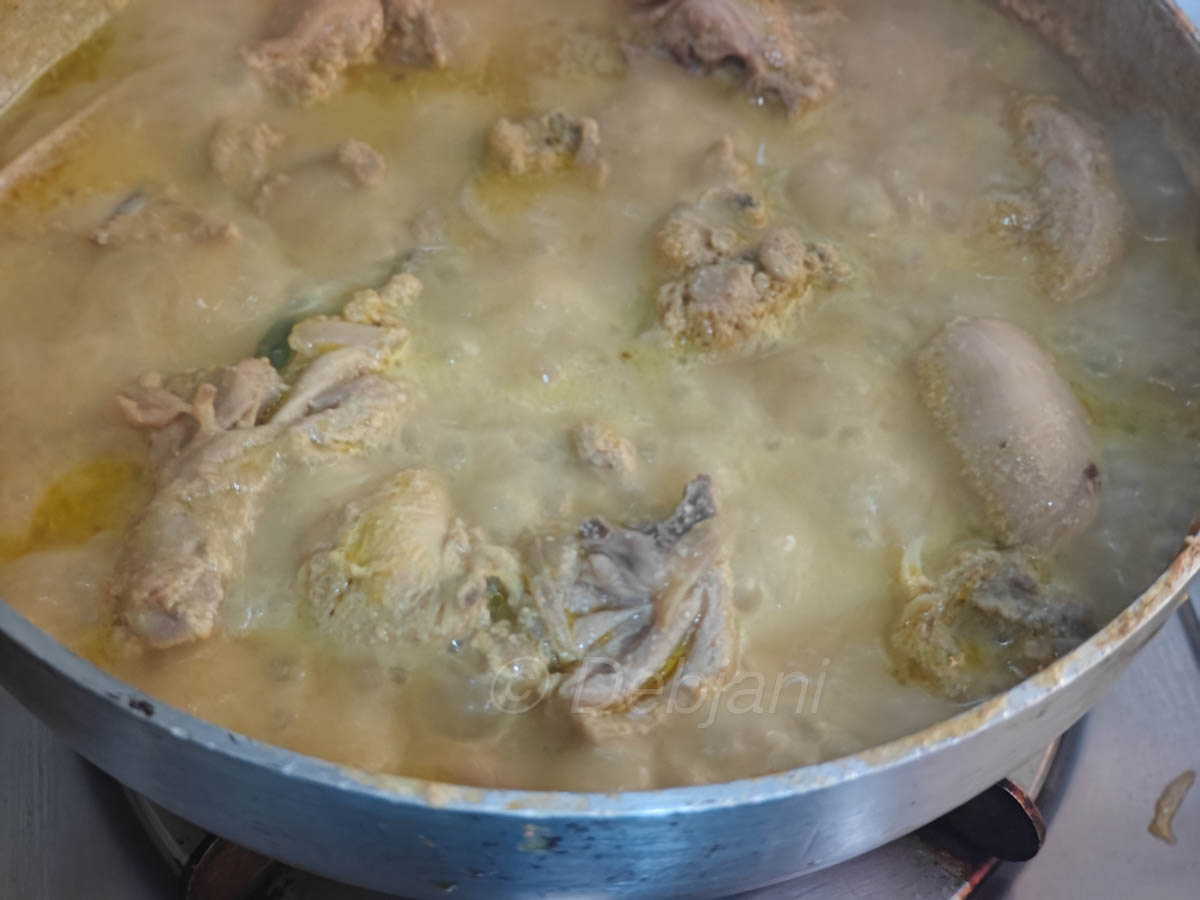
Cover the pan and cook on medium heat for 2-3 minutes.
-
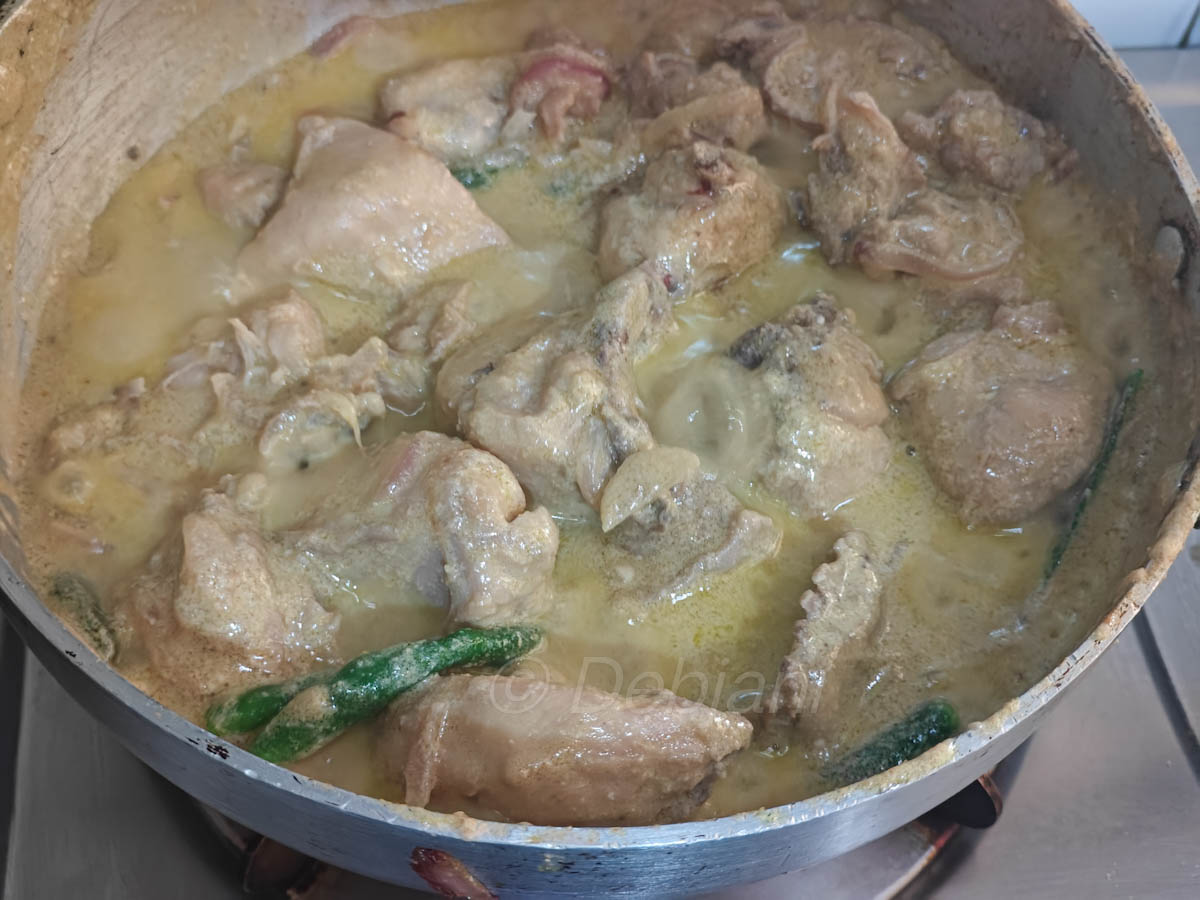
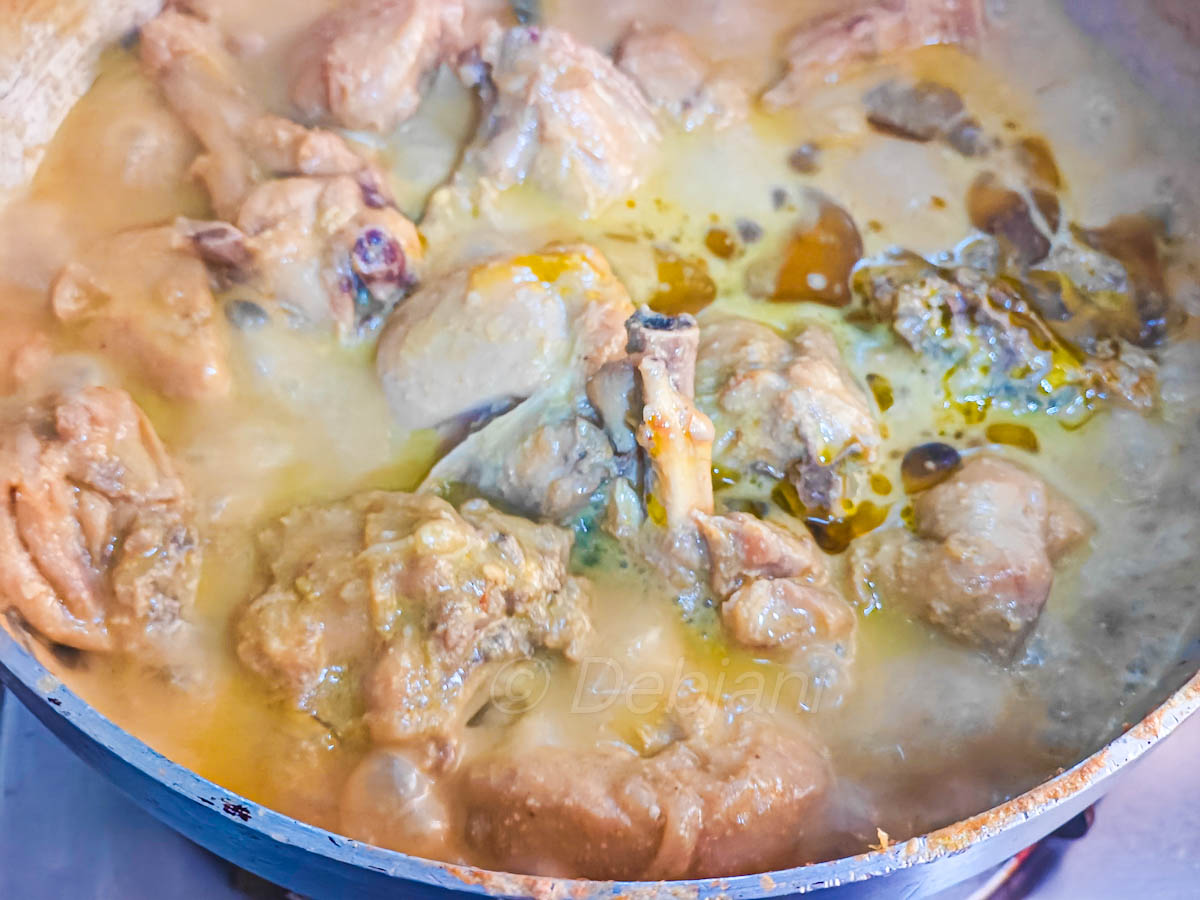
Remove the lid and continue cooking for about 5 minutes, or until the chicken is fully cooked but still holding its shape. Be careful not to overcook it; a total of 20 minutes of cooking after adding the chicken should be sufficient.
-
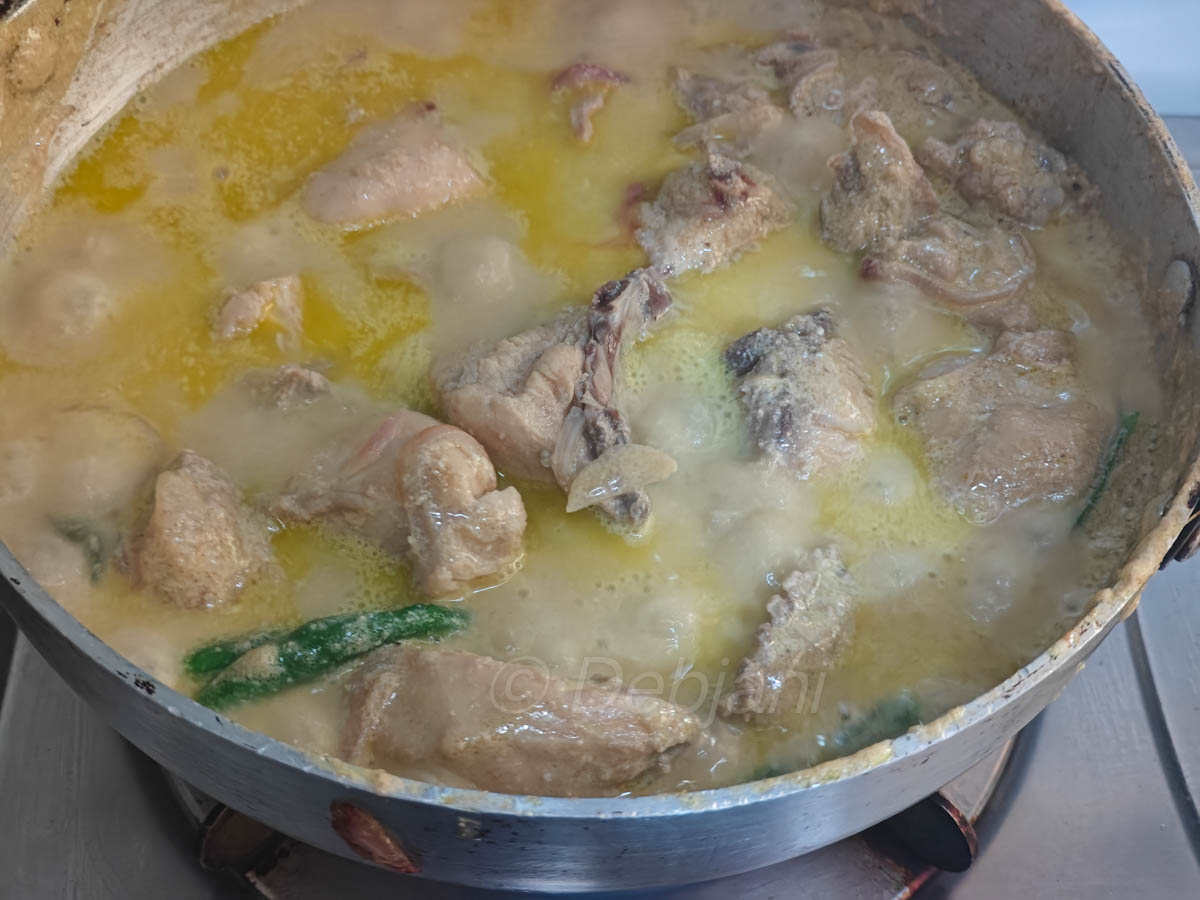
Finally, when the sauce has reached your preferred thickness, add a tablespoon of mustard oil for its unique, strong flavor. This step is optional. Mix everything well and turn off the heat. Before serving, cover the pan with a lid and let it rest for 5 minutes.
-
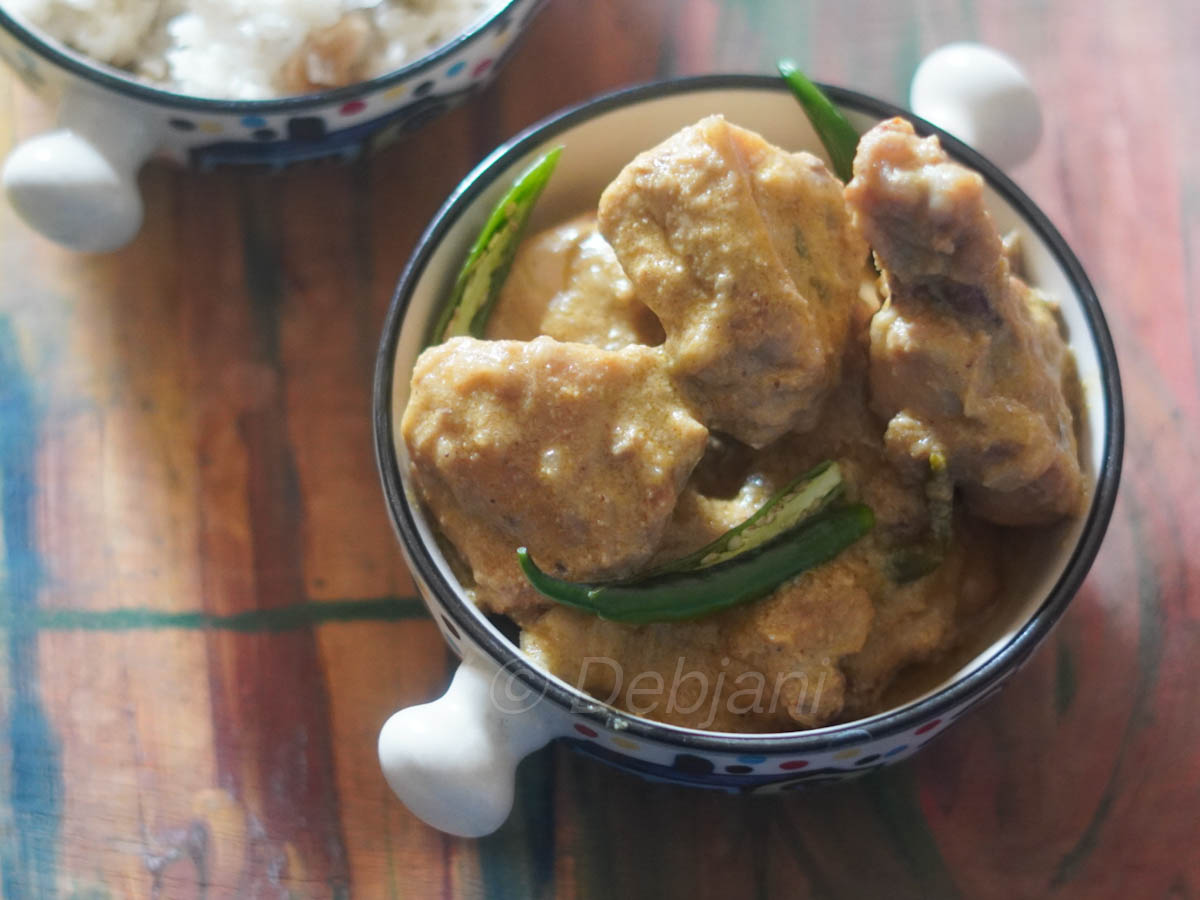
Your Posto Murgi is ready to serve!


Quick Tips
- Type of Chicken - For this recipe, I suggest using bone-in, skinless chicken cut for curry.
- Posto - You can change the amount of poppy seeds to your liking. I recommend 100 grams of poppy seeds for 1 kilogram of chicken, which is a moderate amount.
- Chili - I use a good number of green chilies in this recipe; please adjust them to your own taste. I also avoid using red chili because I prefer to keep its color out of this dish.
- Oil - Mustard oil is essential for my recipe. However, if you cannot find it or dislike its strong taste, feel free to use any oil that doesn't have a strong flavor.
- Spices - I advise against using strong spices like cumin powder, coriander powder, or garam masala. This is simply to make sure they don't hide the main taste of the poppy seeds.
Frequently Asked Questions
While you can, I don't recommend it. Bone-in chicken adds more flavor to the curry, which is a key part of authentic Bengali cooking.
The combination of posto and mustard oil is a classic in Bengali cuisine. However, if you don't like it, feel free to use any unflavored oil instead.
It's also known as poppy seed or khuskhus.
The poppy plant is the source of opium. Poppy pods from illegal farms are sold for high prices on the black market. When these pods are crushed, they yield poppy seeds, known as "khus khus" or "Posto" in India. This spice is currently very expensive. In India, growing opium is strictly controlled and only allowed in Madhya Pradesh, Rajasthan, and Uttar Pradesh for medicinal and research purposes.
No, eating posto or poppy seeds is not banned in India. It is a common ingredient in Bengali food.
If you plan to travel with poppy seeds, be aware that many countries prohibit them, so always verify the regulations. Should they be permitted, you can readily find them in Indian grocery stores.
Regarding the quantity of poppy seeds needed for posto murgi, I typically use 100 grams of poppy seeds for every kilogram of chicken. However, this is flexible. You can reduce the amount to 75 grams or even 50 grams if you prefer a less intense poppy seed flavor. Keep in mind that the taste of poppy seeds is often something you grow to appreciate.
Related Recipes
Looking for other recipes that use posto? Try these:
- Posto Mangsho (Bengali Mutton Curry cooked with Poppy Seed Paste)
- Postor Bora | Bengali Poppy Seed Fritters Recipe
- Piyaj Posto | Bengali Peyaj Posto Recipe
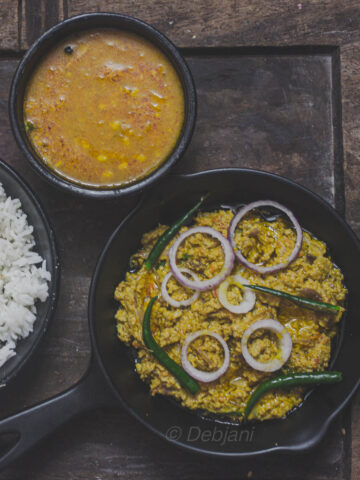
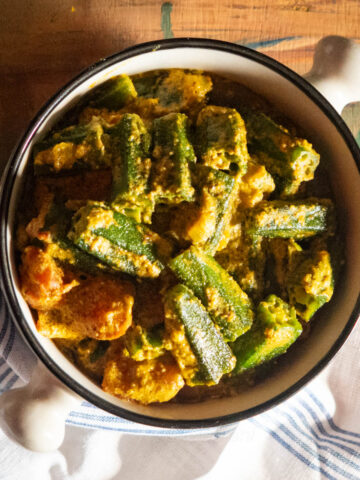
- Shorshe Posto Dharosh Recipe | Bhindi or Okra cooked with mustard and poppy seed paste
- Bengali Jhinge Posto | Jhinge Aloo Posto Recipe
- Gota Posto Diye Aloo Bhaja
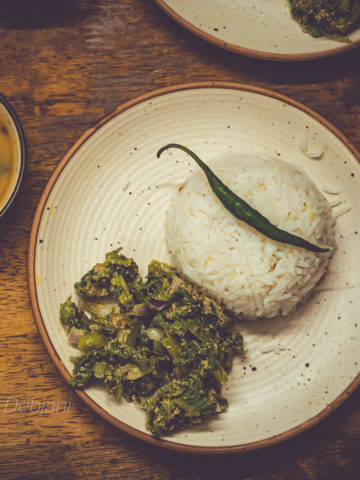
- Posto Diye Laushak Bhate | Bengali Bottle Gourd leaves Mash with Poppyseed Paste
- Aloo Posto



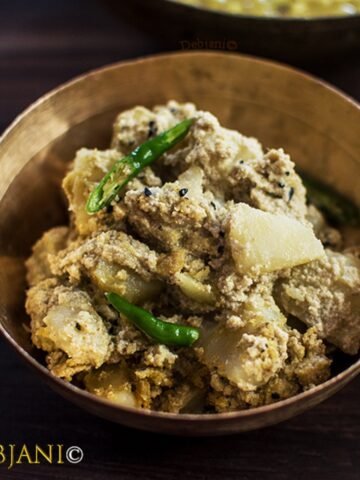
Pairing Posto Murgi
These are my favorite dishes to serve with posto murgi:
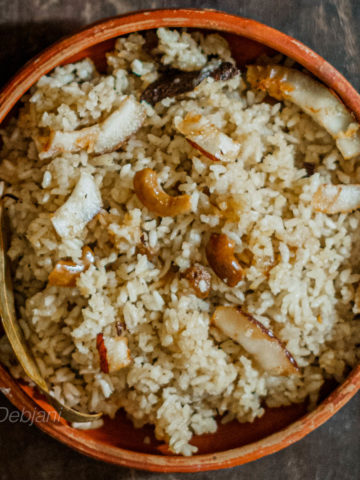
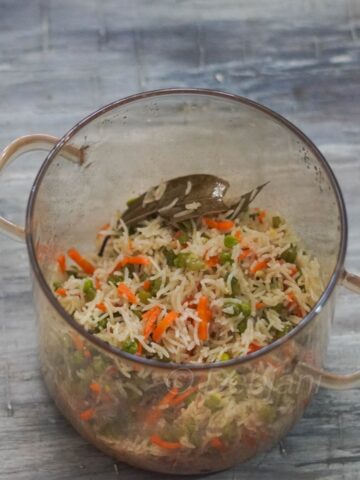
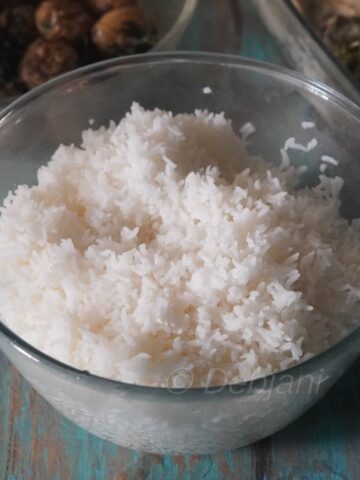
Step-by-Step Photo Guide with recipe for Posto murgi above and recipe card below
Recipe Card
Posto Murgi Recipe | Bengali Chicken Curry with Poppy Seed Paste
Ingredients
- 1 kg Chicken curry-cut without skin
- 100 g Posto / Poppy seed
- 2 Onion big
- 10 Green Chilli
- 1 tablespoon Ginger paste
- 1 tablespoon Garlic Paste
- 150 g Tawk Doi / Plain Yogurt
- 1.5 teaspoon Salt
- 5 tablespoon Mustard Oil

Instructions
- For this recipe, you'll need basic curry-cut chicken, making sure to remove the skin. Wash and pat the chicken dry.
- Begin by marinating the chicken. Mix it with 1 tablespoon each of ginger paste and garlic paste, half of the tawk doi or plain yogurt, and ½ teaspoon of salt. Let this sit for 10 minutes.
- While the chicken marinates, prepare the posto bata.
- First, soak the posto in water for 10 minutes.
- Then, drain the water and blend the soaked posto with 2 green chilies and ¼ teaspoon of salt until it forms a smooth paste.
- Next, slice the onions thinly.
- Heat 4 tablespoons of mustard oil in a heavy-bottomed pan or wok- kadhai.
- Once the oil changes color, add the sliced onion.
- Fry the onion until it turns light pink; be careful not to overfry it, as this will make the curry bitter.
- Next, add the marinated chicken and mix it in.
- Now, add 5-6 green chilies (I use sliced chilies) and mix again.
- Cook this on a medium flame for about 5 minutes. You will notice the chicken starting to release its moisture at this point.
- Once the chicken has released all its moisture, stir in the posto bata. Mix everything well and cook for 2 minutes over medium heat.
- Next, add the rest of the plain yogurt / Tawk Doi.
- Combine all ingredients thoroughly and cook for another 2-3 minutes.
- Then, pour in ½ cup of hot water and mix.
- Now, add ½ teaspoon of salt.
- Remember to adjust this amount, as salt was already used when marinating the chicken and preparing the posto bata.
- Cover the pan with a lid and cook on medium heat for 2-3 minutes.
- After that, remove the lid and continue cooking for about 5 minutes, or until the chicken is fully cooked but still holds its shape.
- Finally, when the gravy reaches your preferred thickness - neither runny nor thick, add a tablespoon of mustard oil for its distinct sharp taste, though this is optional.
- Mix well and turn off the heat.
- Your Posto Murgi is now ready. Before serving, cover the pan with a lid and let it rest for 5 minutes.
Notes
- For this recipe, I suggest using bone-in, skinless chicken pieces cut for curry.
- You can adjust the amount of poppy seeds to your liking. I find that 100 grams of poppy seeds for 1 kilogram of chicken gives a balanced flavor.
- I use a good number of green chilies in this dish, so feel free to adjust the amount based on your spice preference. I choose not to use red chilies because I prefer the color of the dish without them.
- Mustard oil is essential for my version of this recipe. However, if you cannot find it or dislike its strong taste, any neutral-flavored oil will work.
- Avoid strong spices like cumin powder, coriander powder, or garam masala. The simple reason is to ensure they don't overpower the main flavor of the posto.
Nutrition
Have you tried the Posto Chicken Recipe from Debjanir Rannaghar!
Please inform me of your experience, and feel free to send a photo to [email protected]. Additionally, you can find me on various social media platforms such as Instagram, YouTube, Facebook, Pinterest, Google News, X, and Thread. Don't forget to use the hashtag #debjanirrannaghar when sharing your attempts at my recipes or if you have any questions or recipe requests.
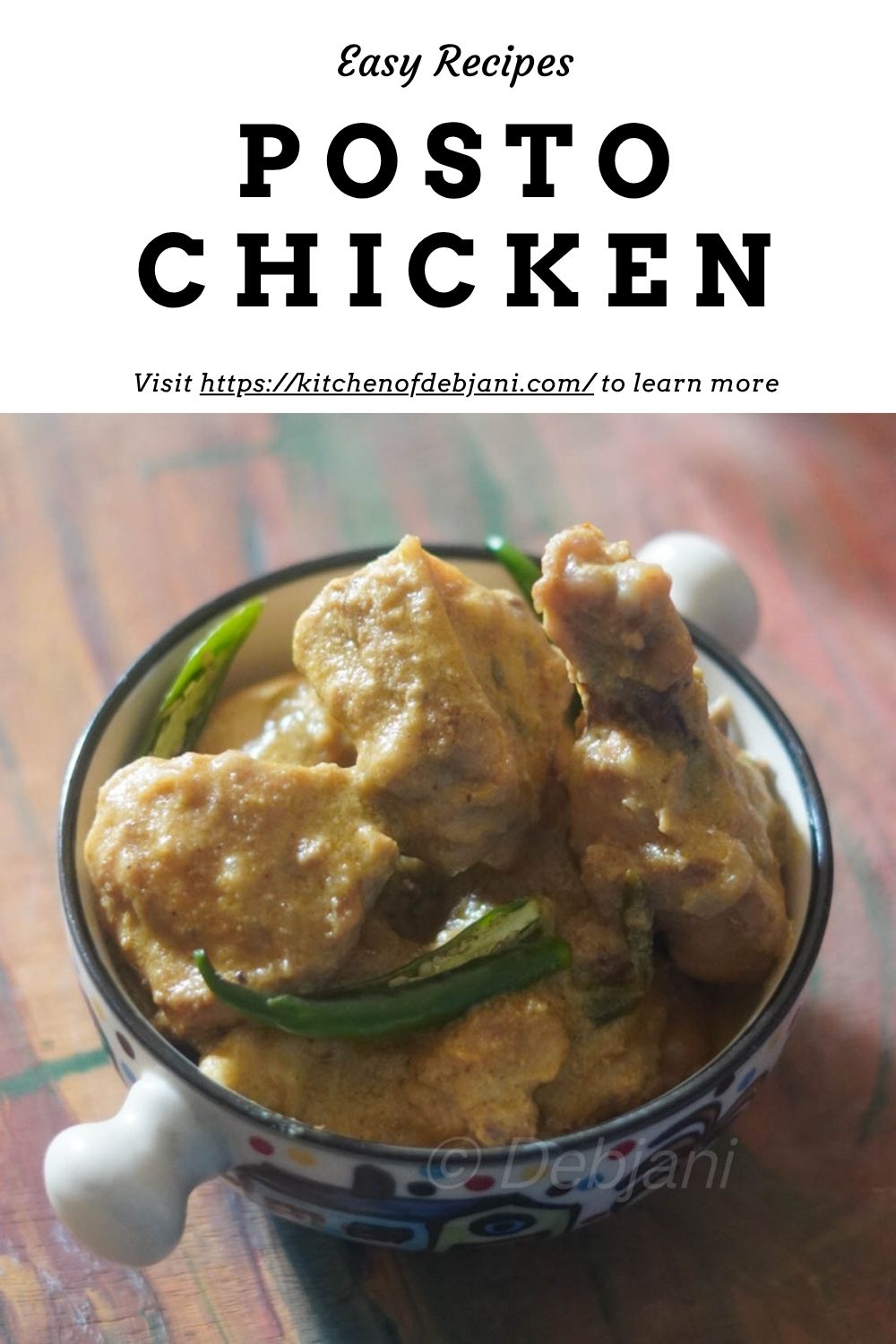
Here's the Posto Murgi Recipe Pin for your Pinterest Board

About Debjani Chatterjee Alam
I am Debjani Chatterjee Alam. A CSR specialist by profession and a food writer, food blogger, and food photographer as well. I live in Kolkata along with my Husband Mehebub who is an architect by profession, my daughter Pasta, and also my dog daughters Coffee and Luchi.




Leave a Reply